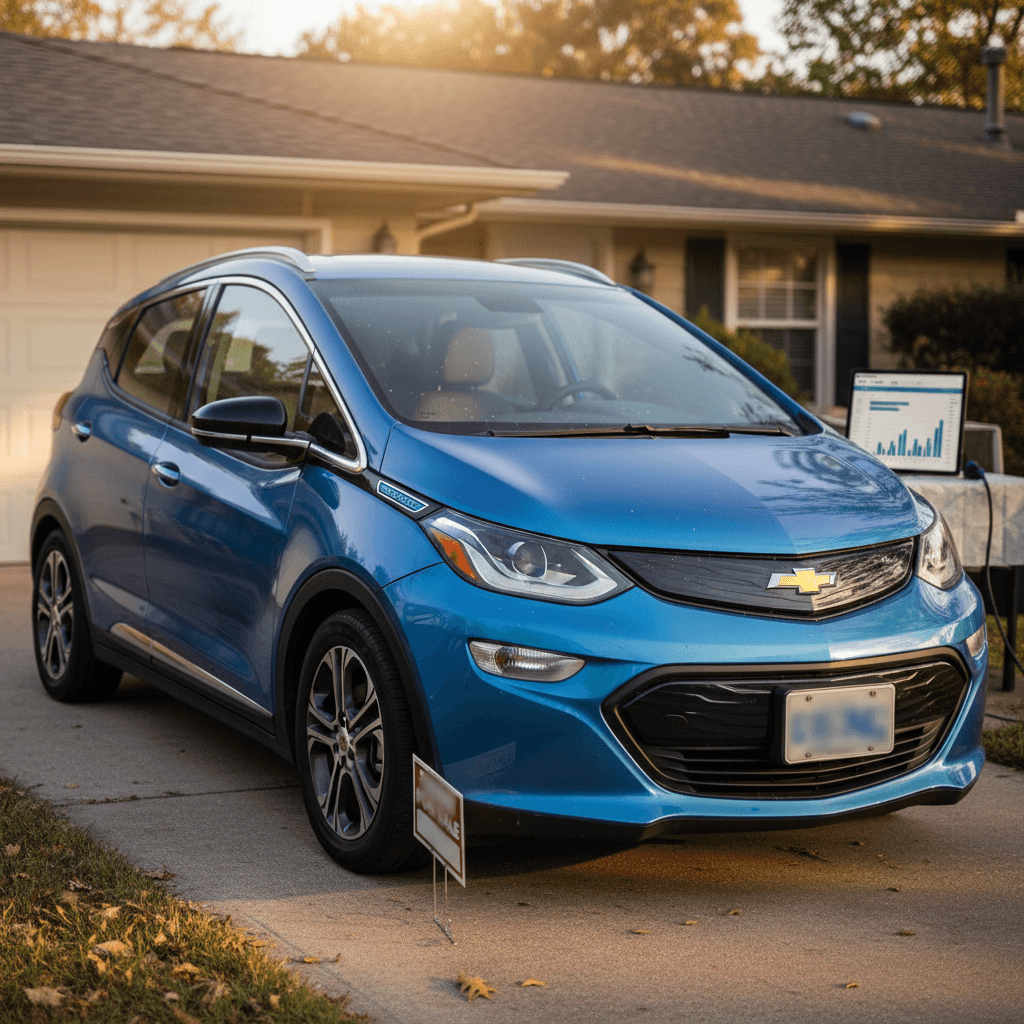
If you’re shopping for an affordable electric hatchback, the Chevy Bolt EV is going to pop up early and often. It’s one of the few EVs that delivers 200+ miles of range, a roomy cabin, and hatchback practicality at used-car prices that often undercut comparable gas compacts. But between battery recalls, changing incentives, and a new-generation Bolt on the way, it’s fair to ask: is a Bolt EV still a smart buy in 2025?
Quick context
Why the Chevy Bolt EV still matters in 2025
Bolt EV by the numbers
The Bolt EV launched for 2017 as one of the first mass‑market long‑range EVs that didn’t wear a Tesla badge. Early on it flew under the radar, but aggressive price cuts and rising gas prices turned it into GM’s best‑selling EV by the early 2020s. With production wrapped, today the Bolt EV sits in a sweet spot: newer than a Nissan Leaf of similar price, but often cheaper than a Tesla Model 3.
Why shoppers like it
Chevy Bolt EV at a glance: years, trims, key specs
First‑generation Bolt EV overview
Key differences between early and later Bolt EV model years.
| Model years | Battery (gross) | EPA range | Onboard AC charger | DC fast charging | Notes |
|---|---|---|---|---|---|
| 2017–2019 | ~60 kWh | ~238 mi | 7.2 kW | Optional (~55 kW max) | Original design, subject to full battery recall; earlier infotainment and seats. |
| 2020 | ~66 kWh | ~259 mi | 7.2 kW | Optional (~55 kW max) | Range bump from battery tweaks; still part of the recall universe. |
| 2021 | ~66 kWh | ~259 mi | 7.2 kW | Optional/trim‑dependent | Last pre‑refresh styling; fast charge standard on some trims. |
| 2022–2023 | ~65 kWh | ~259 mi | 11.5 kW | Standard (~55 kW max) | Facelift with nicer interior, better seats, and faster Level 2 charging. |
EPA range estimates are for new vehicles; expect some variation on older, high‑mileage examples.
Model‑year sweet spot

Real-world Bolt EV range and charging speeds
On paper, a Bolt EV is rated around 238–259 miles of range, depending on model year. In the real world, most owners see 200–240 miles in mixed driving, with colder climates and high‑speed highway use trimming that number. The car is most efficient below 70 mph and when you use the excellent one‑pedal driving mode to recapture energy.
Home & workplace charging
- Level 1 (120V): Adds roughly 3–4 miles of range per hour. Fine for light commuters but slow for deeper daily drains.
- Level 2 (240V): Early Bolts charge up to about 7.2 kW; 2022–2023 cars accept up to 11.5 kW. On a 40–48 amp home charger, you can typically go from near‑empty to full overnight.
- Most owners eventually install a Level 2 charger or use a 240V outlet (like a dryer plug) for faster top‑offs.
Public & DC fast charging
- Connector: First‑gen Bolts use the CCS1 combo port, compatible with most non‑Tesla fast‑charging networks.
- Peak DC speed: About 55 kW, with the car tapering down as the battery fills. Figure roughly 90 minutes to go from very low to ~80% in ideal conditions.
- Best use: Great for road‑trip top‑ups and occasional long drives, but not as quick as newer 150–250 kW EVs.
Don’t rely solely on peak kW
Bolt EV battery recall: what actually happened
No honest Bolt EV guide can skip the battery recall. GM and its cell supplier LG identified defects in certain battery modules that could, in rare cases, lead to fire. GM ultimately recalled essentially all 2017–2019 Bolt EVs and select later cars for software limits, then for battery module replacement where required.
What the Bolt EV battery recall means for you
For used shoppers, the recall can be a risk, if unresolved, or a quiet advantage if the work is complete.
Many early cars got new packs
What to verify
How to think about risk
Avoid unresolved recall cars
Ownership costs: what it’s really like to live with a Bolt EV
For many buyers, the biggest appeal of a Bolt EV isn’t just the purchase price, it’s the low running costs. With few moving parts, no oil changes, and strong energy efficiency, the Bolt can be significantly cheaper to run than a comparable gas hatchback or small crossover.
Key Bolt EV cost factors
Where the Bolt EV tends to save you money, and where to budget a little extra.
Energy vs. gasoline
Maintenance & repairs
Insurance & depreciation
Battery & high‑voltage parts
Leverage detailed diagnostics
Bolt EV vs. Bolt EUV vs. next‑gen Bolt
You’ll see two closely related models on the used market: the Bolt EV hatchback and the slightly larger Bolt EUV (Electric Utility Vehicle), introduced for 2022. Both share the same basic powertrain and battery, but differ in space, features, and feel.
Bolt EV (hatchback)
- Shorter overall, easier to park and slightly more efficient.
- Better choice if you prioritize maximum range and value.
- Hatchback cargo area is surprisingly useful, especially with rear seats folded.
Bolt EUV (small crossover feel)
- A bit more rear‑seat room and a taller, more SUV‑like stance.
- Available with advanced features like GM’s hands‑free driving tech (Super Cruise) on certain trims.
- Range is slightly lower than the EV, but still in the ~247‑mile ballpark.
What about the next‑gen Bolt?
How to shop for a used Bolt EV in 2025
Shopping used is where the Bolt EV shines, but it’s also where doing your homework pays off. You’re balancing price, battery health, recall history, and charging features. Here’s a practical framework you can use whether you’re browsing local classifieds or shopping digitally through a marketplace like Recharged.
Smart strategies when comparing used Bolts
Focus on the details that actually change your day‑to‑day experience.
Start with your budget & range needs
Prioritize verified battery health
Check charging hardware
Use digital retail to your advantage
Inspection checklist for a used Bolt EV
10 things to check before you buy a used Bolt EV
1. Confirm recall completion
Ask for service records showing that all high‑voltage battery recalls and software updates are complete. Cross‑check the VIN with a Chevy dealer or online recall lookup before you sign anything.
2. Review battery health
Look at the displayed range at 100% charge and compare it to the original EPA rating. When possible, get a third‑party or marketplace‑provided health report (like the Recharged Score) for a more objective view.
3. Inspect the charging port & cable
Check for cracked plastics, bent pins, or corrosion on the J1772/CCS port. Make sure the included portable charge cord works on a standard outlet and isn’t damaged.
4. Verify DC fast charging option
Physically confirm the CCS fast‑charge inlet above the Level 2 port and test a session if you can. Not all early Bolts were built with DC fast charging.
5. Check tire and brake condition
EVs are heavier than comparable gas cars, so they can be harder on tires and suspension. Uneven wear may point to alignment issues or a history of pothole encounters.
6. Test all driver‑assist features
On a test drive, confirm adaptive cruise, lane‑keeping, parking sensors, and cameras work as expected. Faulty sensors can get expensive quickly.
7. Listen for suspension or drivetrain noise
The Bolt’s quiet powertrain makes it easy to hear clunks or rattles. Drive over rough pavement at low speed and during gentle acceleration/deceleration.
8. Inspect interior wear
Early Bolts had firmer seats some drivers disliked. Check for excessive bolster wear, cracked dash plastics, and sticky buttons, signs of a hard life or poor care.
9. Ask about charging habits
Frequent DC fast charging and aggressive 100% top‑offs aren’t deal‑breakers, but a car mostly charged at home to ~80–90% is likely to have gentler long‑term battery wear.
10. Understand total cost of ownership
Factor in insurance quotes, home charging installation, and any upcoming maintenance (tires, brakes, cabin filter). Platforms like Recharged help surface these costs up front so there are fewer surprises later.
Chevy Bolt EV FAQ
Frequently asked questions about the Bolt EV
Bottom line: Is a Bolt EV a good buy?
For shoppers who want to get into an electric vehicle without spending luxury‑car money, the Chevy Bolt EV remains one of the smartest plays on the used market. You’re getting real highway‑capable range, simple ownership costs, and a driving experience that feels modern enough for the 2020s. The key is to be picky: insist on complete recall work, verify battery health, and pay attention to how the previous owner cared for the car.
If you’d like help comparing specific Bolts, or you just want to see how a particular car’s battery stacks up, Recharged can walk you through the details with a Recharged Score Report, financing options, and nationwide delivery. Whether you buy through Recharged or elsewhere, approaching the Bolt EV with good information turns it from a question mark into a confident, budget‑friendly EV choice.