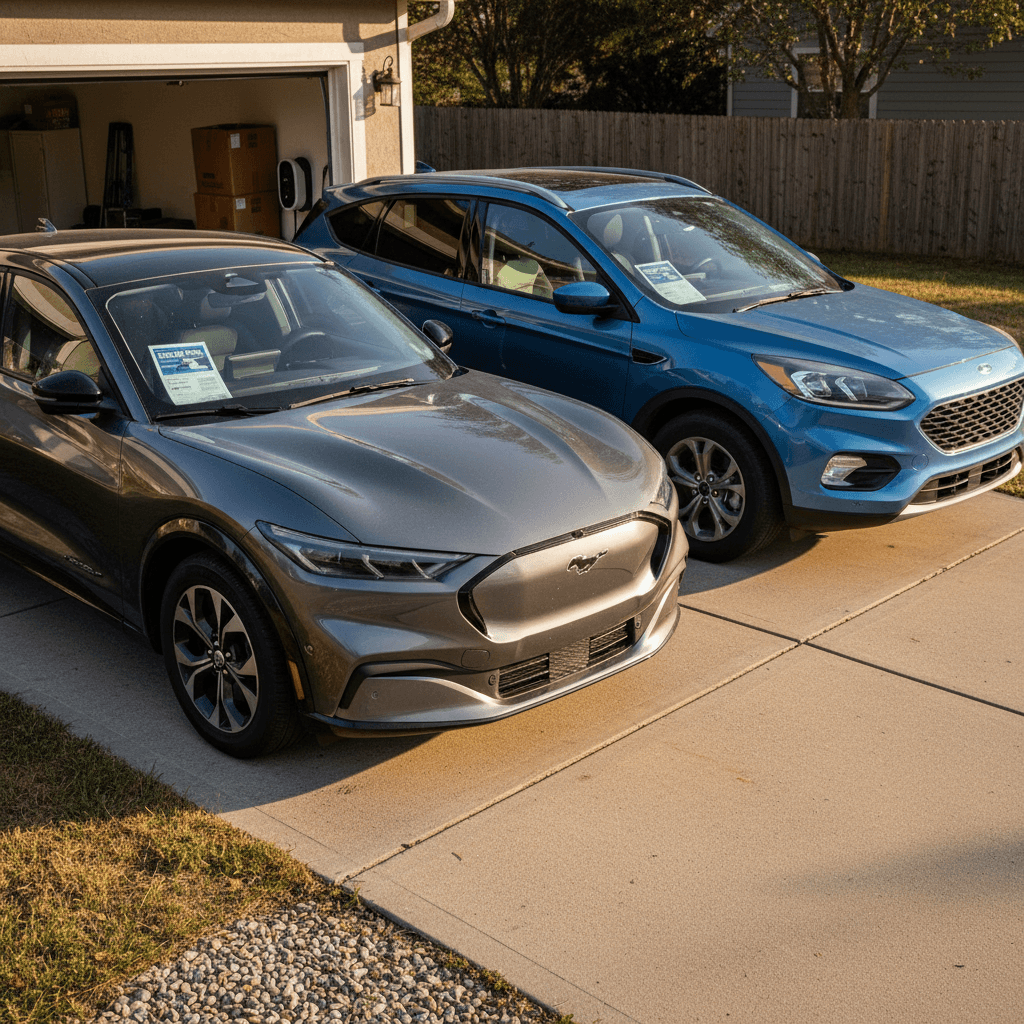
You’re cross-shopping a used Ford Mustang Mach-E against a Ford Escape Hybrid and wondering which one actually makes more sense for your life and budget. Both are compact Ford SUVs, both promise lower fuel costs than a traditional gas Escape, and both show up on used lots at similar prices. But day-to-day, a battery-electric Mach-E and a gasoline hybrid Escape behave very differently.
EV vs hybrid in one sentence
Who should compare a used Mach-E vs Escape Hybrid?
Looking at a used Ford Mustang Mach-E vs Ford Escape Hybrid usually means you want a compact SUV that’s efficient but still practical. You might be: - Coming out of a gas Escape or CR‑V and want lower fuel bills. - EV-curious but not ready to commit to a brand-new electric model. - A commuter with a moderate daily drive who still needs road-trip flexibility. If any of those sound familiar, it’s worth understanding where a used Mach-E shines, where the Escape Hybrid is still the safe play, and what the total ownership picture looks like over 3–8 years.
Quick take: Mustang Mach-E vs Escape Hybrid in one glance
Used Mustang Mach-E vs Ford Escape Hybrid: headline comparison
High-level differences for typical U.S. used shoppers. Exact numbers vary by model year and trim, but this gives you the shape of the decision.
| Aspect | Used Mustang Mach-E (all-electric) | Ford Escape Hybrid (gas-electric) |
|---|---|---|
| Powertrain | Full battery-electric, single- or dual-motor | 2.5L Atkinson-cycle gas engine + electric motor, hybrid system |
| Energy use | 0 gas, approx. 30–40 kWh/100 mi depending on trim | EPA ~39 mpg combined for recent Escape Hybrid models |
| Typical used range / MPG | Approx. 211–320 miles EPA range depending on battery and drivetrain | Around 550–600 miles on a tank with ~39 mpg combined |
| Fuel/energy cost | Very low if you charge at home, higher on paid fast charging | Much lower than non-hybrid SUVs, but you still buy gasoline |
| Cargo & space | Stylish crossover with decent space and a small front trunk | More conventional SUV shape, strong rear cargo volume |
| Driving feel | Quicker, quieter, instant torque; more "fun" | Comfortable, familiar, efficient but not sporty |
| Best for | Home chargers, commuters, tech‑forward buyers, lower operating cost | Apartment dwellers, frequent road‑trippers, simplicity and flexibility |
Think of the Mach-E as a performance EV with low running costs if you can charge at home, and the Escape Hybrid as a mainstream family SUV that just happens to sip fuel.
Where used pricing tends to overlap
Powertrain, range and MPG: electric vs hybrid reality check
Used Mustang Mach-E: full EV performance
The Mustang Mach-E is a battery-electric compact crossover. Depending on year and trim, it uses either a standard-range or extended-range battery, rear-wheel drive or dual-motor all-wheel drive. EPA-rated range across trims typically falls around 211–320 miles on a full charge for recent model years.
- Standard-range RWD trims aim for roughly the mid‑200s in miles of range.
- Extended-range RWD and some Premium trims stretch closer to 300+ miles.
- Performance variants (like GT) trade some range for much quicker acceleration.
If you’re coming from a gas Escape, the big change is that "refueling" means charging – ideally overnight at home.
Ford Escape Hybrid: conventional with a twist
The Escape Hybrid pairs a gasoline engine with an electric motor and small battery that you never plug in. Recent AWD Escape Hybrids are rated around 39 mpg combined, meaning many drivers can travel 550–600 miles on a tank with a similar driving style.
- You fuel up at any gas station in a few minutes.
- The battery and motor help in stop‑and‑go traffic and at lower speeds to save fuel.
- No charging decisions – the computer handles everything.
Range anxiety simply isn’t part of the picture, but you’re still paying whatever gasoline costs in your area.
Real-world range perspective
Charging vs fueling: what daily life actually looks like
How living with a Mach-E differs from an Escape Hybrid
Both are easy to live with if you play to their strengths.
Home charging (Mach-E)
If you have a driveway or garage, plugging in a Mach‑E at home is the biggest quality-of-life upgrade. A 240V Level 2 charger can comfortably recharge overnight, and you leave each morning with range in the battery rather than a fuel stop on your to‑do list.
Public charging (Mach-E)
Without home charging, you’ll rely on public stations. That’s doable – especially if you have chargers near work or your errands – but it’s a different habit than quick gas stops. Plan for occasional waits, broken stations and variable pricing.
Gas stations (Escape Hybrid)
The Escape Hybrid keeps the traditional playbook. You stop every week or two, spend a few minutes at a pump, and drive off. Fuel is more expensive per mile than home electricity, but the workflow is obvious and works anywhere, instantly.
Questions to decide if charging fits your life
1. Can you install or access 240V charging at home?
A dedicated Level 2 charger (or even a 240V outlet) is the single biggest factor that makes Mach-E ownership seamless. If that’s not possible, think carefully about public charging options near your home and work.
2. Do you routinely drive more than 200–250 miles in a day?
If long highway days are rare, the Mach-E’s range is more than enough. If you often run 300–500 miles in a day, the Escape Hybrid’s quick refueling may feel easier unless you’re willing to plan charging stops.
3. How sensitive are you to fuel and electricity prices?
A Mach-E charged at typical U.S. residential rates often costs <strong>significantly less per mile</strong> than a hybrid on gas. But if your only option is expensive DC fast charging, savings can shrink fast.
4. Are you okay learning charging apps and networks?
Living with an EV means learning apps, RFID cards and different networks. If that sounds interesting, the Mach-E fits. If you want to turn a key and forget it, the Escape Hybrid aligns better.
Space, practicality and ride comfort
Mustang Mach-E practicality
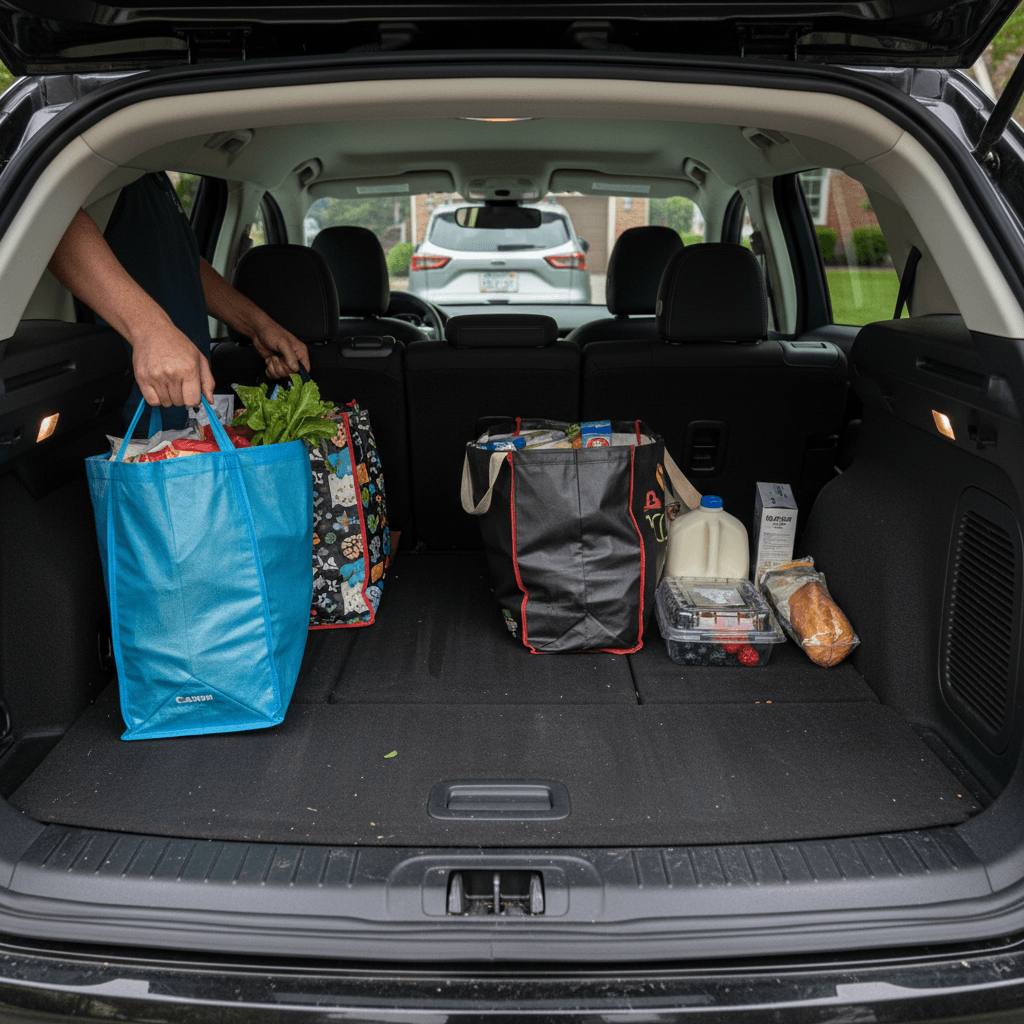
The Mach-E’s coupe-like roofline and EV skateboard platform free up a good amount of interior space for its footprint. There’s seating for five, a useful rear cargo area, and a small front trunk that’s handy for charging cables or muddy gear.
- Flexible rear seats that fold flat for larger items.
- More stylish, sport-oriented seating position and cabin design.
- Quieter around town thanks to the electric powertrain.
It’s a practical daily driver, but if you regularly haul bulky, boxy cargo, the Escape Hybrid may feel more straightforward.
Escape Hybrid practicality
The Escape Hybrid looks and behaves like a classic compact SUV. You get a tall roof, big rear hatch, and up to around mid‑60s cubic feet of cargo space with the rear seats folded in recent model years.
- Sliding rear seats on many trims to trade legroom for cargo depth.
- Easier to load taller objects like dog crates or bikes.
- Ride tuning that’s aimed at comfort and familiarity.
If you’re coming from a previous Escape, the hybrid version feels like the same car – just with dramatically better fuel economy.
Kids and car seats
Ownership costs: price, maintenance and depreciation
Where used EVs and hybrids save you money
Used pricing and depreciation patterns
Both the Mach-E and Escape Hybrid have been around long enough to build a meaningful used market. In many metro areas, you’ll see early‑model Mach-Es discounted as EV incentives and newer tech arrive, while Escape Hybrids hold value more like a traditional efficient crossover. That means you can sometimes find a surprisingly well-equipped Mach-E for similar money to an Escape Hybrid with modest options.
Watch for ultra-cheap EVs
Maintenance and repairs
- Mach-E: No oil changes, fewer moving parts in the powertrain, and regenerative braking that can extend pad life. You still have tires, coolant for the battery and cabin systems, cabin filters and occasional brake service, but the overall maintenance schedule is simpler.
- Escape Hybrid: Much like a regular Escape, though the hybrid system adds complexity that most owners never interact with directly. You’ll still budget for oil changes, transmission fluid, spark plugs and more frequent brake work over the long term.
Insurance costs will vary by region and driver profile, but you should expect the Mach-E – especially in higher-performance trims – to sit at the higher end of the compact-SUV insurance spectrum. Escape Hybrids, being more conventional and less powerful, are often cheaper to insure.
Reliability and battery health on the used market
What to know about Mach-E recalls
Battery health and degradation (Mach-E)
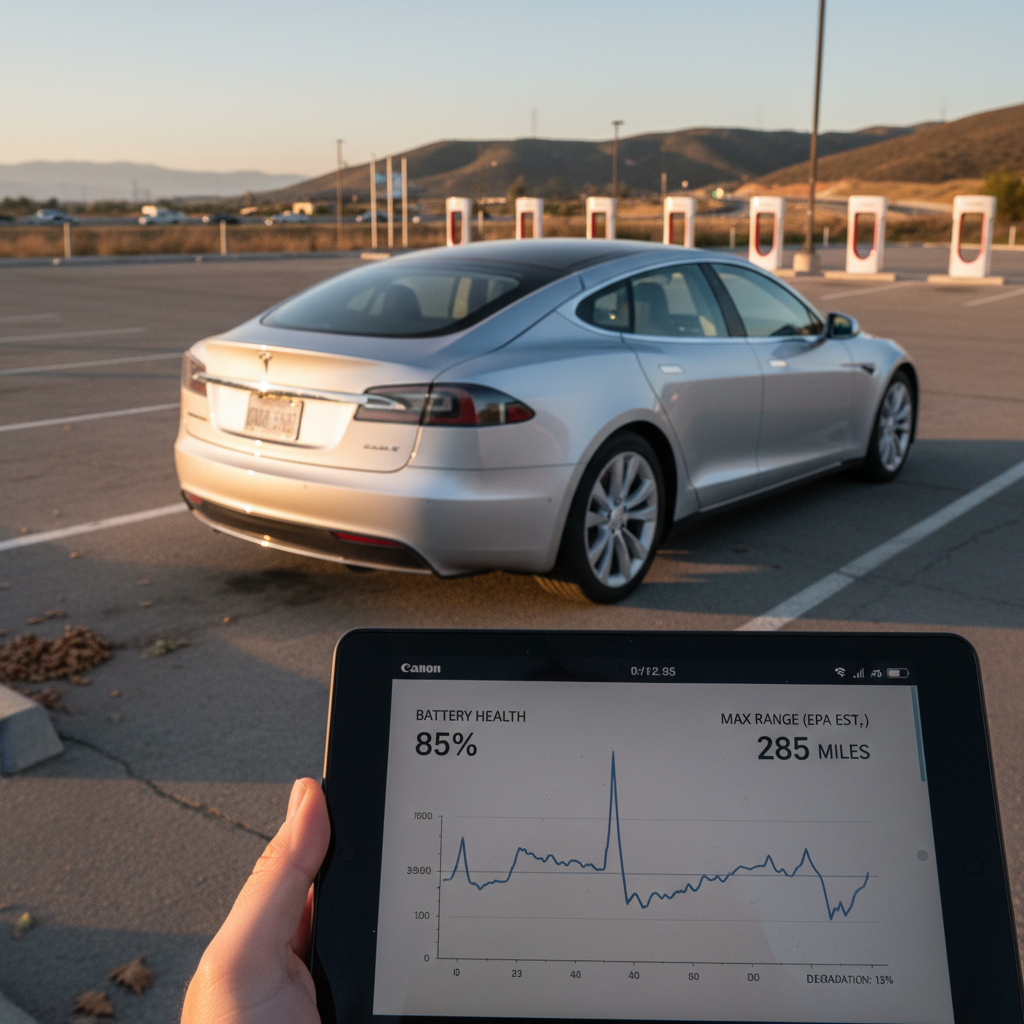
All modern EVs lose some capacity over time, but for most Mach-E owners that loss is gradual and manageable. The bigger issue for used buyers is knowing where a specific car stands today – not just guessing from odometer mileage.
This is where a third-party battery report matters. At Recharged, every used EV includes a Recharged Score Report with verified battery health, so you can compare one Mach-E to another – and to hybrid alternatives – with real data, not just a dashboard guess.
Hybrid system reliability (Escape Hybrid)
Ford has years of experience with hybrid systems. The Escape Hybrid’s gasoline engine, e‑CVT and battery pack are all fairly mature technologies, and most of the horror stories people remember from early hybrids are in the rear-view mirror.
On the used market, you’ll still want to check service history, listen for unusual drivetrain noises, and have a technician inspect the hybrid battery cooling system and any warning lights. But broadly, modern Escape Hybrids don’t ask owners to think about their hybrid hardware very often.
Why EV-specific inspections matter
Environmental impact and incentives
From a carbon perspective, both the Mach-E and Escape Hybrid are far cleaner than a comparable non-hybrid SUV. The Mach-E can be nearly zero tailpipe emissions in daily use, especially if you charge from a relatively clean grid mix, while the Escape Hybrid simply burns a lot less fuel than its conventional counterparts.
- Used Mach-E: Eliminates tailpipe emissions entirely and, depending on your local electricity mix, can dramatically reduce lifecycle emissions. Many utilities offer lower overnight EV rates, which both save money and push charging into low-demand hours.
- Escape Hybrid: Cuts fuel use significantly compared with a standard Escape, especially in stop‑and‑go traffic and city driving, but still emits CO₂ and local pollutants whenever the engine is running.
Don’t forget utility perks
Which one fits you? Common buyer profiles
Buyer types: Mach-E vs Escape Hybrid
Daily commuter with home parking
Drive 20–60 miles per day, mostly fixed routes.
Have a driveway or garage where a Level 2 charger can be installed.
Want lower running costs and like new tech.
Apartment dweller or street parker
Limited or no reliable home charging options.
Can’t count on workplace charging every day.
Want better MPG but need gas-station flexibility.
Road-trip family
Do several 300–600 mile days per year.
Prefer quick, predictable refueling off major interstates.
Still want better efficiency than a traditional SUV.
Tech-forward performance fan
Care as much about acceleration and quietness as efficiency.
Like OTA updates, advanced driver assistance and EV features.
Okay learning the charging ecosystem and planning a bit.
So which should you choose?
Match your situation to the stronger choice.
Choose a used Mustang Mach-E if…
- You can reliably charge at home or at work.
- Your typical day is well under 200 miles.
- You want lower operating costs and enjoy strong acceleration.
- You’re comfortable using apps and planning public charging on longer trips.
Choose a Ford Escape Hybrid if…
- You can’t install home charging or park near outlets.
- You value simplicity and maximum range per stop.
- You do frequent long highway drives with tight schedules.
- You prefer a familiar driving and ownership experience.
How Recharged helps if you choose a used Mach-E
If you decide the Mustang Mach-E is the right fit, buying used doesn’t have to feel like a science project. At Recharged, every EV we sell – including Mach-E models – comes with a Recharged Score Report that covers battery health, pricing vs market, and key condition details. That lets you compare one used Mach-E to another, or even to an Escape Hybrid, on something more meaningful than just mileage and model year.
- EV-specialist advisors who can walk you through whether an EV or hybrid better fits your actual driving patterns.
- Financing and trade‑in options tailored to used EVs, including instant offers or consignment if you’re moving out of a gas vehicle.
- Nationwide delivery and a fully digital purchase process if you’re not near the Richmond, VA Experience Center.
- Transparent pricing and condition reports so there are fewer surprises after delivery.
Try this before you decide
Ready to find your next EV?
Browse VehiclesFAQ: Used Ford Mustang Mach-E vs Ford Escape Hybrid
Frequently asked questions
Bottom line: Should you go EV or hybrid?
Choosing between a used Ford Mustang Mach-E and a Ford Escape Hybrid isn’t really about brand loyalty – it’s about your daily patterns, parking situation and appetite for change. The Mach-E rewards you with lower running costs, stronger performance and a quieter drive if you can reliably charge at home. The Escape Hybrid rewards you with simplicity, long range per stop and fuel savings over a conventional SUV, without asking you to think about charging at all.
If you’re EV-curious and your lifestyle fits, a used Mach-E can be a smart, future-facing choice – especially when you have transparent battery health data and EV-savvy support. If your reality is shared parking, frequent long drives and zero desire to learn charging apps, the Escape Hybrid remains an excellent efficiency upgrade over a traditional gas SUV. Either way, running the numbers on your real-world driving – and getting clear, vehicle-specific data – is the surest path to a decision you’ll still be happy with years from now.