If you’re coming from a gas BMW X5 or X7, the BMW iX service schedule can feel almost suspiciously light: no oil changes, no spark plugs, no transmission service. But “low maintenance” doesn’t mean “no maintenance,” and understanding what the iX actually needs – and when – will help you avoid surprises and protect both your warranty and resale value.
Good news for iX owners
BMW iX service schedule basics
BMW doesn’t publish a simple “every 10,000 miles” chart the way some brands do. Instead, the iX uses Condition Based Service (CBS). The car monitors time, mileage, and sensor data, then tells you when specific items are due in the iDrive menu and My BMW app. For most U.S. owners, here’s how that translates into the real world:
- Annual visit: A quick inspection and software/campaign check is sensible once per year, even if CBS shows nothing critical.
- Every 2 years (roughly 20,000–30,000 miles): Brake fluid change, cabin microfilter(s), comprehensive check of the high‑voltage system and chassis hardware.
- Tires and alignment as needed: Heavy EVs like the iX can wear tires faster than expected, especially on 21"–22" wheels.
- Brake pads and rotors: Regenerative braking means pads can last far longer than on a gas SUV, but they should be inspected regularly and replaced when worn or corroded.
Don’t ignore the time‑based reminders
How BMW Ultimate Care covers your iX
In the U.S., every new BMW, including the iX, comes with BMW Ultimate Care. For model‑year 2026, that’s generally 3 years or 36,000 miles of factory‑recommended maintenance at a BMW center, on top of the standard bumper‑to‑bumper and battery warranties.
BMW Ultimate Care for the iX: what it usually includes
Coverage and what you’re responsible for
Covered items
- Brake fluid services on the factory schedule
- Cabin microfilter(s) replacement
- Multi‑point inspections
- Software and campaign checks during visits
You still pay for
- Tires, alignments, and wheel damage
- Brake pads/rotors (wear and tear)
- Windshield wipers, glass, bulbs
- Damage from road hazards or accidents
How it works
- Car notifies you via CBS/iDrive
- BMW TeleService can ping your dealer
- You book a visit while coverage is active
Ask this at the showroom
BMW iX service intervals at a glance
BMW iX maintenance snapshot (typical U.S. ownership)
Typical BMW iX service timeline (first 10 years)
Actual intervals are determined by CBS in your vehicle and may vary with mileage and climate. Think of this as a planning tool, not a substitute for your owner’s manual.
| Vehicle age | Approx. miles | Key maintenance items | Notes |
|---|---|---|---|
| Year 1 | 0–15,000 | Basic inspection, software/campaign checks | Often combined with any warranty work or tire rotations. |
| Year 2 | 15,000–30,000 | Brake fluid, cabin microfilter(s), full vehicle check | Most iX owners see their first real service visit here. |
| Year 3 | 30,000–45,000 | Inspection, tire evaluation/rotation, possible alignment | BMW Ultimate Care typically ends around this time. |
| Year 4 | 45,000–60,000 | Brake fluid, cabin microfilter(s), detailed chassis and HV checks | Plan ahead for tires on larger‑wheel iX models. |
| Year 6 | 75,000–90,000 | Another 2‑year service set; closer look at suspension, steering, cooling hardware | Brakes may be due depending on driving style and climate corrosion. |
| Year 8–10 | 100,000–150,000+ | Brake fluid, cabin filter, comprehensive inspection at each 2‑year mark | High‑voltage battery and drivetrain still minimal maintenance, but condition checks matter. |
Schedule assumes 12,000–15,000 miles per year in mixed U.S. driving.
Always check your specific manual
What actually happens at the 2‑year BMW iX service
Talk to real iX owners and you’ll hear a common story: the big “two‑year service” alert pops up, and the dealer invoice mostly shows brake fluid and a cabin filter. That’s not the whole picture, but it’s the heart of what BMW expects at this interval.
Typical 2‑year BMW iX service – item by item
Brake fluid flush and replacement
BMW treats brake fluid as a time‑based safety item. Every two years, the old hygroscopic fluid is flushed and replaced to protect your ABS, brake‑by‑wire hardware, and calipers from moisture‑related corrosion.
Cabin microfilter replacement
The iX uses high‑efficiency cabin filters to support its advanced climate and air‑quality functions. Fresh filters help keep the HVAC system breathing freely and your interior air clean.
High‑voltage system and safety checks
Technicians visually inspect the orange high‑voltage cabling, connection points, and protective covers, and they’ll scan for battery or inverter fault codes that might not yet show a warning to you.
Chassis and underbody inspection
The visit is a good time to check suspension bushings, ball joints, steering components, and underbody panels – especially important on heavier EVs that carry extra weight.
Tires, wheels, and alignment review
Even if you’re not due for new tires, a good shop will measure tread depth, look for uneven wear, and recommend an alignment if needed to prevent premature tire replacement.
Software, updates, and campaigns
Some updates arrive over the air, but major recalls, service campaigns, or certain control‑unit updates may still require a physical visit. The 2‑year service visit is a natural time to catch up on them.
Can you skip it?
Long‑term BMW iX maintenance after the free period
Once BMW Ultimate Care expires, you’re on the hook for routine service, whether at a BMW center or a qualified independent EV shop. The good news is that, compared with a similar gas BMW SUV, your iX still has far fewer wear items to feed. The trick is planning ahead for the big‑ticket consumables: tires and, eventually, brakes.
Tires and alignment
On a heavy, high‑torque EV like the iX, tires are easily your largest recurring maintenance expense. Expect:
- Shorter tread life than on a light crossover, especially on staggered 21" or 22" wheels.
- Higher replacement cost for EV‑rated, low‑rolling‑resistance tires.
- Real benefits from doing a 4‑wheel alignment when you first notice uneven wear.
Brakes, cooling, and other items
Regenerative braking means pads and rotors may last well past 60,000 miles, but rust and sticky sliders are still risks, especially in wet or salty climates. In higher‑mileage years, plan for:
- Brake pad and rotor replacement based on inspection, not a fixed mileage.
- Cooling system and battery thermal‑management checks.
- Suspension bushings, control arms, and dampers wearing like any luxury SUV.
Budgeting rule of thumb
High‑voltage battery, brakes, and other key systems
The two systems most shoppers worry about on any used EV are the high‑voltage battery and the brakes. On the BMW iX, both can be remarkably trouble‑free if the car has been driven and serviced sensibly, but it pays to understand how they fit into the broader maintenance picture.
How the BMW iX’s major systems affect its service schedule
High‑voltage battery
The iX’s large lithium‑ion pack is designed to last for many years and is backed by a lengthy battery warranty (usually 8 years/100,000+ miles in the U.S., check your booklet). Routine service is minimal, but:
- Software keeps the pack within safe temperature and charge limits.
- Technicians may run diagnostics during scheduled visits.
- Physical damage or improper lifting can cause very expensive repairs.
Brake fluid and hardware
Because the iX uses blended braking, you might hardly touch the hydraulic brakes in daily driving, but the fluid and hardware still age with time and climate.
- Brake fluid flush every two years protects seals and valves.
- Regular visual inspection catches rusted rotors or sticking calipers.
- Extended parking in humid or salty areas accelerates corrosion.
Onboard charger and cooling
The onboard AC charger and DC fast‑charging hardware have no user‑serviceable parts, but they live in a demanding thermal environment.
- Coolant leaks, if they occur, should be fixed promptly.
- Following BMW’s charging recommendations reduces long‑term stress.
- Service visits are a chance to check for related software updates.
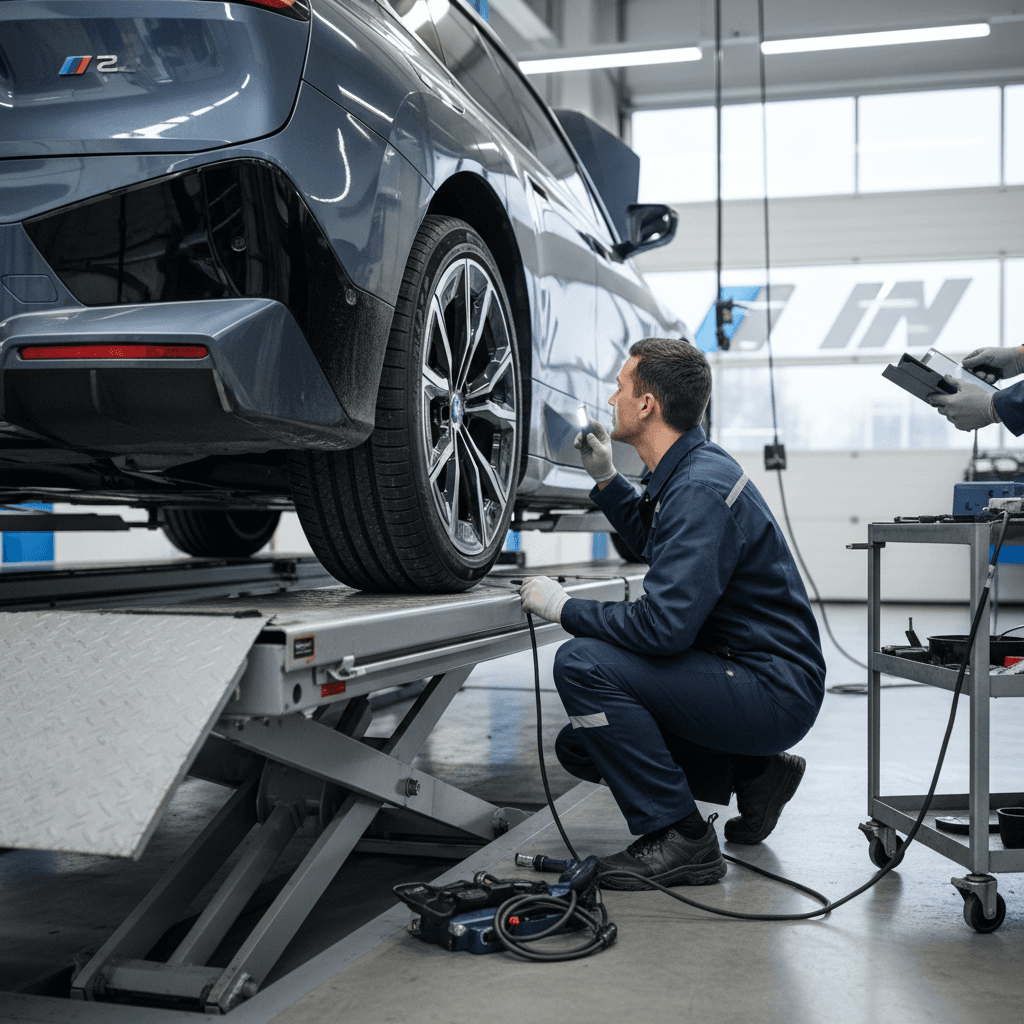
Buying a used BMW iX: service history checklist
The BMW iX is an excellent candidate for used‑EV ownership because the official maintenance schedule is relatively simple. But the more high‑tech and expensive a vehicle is new, the more you’ll want to confirm that previous owners didn’t treat maintenance as optional.
Used BMW iX service history: what to verify before you buy
Documented 2‑year brake fluid service
Ask for invoices or digital records showing brake fluid service around the 2‑year, 4‑year, and 6‑year marks. If those were skipped, you’ll want to do a flush soon after purchase.
Cabin filter replacement and HVAC performance
A clean, properly functioning climate system is especially important on a luxury EV. Test the A/C and heat, and look for filter services on the history.
Tire age, brand, and tread depth
Walk each tire, note the DOT date code, and measure tread. An iX on mismatched cheap tires has probably been maintained with a red pencil.
Brake pad and rotor condition
Have a shop pull the wheels or at least photograph pad thickness and rotor surfaces. Rust ridges, pitting, and uneven wear can signal deferred maintenance.
Software, recalls, and campaign status
Ask a BMW dealer or EV‑savvy shop to check the VIN for open campaigns. Applying overdue updates is often free and can clear subtle drivability or charging quirks.
High‑voltage and charger health report
When you shop through a platform like <strong>Recharged</strong>, you get a Recharged Score battery‑health snapshot and expert inspection, so you’re not guessing about pack condition or charger trouble codes.
How Recharged helps used iX shoppers
Dealer vs independent vs DIY for iX service
For the first few years, most iX owners simply follow the prompts back to a BMW center, the maintenance is prepaid, and the car is still under comprehensive warranty. As the vehicle ages, you have more choices about where and how you handle its relatively modest service needs.
BMW dealer
- Full access to BMW diagnostic tools, software, and recalls.
- Factory technicians familiar with the latest bulletins.
- Required for BMW Ultimate Care coverage.
- Generally the highest hourly rate, but sometimes flat‑rate menu pricing.
Independent EV specialist
- Can often perform brake fluid, cabin filter, tires, and basic inspections at lower cost.
- Look for shops that advertise EV or BMW‑specific experience.
- Make sure they know proper lift points and safety procedures on high‑voltage cars.
DIY where it makes sense
- Cabin air filters and wiper blades are realistic DIY items for many owners.
- Brake fluid and any work near orange high‑voltage cables should be left to pros.
- Keep receipts and document everything for future buyers.
High‑voltage safety is non‑negotiable
BMW iX service schedule FAQ
Frequently asked questions about BMW iX service
Key takeaways and next steps
The BMW iX service schedule is refreshingly simple once you strip away the jargon: follow the car’s CBS reminders, treat the two‑year brake‑fluid and cabin‑filter visits as non‑negotiable, and budget like you would for any heavy luxury SUV when it comes to tires and brakes. In return, you get an electric BMW that can rack up years and miles with far less routine hassle than its gas‑powered cousins.
If you’re considering a used iX, or comparing it with other EVs, a transparent look at battery health and real‑world maintenance history is worth its weight in diagnostic equipment. That’s exactly what you get when you shop through Recharged: a Recharged Score Report, fair‑market pricing, and EV‑specialist support from your first question to delivery. Whether you’re trying to decode BMW’s service schedule or just want a clear path into luxury EV ownership, you don’t have to figure it out alone.