If you bought a BMW i7 new, you’ve probably watched its value drop faster than a traditional 7 Series. If you’re shopping used, that same brutal depreciation can be your best friend. This 2026 BMW i7 resale value guide walks you through real‑world depreciation, current used prices, and what actually helps or hurts the value of BMW’s electric 7 Series when it’s time to buy or sell.
Why the BMW i7 is a resale wild card
BMW i7 resale value in 2026: the big picture
BMW i7 resale snapshot for early model years
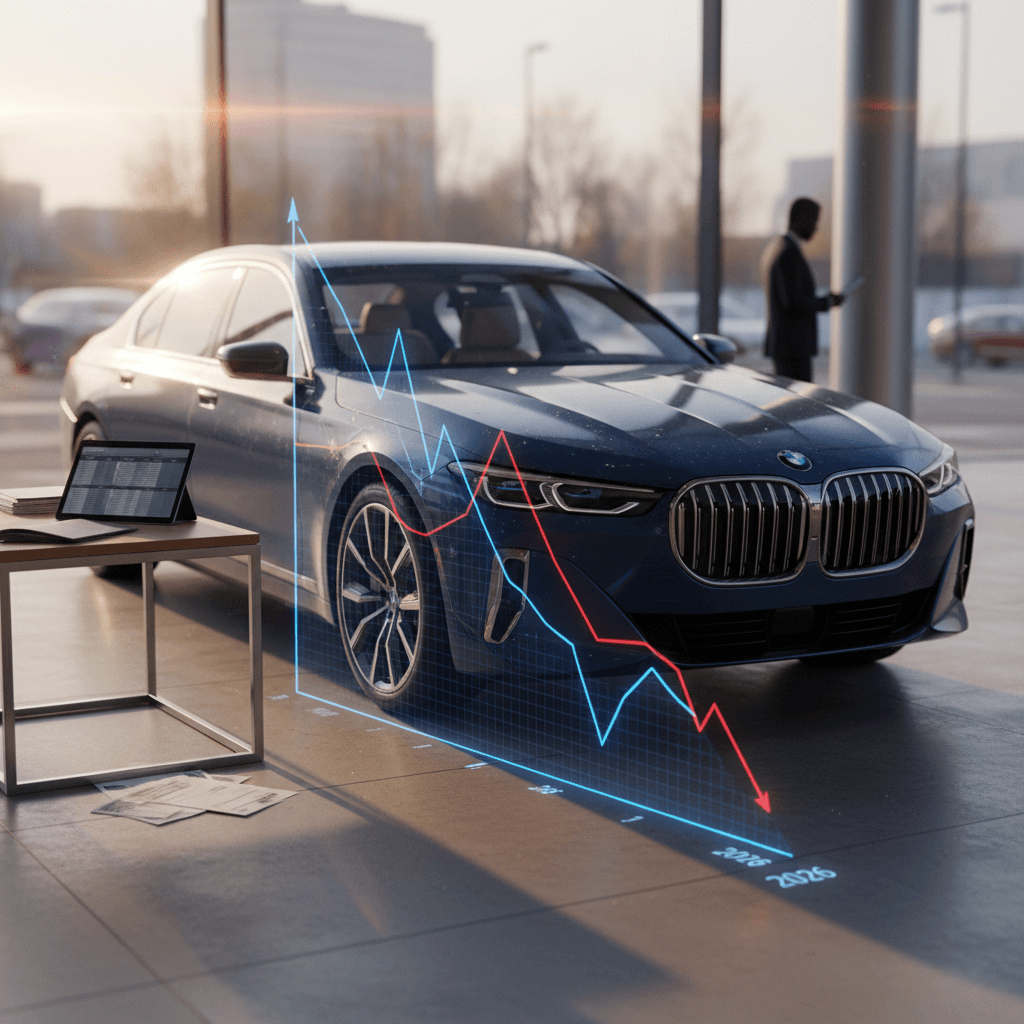
Multiple data sources and real‑world listings suggest the BMW i7 sheds roughly half of its value within its first three to four years. Early 2023 cars that stickered around $120,000–$140,000 are now often advertised in the mid‑$60,000s to high‑$70,000s, with mileage, options, and condition doing most of the fine‑tuning.
That puts the i7 squarely in the “steep luxury EV depreciation” camp. Compared with bread‑and‑butter EVs (or even some Teslas), it loses value faster, but that’s consistent with how the gasoline 7 Series has behaved for decades. The twist in 2026 is that used EV prices have cooled from their pandemic highs and are now much closer to used gas cars, which makes a used i7 feel like a remarkable amount of car for the money if you’re buying today.
How to use this guide
How fast does a BMW i7 depreciate?
Every i7 will have its own story, but we can sketch reasonable ranges from available market data, public depreciation calculators, and what we’re seeing in luxury EV pricing overall. Remember: these are estimates, not guarantees, and they assume normal driving patterns and no major accident history.
Illustrative BMW i7 depreciation curve (U.S., early builds)
Approximate value retention for a well‑equipped BMW i7 xDrive60 based on typical market behavior in 2026. Numbers are directional, not promises.
| Age in years | Estimated value vs original MSRP | What that may look like in dollars* | Market notes |
|---|---|---|---|
| 1 year (lightly used 2025) | ~70–75% | $85,000–$105,000 on a $120k–$140k build | Demo cars and low‑mile lease returns still carry a premium. |
| 2 years (2024 builds) | ~60–65% | $75,000–$95,000 | Higher‑spec cars lose more dollars but similar percentages. |
| 3 years (early 2023 builds) | ~45–55% | $60,000–$80,000 | Sweet spot for value‑oriented used shoppers in 2026. |
| 5 years (projected 2028 for 2023 cars) | ~35–40% | $45,000–$60,000 | Where many flagship luxury sedans tend to land long‑term. |
| 8 years (projected, end of battery warranty) | ~25–30% | $30,000–$45,000 | Battery health and warranty status will drive big price gaps. |
Use this as a sanity check when you’re staring at a trade‑in quote or an online listing, your car may be above or below these ranges based on options, color, and condition.
Don’t over‑interpret a single calculator
The bottom line: your i7 is unlikely to be a “slow depreciator”. But for buyers entering in 2026, much of the painful early drop has already happened. That’s exactly why a used i7 can make sense, as long as you buy the right car at the right price and keep an eye on future tech changes.
Current used BMW i7 price ranges in 2026
Typical BMW i7 asking prices by model year and trim
These are broad U.S. market ranges from real‑world listings in early 2026. Local supply, mileage, and options can move a car above or below these bands.
2023 i7 xDrive60
Typical asking: mid‑$60k to upper‑$70k
- Often 15,000–30,000 miles
- Lots of Executive Package / rear‑seat luxury builds
- Early adopters trading out of first leases
2024 i7 xDrive60
Typical asking: high‑$70k to low‑$90k
- Frequently under 20,000 miles
- More cars with latest driver‑assist and tech packages
- Some CPO inventory through BMW dealers
Performance & M70 variants
Typical asking: widely variable
- Performance‑oriented trims can still push into six figures
- Smaller buyer pool means more negotiation room
- Expect higher running costs and steeper absolute dollar depreciation
If you’re looking at a car that’s wildly outside these ranges, pause and ask why. A low price might reflect high mileage, accident history, or a weak market. A very high price might be banking on rare options, a scarce color and trim combo, or a seller who’s still emotionally anchored to the original MSRP.
Where Recharged fits into the price puzzle
7 factors that move BMW i7 resale value up or down
- Mileage and use pattern. A 22,000‑mile 2023 i7 that lived on the highway will usually draw stronger offers than a 38,000‑mile car that did short‑trip city duty, even if both are three years old.
- Accident and repair history. Structural repairs or airbag deployments drag values down quickly on any luxury sedan; clean Carfax/AutoCheck and consistent service records help support top‑of‑market pricing.
- Options and original MSRP. Flagship EVs are often heavily optioned. Rear Executive Lounge seating, high‑end audio, and advanced driver‑assist packages make the car nicer to live with, but they don’t retain dollar‑for‑dollar value. Expect loaded cars to be relatively cheap compared with what they cost new.
- Exterior/interior color and trim. Conventional colors (black, white, gray, dark blue) paired with understated interiors usually sell faster and closer to asking price than very bold color combos on a big luxury sedan.
- Battery health and remaining warranty. An i7 with a healthy pack and several years of high‑voltage battery warranty remaining is dramatically easier to sell than a similar‑mileage car nearing the end of coverage.
- Software and tech currency. Major over‑the‑air software updates, feature unlocks, and updated driver‑assist behavior can make an older i7 feel more modern, and support a stronger resale story.
- Macro EV market trends. Shifts in EV incentives, fast‑charging build‑out, and new model launches can all ripple through used prices. Luxury EVs, including the i7, are particularly sensitive to these swings.
Good news for the right used i7
Battery health, warranty, and resale confidence
When you strip away the leather and lighting, the single biggest question hanging over any used EV is, “How healthy is the battery, and what happens if it’s not?” For the BMW i7, that’s not just a technical curiosity, it’s a core piece of the resale story.
BMW i7 high‑voltage battery warranty
- U.S. BMW i7 models carry an 8‑year / 100,000‑mile high‑voltage battery defect warranty.
- Coverage is transferable to subsequent owners, which props up resale values in the first ownership cycle.
- Some states layer additional emissions‑related protections; always confirm coverage with a BMW dealer using the specific VIN.
The battery warranty doesn’t turn the i7 into an investment, but it does give used buyers a floor of confidence up through roughly model‑year 2030 for early cars.
Why objective battery data matters
- Two i7s with the same mileage can have very different usable range depending on how they were charged and driven.
- Dealers and private sellers rarely provide a clear, third‑party battery health report.
- Battery replacement costs on large luxury EV packs can be eye‑watering, buyers will discount aggressively if they’re unsure.
A transparent battery health report can easily swing the value of a used i7 by thousands of dollars, especially as cars approach the later years of their warranty.
How Recharged de‑risks used i7 battery health
Ready to find your next EV?
Browse VehiclesLeasing vs buying: which makes more sense with i7 depreciation?
Luxury brands have long used leasing to tame ugly depreciation curves, and the i7 is no exception. In 2026, a lot of the used inventory you’re seeing originates from three‑year leases that baked in aggressive depreciation assumptions right from the start.
If you’re considering a new or nearly new i7
- Leasing shifts much of the depreciation risk to the captive finance arm, as long as you don’t buy out an overpriced residual.
- Incentives and subsidized money factors can make leases surprisingly competitive relative to paying cash on a rapidly depreciating EV.
- Just remember: if you plan to keep the car beyond the lease, obsess over the residual value. You don’t want to pay new‑car money twice.
If you’re shopping a used i7 in 2026
- Buying used often makes more sense, you’re stepping in after the sharpest part of the curve.
- Target cars that are 2–4 years old with several years of battery warranty left and clean histories.
- Consider third‑party or CPO coverage mainly as protection against non‑battery big‑ticket items, not as a value booster on its own.
Watch out for overpriced lease buyouts
How to price and sell your used BMW i7 in 2026
If you’re the one holding the keys, your goal is simple: make your i7 the safest, clearest choice in a crowded used‑luxury search result. That means nailing both the number and the story behind it.
Step‑by‑step: getting a strong resale number for your i7
1. Benchmark your car against real listings
Pull asking prices for BMW i7s with similar model year, mileage, and trim in your region. Ignore obvious outliers and focus on where most clean cars cluster.
2. Adjust for miles, options, and color
Price slightly above the pack if your car is lower‑mileage, better‑equipped, or in a highly desirable color combo. Move down if you’re outside the sweet spot.
3. Gather documentation and service records
Full maintenance history, recall paperwork, and charger/adapter receipts all help reassure buyers and support a higher price or faster sale.
4. Highlight battery health and warranty
Call out remaining high‑voltage battery warranty years and mileage. If you have a third‑party battery health report or Recharged Score, feature it prominently.
5. Fix inexpensive cosmetic issues
A professional detail, paintless dent removal, and wheel touch‑up are often cheaper than the price cuts shoppers will expect if a car looks tired online.
6. Get multiple offers
Compare bids from dealers, instant‑offer services, and marketplaces like Recharged. The spread on a niche luxury EV can be surprisingly wide, don’t accept the first lowball.
How Recharged can help you sell
Buying a used BMW i7 in 2026: checklist
Shopping for a used i7 can feel like an IQ test written in German and coded in kilowatts. A simple checklist keeps you from getting dazzled by the ambient lighting and forgetting the stuff that actually affects long‑term value.
Used BMW i7 buyer checklist
Confirm trim, options, and original MSRP
Get the original window sticker or a build sheet. It helps you understand what the car truly is, not just what the badge says.
Check battery health and remaining warranty
Ask for documentation on battery performance. On Recharged, review the Recharged Score to see pack health and realistic range expectations.
Review charging history and habits
Frequent DC fast‑charging or chronic deep discharges can stress a pack. Ask how and where the car was typically charged.
Inspect tires, brakes, and suspension
Big, heavy luxury EVs eat consumables faster. Price in a fresh set of tires or brake service if they’re due soon.
Scan for accident history and bodywork
Use a vehicle history report and, if in doubt, a pre‑purchase inspection to catch prior damage that might not appear in a glossy listing.
Test all tech and comfort features
From soft‑close doors to rear‑seat entertainment, you want to know everything works. Fixing flagship‑car gadgets can be painfully expensive out of warranty.
BMW i7 vs other luxury EVs on resale value
The i7 doesn’t live in a vacuum. If you’re cross‑shopping, you’re probably also eyeing cars like the Mercedes‑Benz EQS, Porsche Taycan, Audi e‑tron GT, or even higher‑spec versions of the Tesla Model S. How does the BMW stack up?
How the BMW i7’s resale dynamics compare
Big‑picture behavior across flagship EV sedans in 2026.
BMW i7 vs Mercedes‑Benz EQS
- Both are large flagship EV sedans with steep early‑year depreciation.
- The EQS has had more publicized design and interface critiques, which can weigh on demand.
- In many markets, a similar‑age i7 and EQS trade hands within a fairly narrow band.
BMW i7 vs Porsche Taycan
- The Taycan trades some rear comfort for performance‑car cachet.
- It also depreciates heavily, especially non‑Turbo trims that started with lofty MSRPs.
- For pure back‑seat luxury, the i7 typically delivers more for a similar or lower used price.
BMW i7 vs Tesla Model S
- Model S prices have come down sharply, but Teslas generally have broader brand recognition and charging‑network advantages.
- Resale behavior is uneven by region; in some markets a Model S will hold value better, in others the i7’s luxury appeal narrows the gap.
- If you value cabin craftsmanship and rear‑seat comfort over Supercharger access, the i7 can be the smarter used buy.
Where the i7 shines as a used buy
- Massive original MSRP plus fast depreciation equals strong value for second owners.
- Plush cabin, serious performance, and advanced tech that still feel current in 2026.
- Availability of CPO and independent EV specialists makes long‑term ownership more approachable than it first appears.
Resale is local
FAQ: BMW i7 resale value in 2026
Frequently asked questions
Should you buy or sell a BMW i7 now?
In 2026, the BMW i7 is a classic tale of two markets. For first owners, it has been an expensive experiment in cutting‑edge electric luxury. For used buyers, it’s rapidly becoming one of the biggest “more car than money” plays in the EV world, as six‑figure MSRPs collapse into prices that rival nicely optioned midsize SUVs.
If you’re selling, your job is to tell a clear, documented story about your specific i7, its service history, battery health, and condition, then anchor your price in real‑world comparables. If you’re buying, the mission is to let someone else eat the big first‑owner depreciation, then use tools like the Recharged Score, expert EV support, and transparent pricing to pick a car that will make you smile every time you settle into that back seat.
Either way, the days of guessing what an i7 is worth are over. With the right data and a realistic view of luxury EV depreciation, you can step into, or out of, a BMW i7 in 2026 with your eyes wide open and your budget under control.