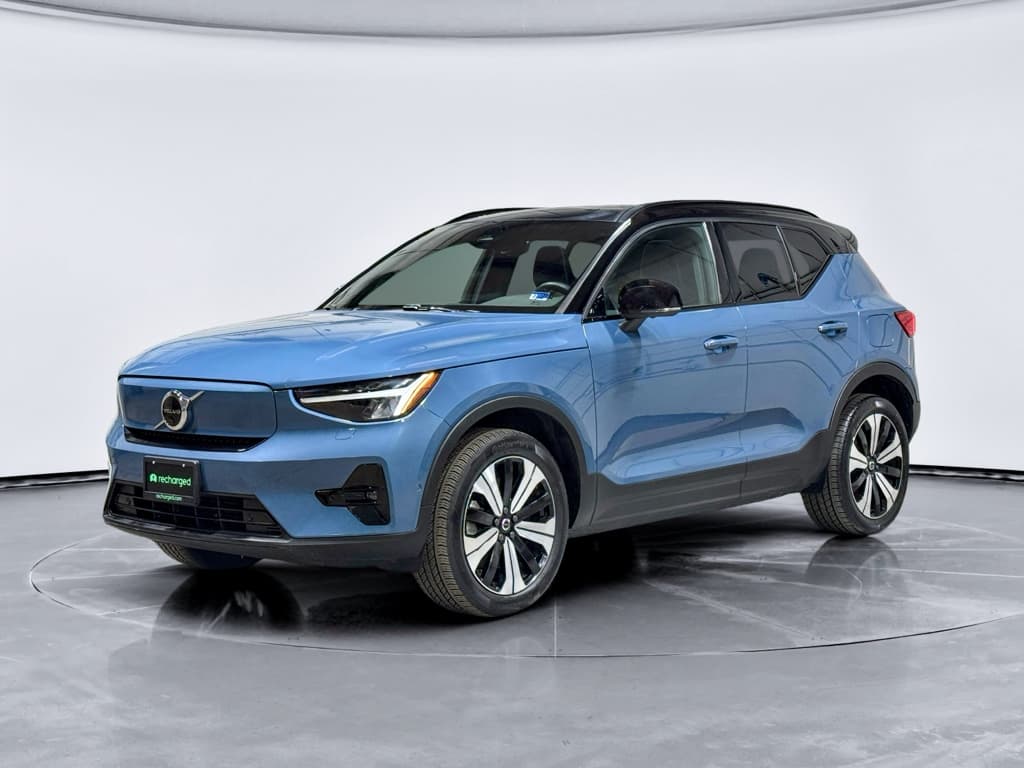
The Volvo EX90 is still a fresh face in the luxury EV world, but by 2026 we’re finally starting to see meaningful data on its **resale value**. If you’re thinking about buying one, trading out of an early build, or hunting for a used EX90, understanding how this SUV is holding its value in 2026 is critical.
Context: a young model in a cooling EV market
Why Volvo EX90 resale value matters in 2026
When a new flagship EV launches, early adopters often expect strong residuals. The **Volvo EX90** launched with pricing in the high-$70,000s to low-$80,000s for U.S. buyers, depending on trim and destination charges. As we move through 2026, first-wave owners are starting to trade, and lease returns won’t be far behind. That’s when resale value stops being theoretical and turns into real dollars.
- You might be upside-down on a loan if depreciation outpaces your payoff schedule.
- A soft used market can pressure Volvo and dealers to discount new EX90s more heavily.
- Savvy buyers can find value in slightly used, low-mile EX90s at a steep discount from MSRP.
- Battery health, software updates, and new-model improvements can make some builds more desirable than others.
Quick Volvo EX90 resale value takeaways
Volvo EX90 resale snapshot for 2026
Caution on all numbers
New pricing and early used market baseline
Volvo positioned the EX90 as a flagship three-row electric SUV. Early U.S. pricing announcements for the 2025 model year placed the **Twin Motor Plus** in the high‑$70,000s, with **Ultra** and **Twin Motor Performance Ultra** builds pushing into the mid‑ to high‑$80,000s once destination was included. Real-world transaction data in 2025 already showed discounts off MSRP as inventory built up and EV demand cooled.
Typical Volvo EX90 new pricing context (U.S., 2025 MY)
Representative MSRPs including destination; your exact window sticker may differ by options and build date.
| Trim (2025) | Approx. New MSRP incl. destination | Configuration highlights |
|---|---|---|
| Twin Motor Plus | ~$78,000–$82,000 | Dual motor AWD, 7-seat standard, strong safety tech suite |
| Twin Motor Ultra | ~$82,000–$86,000 | Adds higher-end interiors, more driver aids, upgraded features |
| Twin Motor Performance Ultra | ~$86,000–$90,000+ | More power, top trim features, often 7-seat; some 6-seat builds |
These MSRP bands provide a baseline to judge depreciation and used pricing in 2026.
What the new-pricing range means for you
How fast is the Volvo EX90 depreciating?
Because the EX90 only started deliveries in 2024, we don’t yet have long-term residual curves like we do for the gasoline XC90. But we can triangulate early trends from transaction data, public listings, and third‑party depreciation forecasts.
- Early 2024–early 2025 buyers paid close to MSRP or with small discounts; by late 2025 and into 2026, transaction prices on new EX90s were more frequently several thousand below sticker.
- By early 2026, there are certified pre-owned (CPO) EX90 Ultra Performance examples with roughly 5,000 miles being offered around the low‑$60,000s, and some non-CPO, single‑owner 2025 Ultra Performance units advertised in the high‑$40,000s to mid‑$50,000s depending on miles and region.
- Generic EX90 depreciation calculators are projecting roughly 48–55% value retention at year four, which implies around 25–35% depreciation in the first 24 months for typical use and mileage.
Use ranges, not single numbers
Key factors that move EX90 resale up or down
What’s actually moving Volvo EX90 resale in 2026?
Beyond age and miles, these are the levers that matter most to buyers and appraisers.
Safety & tech reputation
The EX90 leans hard into advanced safety and driver-assistance tech, including a standard roof-mounted LiDAR sensor. That reputation helps long-term demand, but buyers want clarity on which software features are active on your specific VIN.
Battery & charging story
Range, DC fast‑charging performance, and compatibility with newer NACS infrastructure all influence resale. A healthy battery with documented charging habits is a plus; repeated DC fast charging with no records can raise questions.
Software & hardware revisions
Volvo has been iterating the EX90 quickly. Vehicles with the latest over‑the‑air updates, improved driver‑assistance behavior, and, for later model years, upgraded high‑voltage systems may be valued differently than early builds.
Configuration & options
6‑seat vs. 7‑seat layout, wheel size, color, and option packages matter. Family buyers often favor 7‑seat Ultras in practical colors; performance‑minded shoppers may chase high‑spec Performance Ultras.
Macro EV market conditions
Higher interest rates, changing incentives, and aggressive price cuts by competitors can drag on all used EV values, including the EX90, even if nothing about your specific car has changed.
Regional demand
Three‑row luxury EVs move faster in metro areas with strong charging infrastructure. In regions with sparse fast charging or cheaper gasoline, buyers can be more hesitant, pushing resale lower.
Battery health and warranty: the big resale levers
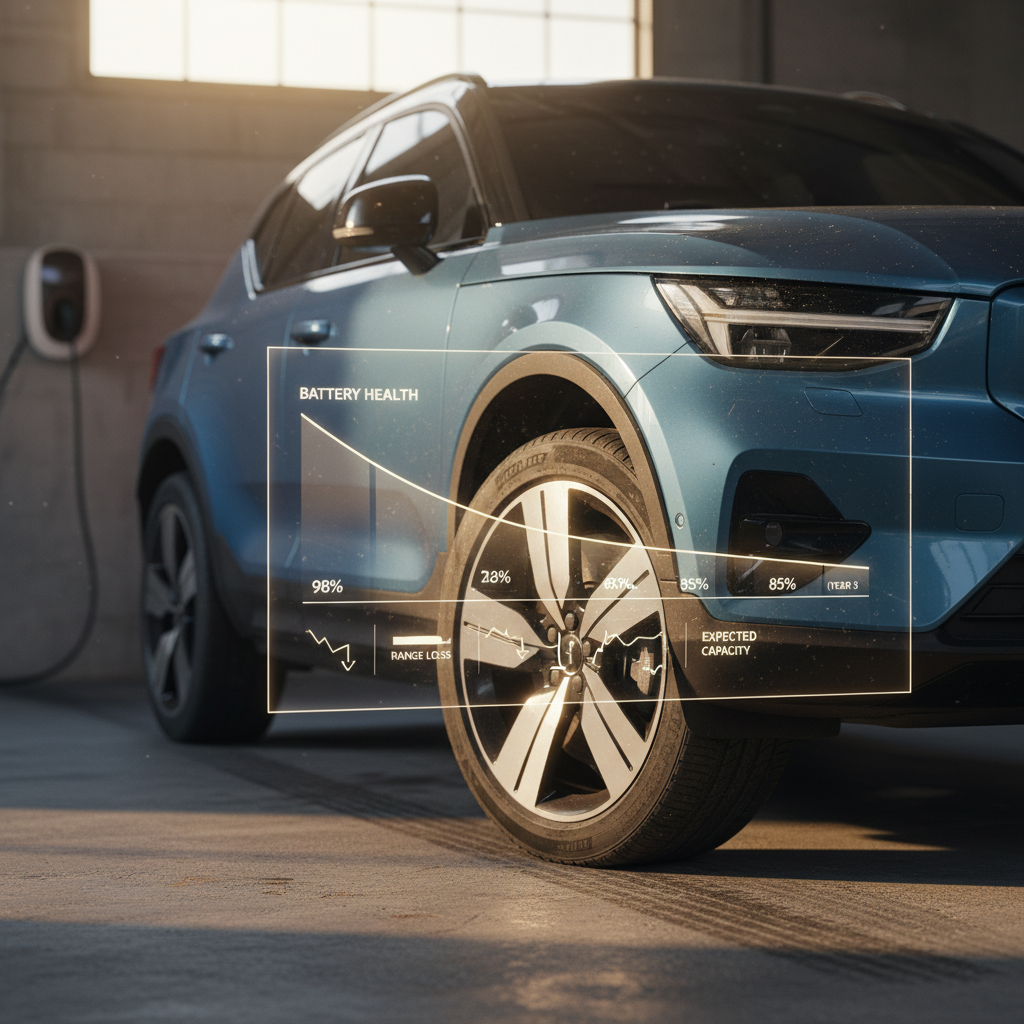
For any used EV, **battery health** is at least as important as paint condition. The EX90’s large pack (around 111 kWh gross on early model years) should age gracefully if it’s charged reasonably, but buyers in 2026 are more educated than EV shoppers were a few years ago. They’ll ask pointed questions about how the vehicle was charged and what the pack looks like today.
- Most modern Volvos include an 8‑year/100,000‑mile high‑voltage battery warranty in the U.S., typically guaranteeing the pack won’t drop below a certain capacity threshold in that period (exact terms depend on model year; always verify for your VIN).
- Volvo’s software encourages charging to around 90% for daily use, which is a positive signal to future buyers that the vehicle wasn’t routinely pushed to 100% SOC for long periods.
- Real‑world degradation for comparable large‑pack EVs is often in the low‑single‑digits over the first 2–3 years when treated well, but harsh climates and frequent DC fast charging can accelerate wear.
Do NOT sell without a battery health story
Battery-health steps that protect your EX90’s future value
1. Pull a recent battery health report
Use an EV‑specific diagnostic or a trusted marketplace like Recharged that can provide a <strong>verified battery health score</strong>. A third‑party report carries more weight than a casual statement that “range feels fine.”
2. Document your charging habits
If you mostly charge at home to ~80–90% and rarely fast charge, keep screenshots or utility data that show this pattern. It helps reassure buyers that your pack hasn’t been abused.
3. Stay current on software
Keep your EX90 up to date with the latest over‑the‑air updates. Software can affect range estimates, charging behavior, and driver‑assistance performance, all of which influence perceived value.
4. Clarify battery warranty coverage
Print or save documentation from Volvo (or your purchase paperwork) that spells out the battery warranty term and capacity guarantee for your exact model year. Include this with your listing.
5. Avoid deep discharges before sale
In the weeks leading up to a sale or appraisal, avoid frequently running the battery near 0% or storing the car at 100% for long periods. Aim to show the vehicle in a healthy, typical state of charge.
2026 vs. 2027 model updates: will they hurt your value?
One unique wrinkle with the EX90 is how quickly Volvo is iterating the platform. Reports from late 2025 and early 2026 indicate that the 2026 model year begins to move the architecture toward higher‑voltage operation and updated drivetrain configurations, with further powertrain and efficiency improvements expected for 2027.
What favors earlier EX90 builds
- Lower entry prices on the used side attract value-focused buyers who want a luxury three‑row EV without paying six figures.
- For some buyers, the difference between early and later hardware isn’t worth a five‑figure price gap, especially if they mostly do urban driving and home charging.
- Early adopters may have desirable option mixes or interior colors that later buyers can’t easily configure new.
What favors later EX90 builds
- Improved efficiency and charging performance from higher‑voltage hardware can appeal to road‑trippers and tech‑savvy buyers.
- Refinements to driver‑assistance systems and LiDAR‑based features as Volvo matures the software stack.
- Perception that “newer is safer” from a long-term parts and support perspective.
Position your model year the right way
How EX90 resale compares to Tesla, BMW & others
In 2026, Volvo’s three-row electric SUV is competing directly with vehicles like the **Tesla Model X**, **BMW iX**, **Mercedes‑Benz EQE/EQS SUV**, and **Rivian R1S**. All of them have been navigating the same reality: higher production, evolving incentives, and buyers who now expect discounts on big EVs.
Luxury three‑row EV SUV resale dynamics (2026 snapshot)
High-level view of how the EX90 stacks up against key rivals from a resale-value and buyer-perception standpoint.
| Model | Early depreciation trend | Used-market narrative (2026) | Notable resale strengths |
|---|---|---|---|
| Volvo EX90 | Moderate–high in first 2 years, from a high MSRP starting point | Growing supply, limited but rising awareness; values under pressure but buoyed by safety reputation | Cutting-edge safety tech, Scandinavian design, three‑row practicality |
| Tesla Model X | Moderate; heavy impact from Tesla’s aggressive new‑price cuts | Used values reset downward after repeated MSRP reductions, but robust brand recognition supports demand | Supercharger access, brand cachet, strong performance |
| BMW iX | Moderate; mix of leases and cash buyers | Niche buyer base; high MSRPs mean big absolute-dollar depreciation | BMW badge, interior quality, driving dynamics |
| Rivian R1S | High early volatility; some sharp drops as supply ramped | Enthusiast following but subject to broader EV headwinds and new-model uncertainty | Adventure image, off‑road capability, over‑the‑air improvements |
These are directional comparisons, not precise rankings; local market conditions can swing any of them up or down.
Where the EX90 likely lands long-term
How to price your used Volvo EX90 in 2026
Pricing an EX90 in 2026 is part art, part data science. Generic valuation tools don’t yet have deep EX90 history, and local market conditions change quickly. But you can create a sensible pricing band by anchoring to new pricing and adjusting for miles, trim, and battery story.
Step-by-step: building a smart asking price
1. Identify the original build and MSRP
Decode your VIN or look at the original window sticker to confirm trim (Plus vs. Ultra vs. Performance Ultra), seat count, wheels, and key options. Note the MSRP including destination; that’s your starting anchor.
2. Pull current new-car transaction data
Look up what dealers in your region are actually asking, and taking, for comparable new EX90s. If new Ultras transact around $80,000 in your area, a used Ultra at $72,000 will be a hard sell unless miles are extremely low.
3. Scan used listings within 500 miles
Search for EX90s with similar trim, model year, and mileage. Pay attention to which ones sit for weeks and which disappear quickly. That gap tells you where the real market-clearing price likely is.
4. Adjust for mileage and condition
As a rough rule of thumb, each 10,000 miles on a nearly new luxury EV can shave several thousand dollars from value. Add premiums back for pristine cosmetic condition, rare colors, or high-demand options.
5. Factor in CPO and warranty status
A Volvo CPO EX90 with extended coverage can justify a higher ask than a private-party sale with no extra warranty. Conversely, if your car is out of basic warranty soon, be prepared to price more aggressively.
6. Decide on your speed vs. price trade-off
If you want to move the car in a week, list near the lower end of the band you’ve built. If you can wait a month or more, try the middle-to-upper range and be ready to negotiate based on feedback.
Maximizing your EX90 trade-in or private sale
Once you have a target pricing band, the next step is squeezing as much value as possible out of either a trade‑in or private sale. The EX90’s tech‑heavy spec sheet means presentation and documentation matter more than they would on a simpler gasoline SUV.
Trade-in vs. private sale: which makes more sense for your EX90?
Both paths can work in 2026, choose based on time, risk tolerance, and equity position.
Optimizing a trade-in
- Shop multiple offers. Don’t stop at the first Volvo store. Get bids from at least two franchised dealers and an online EV specialist.
- Bring documentation. Service history, software update logs, and a third‑party battery report can nudge offers higher.
- Mind tax benefits. In many states, trading in reduces sales tax on your next purchase, which can offset a slightly lower trade value.
Winning a private sale
- Tell the EV story, not just the spec. Explain how you charged, what range you saw, and what you liked about living with the EX90.
- Be transparent about software status. Note any outstanding campaigns or updates and whether they’re scheduled.
- Offer test drives thoughtfully. Screen buyers, meet in public places, and verify insurance before handing over keys.
Be honest about software and known issues
How Recharged helps you protect and unlock EX90 value
Because the EX90 is a tech‑dense flagship with a big battery and fast-evolving software, selling or buying one benefits from transparent diagnostics and expert guidance. That’s where a specialized used‑EV marketplace like Recharged changes the equation.
- Every vehicle on Recharged comes with a Recharged Score Report that includes verified battery health, so you’re not guessing about pack condition.
- Fair‑market pricing tools tuned for EVs help you understand where your EX90 should land relative to new‑car incentives and regional supply.
- If you’re selling, you can choose instant offer, trade‑in, or consignment, backed by EV‑specialist support and a fully digital experience.
- If you’re buying, you can finance online, arrange nationwide delivery, and lean on experts who understand EX90‑specific questions about range, software, and charging.
Why this matters specifically for the EX90
Volvo EX90 resale value FAQ (2026)
Frequently asked questions about Volvo EX90 resale value
Bottom line: Volvo EX90 resale outlook
The **Volvo EX90** entered the market at a challenging time for high‑end EVs, and its resale values in 2026 reflect that reality: meaningful early depreciation from high MSRPs, but growing used‑market interest in a safe, spacious, Scandinavian three‑row EV. If you’re selling, you can’t control macro EV headwinds, but you can control presentation, documentation, and where you list. If you’re buying, you’re in a rare window where early EX90s can be had for tens of thousands below new pricing while still sitting comfortably inside their battery warranty window.
Whichever side of the transaction you’re on, treating the EX90 like a battery‑first, software‑heavy product, not just a luxury SUV, will help you make smarter moves. And if you want a partner that understands those nuances, Recharged is built specifically to make used EV ownership simple and transparent, from battery diagnostics and fair‑market pricing to trade‑ins and nationwide delivery.