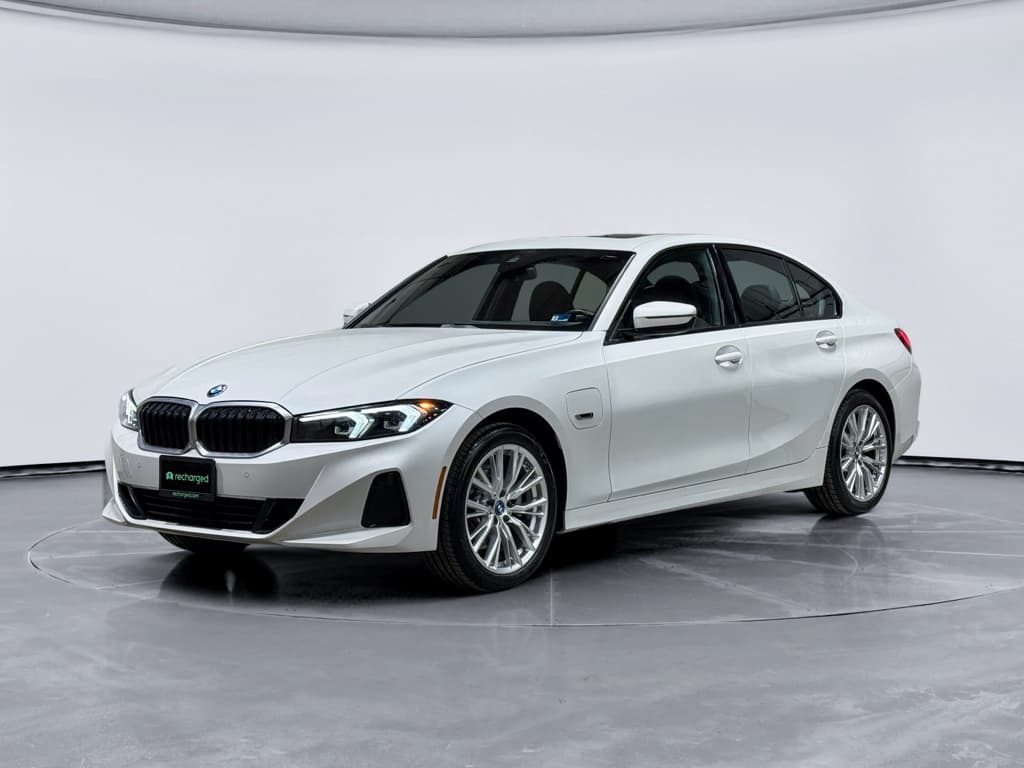
The BMW i5 is still the new kid in the 5 Series family, but the market has already decided one thing: three years is where this electric 5 Series gets interesting. If you’re wondering what a BMW i5 is worth after 3 years, whether you’re buying used or planning when to sell, this guide walks through real depreciation data, typical 36‑month values, and how to play the curve instead of being played by it.
Quick take
Why three years matters for the BMW i5
In the luxury world, three years is when many leases end. That’s when a wave of cars, often low‑mileage, well‑optioned examples, hits the used market. For a model like the BMW i5, which launched in the U.S. for 2024, the first of those cars will be maturing in late 2026 and 2027. The timing matters because EV pricing is still volatile: you’re navigating not just normal 5 Series depreciation, but also the hangover from big EV incentives and fast‑moving tech.
BMW i5 value snapshot (current estimates)
A note on the data
How much is a BMW i5 worth after 3 years?
Let’s translate the percentages into real dollars. Base MSRPs for the i5 eDrive40 in the U.S. have typically landed around the high‑$60,000s, with M60 cars often optioned well into the $80,000s. A 3‑year value in the 45–55% range means:
Illustrative 3‑year BMW i5 values
Approximate 36‑month values for typical builds, assuming normal mileage and condition.
| Model when new | Typical MSRP when new | 3‑yr value at 45% | 3‑yr value at 50% | 3‑yr value at 55% |
|---|---|---|---|---|
| i5 eDrive40 (lightly optioned) | $68,000 | $30,600 | $34,000 | $37,400 |
| i5 eDrive40 (well optioned) | $75,000 | $33,750 | $37,500 | $41,250 |
| i5 M60 (typical build) | $86,000 | $38,700 | $43,000 | $47,300 |
These are directional examples, not guaranteed offers. Options, mileage, incentives, and market swings can move actual values up or down.
In other words, a three‑year‑old i5 eDrive40 that stickered around $70,000 new is plausibly a mid‑$30,000s car by the end of year three, while a well‑equipped M60 lands in the low‑to‑mid‑$40,000s. Private‑party prices skew to the higher end of those bands; trade‑in and instant‑offer numbers skew lower to leave room for reconditioning and profit.
Look at today’s 1‑ and 2‑year data to infer year three
What actually drives BMW i5 depreciation?
The four big levers on 3‑year i5 value
Same badge, very different outcomes depending on these factors.
1. Original MSRP & discounts
The higher the original MSRP, and the heavier the discounts or incentives, the more room there is to fall. A $90,000 launch‑spec M60 that was heavily incentivized will show bigger absolute dollar losses than a modestly optioned eDrive40, even if the percentage drop is similar.
2. Mileage & usage pattern
Forecasts assume ~12,000 miles a year. A 3‑year i5 with 18,000 miles total is a different proposition than one with 45,000. Frequent DC fast charging, rideshare use, or hard urban miles all push value down faster.
3. Battery health & charging history
Unlike a gas 5 Series, the i5’s battery shows up directly in the price. Clean health reports, gentle charging habits, and modest DC‑fast‑charge use support values. Aggressive DC use and visible range loss drag them down.
4. Broader EV market swings
EV prices have been on a roller coaster. New‑EV price cuts, shifting tax credits, and aggressive lease support from BMW can all compress used values, even for clean, low‑mile cars.
The invisible discount: incentives
3‑year BMW i5 value vs other luxury EVs
BMW’s internal combustion 5 Series has historically been a slow, dignified fader, often retaining around half its value at five years in decent condition. The i5, like most luxury EVs, fades faster. Independent analyses of BMW EVs suggest three‑year losses north of 50% are common for high‑spec cars, with five‑year losses in the 60–70% range not unusual for the worst‑hit trims.
Compared with gas 5 Series
- Steeper early drop: The i5 tends to lose more in years 1–3 as tech ages and EV prices reset.
- Battery risk priced in: Buyers demand a discount for unknown battery history, even when degradation is modest.
- Running‑cost story helps later: By years 4–5, cheap energy and low maintenance help support used values.
Compared with other luxury EVs
- Mid‑pack performer: The i5 doesn’t hold value like the most in‑demand Teslas, but early data suggests it fares better than some niche luxury EV sedans.
- Brand and cabin quality: BMW’s reputation, interior quality, and the 5 Series nameplate all help keep a floor under resale.
The upside for used buyers
Leasing residuals: what BMW Financial is telling you
You don’t need a crystal ball to see how BMW itself expects the i5 to age. You just need to read the lease fine print. Recent programs on 36‑month, 10–12k‑mile i5 leases have commonly carried residuals in the low‑ to mid‑50% range, depending on trim and region. That’s BMW Financial’s best guess at what the car will be worth at three years when it comes back off lease.
How to read those BMW i5 lease numbers
Check the residual percentage
On a 36‑month lease, the residual might be quoted as 50–55%. Multiply that by MSRP to get BMW’s projected 3‑year value. For an $80,000 i5, a 53% residual implies about $42,400 after three years.
Separate MSRP from real transaction price
If the dealer discounted the car or BMW stacked incentives on top, the <strong>effective price you’re paying</strong> may be thousands under MSRP. Your true out‑of‑pocket depreciation is better than the raw MSRP‑based math suggests.
Watch for different residuals by trim
Performance variants like the M60 can sometimes carry slightly lower residuals than the base i5, reflecting higher option content and a smaller buyer pool on the used side.
Remember residuals aren’t guarantees
Residuals are targets, not promises. A white‑hot EV market or a price war can move real‑world values above or below those lease projections in three years’ time.
Thinking about buying your i5 at lease‑end?
Battery health and 3‑year value: the silent deal‑maker
On paper, two 3‑year‑old i5 eDrive40s with 30,000 miles might look identical. On the road, and in the data, they aren’t. What separates the keepers from the question marks is verified battery health and charging history.
- Most modern BMW packs show modest degradation in the first 3 years when used normally, but heavy DC fast‑charging can push losses higher.
- Buyers are increasingly asking for state‑of‑health (SoH) reports instead of just accepting the rated EPA range on faith.
- Cars with documented home Level 2 charging and occasional DC use tend to command stronger offers than cars that lived on road‑trip fast‑chargers.
How Recharged handles i5 battery health
When to buy a used BMW i5 for the best value
If you’re shopping used, you’re trying to land in the valley between “too new and expensive” and “too old and needy.” For the i5, early data suggests that valley opens up nicely right around the three‑year mark.
Where the 3‑year‑old i5 hits the sweet spot
Why many savvy buyers circle years 3–5.
Depreciation mostly baked in
The lion’s share of value loss happens in the first 36 months. By year three, the curve starts to flatten, so each additional year hurts less on a dollar basis.
Warranty still in play
BMW’s EV warranty typically covers the high‑voltage battery for many years and miles. A 3‑year‑old i5 often has ample coverage left on the pack and power electronics.
Fewer big‑ticket surprises
Unlike older gas 5 Series sedans, a relatively young i5 usually isn’t staring down transmission work, turbos, or complex emissions after‑treatment. Tires and brakes are the big consumables.
Target cars that look boring on paper
How to price or sell your 3‑year‑old BMW i5
If you’ll be the one dropping an i5 into the three‑year‑old pool, your job is to prove to a skeptical market that your car is the exception: well‑kept, healthy‑battery, no‑stories. Here’s how to stack the deck in your favor.
Checklist: Maximizing value on a 3‑year‑old i5
Document everything
Gather service records, charging history if available, and any warranty work. A thick folder of boring paperwork is worth real money in the luxury used market.
Get a battery health report
Before you list or accept an offer, get a <strong>third‑party battery health check</strong>. With Recharged, this is built into the Recharged Score, giving buyers hard data instead of guesses.
Benchmark the market, not just the guides
Look at actual listing prices for similar‑spec i5s in your region, then compare them to instant‑offer tools and dealer trade‑in quotes. Expect those offers to sit a few thousand below clean retail listings.
Decide how fast you need to sell
If time is more valuable than squeezing out every last dollar, use an instant offer or consignment service. Recharged, for example, can provide an instant offer or help list the car nationwide while handling buyer questions and paperwork.
Detail and photograph like a pro
Presentation matters more on a tech‑heavy luxury EV. Have the car professionally detailed, show the charging cable neatly coiled, and photograph the key infotainment screens, range at full charge, and included equipment.
Where Recharged fits in
Ready to find your next EV?
Browse VehiclesBMW i5 3‑year value: FAQ
Frequently asked questions about BMW i5 value after 3 years
Bottom line: Is the BMW i5 a good 3‑year value bet?
For the first owner, the BMW i5 is an indulgence with a depreciation curve to match; you buy the latest tech, the quietest cabin, the smug glow of being early to a new kind of 5 Series, and you pay for the privilege. For the second owner, though, particularly at the three‑year mark, the i5 starts to look like one of the sharper plays in the luxury EV space: half‑price hardware, plenty of warranty, and a driving experience that still feels right‑now.
Whether you’re buying a 3‑year‑old i5 or figuring out what yours is worth, focus less on generic book numbers and more on the specifics of the car in front of you: battery health, charging history, miles, options, and how it’s been cared for. Platforms like Recharged exist precisely to surface those details, pair them with transparent pricing, and give you expert EV guidance from first search to final signature, so you can enjoy the best years of the BMW i5 without getting crushed by its steepest ones.