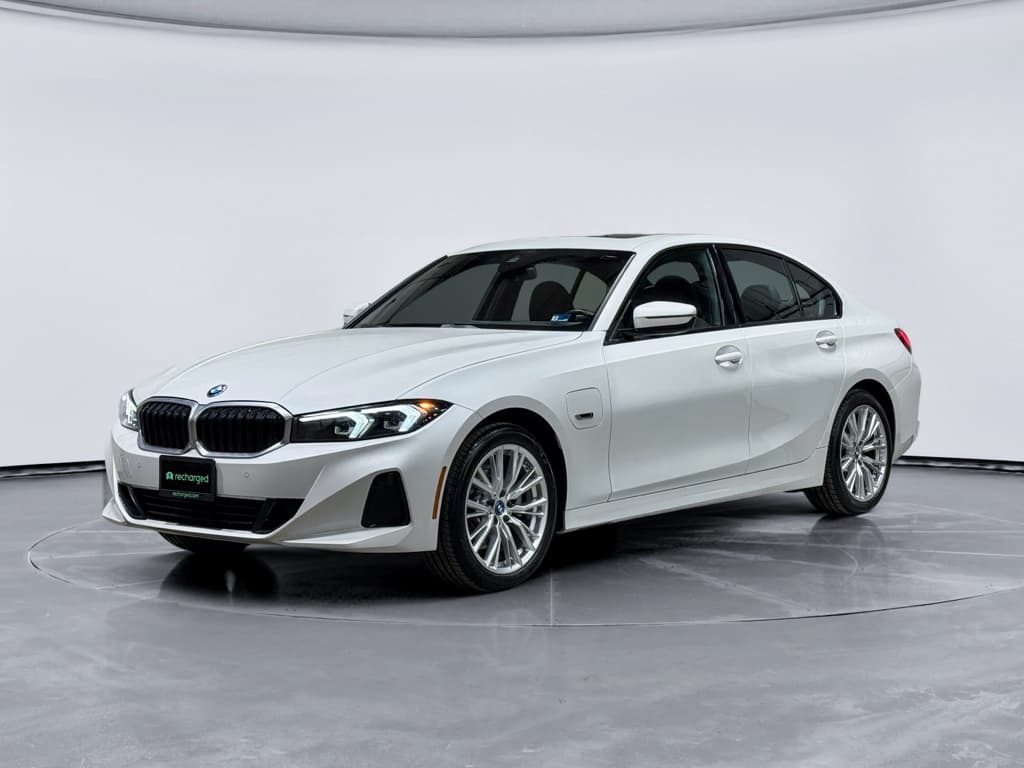
If you’re looking at a BMW i5 as a family road‑trip machine or daily luxury EV, you might also want it to tow a small camper, utility trailer, or bikes. The challenge is understanding both the BMW i5 towing capacity and range loss so you know what’s realistic before you bolt on a hitch and hit the highway.
Quick takeaway
BMW i5 towing overview
The BMW i5 is based on the current G60 5 Series platform and, unlike many early luxury EV sedans, is designed to tow when equipped with a factory tow package in markets that allow it. That’s an important distinction: in some regions BMW doesn’t recommend towing with certain trims at all, while in others it publishes clear braked trailer ratings.
- Body style options: i5 sedan and i5 Touring (wagon, currently Europe‑focused)
- Drivetrains: rear‑drive eDrive40, all‑wheel‑drive xDrive40, and high‑performance M60 xDrive
- Battery: ~81 kWh usable, shared across the range, which sets the upper bound for towing range
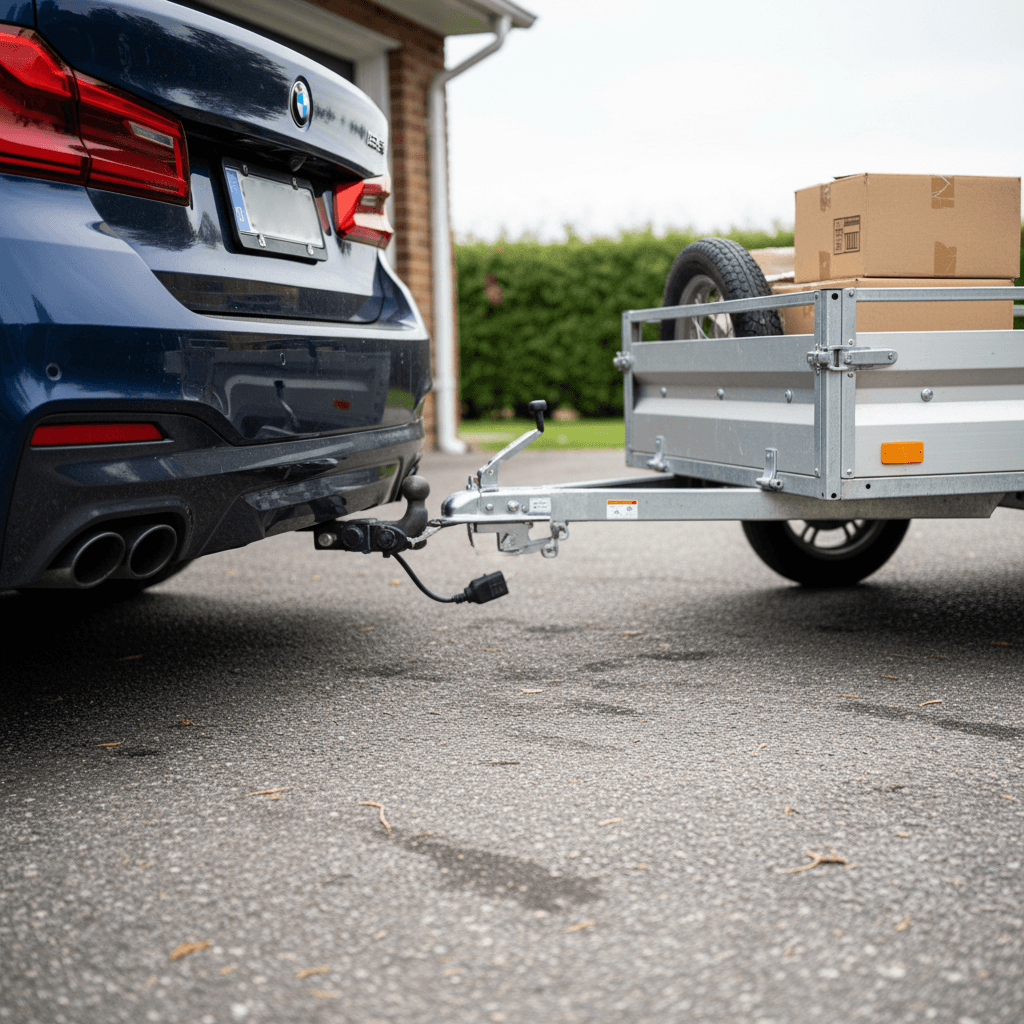
- Factory tow hitch: must be specified from the factory for full rated capacity; aftermarket hitches may legally limit you to bike racks or very light loads
Always check your specific VIN
Official BMW i5 towing capacity by model
BMW’s own data sheets and regional guides give a range of tow capacities for the i5, especially as the Touring wagon joins the lineup. Here’s how the numbers broadly stack up as of early 2026:
BMW i5 indicative tow ratings (braked trailer)
Representative factory‑published towing capacities. Exact limits depend on market, equipment, and model year.
| Model | Body style | Drivetrain | Indicative braked towing capacity | Unbraked (typically) | Notes |
|---|---|---|---|---|---|
| i5 eDrive40 | Sedan | RWD | Up to ~1500 kg (3300 lb) | 750 kg (1650 lb) | Some regional guides list “towing not recommended” for the sedan; check your manual. |
| i5 M60 xDrive | Sedan | AWD | Up to ~2000 kg (4400 lb) | 750 kg (1650 lb) | Higher tow rating thanks to dual‑motor AWD and higher GVWR in some markets. |
| i5 eDrive40 Touring | Wagon | RWD | Around 1500 kg (3300 lb) | 750 kg (1650 lb) | BMW press material for the Touring quotes 1500 kg braked capacity. |
| i5 xDrive40 Touring | Wagon | AWD | Around 1800 kg (3970 lb) | 750 kg (1650 lb) | Certain European spec sheets quote 1800 kg braked for this model. |
Use these values as a guide only, always verify your car’s own rating.
Towing “not recommended” still means no
BMW i5 towing at a glance
How much range you lose when towing
Tow ratings tell you what the car can safely pull, but what most i5 drivers really care about is how much range they’ll lose with a trailer. Because widespread, controlled towing tests for the i5 are still limited, it’s useful to look at broader EV towing data and physics.
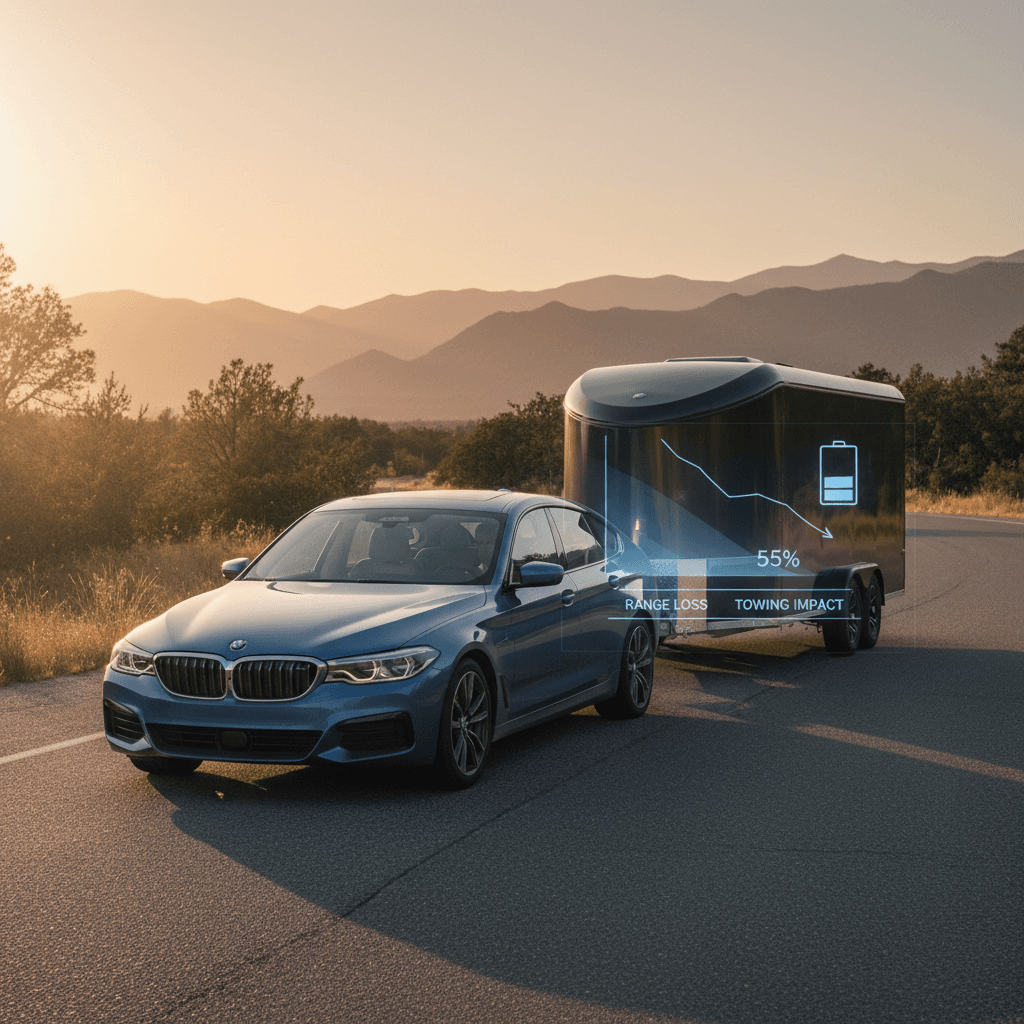
Independent towing tests of similar‑size EVs such as the BMW i4, Tesla Model Y, Kia EV6, and Hyundai Ioniq 5 show a fairly consistent pattern: towing a full‑height camper or box trailer at highway speeds typically cuts usable range by about 50–60% compared with solo driving. That’s driven by a combination of extra weight, but more importantly the huge jump in aerodynamic drag from a bluff trailer.
Typical BMW i5 range loss when towing
Approximate, assuming a healthy battery and 70–75 mph highway speeds.
Light, low trailer
Example: Small utility trailer with bikes, light cargo box, or low teardrop.
- Added weight: ~500–1000 lb
- Range impact: ~25–35% loss
- Good for: Weekend trips, local hauling
Mid‑size camper
Example: Single‑axle camping trailer near 1500–2000 kg limit.
- Added weight: ~2500–3500 lb
- Range impact: ~40–55% loss
- Good for: Shorter highway legs with careful planning
Tall box trailer
Example: Enclosed cargo trailer, high frontal area.
- Added weight: ~2000–3000 lb
- Range impact: ~50–60%+ loss
- Good for: Occasional use only; expect frequent charging stops
Aerodynamics matter more than weight
Real-world EV towing benchmarks you can apply to the i5
We can’t yet point to a large sample of instrumented BMW i5 towing tests, but we do have plenty of data from similar EVs with comparable batteries and drag profiles. Those real‑world results help us estimate what you should expect in an i5.
Benchmark 1: BMW i4 eDrive40
The i4 shares BMW’s efficiency‑first EV philosophy with the i5. In independent towing tests with a caravan matched to roughly 85% of the car’s curb weight, the i4 lost about 55–60% of its solo range. That’s right in line with what we see from other streamlined mid‑size EVs.
Because the i5 is larger, slightly heavier, and shaped more like a classic sedan than a liftback, you should expect broadly similar, or slightly worse, range efficiency when towing the same trailer at the same speeds.
Benchmark 2: Mainstream crossover EVs
Popular crossovers such as the Tesla Model Y, Kia EV6, and Hyundai Ioniq 5 routinely see 40–60% range loss when towing mid‑size campers at 60–70 mph. Drivers report real‑world legs of 90–130 miles between fast‑charge stops, even when the solo EPA range is 260–300+ miles.
The i5’s battery is in the same ballpark, so using that 90–130‑mile towing leg as a planning anchor is reasonable for most trailers at U.S. highway speeds.
A simple rule of thumb
Is the BMW i5 actually good for towing?
Whether the i5 is a “good” tow vehicle depends on what you expect from it. Compared with a diesel 5 Series Touring or a BMW X5, it’s clearly more limited. Compared with other electric sedans, though, the i5’s combination of efficiency, stability, and available factory tow prep puts it in a relatively strong position.
BMW i5 towing: strengths vs. limitations
Strengths
- High torque and smooth control from the electric drivetrain makes it easy to pull away smoothly and merge with traffic, especially in the dual‑motor M60.
- Excellent stability systems and low center of gravity help keep the car composed under load.
- Strong regen braking can take some work off the friction brakes on gentle descents.
- Comfortable grand‑tourer ride for long days on the highway between charging stops.
Limitations
- Short towing range versus ICE: plan for roughly half your solo highway range with a typical camper.
- Charging logistics: many DC fast chargers weren’t designed with trailers in mind, so you may need to unhitch.
- Tow ratings are moderate (1500–2000 kg in many specs), not full‑size SUV levels.
- Regional inconsistencies: in some markets, certain trims list towing as “not recommended,” limiting your options.
When the i5 shines as a tow car
Setting up your i5 for safe, efficient towing
Before you think about range, you need to make sure the hardware and setup are right. That starts with the hitch itself and extends to how you load the trailer and configure the car’s drive modes.
BMW i5 towing setup essentials
1. Confirm your car is rated to tow
Verify in your owner’s manual and door‑jamb label that your exact i5 trim and market allow towing, and note the maximum braked and unbraked trailer weights plus tongue weight.
2. Use a factory or OEM‑spec hitch
Whenever possible, opt for the BMW factory retractable towbar or an OEM‑approved kit. Aftermarket hitches may be fine for bike racks but could be limited or unsupported for full‑weight trailers.
3. Stay well under the maximum rating
For comfort and range, aim for <strong>60–80% of the published tow limit</strong> rather than trying to hit the maximum. This gives you headroom for passengers, cargo, and hills.
4. Mind tongue weight and loading
Keep tongue weight under ~10–15% of total trailer weight and load heavy items low and over the trailer axle. Poorly distributed weight hurts both stability and efficiency.
5. Choose the right tires and pressures
Make sure your i5 and trailer tires are rated for the load and inflated to towing pressures listed in the door‑jamb chart. Under‑inflation increases rolling resistance and heat buildup.
6. Enable any trailer or tow mode
If your region’s software includes a trailer mode, use it, it can adjust stability systems and driver‑assist behavior. If not, manually dial back lane‑change and following‑distance helpers when towing.
Watch brake and motor temps on long descents
Trip planning and charging strategy while towing
Once the hardware is sorted, the real art of towing with an EV like the i5 is trip planning. You’re trading some spontaneity for predictability: slow down a bit, stop more often, and choose chargers that actually work with a trailer.
Plan conservative legs
- Take your solo highway range, often 230–280 miles in an i5 depending on wheel size and conditions, and cut it roughly in half for a camper.
- Build in a 15–20% buffer to account for headwinds, elevation, and cold temps.
- Prefer 60–70 mph to maximize range; aerodynamic drag rises quickly above that.
Choose tow‑friendly chargers
- Look for pull‑through or end‑of‑row stalls at DC fast‑charging sites so you may not need to unhitch.
- Have a plan to drop the trailer safely if you must reverse into a space, locks and wheel chocks are your friends.
- Target 10–80% state of charge on each stop for faster DC charging and less time sitting.
Time vs. distance mindset
Does towing hurt the battery or resale value?
A common fear among new EV owners is that towing will “kill the battery.” In reality, occasional towing within the car’s rated limits is well within what BMW engineers design for. What matters more is how hot you let the pack get and how often you fast‑charge, all of which apply whether you tow or not.
- Towing does increase average power draw, which means more waste heat in the battery and motors, especially at high speeds or in hot weather.
- The i5’s thermal management system is designed to keep the battery in its preferred temperature window, meaning it will cool more aggressively under load.
- Frequent DC fast charging from high states of charge (e.g., 60–100%) is harder on the battery than fast charging between roughly 10–60% while on trips, whether towing or not.
- From a resale perspective, documented light towing is unlikely to matter nearly as much as overall battery health, service records, and cosmetic condition.
How Recharged looks at towing and battery health
Pre‑tow checklist for BMW i5 owners
Before you hitch up your trailer and point your i5 toward the mountains, run through this quick checklist. It’s aimed at keeping you safely within the car’s capabilities and avoiding range surprises.
BMW i5 towing checklist
Confirm tow rating and hitch
Double‑check that your specific i5 is rated to tow and that you’re using a factory or OEM‑spec hitch with the right ball size and class for your trailer.
Weigh your trailer
Use a public scale or tongue scale to confirm both total trailer weight and tongue weight. Adjust cargo so you’re under limits with a 10–15% tongue‑weight target.
Inspect tires, brakes, and lights
Check tread and pressures on both car and trailer tires, test trailer brakes (if equipped), and confirm all lights work before you leave.
Dial in your driving mode
Choose a comfortable, efficient mode; avoid the sportiest settings. If there’s a trailer or towing profile available in your region’s software, enable it.
Pre‑plan chargers and legs
Use an EV‑aware route planner and then mentally cut predicted arrival state of charge by 10–20% as a buffer. Fewer surprises beats one big hero leg.
Pack charging and safety gear
Bring your mobile EVSE, gloves, wheel chocks, a good lock for the trailer, and basic tools. For long trips, a tire repair kit and compressor are wise additions.
FAQ: BMW i5 towing capacity and range loss
Frequently asked questions about BMW i5 towing
The BMW i5 won’t replace a heavy‑duty SUV as a cross‑continent tow rig, but for lighter trailers and thoughtfully planned trips it can be a quiet, capable, and efficient tow partner. The key is to respect the official towing capacity, assume a substantial range loss of around half with a full‑height camper, and build your routes and charging strategy around those realities. If you’re considering a new or used i5 for double duty as a daily driver and occasional tow car, choosing the right trim, hitch, and trailer, and verifying battery health up front, will make all the difference.