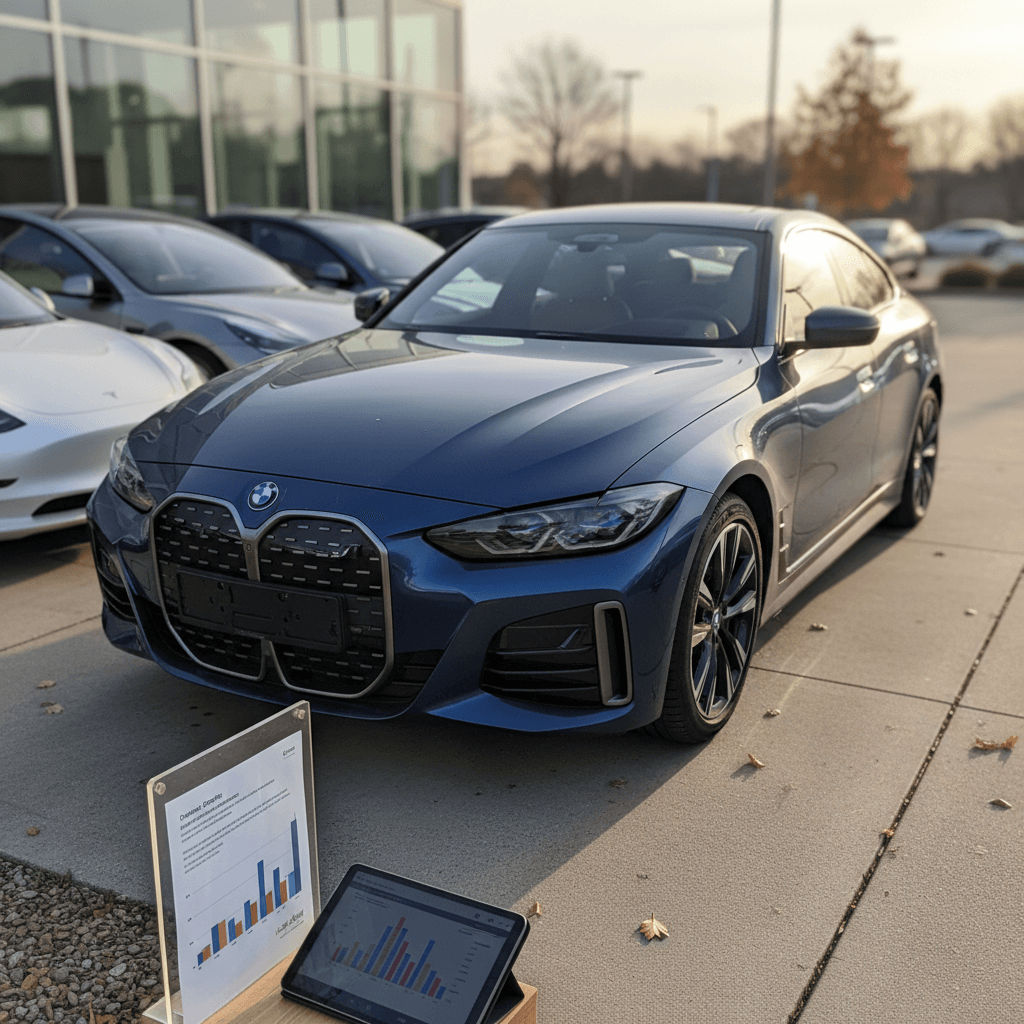
If you’re eyeing a BMW i4 in 2026, whether as a new purchase, a used bargain, or something you might sell soon, the big question is simple: **how fast does a BMW i4 depreciate, and what does that mean for your wallet?** Understanding the BMW i4 depreciation rate in 2026 can help you time your move, pick the right model year, and avoid leaving thousands of dollars on the table.
Quick context for 2026
BMW i4 depreciation rate in 2026: the short version
BMW i4 value snapshots for 2026 shoppers
In 2026, **BMW i4 depreciation looks front‑loaded**, just like most luxury EVs. You typically see the sharpest drop in the first three years as new‑car incentives, rapid technology updates, and changing EV tax rules push prices down. After that, values tend to stabilize, and condition, mileage, and battery health start to matter more than model year alone.
Rule of thumb for 2026 shoppers

How fast does a BMW i4 depreciate?
Let’s translate the BMW i4 depreciation rate into something you can actually use to make a decision. Exact numbers vary by trim (eDrive40, xDrive40, M50), options, and local market conditions, but the broad pattern for U.S. cars looks like this.
Illustrative BMW i4 value curve (original MSRP $60,000)
These are **approximate** ranges based on recent used‑market data, residual values, and typical EV depreciation behavior as of 2026. Your specific car could sit above or below this curve.
| Age of BMW i4 | Approx. retained value | Typical price range | What this feels like in the market |
|---|---|---|---|
| 1 year old (2025–2026) | ~85–90% of MSRP | $51,000–$54,000 | Nearly new, often CPO, sometimes discounted heavily if new‑car incentives were big |
| 2 years old | ~70–75% | $42,000–$45,000 | Biggest chunk of depreciation already hit; still feels “current” in tech and range |
| 3 years old | ~65–70% | $39,000–$42,000 | Many off‑lease cars arrive; buyers have plenty of choice, sellers face more competition |
| 4 years old | ~55–65% | $33,000–$39,000 | Condition, mileage and options matter more than model year; good value zone for shoppers |
| 5+ years old | ~35–50% | $21,000–$30,000+ | Heavier depreciation but bargains appear; battery health and warranty status become critical |
Think of this as a directional guide, not a quote, battery health, mileage, options, and region matter.
Depreciation varies by trim and options
Real‑world pricing data for early BMW i4 model years backs this curve up. Studies of the broader EV market show that **battery‑electric vehicles as a group still depreciate faster over five years than comparable gas cars**, especially in the luxury segments. At the same time, supply has improved, tax rules have shifted, and buyers today have far more choice than they did when the i4 debuted, factors that continue to put pressure on used values in 2026.
BMW i4 vs other EVs: where depreciation stands in 2026
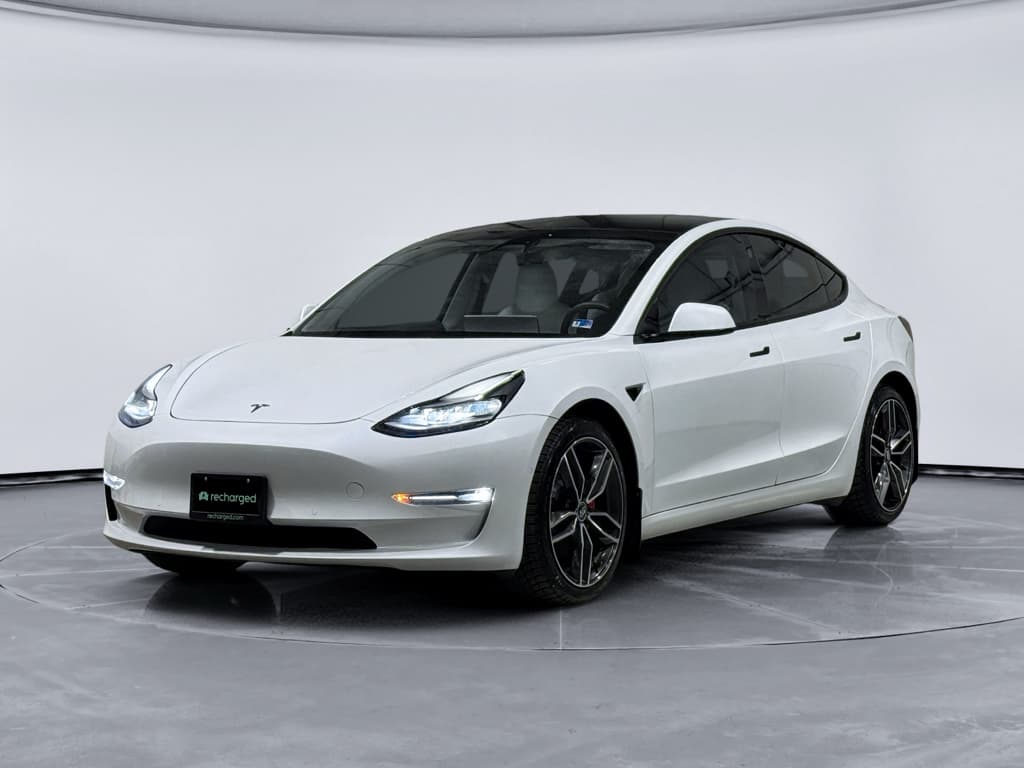
BMW i4 vs Tesla Model 3
- Tesla Model 3 has generally held value better, thanks to lower new pricing, huge brand recognition, and the Supercharger network.
- BMW i4 tends to lose a bit more over 5 years, especially heavily optioned examples, but that creates opportunity for used buyers.
- If you’re choosing purely on resale, the Model 3 still has the edge in most U.S. markets.
BMW i4 vs other luxury EVs
- Compared with some niche luxury EVs, the i4’s depreciation is **middle‑of‑the‑pack**, not the worst, not the best.
- BMW’s long EV warranty and strong dealer network help support values versus smaller brands.
- The i4’s popularity in Europe and North America makes it easier to value and finance on the used market, which also helps.
The key takeaway in 2026 is this: **the BMW i4 is no depreciation superstar, but it’s also not a disaster.** If you’re buying new and plan to sell in three years, you’ll feel that hit. If you’re buying used at three to five years old, you’re often letting the first owner absorb the worst of it while you enjoy a high‑end EV for far less than its original MSRP.
Why used shoppers should smile
What actually drives BMW i4 depreciation?
Depreciation is more than a single percentage. For the BMW i4 in 2026, there are several big levers that push values up or down. If you understand them, you can pick the right car and price, or set realistic expectations when you sell.
Major factors that shape BMW i4 resale value
Most of these are within your control if you’re buying or owning today.
Battery health & warranty
EV buyers care less about model year than about **how much real‑world range the car still has** and whether the high‑voltage battery is under warranty.
BMW’s EV battery warranty (typically 8 years/100,000+ miles for defects and excessive capacity loss) is a major value anchor.
Mileage & use pattern
All else equal, an i4 with 25,000 easy highway miles will be worth more than one with 70,000 urban miles.
EVs handle high mileage better than many fear, but the market still discounts high‑milers heavily.
Options & trim
Core options like adaptive cruise, driver‑assist packages, and upgraded audio tend to support values.
Some cosmetic extras, oversized wheels, special paints, add little at resale relative to their new cost.
Charging landscape
In 2026, the U.S. charging network is still evolving. Homes with **Level 2 charging** and easy access to fast charging nearby are more attractive to used‑i4 buyers.
Regions with better charging density often see slightly stronger EV resale values.
Market incentives & policy shifts
Deep discounts or new‑car tax incentives fire‑sale today’s new i4s, which ripples into lower used prices tomorrow.
Changes to federal or state EV incentives can quickly change what buyers are willing to pay for used examples.
Accident history & cosmetic condition
EV or not, a BMW with a serious accident on its record will struggle at resale.
Factory‑level paintwork and a clean Carfax or similar report still matter a lot to buyers.
The biggest depreciation killer: unknown battery condition
Best years and mileage bands to buy a used BMW i4
Because the BMW i4 is still a relatively new nameplate, 2026 buyers are mostly choosing among 2022–2025 model years, with 2026s just beginning to filter into the used market. Here’s how to think about the choices.
Smart buying zones for used BMW i4 shoppers in 2026
1. Target 3–4‑year‑old cars
For many shoppers, a 2022 or 2023 BMW i4 in 2026 hits the ideal mix of price and modern tech. These cars have taken their big depreciation hit but are still young in EV terms.
2. Look for under ~45,000 miles
Mileage itself doesn’t scare EV buyers the way it does with turbo gas cars, but resale data still punishes high‑milers. Under 45,000 miles on a 3–4‑year‑old i4 is a good benchmark.
3. Prioritize battery documentation
Ask for a recently run battery health or capacity report. At Recharged, every i4 listing includes a <strong>Recharged Score</strong> with verified battery diagnostics so you aren’t guessing about remaining range.
4. Check remaining warranty coverage
A car with 2–4 years of high‑voltage battery coverage remaining is easier to live with and easier to resell later. Note the in‑service date, not just the model year.
5. Don’t overpay for rare options
Individual taste options, unusual colors, niche trim packages, may not return much on resale. Pay for features that matter in everyday use: range, driver‑assist, comfort, and charging speed.
6. Shop multiple regions if possible
EV pricing can vary meaningfully between, say, Southern California and the Midwest. A nationwide platform like Recharged lets you compare BMW i4 prices across markets and have the right car delivered to your door.
Leverage nationwide used EV inventory
Leasing vs. buying a BMW i4 in 2026
Because EV depreciation is still steeper and more uncertain than for many gas cars, a lot of shoppers in 2026 ask whether they should lease a BMW i4 instead of buying one. The right answer depends on **how you feel about risk, tax incentives, and rapid tech changes.**
When leasing a BMW i4 makes sense
- You want protection from long‑term resale risk. The leasing company takes the bet on future value. If the market tanks or a new tech leapfrogs your i4, you can walk away.
- You value the latest tech. With a 3‑year lease, you’re always close to the current generation of range, charging speed, and driver‑assist tech.
- You can access embedded tax credits. In 2026, some BMW EV leases still effectively roll commercial tax credits into the lease structure, lowering your payment even when you don’t qualify for a purchase credit.
When buying (especially used) is smarter
- You drive modest miles and keep cars longer. Once you’re past the steepest depreciation window, a well‑bought used i4 can be very cost‑effective over 5–8 years.
- You want full control. No mileage caps, no turn‑in inspection, and you can sell or trade whenever it suits you.
- You’re value‑focused. In 2026, many used i4s already reflect heavy depreciation, so your **annual cost of ownership can be very competitive** with a new car lease.
A note on lease residuals
Selling or trading in your BMW i4: timing and strategy
If you already own a BMW i4 and you’re thinking about selling or trading it in during 2026, a bit of timing and preparation can easily swing your outcome by several thousand dollars. Here’s how to approach it.
- Aim to sell between years 2 and 4 if you want to maximize price while keeping the process relatively easy. Younger cars with warranty remaining attract more private‑party and dealer interest.
- If you’re close to the end of your battery or comprehensive warranty, consider selling **before** that expiration date, it’s a psychological line in the sand for many buyers.
- Get a fresh tire and brake inspection and cosmetic detail before listing; for higher‑end EVs like the i4, presentation really does move the needle.
- Gather paperwork: service records, recall documentation, and especially any battery health report. The more confidence a buyer has, the less they haggle.
- Compare multiple exit paths: instant cash offers (including from platforms like Recharged), dealer trade‑ins, and private sale pricing. In 2026, EV pricing is dynamic, don’t assume last year’s rules still apply.
How Recharged can help on the sell side
How Recharged evaluates BMW i4 value & battery health
Traditional pricing guides were built for gas cars. They’re still useful, but electric vehicles layer on a new dimension: **battery condition and charging behavior**. That’s why Recharged doesn’t just look at options lists and mileage when we price a BMW i4 for our marketplace.
Inside a BMW i4 valuation at Recharged
Why two similar‑looking i4s can be priced thousands apart.
1. Battery & charging diagnostics
Using our Recharged Score process, we pull detailed data from the car’s battery management system to understand:
- Estimated remaining capacity vs. when new
- Fast‑charging vs. home‑charging patterns
- Any fault codes or anomalies in charging behavior
That directly shapes how we view depreciation on a given car.
2. Market & condition benchmarking
We blend battery health with:
- Real‑time nationwide sales data for comparable BMW i4s
- Trim, options, mileage, and accident history
- Regional EV demand and available incentives
The result is a price that reflects today’s market, not last quarter’s averages.
Ready to find your next EV?
Browse VehiclesFor buyers, this means you’re not guessing about whether a “good deal” is good because the seller is generous, or because the battery has quietly given up more capacity than you’d like. For sellers, it means a well‑cared‑for i4 can stand out instead of being lumped in with every other one‑owner trade‑in on a generic listing site.
FAQ: BMW i4 depreciation in 2026
Frequently asked questions about BMW i4 depreciation
Depreciation doesn’t have to be a mystery, or a nasty surprise, if you’re looking at a BMW i4 in 2026. Understand that the car sheds the most value in its first three years, recognize that battery health and warranty coverage now matter as much as mileage, and shop thoughtfully in that 3–5‑year‑old window if you’re value‑focused. Whether you’re buying, selling, or simply planning your next move, using real‑world depreciation patterns to guide your timing can turn the BMW i4 from a question mark into a smart, predictable part of your EV ownership journey.