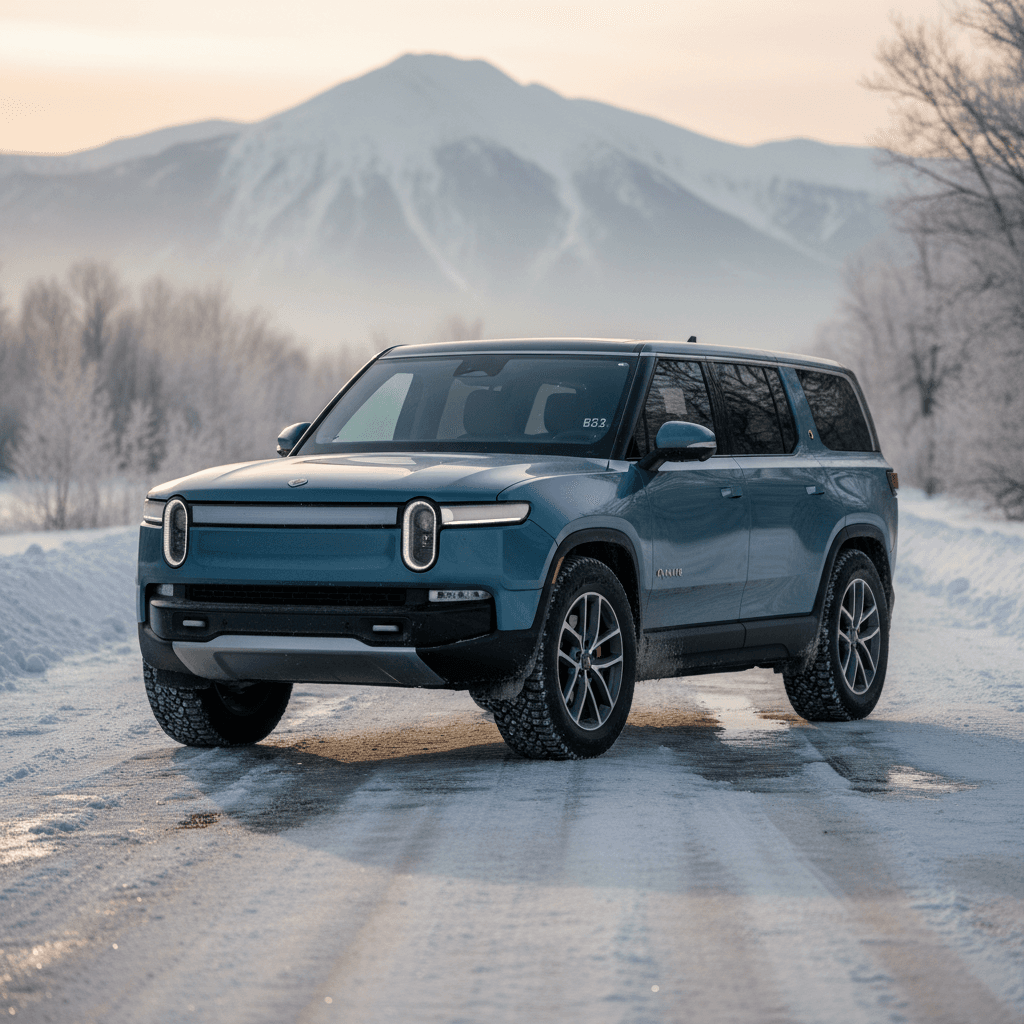
If you live where winter actually means snow, ice, and long stretches below freezing, you’re right to wonder about Rivian R1S winter range loss percentage. EVs are famously less efficient in the cold, and the R1S is a big, powerful SUV. The good news: once you understand what’s normal and how to drive around it, winter range loss becomes something you manage, not something that ruins every trip.
The short answer
Rivian R1S winter range loss at a glance
Typical Rivian R1S winter range impact
Those percentages are based on a mix of independent testing, Rivian community data, and Recharged’s own highway and winter driving impressions of the R1S. They’re not one-size-fits-all rules, but they’re a solid planning baseline if you’re trying to decide whether an R1S will work for your winter commute or ski trips.
Why your Rivian R1S loses range in winter
Cold-weather range loss isn’t a Rivian problem; it’s a physics problem. Every modern EV sees reduced range in winter, and a heavy, high-performance SUV like the R1S simply has more mass and air resistance to push through that cold air.
Four main reasons EVs lose range in the cold
Understanding these makes the percentages feel a lot less scary.
1. Cold batteries are less efficient
2. Cabin heat uses a lot of energy
3. Higher rolling and air resistance
4. Short trips with cold-soaked components
Don’t confuse winter loss with battery degradation
Typical Rivian R1S winter range loss percentages
Let’s put some numbers to the phrase “Rivian R1S winter range loss percentage.” EPA range is a warm-weather lab test. What matters for you is real-world winter range on the specific R1S you’re driving.
Rivian R1S winter range loss: ballpark numbers
Approximate winter range and loss percentages for common R1S setups, assuming healthy battery and efficient driving.
| Configuration | EPA Rated Range (21" wheels) | Mild Winter (30–40°F) | Typical Winter (10–30°F) | Harsh Cold (0°F & below) |
|---|---|---|---|---|
| Dual-Motor Large Pack | ≈350 mi | 260–280 mi (~20% loss) | 230–260 mi (~25–35% loss) | 190–220 mi (~35–45% loss) |
| Dual-Motor Max Pack | ≈400 mi | 300–320 mi (~20% loss) | 260–300 mi (~25–35% loss) | 220–250 mi (~35–45% loss) |
| Quad-Motor Large Pack | ≈320 mi | 235–255 mi (~20% loss) | 210–240 mi (~25–35% loss) | 180–210 mi (~35–45% loss) |
Use these numbers as planning tools, not promises. Your results will vary with speed, tires, elevation, and driver habits.
Again, these are directional examples, not guarantees. The key takeaway is that seeing about one‑third less range in a real winter is normal, especially at highway speeds. If you plan based on 60–70% of the EPA number in cold weather, you’ll rarely be surprised.
A simple winter planning rule of thumb
Real-world Rivian R1S winter range examples
Numbers on a chart are useful; examples are better. Here are a few realistic R1S winter scenarios that line up with what owners and testers report.
- Suburban commuter, Dual‑Motor Large Pack, 30°F: 25‑mile each-way commute, mostly 35–55 mph, car parked outside. With scheduled preconditioning while plugged in and moderate cabin temps, many owners see 20–25% loss versus summer, so a 350‑mile EPA R1S behaves more like a 260–280‑mile SUV.
- Ski weekend highway run, Dual‑Motor Large Pack, 15°F: 180‑mile drive each way, 70–75 mph, winter tires, some elevation. With battery preconditioned for the first fast charge and speeds kept reasonable, plan on 25–35% loss, or ~220–260 real miles between comfortable fast‑charge stops.
- Short‑hop errands, Quad‑Motor Large Pack, 5–10°F: Multiple 3–10 mile trips in town, R1S parked outside between drives. The car repeatedly heats the pack and cabin, so you might see 40%+ loss and shockingly low mi/kWh, but that doesn’t mean the highway range would be that bad on a single long trip.
- Deep-cold road trip, Max Pack, -5°F with wind: Long Interstate stretches at 75+ mph into a headwind can push losses toward the high end of the range, around 35–45%, especially if you don’t slow down or precondition. The upside of the Max pack is that even 60% of 400 miles is still meaningful road‑trip range.
Key factors that change your winter range
What moves your winter range up or down?
Same SUV, wildly different results depending on these variables.
Speed
Temperature
Preconditioning
Tires & wheels
Elevation & wind
Driving style & modes
Beware of “one-number” expectations
How to protect range in a Rivian R1S winter
You can’t change physics, but you can stack the deck in your favor. Here are practical, Rivian‑specific ways to reduce winter range loss and make those percentages work for you instead of against you.
Practical Rivian R1S winter range tips
1. Precondition while plugged in
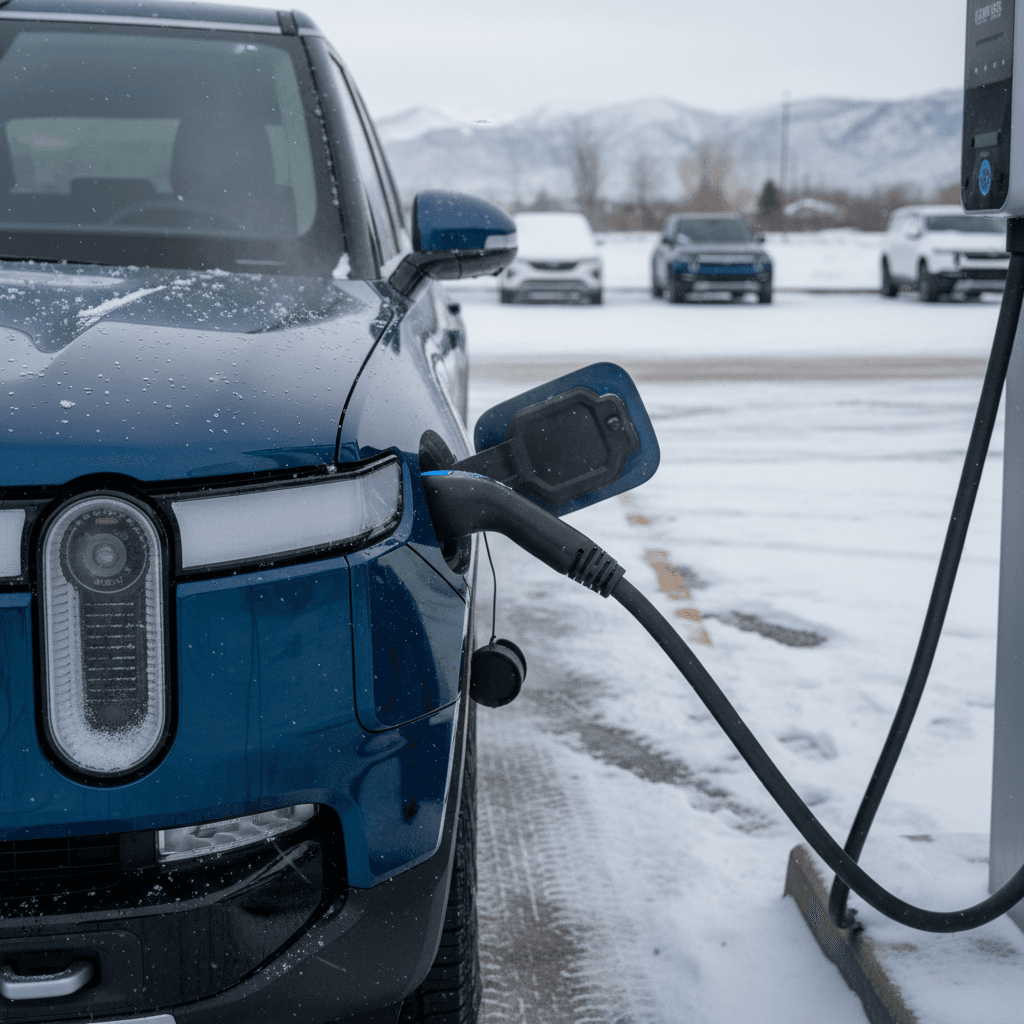
Use the Rivian app’s climate scheduling and, when heading to a DC fast charger, set it as a destination so the vehicle warms the battery on grid power. Starting with a warm pack reduces both range loss and charging time.
2. Use seat and wheel heaters first
Cabin heat pulls more power than seat and steering‑wheel heaters. You’ll stay just as comfortable if you set the cabin a few degrees lower and let those localized heaters do more of the work.
3. Choose efficient tires and wheels
If you’re range-sensitive, consider 21" wheels with all‑season or efficiency‑oriented winter tires instead of chunky all‑terrains. That can reclaim a meaningful chunk of winter range without changing how you drive.
4. Keep your R1S plugged in
When temperatures plunge, leaving the SUV plugged in lets the car manage pack temperature without eating deeply into your state of charge. It also means preconditioning is available when you’re ready to leave.
5. Plan for fewer, longer trips
If possible, combine errands so you’re making one longer trip in a warm vehicle instead of multiple short hops with a cold battery. That minimizes the repeated warm‑up penalty that makes city winter efficiency look terrible.
6. Moderate highway speeds
On a cold, windy day, dropping from 75 mph to 65 mph can make as much difference as changing wheels or tires. When in doubt, trade 10–15 minutes of trip time for a healthier range buffer.
Set realistic, not pessimistic, expectations
Planning winter road trips in a Rivian R1S
The R1S is built for adventure, and that doesn’t stop when the temperature drops. But winter road‑trip planning is different from summer range‑bragging. You want to think in legs and buffers, not just the biggest number on the window sticker.
Step 1: Base your route on winter range, not EPA
Take your EPA number and multiply by about 0.65–0.7. Then, in your preferred trip planner or the in‑car navigation, space DC fast‑charge stops inside that number, not right on it. For a 350‑mile EPA R1S, that means planning winter legs around 220–240 miles, max.
Step 2: Build in time, not stress
Accept that your average speed over a winter day, counting charging and slower conditions, will be lower than in July. If you budget an extra 15–30 minutes per 200 miles for charging and weather delays, you can relax instead of staring at the state-of-charge gauge.
Winter road trip playbook for R1S owners
Confirm chargers along your route
Use Rivian’s built‑in navigation plus third‑party apps to validate that fast chargers on your route are working and accessible in winter. Favor well‑maintained sites near major roads and services.
Precondition before key fast‑charge stops
On freezing days, navigate to your chosen fast charger 30–60 minutes before you arrive so the pack is warm. That keeps you closer to the advertised kW speeds and cuts down on long, cold charging sessions.
Arrive with a healthy buffer
Aim to reach chargers with <strong>15–25% state of charge</strong> in winter, especially when climbing or in remote areas. That gives you margin for unexpected detours, winds, or station issues.
Know your worst-case leg
Identify the longest, steepest, or coldest stretch of your route and plan that leg around the lower end of your expected winter range. If that works on paper with a buffer, the rest of the day typically feels easy.
Use cabin settings strategically
Before you leave a charger, warm the cabin while still plugged in, then rely more on seat and wheel heaters on the road. That way, you’re spending the charger’s power, not your battery’s, on comfort.
How Recharged can help on the planning side
Used Rivian R1S buyers: winter range checklist
If you’re considering a used Rivian R1S, especially in a cold‑weather region, you want to know not only how far it went when it was new, but how it will behave now, in your actual climate and driving pattern.
Questions to ask before buying a used R1S for winter
What’s the exact battery and motor configuration?
A Dual‑Motor Large Pack R1S has very different winter legs than an older Quad‑Motor with different wheels. Clarify battery pack (Standard, Large, Max), motor layout, and wheel size before you start estimating winter range.
How has the vehicle been used and stored?
An R1S that lived its life garaged and mostly charged at home is likely to have a healthier pack, and a less stressful winter, than one that spent years fast‑charging daily and sitting cold‑soaked in a lot.
What does the battery health report say?
On Recharged, every R1S comes with a <strong>Recharged Score battery health report</strong>, so you’re not guessing whether an older pack is still close to its original capacity. That turns winter range planning from guesswork into math.
Are the tires appropriate for my climate?
If you’re buying in Arizona and moving the SUV to Colorado, you may inherit all‑terrain or summer‑biased tires. Budget for winter‑capable, efficiency‑minded tires that match your typical roads and temperatures.
Can I charge at home where it’ll be parked?
Home Level 2 charging in a garage is almost a cheat code for winter EV ownership. It makes preconditioning painless and keeps the pack from getting brutally cold between drives.
What’s my real daily winter use case?
Write down your longest and most frequent winter drives. If your typical cold‑weather day is 120 miles or less, even with 30% loss, most R1S configurations will handle it comfortably, especially with home charging.
FAQ: Rivian R1S winter range loss
Frequently asked questions about Rivian R1S winter range
Bottom line: is Rivian R1S winter range a dealbreaker?
For most drivers, the Rivian R1S’s winter range loss is something to respect and plan around, not a reason to avoid the SUV entirely. If you assume about 25–35% winter range loss, build in a buffer on cold road trips, and take advantage of preconditioning and home charging, an R1S remains one of the most capable all‑electric family and adventure SUVs you can buy for real winter climates.
If you’re considering a used R1S, especially in a snow‑belt state, pairing this understanding of winter range with a verified battery health report is the smartest way to shop. Every vehicle listed on Recharged includes a Recharged Score with battery diagnostics, transparent pricing, and EV‑specialist guidance, so you can choose the right Rivian for your winters with your eyes wide open.