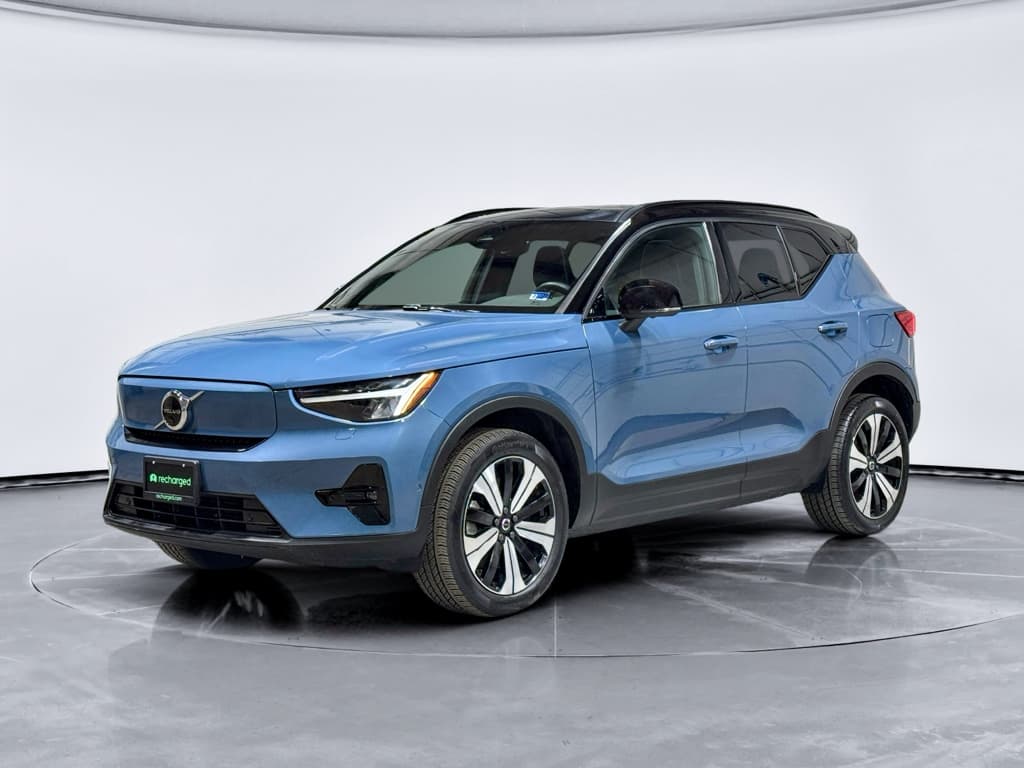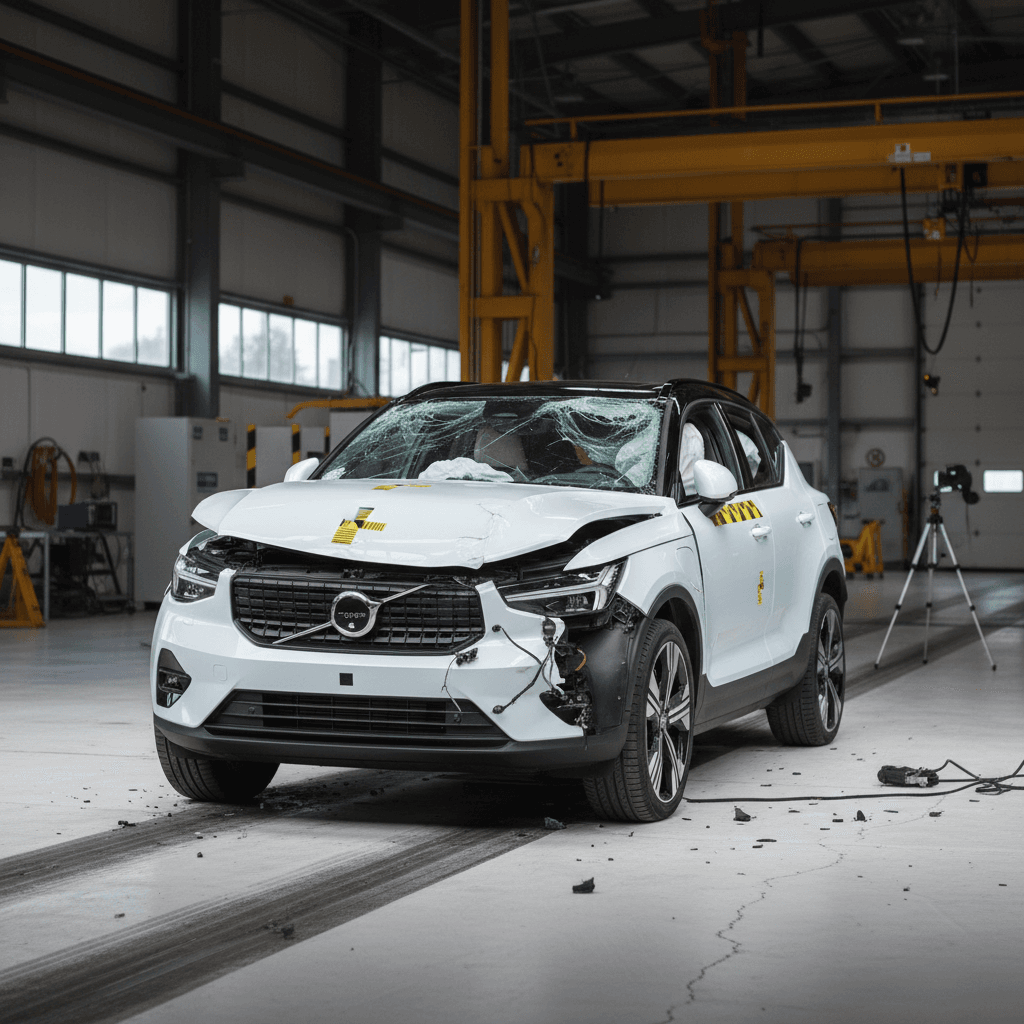
If you’re looking at a Volvo C40 Recharge, you’re probably the sort of person who reads the crash-test labels on the back of the cereal box. The good news: when you dig into the **Volvo C40 Recharge safety rating and crash test data**, it mostly reads like you’d expect from the brand that practically invented the three‑point seat belt. But there are also some nuances, especially a recent brake recall, that any smart buyer should understand.
Quick safety snapshot
Why the Volvo C40 Recharge’s Safety Story Matters
Electric crossovers all make similar promises: silent, quick, and safe. But not all EVs walk the walk when they meet a barrier at 40 mph. The **C40 Recharge** lives in a crowded neighborhood, Ford Mustang Mach‑E, Hyundai Ioniq 5, Tesla Model Y, and safety ratings have become one of the key ways to separate the merely competent from the genuinely confidence‑inspiring. If you’re considering a used C40 Recharge, understanding the crash‑test data and recent recall history is just as important as knowing its range and charging speed.
- You want to know how it protected dummies in independent crash tests, not just in the brochure.
- You care whether its driver‑assist systems can actually prevent or mitigate crashes.
- You’re shopping used and want to be sure earlier model years have all safety updates installed.
- You may be cross‑shopping with other EVs and want an apples‑to‑apples safety comparison.
Safety tip for EV shoppers
Crash-Test Overview: How the C40 Recharge Is Rated
Volvo C40 Recharge headline safety scores
On paper, the C40 Recharge checks all the right boxes: **top-tier crash protection**, robust active safety, and Volvo’s usual obsession with protecting people inside and outside the car. The only real asterisk is the brake recall on select model years, which is a software and calibration story rather than a fundamental structural flaw.
IIHS Safety Ratings for the Volvo C40 Recharge
In the United States, the IIHS rating is the de facto safety Yelp review, and the **Volvo C40 Recharge earned a Top Safety Pick+** award soon after launch. That “plus” is important: it means not just strong crash performance, but also consistently good headlights and effective crash‑avoidance tech across trims.
IIHS crash-test performance for C40 Recharge (2022+ U.S. models)
Summary of major IIHS evaluations for the Volvo C40 Recharge. Ratings may vary slightly by model year and equipment, so always confirm specifics on the IIHS site for the exact year you’re considering.
| Test / Feature | Result | What it means for you |
|---|---|---|
| Moderate overlap front | Good | Strong overall protection in a classic head‑on crash scenario. |
| Driver-side small overlap front | Good | Structure and airbags did their job in a demanding offset impact. |
| Passenger-side small overlap front | Good | Right‑front passenger gets similar protection to the driver. |
| Side impact (updated test) | Good or Acceptable, depending on year | Later models perform well in the tougher side test that simulates an SUV hitting you at an angle. |
| Roof strength & head restraints | Good | Lower risk of injury in a rollover or rear‑end collision. |
| Front crash prevention (vehicle‑to‑vehicle) | Superior | The autonomous emergency braking system avoided collisions in both 12 mph and 25 mph tests. |
| Front crash prevention (pedestrian, day) | Advanced | The system reduced or avoided impact in most day‑time pedestrian scenarios; cyclist performance was particularly strong. |
| Headlights | Good (with specific LED units) | Consistently good illumination and glare control, a requirement for the “+” award. |
IIHS ratings use a four‑step scale: Good, Acceptable, Marginal, Poor.
What “Top Safety Pick+” really means
Euro NCAP & ADAC Results: Europe’s Verdict
Across the Atlantic, **Euro NCAP** put the C40 Recharge through its own ordeal in 2022 and came away impressed enough to award a **5‑star overall rating**. Volvo PR, perhaps not surprisingly, called it a continuation of the brand’s “five‑star streak,” and for once the marketing isn’t overselling it.
Euro NCAP scores for Volvo C40 Recharge (2022 tests)
Euro NCAP uses a percentage‑based scoring system in four main areas. Here’s how the C40 Recharge performed and what it means in plain language.
| Category | Score (approx.) | Takeaway |
|---|---|---|
| Adult Occupant Protection | High 80s–Low 90s (%) | Strong crash protection for front‑seat adults with good control of dummy movement and low injury readings. |
| Child Occupant Protection | Around 90–100% (full crash points) | ADAC notes 16/16 points in frontal and 8/8 in side impacts for children, plus easy installation for approved child seats. |
| Vulnerable Road Users (Pedestrians & Cyclists) | Around 70% | Good leg protection and largely Good/Adequate head protection; the car’s AEB system responds to pedestrians and cyclists with generally solid performance. |
| Safety Assist | Mid‑80s (%) | A broad suite of standard assistance systems: lane keeping, speed assist, driver‑monitoring, and autonomous emergency braking. |
Scores summarized from Euro NCAP and ADAC publications; exact percentages can vary slightly by configuration.
Germany’s **ADAC**, which dissects Euro NCAP results in excruciating detail, also highlights that **all approved child‑restraint types can be properly installed** in the C40. That’s the boring, wonderful kind of sentence you want to read if you’re mounting a rear‑facing seat behind the passenger.
The Brake Recall: What Happened and What to Check
Safety isn’t just about how a car behaves when it hits a barrier in a lab. In 2025, Volvo issued an urgent **“Do Not Drive” warning and recall** for several plug‑in hybrid and EV models, including certain **2023 C40 Recharge** units and later EC40/EX40 derivatives, due to a rare but serious brake issue related to regenerative braking.
- Under specific conditions, roughly a minute and forty seconds of continuous high regen, the friction brakes might not engage correctly.
- In the worst case, this could lead to a temporary **loss of hydraulic braking** until the system resets, which is obviously unacceptable from a safety standpoint.
- Volvo’s remedy is a **software update** delivered either over‑the‑air (OTA) or at the dealer. Owners who haven’t received or installed the update were told not to drive the vehicle.
If you already own a C40 Recharge
What this means for used‑EV shoppers
Key Active Safety Systems on the C40 Recharge
Volvo knows that the best crash is the one that never happens. The C40 Recharge ships with a thick catalog of active safety systems as standard or widely available, many branded under polite‑sounding names that belie how aggressively they intervene when physics is about to get interesting.
Core active safety features on the Volvo C40 Recharge
These systems work in the background every time you drive.
Autonomous Emergency Braking (AEB)
Volvo’s forward‑collision warning with full auto brake watches the road ahead using radar and camera. It can:
- Warn you of an imminent crash with vehicles, pedestrians, or cyclists.
- Automatically apply the brakes to avoid or mitigate impact.
- Earned Superior (vehicle) and Advanced (pedestrian) IIHS ratings in early C40 tests.
Lane Keeping Aid & Oncoming Lane Mitigation
Lane‑keeping tech nudges the car back if you begin to drift over a line without signaling. In more serious cases, oncoming lane mitigation can steer you away from a head‑on path if you start drifting into the face of traffic.
Pilot Assist (Lane-Centering Cruise)
On equipped trims, Pilot Assist blends adaptive cruise with gentle steering support to keep you centered in your lane at a set distance from the car ahead. It’s meant for highways, not for checking your email, and it will complain if your hands leave the wheel for long.
BLIS with Cross-Traffic Alert
Volvo’s blind‑spot information system watches the lanes beside you. If a car or bike is in your blind spot, a light in the mirror glows; if you still start to move over, the steering can subtly resist the maneuver. Cross‑traffic alert with auto‑brake helps when reversing out of parking spots with poor visibility.
Adaptive Cruise Control
Standard or available depending on year/trim, adaptive cruise maintains a selected speed and time gap to the vehicle in front, braking and accelerating smoothly in traffic.
Road Sign & Slippery Road Information
Front cameras read many speed‑limit and road‑sign markings and can display them in the cluster. A slippery‑road alert can warn you (and sometimes others via cloud data) about low‑grip conditions, encouraging earlier and gentler inputs.
How to get the most from driver assists
Passive Safety: Structure, Airbags & Child Protection
Underneath the stylish, coupe‑ish roofline, the C40 Recharge is fundamentally a safety cage on wheels. Volvo leans on high‑strength steel and clever load paths to route crash energy around the passenger cell, and the battery pack is cradled in a reinforced structure to keep high‑voltage components out of the impact zone.
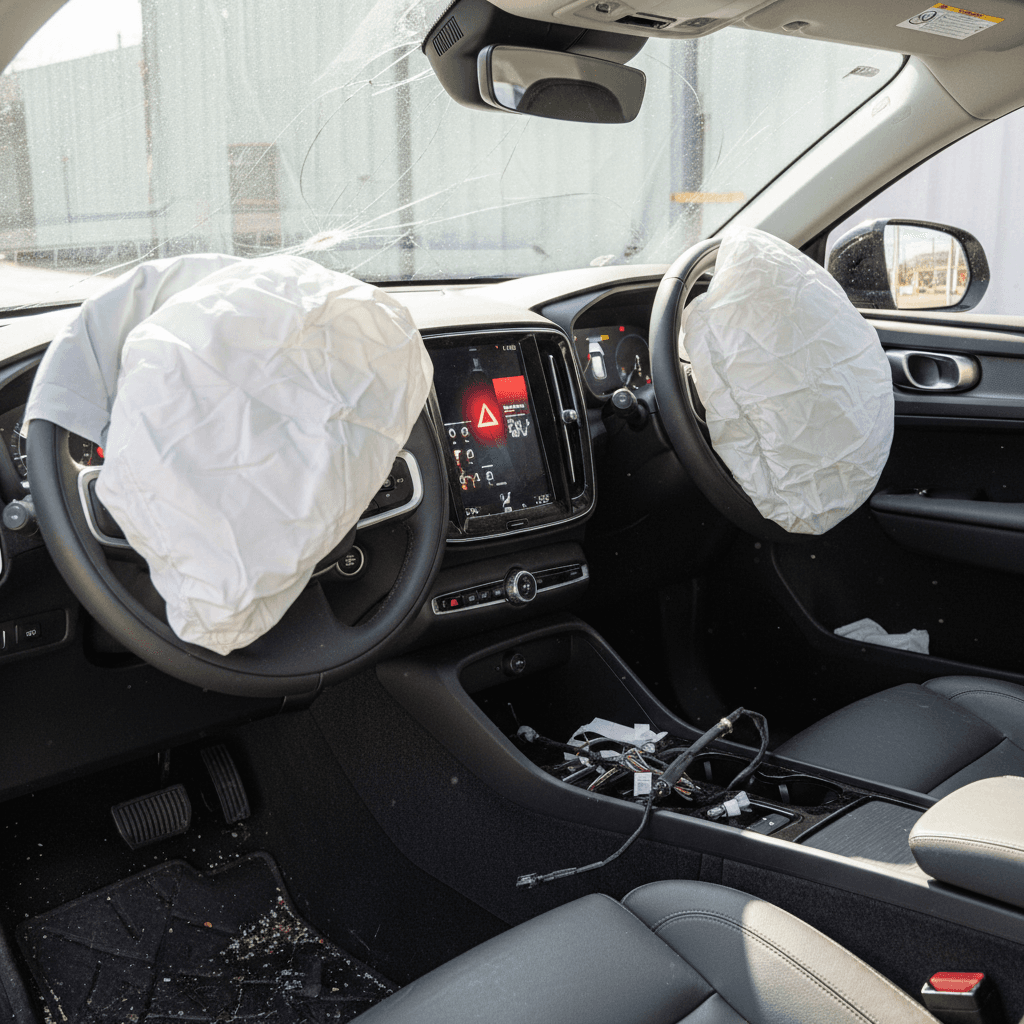
- Multi‑chamber front airbags for driver and passenger, tuned for different impact severities.
- Side airbags integrated into the front seats and full‑length curtain airbags to protect heads in side impacts and rollovers.
- Front and rear pretensioning seatbelts with load limiters to manage chest forces.
- Strong roof and pillars that contributed to Good IIHS roof‑crush scores.
- Dedicated front structures to manage impacts with pedestrians and cyclists.
Child safety and seat installation in the C40 Recharge
What Euro NCAP and ADAC testing tells parents.
Crash protection for children
ADAC’s breakdown of the Euro NCAP tests shows the C40 Recharge scoring full points for child occupants in both frontal (16/16) and side (8/8) impact tests. That means dummy readings for a 6‑year‑old and 10‑year‑old child in booster seats stayed comfortably within safe thresholds.
Child-seat installation
Testers reported that all approved child‑restraint types could be properly installed and accommodated. ISOFIX/LATCH anchor points are sensibly located, and there’s adequate space in the second row for rear‑facing seats, though very tall front passengers may need to adjust their seat position.
Rear-facing as long as possible
How the C40 Recharge Compares to Other Electric SUVs
Think of the C40 Recharge as the safety nerd of the class, not the quickest, not the longest‑range, but the one that packs a quiet seriousness about crash protection. Here’s how it stacks up against common EV crossovers you might also be considering.
Safety comparison: Volvo C40 Recharge vs key EV rivals
High‑level look at safety positioning in the compact EV SUV segment. Always check current data for exact model years you’re cross‑shopping.
| Model | Crash-Test Story | Active Safety Tech | Notable Caveats |
|---|---|---|---|
| Volvo C40 Recharge | IIHS Top Safety Pick+; 5‑star Euro NCAP; strong child and pedestrian scores. | Rich standard safety suite; Pilot Assist available; robust AEB and lane‑keeping. | Brake‑software recall on certain years; always verify updates. |
| Tesla Model Y | Strong IIHS crash results and Top Safety Pick+ on many builds. | Powerful but sometimes erratic driver‑assist behavior with Autopilot/FSD; frequent OTA changes. | Varying IIHS headlight and camera performance by year; driver‑monitoring philosophy is more hands‑off than Volvo’s. |
| Ford Mustang Mach‑E | Generally Good IIHS crash scores; some trims Top Safety Pick or +. | Co‑Pilot360 suite offers AEB, lane‑keeping, available BlueCruise hands‑free on mapped highways. | Some trims lose out on top awards due to headlight ratings; software maturity varies by year. |
| Hyundai Ioniq 5 | Excellent crash scores and strong Euro NCAP performance; many trims earn top U.S. awards. | High‑performing AEB, lane‑keeping and highway assist with robust driver monitoring. | 24/7 OTA rollout is evolving; styling compromises some rear visibility, making cameras critical. |
Ratings and awards evolve as tests are updated, but this reflects the general pecking order.
Volvo’s safety philosophy
Volvo tends to tune its systems conservatively. The car buzzes and flashes earlier than some rivals when you drift over a line or close on a slower car, and Pilot Assist is quick to demand your hands on the wheel. The brand’s goal is not just to protect you in a crash, but to **discourage you from getting into marginal situations in the first place**.
How that translates on the road
On a highway run, the C40 Recharge feels almost preemptively concerned about your welfare: gentle but firm lane corrections, progressive braking, and clear visual warnings. If you like a car that takes an active interest in your survival, this is very much your flavor of crossover.
Used Volvo C40 Recharge Safety Checklist
If you’re eyeing a **used C40 Recharge**, especially a 2022–2024 example, you’re operating in that sweet spot where depreciation has done you a favor but modern safety tech hasn’t gone stale. Here’s how to sanity‑check safety before you buy.
Pre‑purchase safety checklist for a used C40 Recharge
1. Confirm open recalls and software updates
Ask the seller for a printout of completed recalls and software campaigns, or call a Volvo dealer with the VIN. Make sure any **brake‑related recall** and critical driver‑assist updates have been applied.
2. Inspect ADAS sensors and cameras
Look closely at the front bumper radar panel, windshield camera area, and side‑mirror housings. Cracks, windshield replacements, or badly repaired bodywork can knock safety systems out of calibration.
3. Test-drive the driver-assistance suite
On a well‑marked road, verify that adaptive cruise, lane keeping, blind‑spot alerts, and Pilot Assist (if equipped) all behave as expected. Warnings should be clear but not random or constantly triggered without cause.
4. Check airbags & seatbelt warning lights
When you power up, all airbag and seatbelt lights should illuminate briefly and then go out. Persistent warning lights or messages about safety systems are a red flag that warrants a diagnostic scan.
5. Evaluate child-seat fit, if relevant
If you have kids, bring your actual child seats. Test install them on both outboard rear positions, confirming ISOFIX/LATCH accessibility and front‑seat legroom with the seats in place.
6. Review crash history carefully
A structurally repaired car can still protect you well, but sloppy work can compromise crumple zones and sensor alignment. At Recharged, structural repairs and safety‑system diagnostics are part of the inspection that feeds into each car’s **Recharged Score Report**.
How Recharged approaches C40 safety
Ready to find your next EV?
Browse VehiclesVolvo C40 Recharge Safety FAQs
Frequently asked questions about Volvo C40 Recharge safety
Bottom Line: Is the Volvo C40 Recharge a Safe Buy?
If you boiled the **Volvo C40 Recharge safety rating and crash test** story down to a single line, it would be this: structurally and electronically, this is one of the safest compact electric SUVs on sale, with a serious, science‑backed approach to protecting people both inside and outside the car. The brake‑recall episode is a sobering reminder that no modern EV is entirely drama‑free, but handled properly, with software fully up to date, it doesn’t negate the C40’s underlying strengths.
For shoppers, that means you can confidently put the C40 Recharge on your shortlist, especially if you value a **calm, conservative safety philosophy** over flashy autonomy claims. And if you’re browsing the used market, pairing Volvo’s engineering with a **Recharged Score Report**, including verified battery health, recall status, and safety‑system checks, turns this stylish little coupe‑SUV into exactly what it looks like: a smart, safe, future‑proof daily driver.