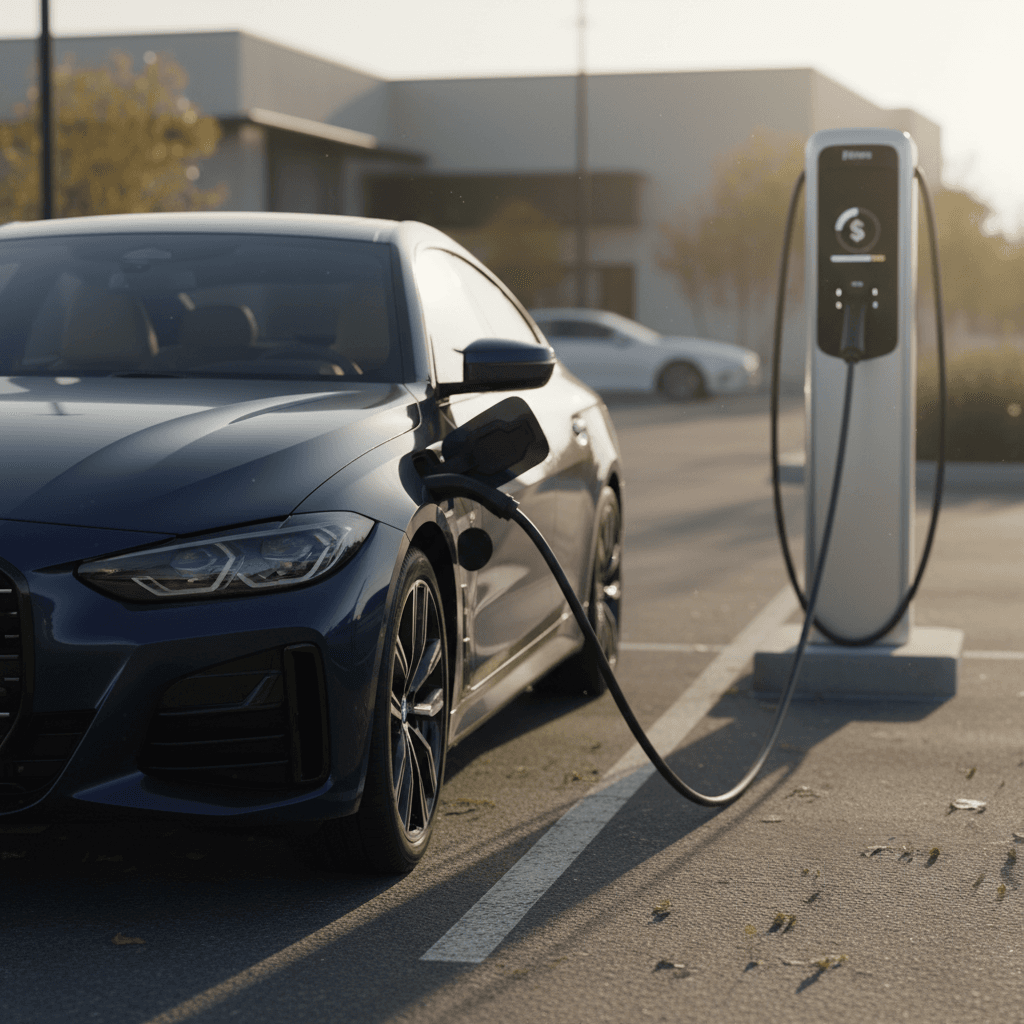
If you’re eyeing a BMW i4, the question behind all the design and tech talk is simple: **what does it actually cost per mile to drive?** The good news is that the BMW i4 charging cost per mile is usually a fraction of a comparable gas 3 Series or 5 Series, especially if you charge mostly at home.
BMW i4 cost per mile at a glance
BMW i4 efficiency & battery basics
To understand BMW i4 charging cost per mile, you need two ingredients: **how efficient the car is** and **what you pay per kWh** of electricity. The i4 is a relatively heavy, high-performance EV, but it’s still far more efficient than a gas sedan.
BMW i4 versions & typical real-world efficiency
Use these as ballpark figures; your driving will vary.
BMW i4 eDrive35
Battery: ~66 kWh usable
EPA range: roughly mid‑260s miles
Real-world efficiency: about 3.1–3.4 mi/kWh for mixed driving.
BMW i4 eDrive40
Battery: ~81 kWh usable
EPA range: ~290–300+ miles depending on wheels
Real-world efficiency: about 3.0–3.3 mi/kWh.
BMW i4 M50
Battery: ~81 kWh usable, dual‑motor performance
EPA range: generally 240–270 miles
Real-world efficiency: about 2.6–3.0 mi/kWh if you enjoy the power.
Why your numbers will differ
How to calculate BMW i4 charging cost per mile
You don’t need a spreadsheet to figure out your **BMW i4 charging cost per mile**. A simple formula gets you 95% of the way there, and you can refine it with your own numbers over time.
- Start with your electricity price in $ per kWh (from your electric bill or charging app).
- Estimate your real-world efficiency in miles per kWh (mi/kWh). For many i4 owners this will land between about 2.7 and 3.3 mi/kWh.
- Use the formula: Cost per mile = (Electricity price per kWh) ÷ (Miles per kWh).
- To get a full‑charge cost, multiply your battery’s usable kWh by your electricity price, then divide by range to confirm your per‑mile number.
Example formula with simple numbers
BMW i4 charging cost per mile at home
Home is where the BMW i4 really pays off. In most of the U.S., **overnight Level 2 charging** is the cheapest way to move a 4,700‑pound, 400‑horse luxury hatchback around.
Typical BMW i4 home-charging economics
Scenario A: Low electricity rate
Rate: $0.12/kWh (some off‑peak or low‑cost regions)
i4 efficiency: 3.2 mi/kWh (calm suburban driving)
Cost per mile = $0.12 ÷ 3.2 ≈ $0.037 (3.7 cents)
1,000 miles/month ≈ $37 in electricity.
Scenario B: Higher electricity rate
Rate: $0.24/kWh (dense urban area, no EV plan)
i4 efficiency: 2.8 mi/kWh (more highway, winter, spirited driving)
Cost per mile = $0.24 ÷ 2.8 ≈ $0.086 (8.6 cents)
1,000 miles/month ≈ $86 in electricity.
Where the BMW i4 really shines
BMW i4 charging cost per mile on public chargers
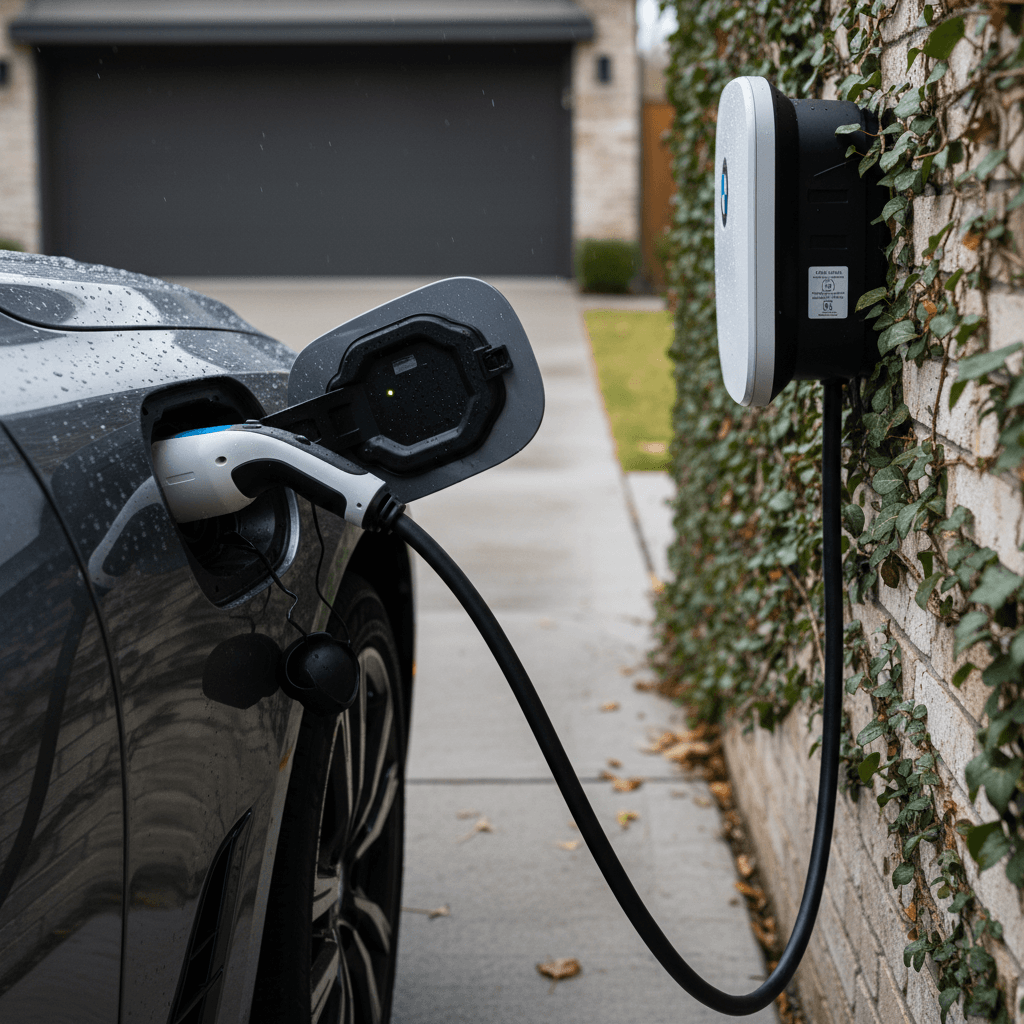
Public charging is where your **BMW i4 charging cost per mile** can swing dramatically. The i4 supports DC fast charging, but the convenience of a 200‑mile top‑up in under an hour comes at a price, especially on per‑kWh pricing.
Public charging options & what they cost per mile
Think of Level 2 as an extension of home charging, and DC fast charging as a convenience fee.
Public Level 2 (AC)
Pricing: often $0.15–$0.35/kWh, or flat hourly fees.
Use case: long stays, work, hotels, downtown parking.
Cost per mile: not far off home rates if priced per kWh. Flat hourly pricing can be a bargain or a rip‑off depending on speed.
Paid DC fast charging
Pricing: commonly around $0.30–$0.60/kWh in the U.S.
Use case: road trips, emergency top‑ups, heavy highway driving.
Cost per mile: often in the $0.10–$0.18 per mile range in an i4, depending on rate and efficiency.
Free or discounted chargers
Pricing: $0.00 or heavily subsidized; often at workplaces, hotels, casinos, dealerships.
Cost per mile: effectively zero for the time you can take advantage of them, fantastic for lowering monthly averages.
Beware idle fees & time-based billing
BMW i4 example DC fast-charging cost per mile
Approximate costs using typical public fast-charging prices and real-world efficiency.
| Scenario | Price per kWh | Assumed efficiency (mi/kWh) | Approx. cost per mile |
|---|---|---|---|
| Budget-friendly network | $0.30 | 3.0 | $0.10 |
| Typical highway station | $0.45 | 2.8 | $0.16 |
| Expensive urban DC hub | $0.60 | 2.7 | $0.22 |
These examples assume mostly highway driving and warmer weather. Winter or very high speeds will increase cost per mile.
BMW i4 cost per mile vs similar gas sedans
A BMW i4 isn’t cheap to buy. Where it often recoups the premium is in **ongoing running costs**, especially energy per mile. Let’s hold everything else constant and just compare fuel vs electricity.
BMW i4 on home charging
Assumptions:
• 3.0 mi/kWh real‑world efficiency
• $0.18/kWh home electricity
Cost per mile:
$0.18 ÷ 3.0 ≈ $0.06/mile.
1,000 miles/month ≈ $60 in electricity.
Comparable gas BMW 3 Series
Assumptions:
• 30 mpg combined
• $3.70 per gallon of gas
Cost per mile:
$3.70 ÷ 30 ≈ $0.12/mile.
1,000 miles/month ≈ $120 in fuel.
Why cost per mile isn’t the whole story
Used BMW i4: ownership cost factors that move the needle
If you’re shopping for a **used BMW i4**, cost per mile is about more than just electricity. How the previous owner treated the car, where it lived, and how often it saw fast chargers can all influence long‑term running costs.
Key cost factors to evaluate on a used BMW i4
1. Battery health & fast‑charge history
Frequent DC fast charging and harsh climates can accelerate battery wear. Look for documentation or third‑party diagnostics, like a <strong>Recharged Score battery health report</strong>, that show capacity and fast‑charge usage over time.
2. Tire condition & alignment
The i4’s instant torque and weight can chew through tires faster than a light gas sedan. Uneven wear hints at alignment issues that could add to your cost per mile.
3. Previous charging habits
An i4 that lived on home Level 2 charging and moderate commuting will likely have better long‑term efficiency and battery health than one that lived on road trips and DC fast chargers.
4. Software & service records
Up‑to‑date software can improve charging logic and efficiency. Check that recalls and recommended EV‑specific services have been done on schedule.
5. Local electricity & charging landscape
A cheap i4 in a region with very high electricity rates and sparse fast charging may cost more per mile to live with than a pricier car in a low‑cost, EV‑friendly region.
How Recharged can help on a used i4
Ready to find your next EV?
Browse VehiclesTips to lower your BMW i4 charging cost per mile
You can’t control your BMW i4’s curb weight or the laws of physics, but you can absolutely influence **what you pay per mile**. A few smart habits can swing the math in your favor.
Six smart ways to cut BMW i4 cost per mile
Stack a few of these and the savings add up quickly, especially if you drive a lot.
Use off‑peak or EV‑specific rates
Many utilities offer cheaper overnight or EV‑only plans. Program your i4’s charge schedule so most charging happens when rates are lowest.
Drive with a little restraint
Enjoy the M50’s launch occasionally, not every stoplight. Smoother acceleration and moderate highway speeds can add 10–20% more miles per kWh.
Precondition while plugged in
Heat or cool the cabin while still on the cable, especially in winter. That pulls energy from the grid instead of your battery, improving on‑road efficiency.
Favor home & workplace Level 2
Use DC fast charging as a road‑trip tool, not a daily habit. Your average cost per mile will drop and your battery will thank you.
Watch your efficiency readout
The i4’s trip computer shows consumption in mi/kWh or kWh/100 mi. Treat it like a game: can you beat your previous best without annoying traffic?
Plan efficient charging stops
On road trips, stop where energy is cheaper, not just closest. A few cents difference per kWh adds up over long distances.
Three habits that quietly raise your cost per mile
BMW i4 charging cost per mile: FAQ
Frequently asked questions about BMW i4 charging cost per mile
Is a BMW i4 worth it on running costs?
Viewed purely through the cost‑per‑mile lens, the BMW i4 is a quiet assassin. Under the clean, conservative sheetmetal is a car that often **cuts your fuel spend by half** versus a comparable gas BMW, provided you can charge mostly at home or at reasonably priced Level 2 stations.
If your reality is all highway miles, expensive urban fast charging, and brutal winters, your **BMW i4 charging cost per mile** will creep upward. But even then, you’ll likely be in the same ballpark as a gas luxury sedan, with the upside of smoother power, fewer oil changes, and that electric‑car calm.
If you’re considering a used BMW i4, a marketplace like Recharged can help you go beyond the window sticker. Every car comes with a Recharged Score battery health report, fair‑market pricing, and EV‑specialist guidance so you can understand not just what you’ll pay today, but what each mile will really cost you over the years.