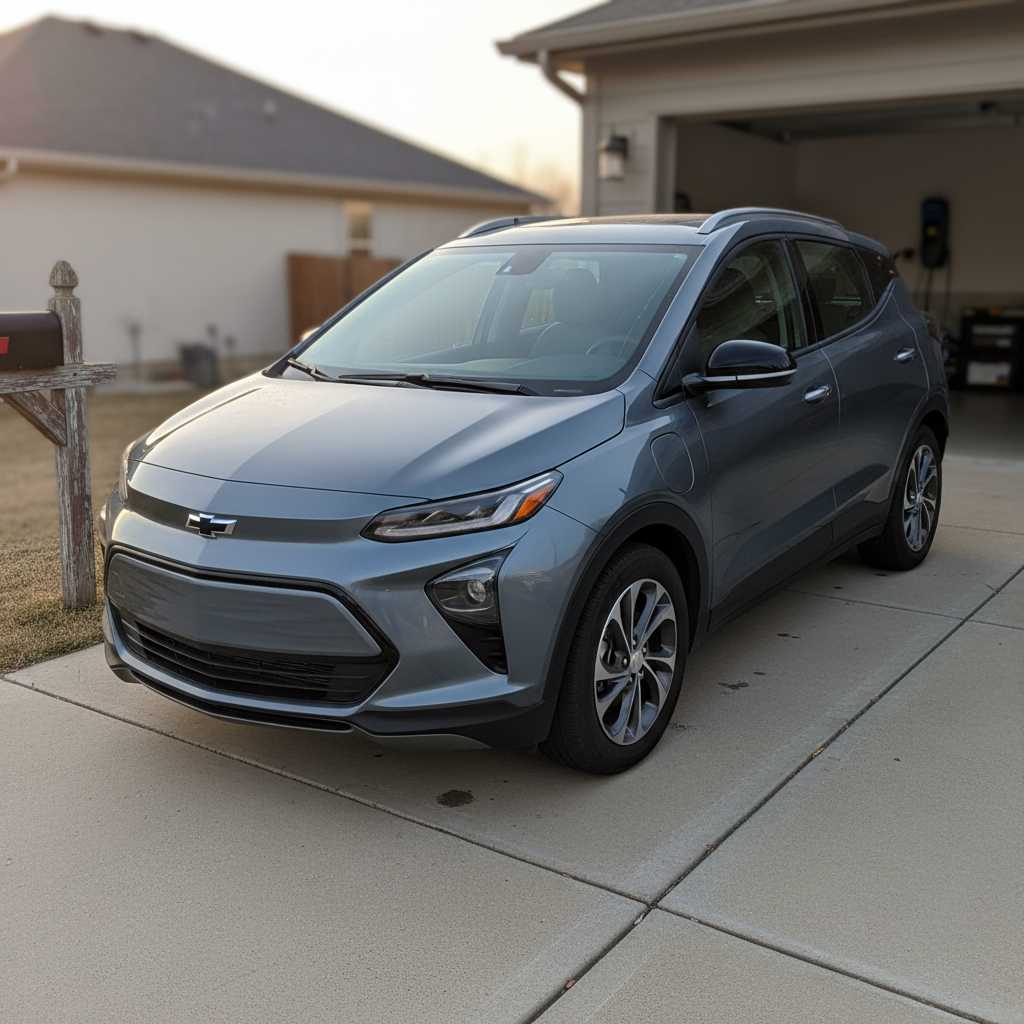
If you’re shopping for a practical, affordable electric car, the 2022 Chevy Bolt EV should be near the top of your list. Chevy refreshed the Bolt for 2022 with a better interior, more standard tech, and a sizable price cut, turning it into one of the best cheap EVs on the used market today. This review focuses on what really matters now: range, charging, comfort, safety, and what you should watch for when buying a 2022 Bolt EV used.
Quick take
2022 Chevy Bolt EV overview
Chevrolet didn’t reinvent the Bolt for 2022, but it did fix some of the biggest complaints. The styling is sharper, the front seats are more comfortable, the interior materials look and feel more modern, and the price dropped by thousands of dollars compared with earlier years. Underneath, you still get a single electric motor driving the front wheels, a roughly 65 kWh battery pack, and an EPA-rated 259 miles of range.
What the 2022 Bolt EV does well
- Excellent range for the price, around 259 miles EPA-rated.
- Compact footprint, big interior thanks to hatchback packaging.
- Low running costs versus gas cars and many rival EVs.
- Modern tech with a large touchscreen, wireless Apple CarPlay and Android Auto.
- Fantastic value used, especially post-recall battery replacements.
Where it falls short
- Slow DC fast charging by today’s standards (around 55 kW peak).
- Front-wheel drive only, no all-wheel-drive option.
- No Super Cruise (reserved for the Bolt EUV in this generation).
- Smaller cabin than an SUV if you regularly carry adults in back.
- Brand perception still colored by earlier battery fire recalls, even though packs were replaced.
2022 Chevrolet Bolt EV core specs
Battery, specs and real-world range
Every 2022 Chevy Bolt EV uses a 65 kWh lithium-ion battery and a single electric motor driving the front wheels. Official EPA range is 259 miles on a full charge, putting it right in the sweet spot for most commuters and many road trippers. In mixed driving at reasonable speeds, many owners report real-world ranges that match or slightly exceed the EPA rating, especially in city driving where regenerative braking shines.
- EPA-rated range: 259 miles (combined)
- Battery capacity: about 65 kWh usable
- EPA efficiency: roughly 120 MPGe combined according to federal ratings
- Powertrain: 200 hp / 266 lb-ft single front motor, single-speed gearbox
Range tip
Charging: home, public, and road-trip reality
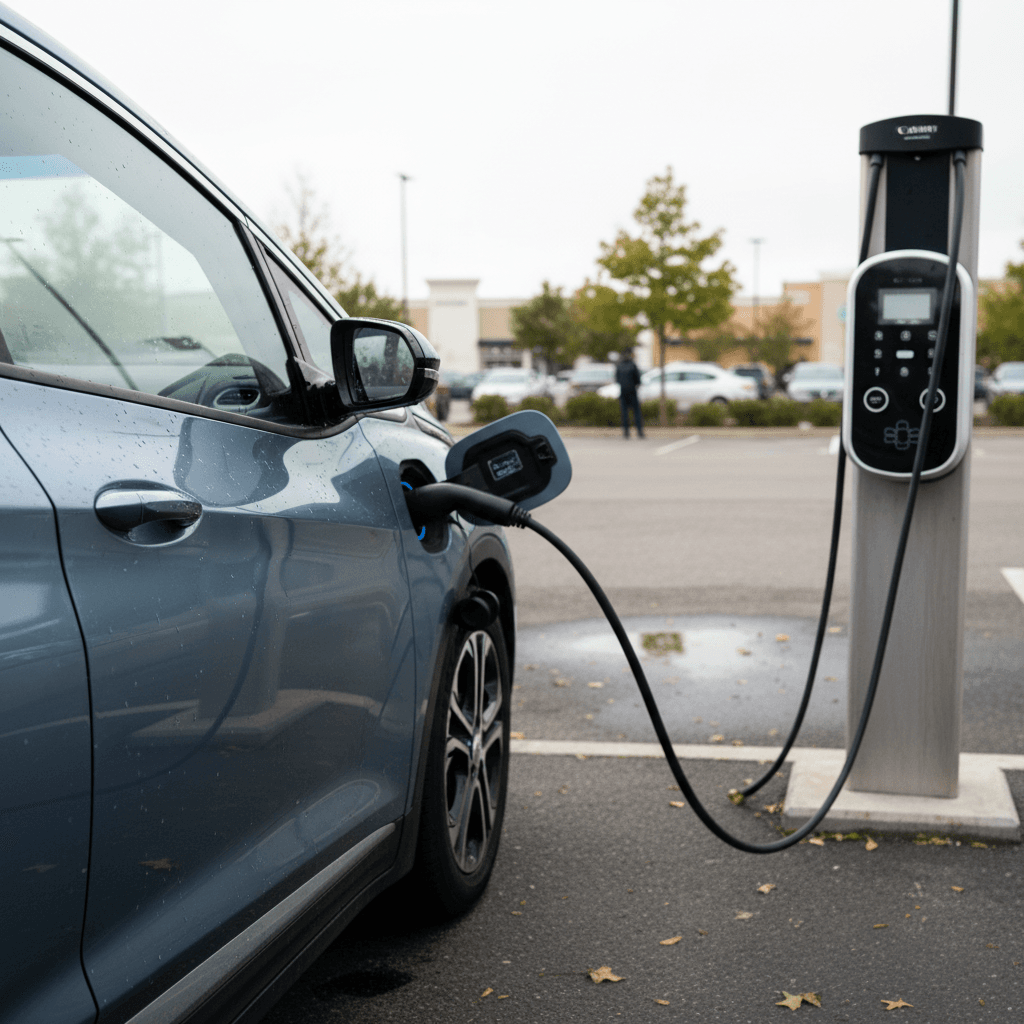
The 2022 refresh made the Bolt EV significantly better to live with from a charging standpoint, especially at home. Chevy bumped the onboard AC charger to 11.5 kW, standard DC fast charging via CCS is included, and many cars shipped with a dual-level portable charging cord that can plug into either a 120-volt household outlet or a 240-volt outlet for faster Level 2 charging.
Typical 2022 Bolt EV charging times
Approximate times from low state of charge under ideal conditions. Your actual results will vary with temperature, charger power, and driving efficiency.
| Charging method | Power (approx.) | 0–100% time | Miles of range per hour |
|---|---|---|---|
| Level 1 (120V home outlet) | 1.4 kW | 40–45 hours | ~5 miles/hr |
| Level 2 (240V, 32A) | 7.7 kW | 8–9 hours | ~30 miles/hr |
| Level 2 (240V, 48A, max onboard) | 11.5 kW | ~7 hours | ~37–40 miles/hr |
| DC fast charging (max) | Up to 55 kW | 10–80% in ~45 minutes | ~100 miles in ~30 min |
The Bolt’s DC fast charging rate is modest, but its strong Level 2 capability makes overnight charging easy for most owners.
DC fast charging expectations
Where the Bolt really shines is home Level 2 charging. At 11.5 kW, a dedicated 240-volt charger can easily refill the battery overnight, even from a low state of charge. For many owners, that makes public DC fast charging an occasional convenience rather than a daily necessity.
Home charging and Recharged
Interior, comfort, and tech features
Earlier Bolts were knocked for flat, unsupportive seats and a plasticky cabin. The 2022 Bolt EV addresses those complaints with redesigned front seats, a cleaner dashboard layout, and more upscale materials. It’s still an economy-focused car, but it feels less rental-grade than the 2017–2021 versions.
Inside the 2022 Bolt EV
Practical, modern, and packed with the tech you actually use.
Space & practicality
- Comfortable for four adults; five in a pinch.
- Split-folding rear seat and a surprisingly roomy cargo area.
- Hatchback opening makes it easy to load bulky items.
Infotainment & connectivity
- Large central touchscreen with intuitive menus.
- Wireless Apple CarPlay and Android Auto on most trims.
- Multiple USB ports and available wireless phone charging.
Comfort & refinement
- Front seats reshaped for better support.
- Quiet cabin at city speeds; more wind and road noise at highway pace, typical for the class.
- One-pedal driving reduces fatigue in stop-and-go traffic.
Cabin impression
Driving impressions: performance and handling
On the road, the 2022 Bolt EV is best described as quietly competent. With 200 horsepower and 266 lb-ft of torque, it jumps off the line smartly and feels lively in city and suburban driving. Instant electric torque masks its modest power at lower speeds. At highway speeds, acceleration is adequate rather than thrilling, you won’t confuse it with a performance EV, but you also won’t struggle to merge.
- Front-wheel drive provides good traction most of the time, but spirited drivers will notice wheelspin in wet conditions.
- The suspension is tuned for comfort, not canyon carving. The Bolt feels stable and predictable, but not sporty.
- Steering is light and accurate, ideal for city parking and commuting.
- One-pedal driving mode is well tuned and quickly becomes addictive in traffic.
Daily-driver sweet spot
Safety, recalls, and driver-assistance tech
Safety is a key part of evaluating any used EV, and the 2022 Bolt EV comes with a strong suite of standard driver-assistance features. Automatic emergency braking, lane-keeping assist, lane-departure warning, and automatic high beams are widely available, and blind-spot monitoring and rear cross-traffic alert are common on higher trims. Some EUV models offered GM’s excellent Super Cruise hands-free system, but the EV hatchback did not get Super Cruise in 2022.
About the Bolt battery fire recalls
Safety and recall checks for a used 2022 Bolt EV
Confirm open recall status
Use the vehicle’s VIN to check for any open recalls through official channels. A clean report is a must before you buy.
Verify battery recall completion
Ask for documentation showing that any battery-related recall work was completed, including pack replacement or software updates as applicable.
Inspect tires and brakes
Even though EVs need fewer mechanical repairs, check for uneven tire wear and brake condition, regenerative braking can mask issues in a quick test drive.
Test driver-assistance features
On a test drive, verify that features like lane-keeping assist, adaptive cruise (if equipped), and parking sensors work as expected.
Ownership costs, reliability, and depreciation
One of the strongest arguments for the 2022 Chevy Bolt EV is its low cost of ownership. Electricity is typically cheaper per mile than gasoline, maintenance needs are modest, and as of 2026 the market has largely digested the earlier recall headlines. That’s created an unusual situation: you can often buy a used Bolt with a relatively young, recall-replaced battery at a significant discount versus newer EVs with similar range.
What it costs to run a 2022 Bolt EV
Why this compact hatch is a money-saver for many households.
Energy costs
At typical U.S. residential electricity rates, many owners spend the equivalent of $1–$2 per gallon in energy costs. Home Level 2 charging maximizes these savings.
Maintenance
No oil changes, fewer moving parts, and regenerative braking that reduces pad and rotor wear. Budget mainly for tires, cabin filters, and occasional brake service.
Depreciation & resale
Early recall news pushed values down, but stabilized used pricing now makes the 2022 Bolt EV one of the better-range-per-dollar buys on the EV market.
How Recharged helps on costs
2022 Bolt EV vs. Bolt EUV
Chevy sold two closely related models in 2022: the Bolt EV hatchback and the Bolt EUV (a slightly larger, more SUV-flavored variant). Under the skin they share the same battery, motor, and basic driving experience, but they’re tuned for slightly different buyers.
2022 Bolt EV vs. 2022 Bolt EUV at a glance
Key differences between the hatchback-style Bolt EV and the more crossover-like Bolt EUV.
| Feature | 2022 Bolt EV | 2022 Bolt EUV |
|---|---|---|
| Body style | Compact hatchback | Slightly longer, more SUV-like hatch |
| EPA range | ~259 miles | ~247 miles |
| Rear-seat space | Good for the class | Better legroom and rear comfort |
| Super Cruise availability | Not offered | Available on select trims |
| Weight | Lighter | Heavier |
| Parking & maneuvering | Easier in tight city spaces | Still compact, but a bit longer |
If you prioritize maximum range and maneuverability, the Bolt EV is the better fit. If rear-seat space and Super Cruise matter more, look to the EUV.
Which should you choose?
Who the 2022 Bolt EV is (and isn’t) for
Great fit for
- Commuters who drive 20–80 miles per day and can charge at home.
- City and suburban drivers who value compact size and easy parking.
- Budget-conscious buyers looking for maximum range per dollar in a used EV.
- First-time EV owners who want something simple, reliable, and easy to live with.
Might want to look elsewhere
- Drivers who road-trip frequently and rely on DC fast charging several times a week.
- Shoppers who need AWD for snow-heavy climates.
- Families who regularly carry three adults in the back plus lots of cargo.
- Enthusiasts seeking sport-sedan handling or high-performance acceleration.
Used 2022 Bolt EV buying checklist
Essential checks before you buy a used 2022 Bolt EV
1. Review the Recharged Score Report
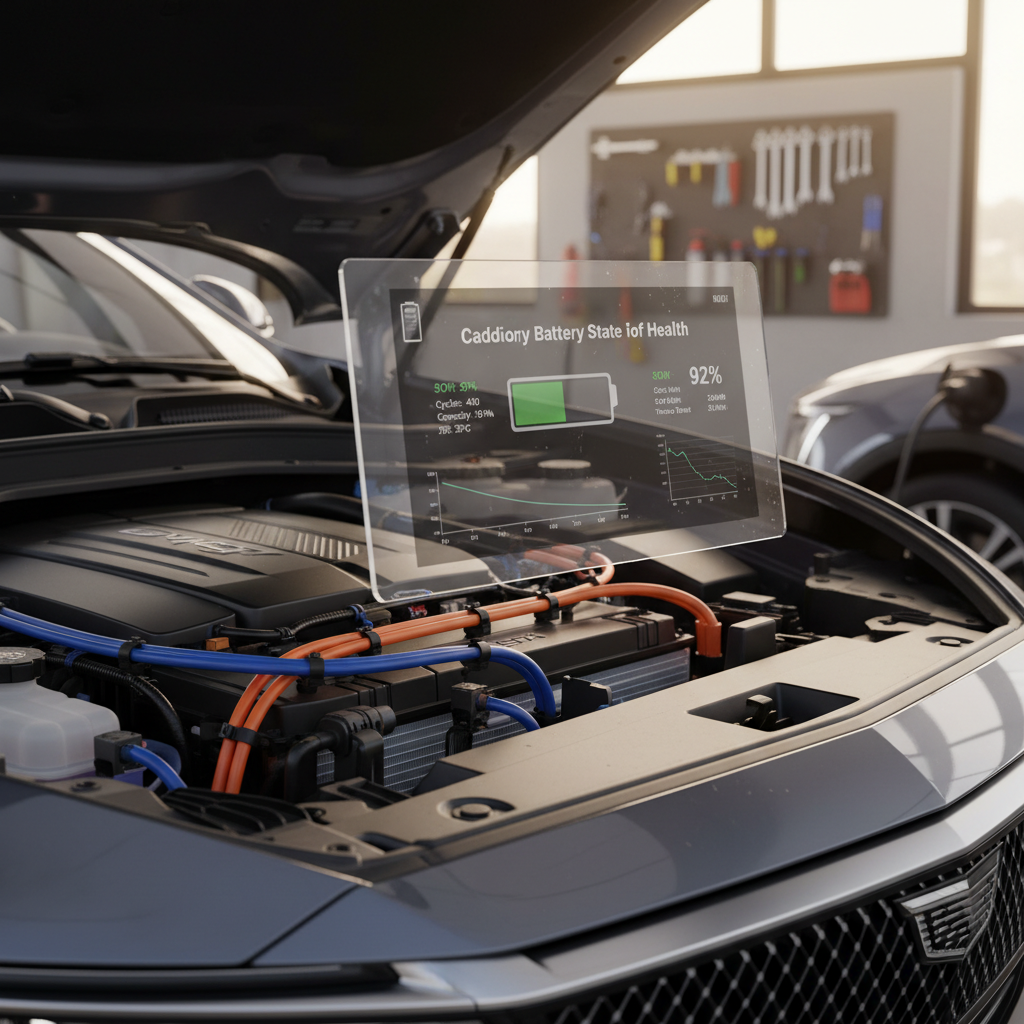
Start with objective data. A Recharged Score includes <strong>verified battery health</strong>, mileage, charging history patterns, and fair market pricing so you can see how this specific Bolt compares to others.
2. Confirm recall and battery history
Ask for service records showing that any battery-related recalls were completed. Note whether the car received a full battery pack replacement or software-only updates.
3. Inspect charging hardware
Verify that the <strong>charge port is clean</strong>, the charge door operates smoothly, and any included portable charger is in good condition. If possible, plug into both Level 2 and DC fast charging during your test.
4. Check for interior and cosmetic wear
Look for excessive seat wear, trim rattles, or water leaks. Because many Bolts lived urban lives, curb-rash on wheels and parking scrapes are common, factor that into price.
5. Test all tech features
Pair your phone and test wireless Apple CarPlay/Android Auto, Bluetooth, cameras, parking sensors, and any driver-assistance features. Outdated or malfunctioning tech can be costly to sort out.
6. Take a varied test drive
Drive in town and at highway speeds. Listen for unusual whines or clunks, test one-pedal driving, and watch how range estimates change with your driving style.
2022 Chevy Bolt EV FAQ
Frequently asked questions about the 2022 Chevy Bolt EV
Bottom line: is the 2022 Chevy Bolt EV a good buy?
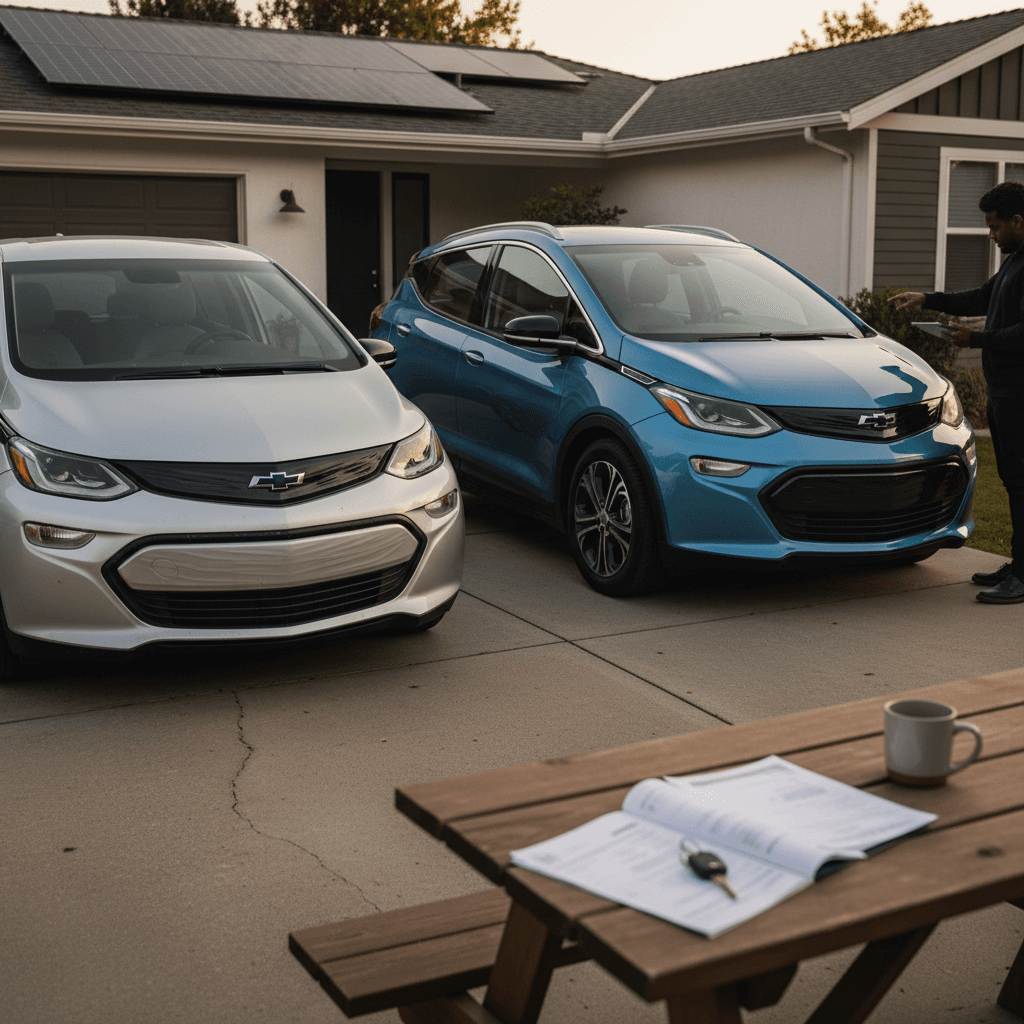
For shoppers who want an affordable, efficient, and easy-to-live-with EV, the 2022 Chevy Bolt EV remains a standout. Its combination of 259 miles of range, comfortable updated interior, strong Level 2 charging capability, and attractive used pricing make it one of the smartest electric-car buys on the road today. The trade-offs, slower DC fast charging and a compact-hatchback footprint, are manageable for most buyers who charge at home and don’t road-trip every weekend.
If that sounds like your driving pattern, a carefully vetted 2022 Bolt EV with clean recall history and verified battery health is well worth serious consideration. On Recharged, every Bolt listing includes a Recharged Score Report so you can compare vehicles by battery condition, usage history, and fair market price before you ever step into the driver’s seat.