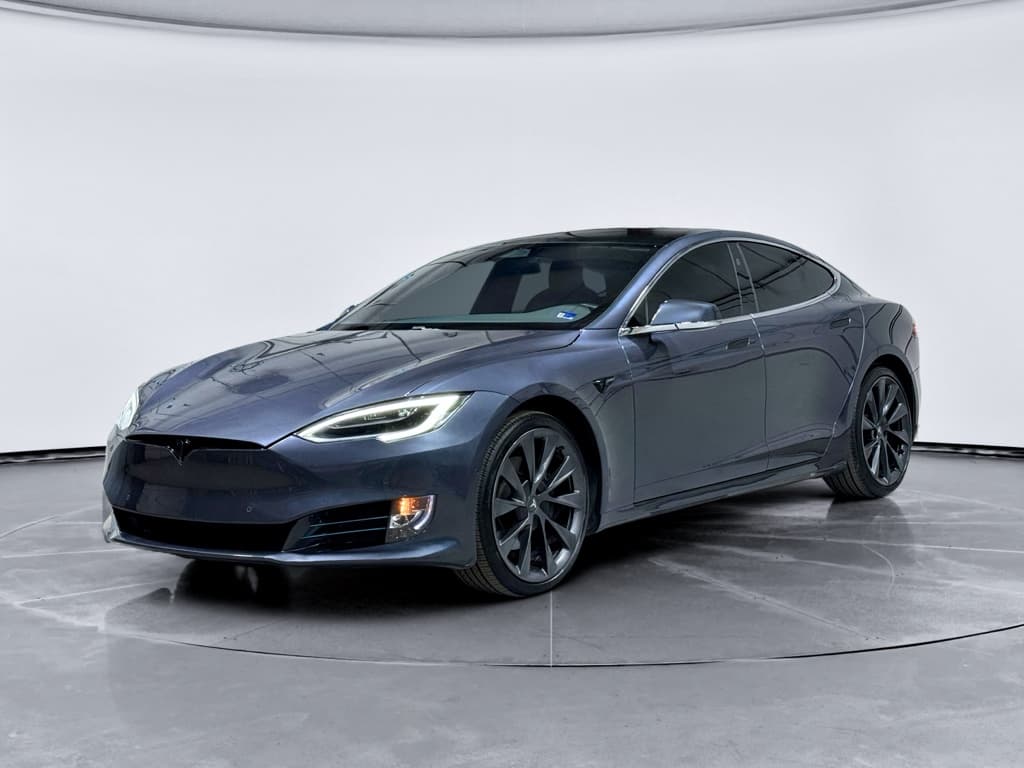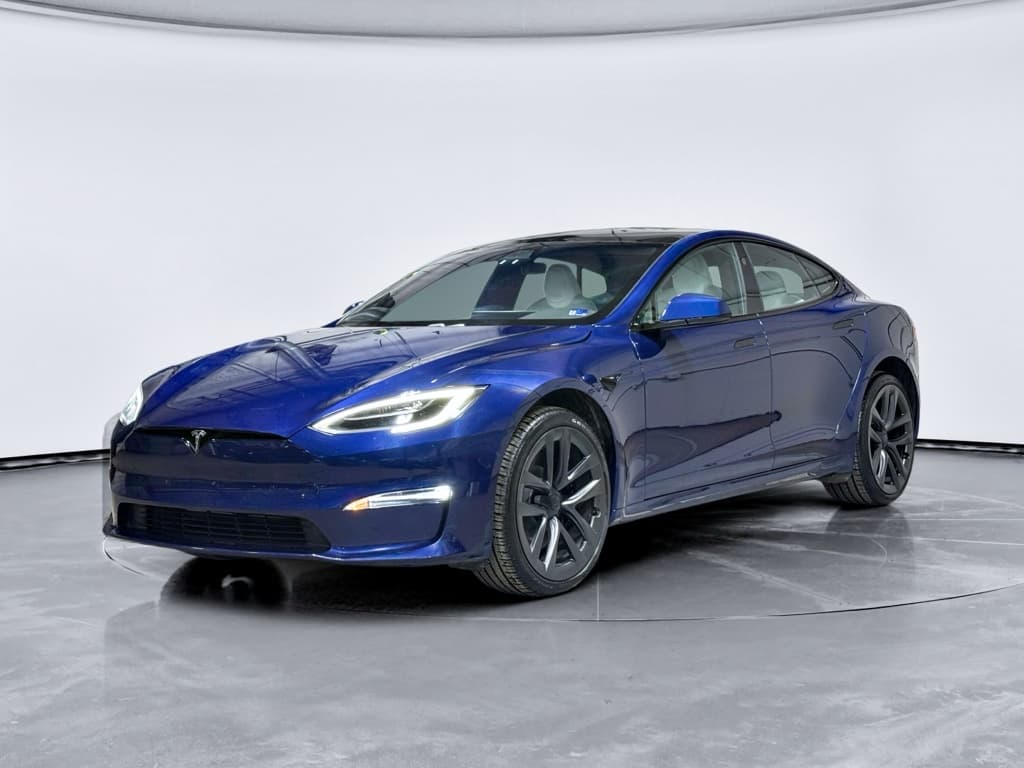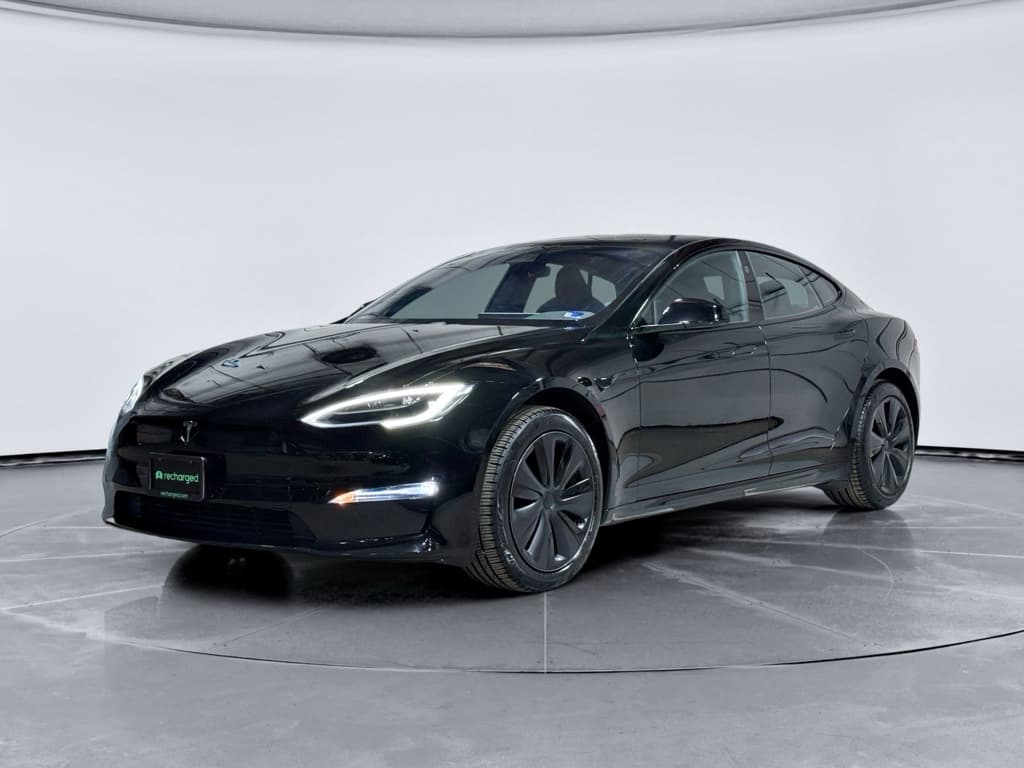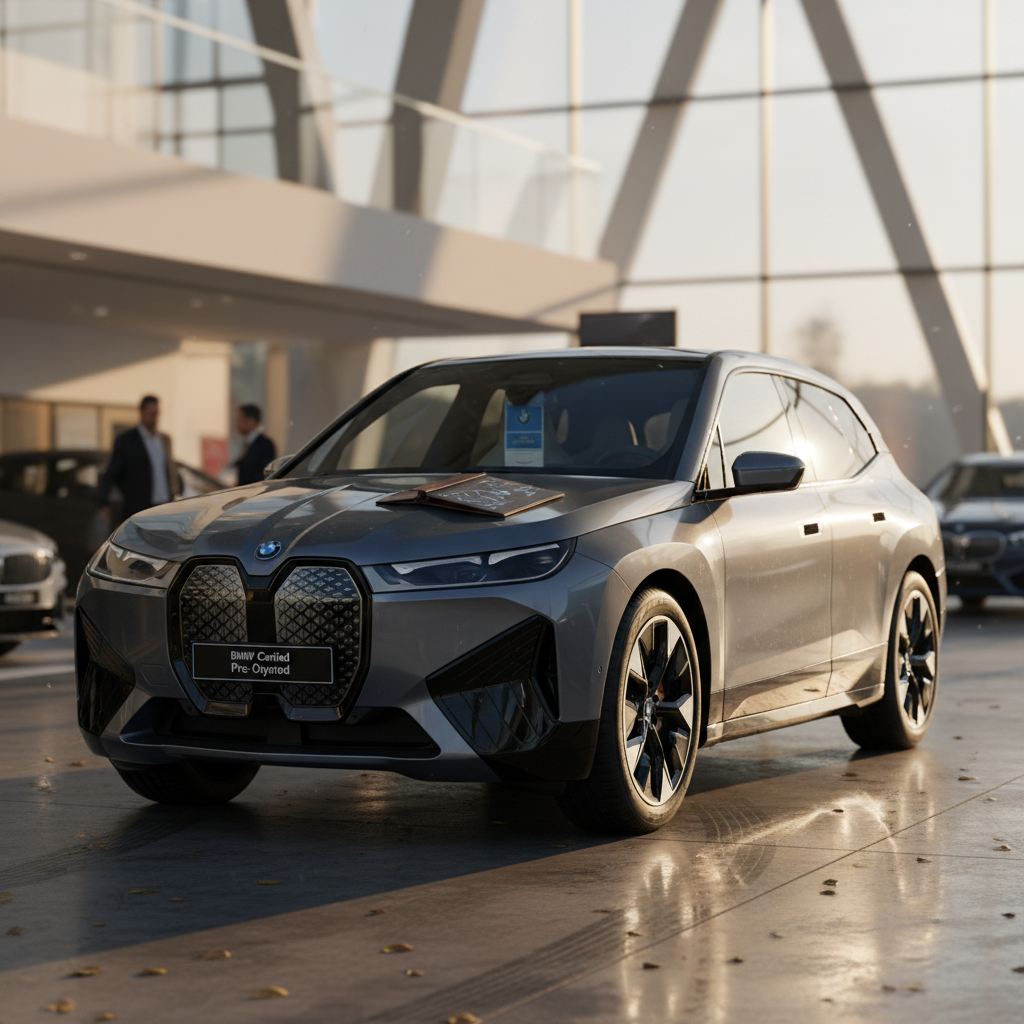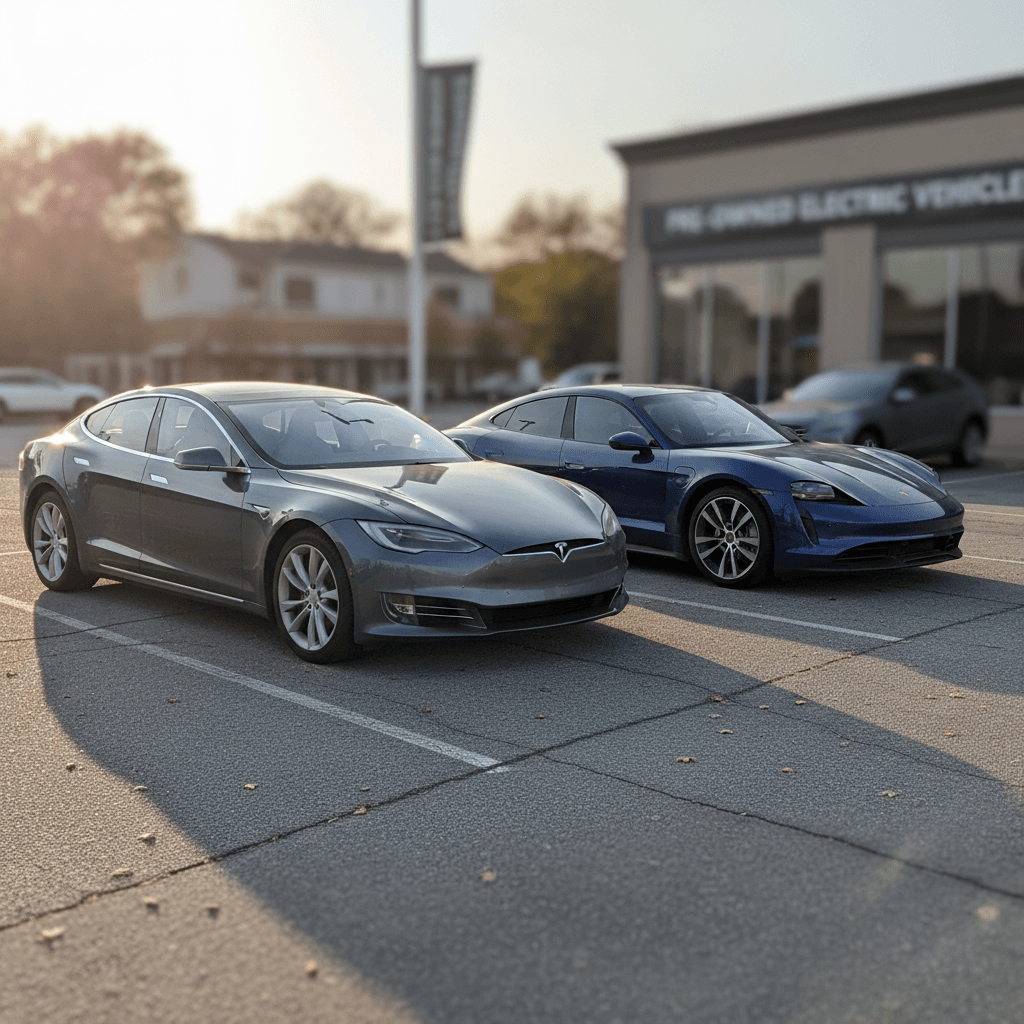
If you’re cross‑shopping a used Tesla Model S vs a used Porsche Taycan under $50,000, you’re not just buying an EV, you’re buying a personality. One is the long‑range tech flagship that rewrote the rulebook; the other is a laser‑focused driver’s car wearing a Porsche crest. Under $50k, though, the details really matter: which years and trims you can actually get, how the batteries are aging, and what it’ll cost you to live with either car after the honeymoon phase.
The short version
Who this comparison is really for
This guide is aimed at shoppers who: - Want a luxury electric sedan rather than a crossover - Are trying to keep the purchase price at or under $50,000 - Care about range, battery health, and long‑term costs, not just 0–60 bragging rights - Are open to buying used, possibly from out of state, with online tools and delivery If that sounds like you, we’ll walk through what you’ll actually find on the market, how the two cars stack up, and how tools like the Recharged Score battery health report can keep you out of trouble.
What you’ll really find under $50,000
Let’s start with a reality check: “Model S vs Taycan under $50k” doesn’t mean every trim ever built. It narrows the field to specific years and configurations.
Typical used inventory under $50,000 (U.S., 2025–2026)
These are the cars you’re most likely to see under $50k at franchised dealers, independents, and EV‑focused marketplaces.
| Model | Typical model years under $50k | Typical mileage range | What you’re really getting |
|---|---|---|---|
| Tesla Model S | 2016–2021 (occasional 2022 RWD or older Performance trims) | 45,000–110,000 miles | Large hatchback with big battery, strong range, and mature Supercharger access |
| Porsche Taycan | 2020–2022 base and 4S; some 2023 ex‑loaner cars | 25,000–70,000 miles | Newer chassis and interior, stellar driving dynamics, shorter range but ultra‑fast DC charging |
Exact availability varies by region and mileage, but this is a realistic snapshot of what shoppers report finding today.
On the Tesla side, $50k often buys a newer generation battery and infotainment, but with higher miles. On the Porsche side, the same money usually buys a newer car with fewer miles, but you’re stepping into a brand whose parts and labor costs live firmly in premium territory.
Use price filters wisely
Battery health and warranty: where the money is hiding
With any used EV, the battery pack is the single most expensive component. Both Tesla and Porsche engineered their packs to last, but they approached the problem differently, and that matters once the cars are five to ten years old.
How Model S and Taycan defend their batteries
Different strategies, same goal: keep degradation low over high mileage.
Tesla Model S battery strategy
- Large pack sizes (typically 75–100 kWh gross) mean shallower daily cycling.
- Well‑documented real‑world data shows many packs losing only ~10% capacity over 150k–200k miles when not abused.
- Early cars had some high‑profile pack issues, but later builds and over‑the‑air tweaks improved longevity.
Porsche Taycan battery strategy
- Smaller usable window: Porsche builds in a generous buffer, so "100%" on the dash is well below true cell maximum.
- Indications from long‑term tests and owners suggest very low degradation even with frequent DC fast charging.
- More complex high‑voltage architecture and cooling, which is great for performance, but pricier if it ever fails.
Don’t buy blind on battery health
Warranty is the other piece of the puzzle. Tesla’s and Porsche’s high‑voltage warranties vary by model year and pack size, but many cover around 8 years with a mileage cap. A 2020 Taycan or 2020–2021 Model S may still have battery and drive‑unit coverage left; a 2016 Model S probably will not. When you’re shopping under $50k, that line between “still under pack warranty” and “fully on your own” is worth real money.
Real-world range and efficiency: Model S vs Taycan
Range is where the used Tesla Model S usually stretches its legs. Porsche has been steadily improving Taycan efficiency, but at the price point we’re talking about, you’re largely in earlier‑generation cars.
Typical real‑world highway range (well‑maintained cars)
A few nuances you’ll feel in the real world: - Model S: Earlier cars were EPA‑rated around the mid‑200‑mile mark; newer ones pushed toward or past 350 miles. Used examples under $50k often sit in the high‑200s when new, and many still deliver realistic 220–280 miles of highway range today, depending on climate, wheels, and how they’ve been driven. - Taycan: First‑wave cars were notorious for modest EPA numbers and so‑so efficiency, though later software and 2025 updates made big gains. The used 2020–2022 sedans in your price band often deliver around 180–220 miles at U.S. freeway speeds if you’re not hypermiling. If your daily life involves a long commute or frequent interstate runs in cold weather, the Model S’s range advantage is hard to ignore.
When Taycan’s lower range is a non‑issue
Charging experience at home and on road trips
Tesla built its reputation not just on the car, but on the charging ecosystem. Porsche leans on the broader CCS fast‑charging networks. Both can work beautifully; they just feel different day to day.
Home charging
- Both cars happily live on a 240V Level 2 home charger (often called a "40‑amp" or "50‑amp" charger).
- Tesla Model S can use a dedicated Tesla Wall Connector or a universal J1772 Level 2 charger with an adapter.
- Porsche Taycan uses the J1772/CCS standard in North America, so any quality Level 2 unit will do.
If you own your home, budget for a professional electrician visit if you don’t already have a 240V circuit in the right place.
Road‑trip fast charging
- Tesla Model S: Supercharger network access is usually seamless, plug in, walk away. Many stalls now support non‑Teslas too, but Tesla drivers still enjoy the simplest experience.
- Porsche Taycan: Uses CCS DC fast charging and shines at very high charging power. Find the right station and you can go from a low state of charge to a useful buffer in well under half an hour.
- Network quality is catching up, but Tesla still tends to win on site reliability and ease of use.
Factor charging into your budget, not just the sticker price
Performance and driving feel
Here’s where these two cars stop being competitors and start being opposites. The Model S is astonishingly quick and very composed, but it still feels like a big, tall‑geared luxury hatch. The Taycan was tuned by the same people who obsess over 911s.
How they feel from behind the wheel
Numbers are part of the story; character is the rest.
Tesla Model S
- Even non‑Performance trims deliver serious straight‑line shove.
- Later dual‑motor Long Range cars can knock off 0–60 mph in roughly the 3–4 second zone; earlier 85D/90D cars are only a beat behind.
- Steering is light and accurate but not especially talkative; great for covering miles, less so for carving canyons.
- Quiet, smooth, and almost appliance‑like when driven gently.
Porsche Taycan
- Even the base Taycan feels decisive and precise, steering weight, brake feel, and body control are deeply satisfying.
- 0–60 mph times vary by trim, but even humble versions feel quick; 4S and up are properly fast.
- Optional air suspension and rear‑axle steering turn it into a sports sedan that shrinks around you.
- Some road noise and firmness, but in return you get communication and confidence.
If your idea of fun is clipping a late apex on a back road, the Taycan will make you grin wider. If you just want to feel like you’ve teleported every time you merge, the Model S still brings the thunder.
Reliability and running costs over time
Neither of these is a Corolla. You’re buying complex hardware drenched in software, built by companies still relatively early in their EV lifecycles. But they have different risk profiles.
Tesla Model S reliability notes
- Well‑known issues on older cars include MCU (screen/computer) failures, door handles, air suspension components, and assorted trim squeaks.
- Later cars improved in many areas, but you’re still dealing with a lot of integration between hardware and over‑the‑air software updates.
- Independent shops that understand Teslas are increasingly common, helping temper repair costs once you’re out of warranty.
Porsche Taycan reliability notes
- Battery and core powertrain have looked strong so far in long‑term testing, with low degradation even on heavily fast‑charged cars.
- Where owners report pain, it’s usually in 12‑volt systems, electronics, or Porsche‑priced out‑of‑warranty repairs.
- Dealer support is generally excellent but can be expensive; independent EV‑literate Porsche specialists are rarer than Tesla shops in many markets.
Why a pre‑purchase inspection matters more on these cars
Ownership experience: tech, space, and comfort
How you and your passengers fit in the car, and how the tech treats you, will shape your ownership far more than the last tenth in a 0–60 sprint.
Everyday usability: Model S vs Taycan
Key comfort and practicality traits that show up every single day.
| Area | Tesla Model S (typical under $50k) | Porsche Taycan (typical under $50k) |
|---|---|---|
| Interior space | Roomy cabin, generous legroom front and rear; seating position a bit higher than a classic sport sedan. | Sportier, slightly tighter cabin; rear seats fine for adults but less stretch‑out space. |
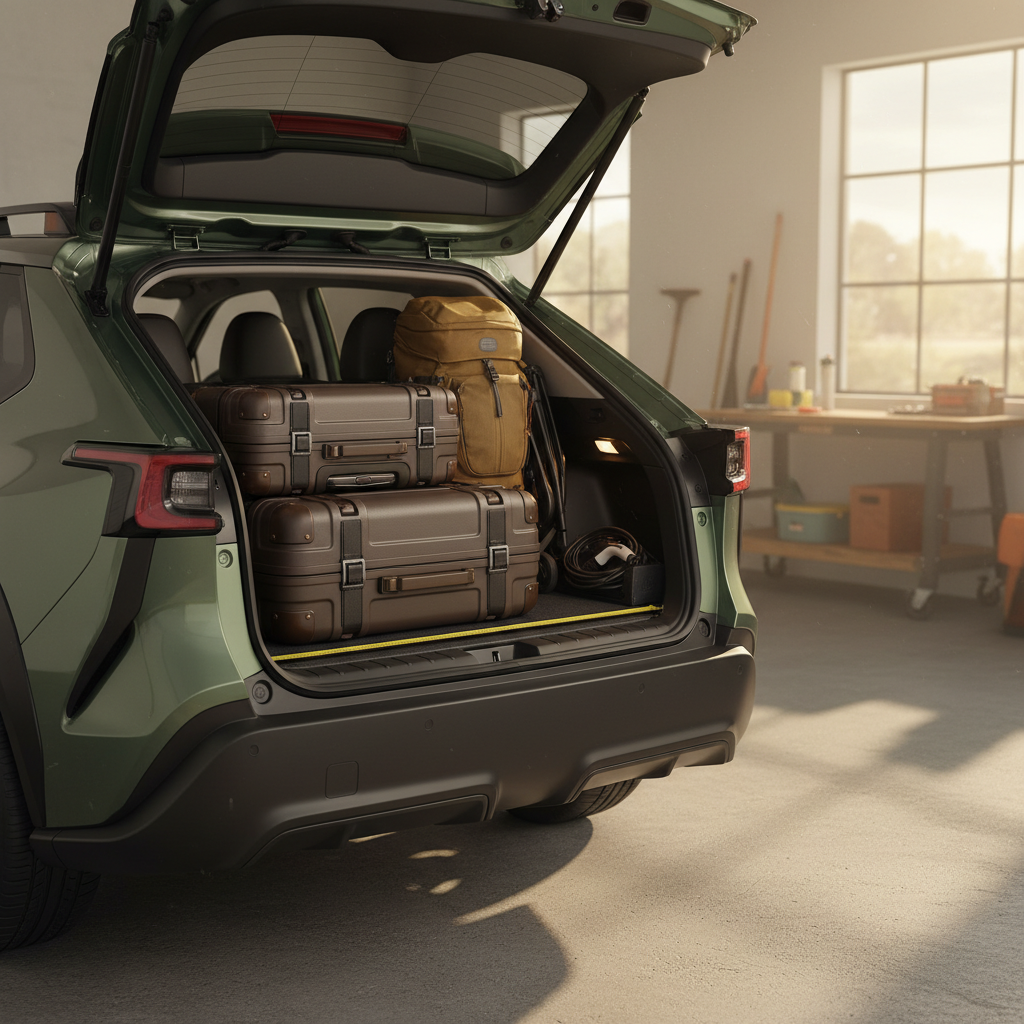
| Cargo | Huge rear hatch plus front trunk; easily swallows bikes, strollers, luggage. | Conventional trunk plus small frunk; fine for trips but notably less flexible than the Tesla. |
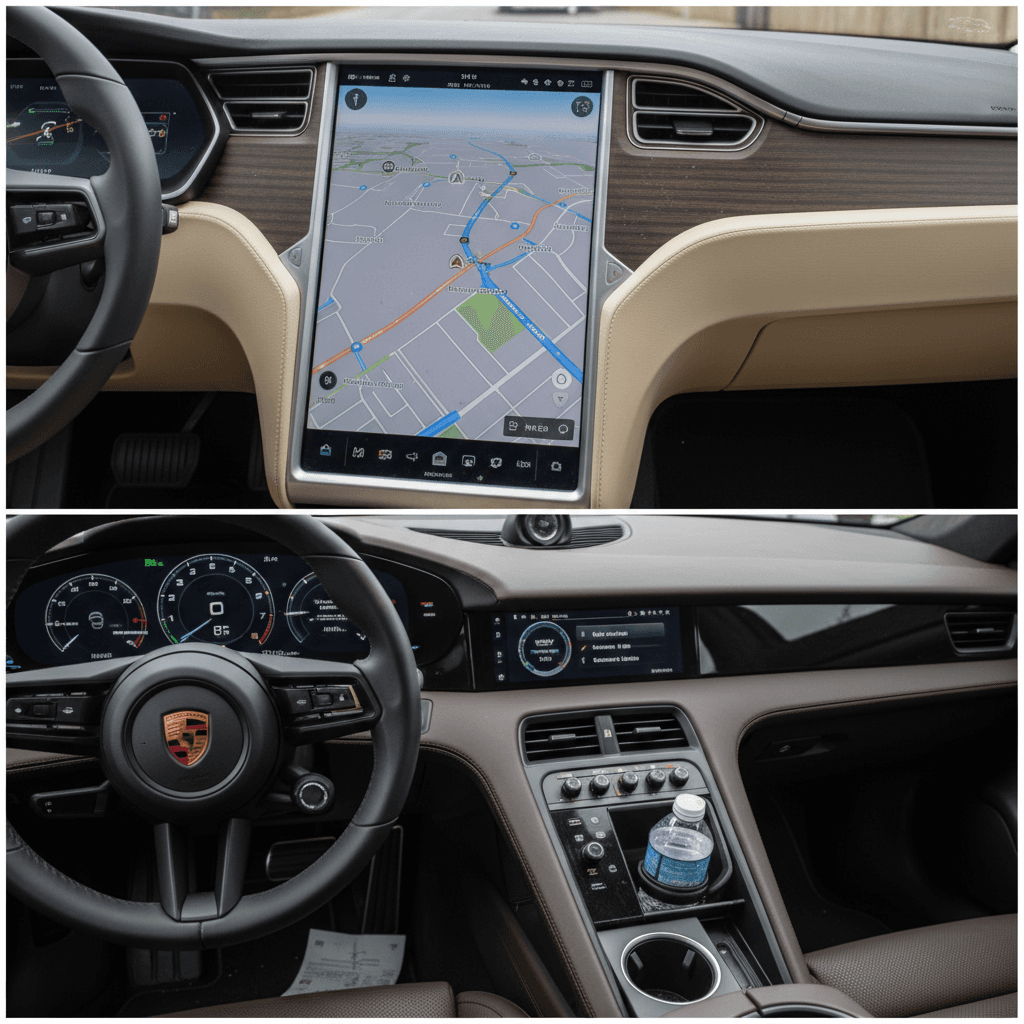
| Infotainment | Single large central screen; frequent OTA updates; some drivers love the minimalism, others miss physical buttons. | Multiple screens, more traditional cockpit feel; more physical controls and a distinctly Porsche layout. |
| Noise & ride | Quieter, softer overall, especially on smaller wheels; fantastic highway cruiser. | More road feel and tire noise; ride can be firm, especially on big wheels, but air suspension smooths things out. |
Exact dimensions vary by year, but the character of each car is consistent across most trims.
Tall family? Road‑trip crew?
Side‑by‑side used spec comparison under $50k
Because the used market is messy, there’s no single “correct” spec sheet. But here’s a realistic pairing you might face on your shortlist: a late‑teens Model S vs an early Taycan 4S, both listed just under $50,000.
Example apples‑to‑apples used comparison
One realistic Model S vs Taycan matchup you might actually see on the market.
| Feature | Used Tesla Model S example | Used Porsche Taycan example |
|---|---|---|
| Likely year & trim | 2018–2019 Model S 100D / Long Range | 2020–2021 Taycan 4S with Performance Battery Plus |
| Typical mileage | 60,000–80,000 miles | 30,000–50,000 miles |
| Realistic highway range | ~250–280 miles after modest degradation | ~190–220 miles depending on wheel/tire and software |
| DC fast‑charge speed | Up to ~150 kW on most older S, higher on some later cars | Very high peak speeds; strong sustained charging on 800V architecture |
| Cargo | Large hatch + frunk; truly wagon‑like utility | Conventional trunk + frunk; good but not cavernous |
| Driving character | Calm, brutally quick in a straight line, optimized for comfort and efficiency | Engaging, precise, sports‑sedan feel with sharp steering and strong brakes |
| Likely warranty status | Battery/drive unit may still be covered on newer examples; earlier ones often out of pack warranty | Many early Taycans still within 8‑year high‑voltage warranty window |
| Expected running costs | Lower parts pricing than Porsche; independent Tesla specialists increasingly available | Higher parts and labor costs; Porsche dealer network is excellent but not cheap |
Use this as a template; always confirm exact specs and battery health on the VIN you’re considering.
Which used EV fits you better? Quick scenarios
Model S vs Taycan: who should pick which?
Match your life to the car, not the other way around.
Long‑distance commuter or road‑tripper
Driving enthusiast
Family hauler with style
When both are good choices
Checklist: what to check before you buy either car
Pre‑purchase checklist for a used Model S or Taycan
1. Verify battery health with real data
Ask for a recent battery health report, not just “range seems fine.” On Recharged, every vehicle includes a <strong>Recharged Score</strong> that rolls verified pack health, charging history where available, and projected range into one transparent report.
2. Confirm remaining battery and drive‑unit warranty
Use the VIN and in‑service date to confirm exactly how much high‑voltage warranty is left, if any. That changes the risk calculus more than cosmetic issues ever will.
3. Inspect charging history and connectors
Look for signs of damage or corrosion at the charge port and cables. On Taycans that lived on DC fast charging, make sure software is up to date. On Teslas, confirm Supercharger access status if it matters to you.
4. Examine tires, brakes, and suspension
These are heavy, powerful cars. Uneven tire wear, tired dampers, or noisy suspension components can turn into big invoices. A short, gentle test drive won’t always reveal them, ask for a lift inspection.
5. Test every screen, button, and feature
Infotainment, driver‑assist systems, HVAC, seat motors, cameras, sunroof (if equipped), if it lights up or moves, test it. Software glitches can be minor or maddening; you want to know which you’re getting.
6. Get a true EV‑savvy inspection
Not every general mechanic is comfortable with 400–800V systems. Use a shop or service that knows these platforms, or lean on a marketplace like <strong>Recharged</strong> that bakes EV‑specific inspections and pricing analysis into every listing.
FAQ: Used Tesla Model S vs Porsche Taycan under $50k
Frequently asked questions
Bottom line: how to shop smarter with Recharged
Under $50,000, the used Tesla Model S is usually the better choice for drivers who want maximum range, easy road‑tripping, and family‑friendly space. The used Porsche Taycan is the pick for drivers who live for steering feel, build quality, and that special‑occasion Porsche aura, so long as they understand the range and running‑cost trade‑offs.
Whichever direction you lean, don’t let glossy photos and a low asking price blind you to battery health, warranty status, and total cost of ownership. That’s where tools like the Recharged Score, EV‑focused inspections, transparent pricing analysis, and expert support can turn a gamble into a confident decision. Use the data, be honest about how you really drive, and you’ll end up with the right car, not just the right badge.