If you’re driving, or thinking about buying, a BMW i4, you’ve probably wondered how quickly the battery will fade. “BMW i4 battery degradation per year” isn’t just an abstract number; it’s the difference between a relaxed road trip and range anxiety five winters from now, especially if you’re considering a used car.
Quick take: BMW i4 battery health
BMW i4 battery degradation basics
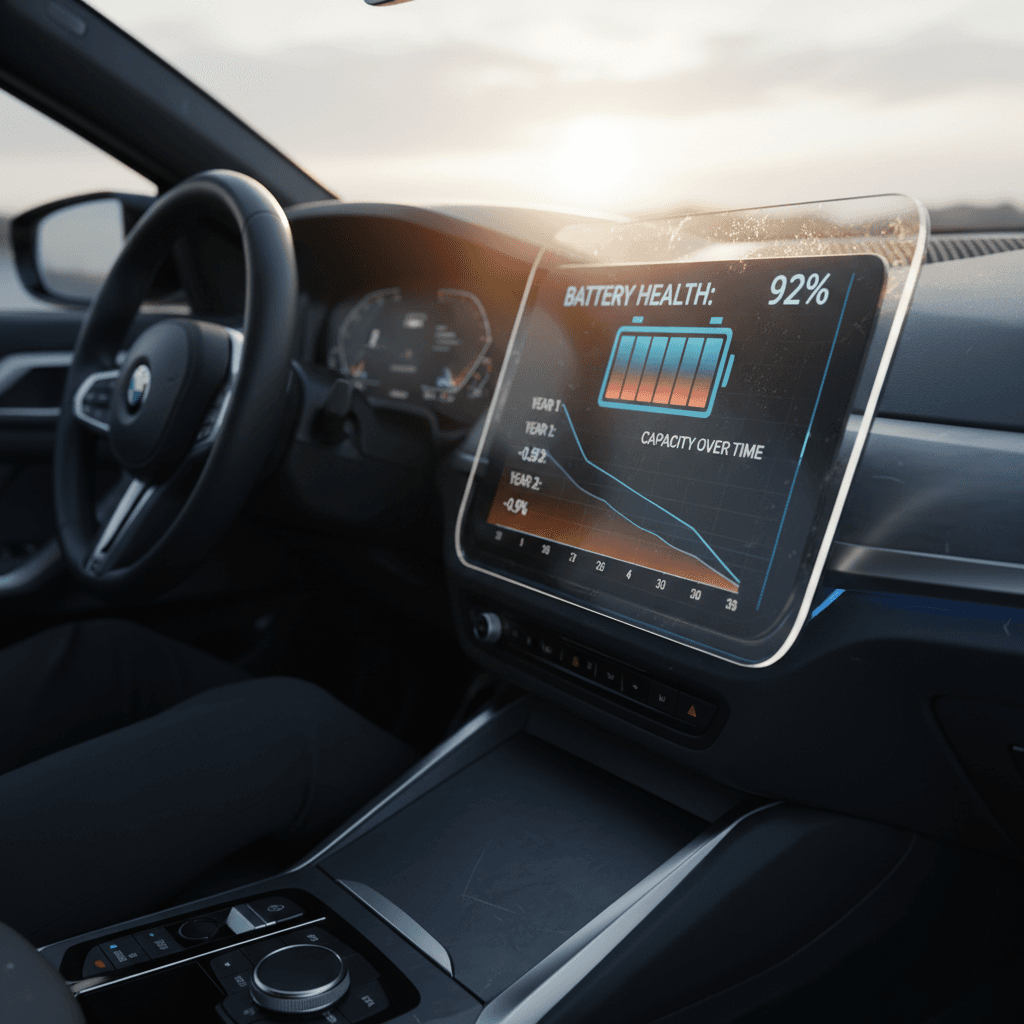
Before you zoom in on the exact BMW i4 battery degradation per year, it helps to understand what we’re really talking about. Degradation is simply permanent loss of usable battery capacity, not day‑to‑day range swings from weather or driving style.
- The BMW i4 uses a high‑voltage lithium‑ion pack (varies by trim, roughly 70–83 kWh usable).
- Capacity slowly drops over time as the chemistry ages, especially when exposed to heat, high states of charge, and frequent fast charging.
- BMW’s software includes a buffer at the top and bottom of the pack to hide the earliest, mild degradation and protect the cells.
- You’ll notice degradation as a lower predicted range at 100% and shorter real‑world driving range on the same routes.
Don’t confuse range swings with degradation
How much does a BMW i4 battery degrade per year?
We don’t yet have 15 years of history on the BMW i4, but we do have a decade of data on similar EVs, and the i4 uses modern cell chemistry with robust thermal management. That lets us make reasonable, conservative estimates of BMW i4 battery degradation per year.
Typical BMW i4 battery degradation pattern
In other words, if you treat the car reasonably well, it’s realistic for an i4 that started with, say, 300 miles of EPA‑rated range to still deliver around 255–270 miles after 8–10 years. Daily driving patterns, climate, and charging habits can nudge that number up or down.
Outliers exist
Degradation by mileage and years on a BMW i4
When you’re comparing cars, thinking in terms of miles and years together is more useful than just age. Here’s a rough, conservative picture of what many BMW i4 owners might see if they’re not abusing the battery.
Approximate BMW i4 battery degradation over time
These are conservative, ballpark figures for a well‑maintained i4 driven in a moderate climate. Real cars will vary.
| Age & mileage | Typical capacity remaining | What that feels like in range | Notes |
|---|---|---|---|
| 1–2 years, ~15k–30k miles | 95–98% | You might not notice any change | Early loss is often hidden by software buffer. |
| 3–4 years, ~30k–50k miles | 92–96% | Maybe 10–20 miles less at 100% | Most owners only notice on familiar highway runs. |
| 5–6 years, ~60k–80k miles | 88–94% | 20–35 miles less than new | Road‑trip stops a bit closer together; daily driving still easy. |
| 7–8 years, ~80k–100k+ miles | 85–92% | 30–50 miles less than new | Still usable for most commutes; long trips require more planning. |
| 8+ years, high mileage | ≥70% (warranty floor) | Noticeably shorter range | At or below 70%, BMW may repair/replace under warranty. |
Use this as a guide, not a guarantee. A detailed battery health report (like a Recharged Score) gives you model‑specific, vehicle‑specific answers.
Every used BMW i4 ages differently
What really causes BMW i4 battery degradation?
Lithium‑ion batteries don’t just wear out randomly. When you hear different owners quoting different BMW i4 battery degradation per year numbers, it’s usually because their usage patterns are different. These are the big levers:
Key drivers of BMW i4 battery degradation
Most of them are in your control.
Heat
High temperatures accelerate chemical aging. An i4 parked outdoors in a hot climate at high state of charge ages faster than one kept in a garage in a moderate climate.
High state of charge
Regularly sitting at 90–100% stresses cells. Topping to 100% for a trip is fine, leaving it there for days is not.
Frequent DC fast charging
Fast charging is safe, but using it as your primary fuel source, especially from low state‑of‑charge to near 100%, will speed up degradation over years.
High annual mileage
More miles means more charge cycles. 5–7% loss at 120,000 miles is very different from that same loss at 20,000 miles.
Time itself
Even a low‑mileage BMW i4 loses a little capacity simply from aging chemistry. That’s why a 10‑year‑old garage queen isn’t “like new.”
Deep discharge
Frequently running the pack down near 0% and letting it sit empty is hard on any EV battery, the i4 included.
Habits that hurt BMW i4 batteries
How to slow BMW i4 battery degradation
The good news is you have a lot of influence over your BMW i4’s battery health. You can’t stop degradation entirely, but you can flatten the curve so your per‑year loss stays on the low end of the typical range.
BMW i4 battery‑friendly habits
1. Use a daily charge limit
In the i4’s settings, set a routine limit around <strong>70–80%</strong> for daily driving. Save 100% charges for road trips when you’ll depart soon after the charge finishes.
2. Prefer home Level 2 charging
Regular overnight Level 2 charging is easier on the pack than living on DC fast charging. If you’re in an apartment, consider a slower Level 2 at work or public stations when possible.
3. Avoid baking the battery
Whenever you can, park in a garage or shade, especially in hot climates. Even a carport helps. Heat is one of the most powerful drivers of long‑term degradation.
4. Don’t fear using the car
Short trips and regular daily driving are fine; modern packs are designed for it. Just try not to store the i4 at 100% or at very low charge for long periods.
5. Plan fast charging intelligently
On road trips, arrive at fast chargers around 10–30% and unplug around <strong>70–80%</strong> if you can. Charging slows dramatically above that anyway, and stopping slightly more often is often faster overall.
6. Keep software up to date
BMW updates battery management over time. Staying current helps the car balance cells and manage thermal behavior, both of which support long‑term health.
What “good” BMW i4 degradation looks like
Shopping for a used BMW i4? What to look for
If you’re considering a used BMW i4, battery health should be near the top of your checklist. A car with 50,000 miles and a healthy pack can be a smarter buy than a low‑mileage car that lived on fast chargers and baking hot pavement.
Questions to ask the seller
- Charging habits: Was it mostly charged at home, or did it live on DC fast charging?
- Parking: Was the car garaged, or parked outdoors in sun and heat?
- Usage: Any frequent long road‑trips, or mostly commuting?
- Software: Are service and software updates current?
Checks you can do yourself
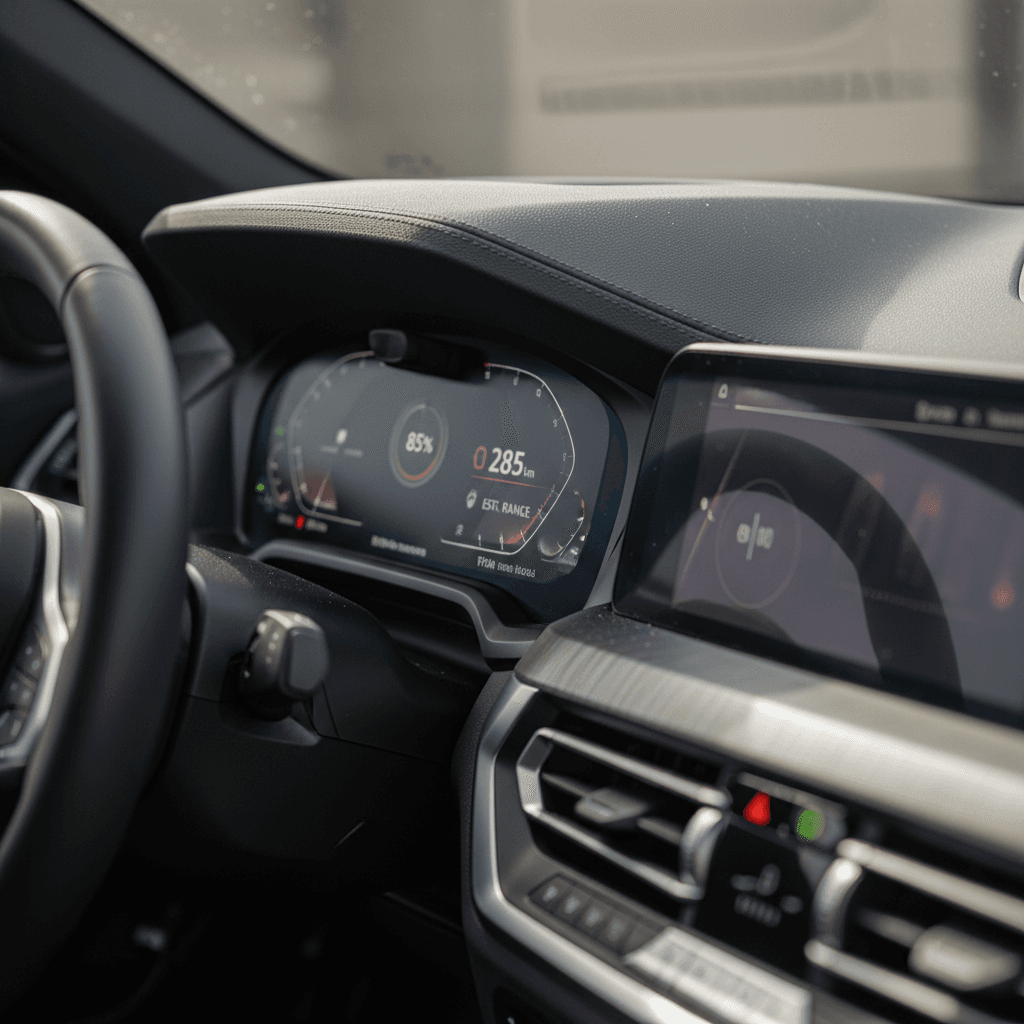
- Compare the displayed 100% range (in similar weather) to the original EPA figure for that trim.
- Drive a known route at consistent speeds to get a feel for real‑world range.
- Watch how quickly the state of charge drops at highway speeds, sudden big drops can signal issues.
- Look for warning lights or battery‑related error messages in the cluster.
How Recharged helps on used i4s
BMW i4 battery warranty and when to worry
BMW backs the i4’s high‑voltage battery with a long warranty (typically around 8 years or 100,000 miles, with a minimum of 70% capacity retained). Exact terms can vary by market and model year, so always confirm for the specific car you’re considering.
BMW i4 battery warranty at a glance
Always verify the specific warranty terms for your model year and region.
| Item | Typical BMW i4 coverage | What it means |
|---|---|---|
| High‑voltage battery warranty | ~8 years / 100,000 miles | If the pack loses too much capacity too soon, BMW may repair or replace it. |
| Capacity threshold | Around 70% remaining | Below this level during the warranty period can qualify as a defect. |
| What’s excluded | Abuse, improper modifications, accidents | Normal wear is covered; damage from misuse usually isn’t. |
Warranty coverage is about peace of mind: if your i4’s battery falls below the promised capacity threshold during the warranty period, BMW is on the hook, not you.
When to start digging deeper
Real‑world BMW i4 range loss scenarios
Numbers on a chart are one thing. Here’s how BMW i4 battery degradation per year feels in real life for different kinds of owners. These are composite scenarios based on typical EV behavior, not promises for your exact car.
How BMW i4 battery degradation shows up in daily life
Same car, different habits, very different long‑term stories.
Scenario 1: Garage‑kept commuter
Profile: 30–40 miles per day, mostly home Level 2 charging, garage‑kept in a moderate climate, daily charge limit at 80%.
After 5–6 years: Still sees roughly 90–94% capacity. Road trips just mean slightly closer‑spaced stops; daily driving feels almost unchanged.
Scenario 2: Fast‑charge road warrior
Profile: High‑mileage highway driving, frequent DC fast charging to 100%, often parked outside in summer heat.
After 5–6 years: Noticeably more range loss, maybe 15–20%. Still usable, but long trips take more planning and the car hits the warranty threshold sooner.
Scenario 3: Cold‑climate owner
Profile: Lives in a northern climate, uses pre‑conditioning and Level 2 at home, often sees winter range drops.
After 4–5 years: Permanent degradation is still modest, but winter range swings feel dramatic. The key is to separate seasonal loss from long‑term capacity loss.
Scenario 4: Low‑mileage city driver
Profile: Short urban drives, car often sits for days, sometimes left at 100% after a full charge.
After 7–8 years: Mileage is low, but some extra aging from time spent at high state of charge. Still typically well above 70%, but not as pristine as the garage‑kept commuter’s pack.
FAQ: BMW i4 battery degradation per year
Frequently asked questions about BMW i4 battery life
Bottom line on BMW i4 battery life
Viewed through a decade of modern EV experience, the BMW i4’s pack is built to be a long‑distance runner, not a sprinter. For most owners, realistic BMW i4 battery degradation per year lives in the low single digits, adding up to something like 10–15% loss over 8–10 years when the car is treated reasonably well.
If you’re already driving an i4, the recipe is simple: lean on Level 2 charging, keep daily charge limits modest, avoid letting the car bake at 100% in summer, and use fast charging as a tool, not a lifestyle. If you’re shopping used, don’t rely on guesswork. Look at real battery health data, understand how the car was used, and, if you prefer a guided path, consider buying through Recharged, where every EV comes with a verified Recharged Score Report and EV‑specialist support from first click to delivery.
Do those things, and the BMW i4’s battery should fade into the background of your ownership experience, quietly doing its job while you enjoy the part that matters: the drive.