If you drive for Lyft, your car is your paycheck. Get the vehicle wrong and you’re donating half your earnings to fuel, repairs and downtime. Get it right and you’re quietly stacking cash while everyone else is waiting in line at Costco gas. That’s why choosing the best used EV for Lyft drivers in 2026 isn’t about hype; it’s about math.
Why this guide is different
Why a used EV makes sense for Lyft drivers in 2026
EV economics for high‑mileage Lyft drivers
Rideshare is exactly the kind of work EVs were built for: predictable daily mileage, mostly city driving, lots of stop‑and‑go where regenerative braking shines. With gas prices bouncing and policy pressure mounting, Lyft is actively steering drivers toward electric options and celebrating milestones like 100 million EV rides on the platform by late 2025. For you, that translates to lower running costs, access to EV incentives, and in many markets, preferential treatment as cities push for cleaner fleets.
Think in "cents per mile"
How to think about the “best” used EV for Lyft
What actually matters in rideshare
- Real-world range: Can you cover your longest shift without a painful mid‑day fast charge?
- Comfort: Rear legroom, ride quality, climate control and seat comfort all show up in your ratings and tips.
- Total cost, not sticker price: Monthly payment + electricity + maintenance + depreciation.
- Charging access: Home or reliable public fast charging near where you actually work.
- Lyft eligibility: Model year limits and basic safety features, which vary by city.
Things you can safely ignore
- 0–60 times. Your riders don’t care if it’s 5.3 seconds; they care that you’re on time and smooth.
- Hyper‑premium trims. Leather is nice, but not if you’re upside‑down on the loan.
- Obscure tech features you’ll never touch during a shift.
- "Brand flex." A silent, clean, on‑time ride beats a fancy badge every time.
The "best" used EV for Lyft drivers is the one that turns your driving time into the highest net profit per hour, not the best Instagram shot.
Top used EV picks for Lyft drivers
Shortlist overview
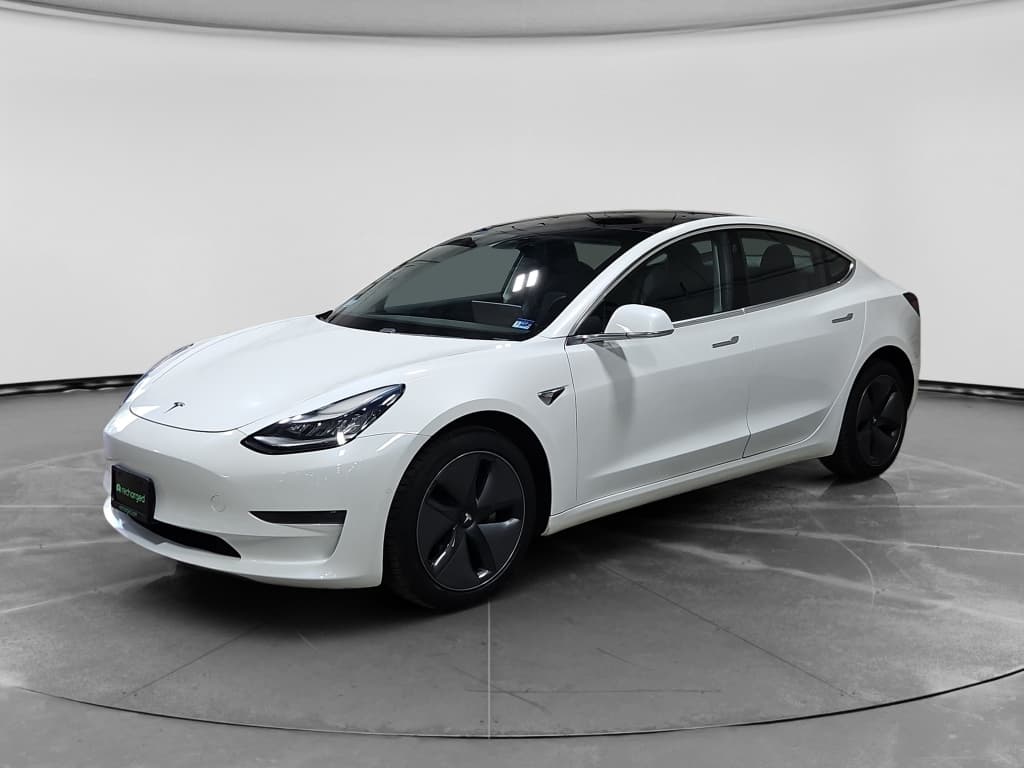
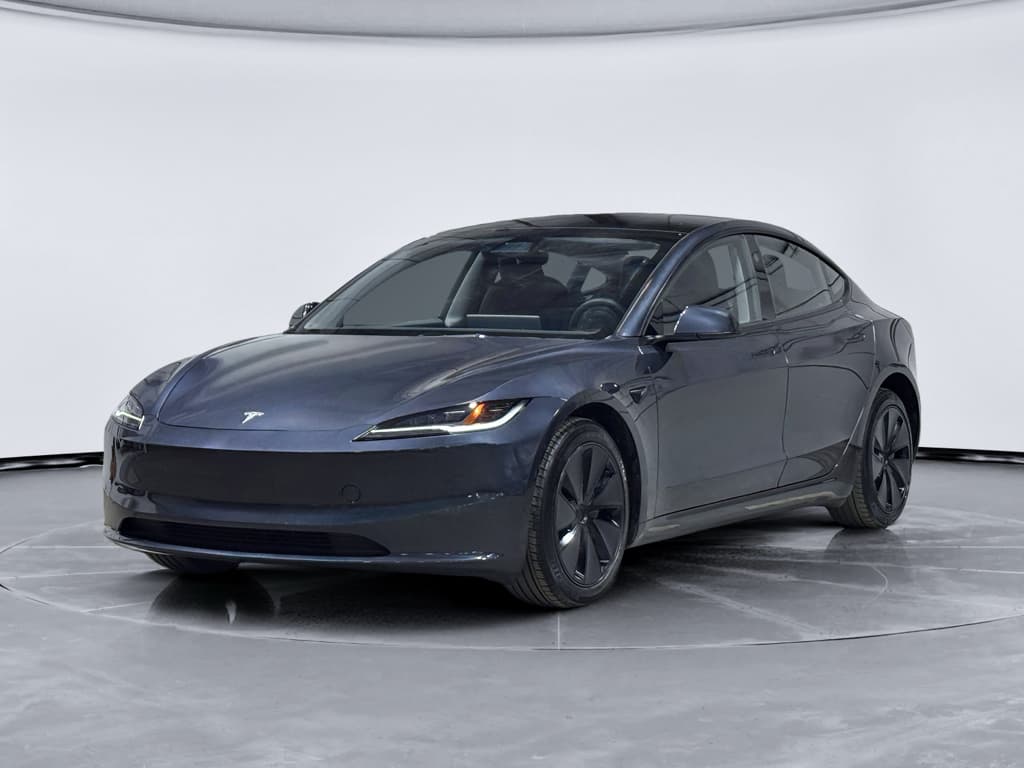
Tesla Model 3: the all‑rounder workhorse
If you asked 100 full‑time EV rideshare drivers which car they’d run if money were no object, Tesla Model 3 would win by a landslide. It’s not perfect, but it’s the closest thing the industry has to a Swiss Army knife: great range, bulletproof charging network, and a cabin that feels special even after your fifth airport run of the night.
Tesla Model 3 for Lyft: pros and cons
Best for high‑mileage drivers in big metro areas
Why it works so well
- Real range: Many trims started around 250–350 miles EPA; even with some degradation, you can often do a long shift on one charge.
- Fast charging: Tesla Superchargers are still the gold standard for reliability and speed, increasingly usable by non‑Tesla EVs but seamless for Teslas.
- Rider appeal: Many passengers see "Tesla" and expect a premium experience, which doesn’t hurt your ratings or tips.
- Low maintenance: No oil, no transmission, minimal routine service.
Where it bites back
- Purchase price: Still pricier than a Bolt or Leaf on the used market.
- Repair costs: When things break out of warranty, body and electronics work can be expensive.
- Ride quality: Earlier cars ride firmly; not everyone loves that after eight hours.
- Interior wear: White interiors look fantastic… until they’ve met a thousand airport coffees.
Sweet spot years for Lyft
Chevy Bolt EV/EUV: budget king of the city
If the Model 3 is the rock star, the Chevy Bolt EV and EUV are the session musicians who show up, nail the gig, and quietly go home with a full envelope. For urban Lyft work, airport, downtown, neighborhoods, repeat, the Bolt is brutally sensible.
What makes the Bolt so good
- Price: Used Bolts are often thousands cheaper than a comparable Tesla, especially 2019–2022 models.
- Range: Later cars are rated around 250+ miles; even with moderate degradation, that’s plenty for city‑focused days.
- Efficiency: Low energy use per mile keeps your electricity bill tiny.
- Compact but roomy: Easy to maneuver and park, but upright seating helps rear passengers.
Cautions for rideshare duty
- Battery recall: Many Bolts had battery recalls; you want one that has had the full pack replacement or documented fix.
- Fast‑charge speed: DC fast charging is only OK, not spectacular. Plan shifts around this if you can’t charge at home.
- Perceived status: Riders don’t care about badges as much as cleanliness and timeliness, but it doesn’t have the “Tesla allure.”
Bolt battery recall homework
Hyundai Kona EV & Kia Niro EV: balanced and efficient
The Hyundai Kona EV and Kia Niro EV are the quietly competent middle children: more range than a Leaf, often cheaper than a Tesla, and more space and comfort than a Bolt. They’re particularly strong choices if you split your time between city and suburban/freeway runs.
Kona EV & Niro EV for Lyft
Great balance of efficiency, comfort, and cost
Range & efficiency
Passenger comfort
Ownership experience
Climate note
Nissan Leaf: the cheapest way into EV rideshare
The Nissan Leaf is the OG of affordable EVs. For part‑time Lyft drivers or those in dense cities with short trips, a newer‑battery Leaf can be the cheapest door into electric rideshare. But you need to go in with eyes wide open.
Where the Leaf shines
- Low purchase price: Clean, later‑generation Leafs are often the least expensive EVs on the used market.
- Smooth, quiet drive: Still feels more refined than a lot of cheap gas compacts.
- Simple to live with: Easy ingress/egress, straightforward controls, decent cargo space for a hatchback.
Serious caveats
- Battery degradation: Early Leafs in particular are notorious for range loss. You must know the current usable capacity.
- CHAdeMO fast charging: The standard is being phased out in North America, which can limit your fast‑charging options going forward.
- Shorter range: Even with the 40 kWh or 62 kWh packs, you’ll want to carefully map your routes and charging if you drive long days.
Leaf as a trap car
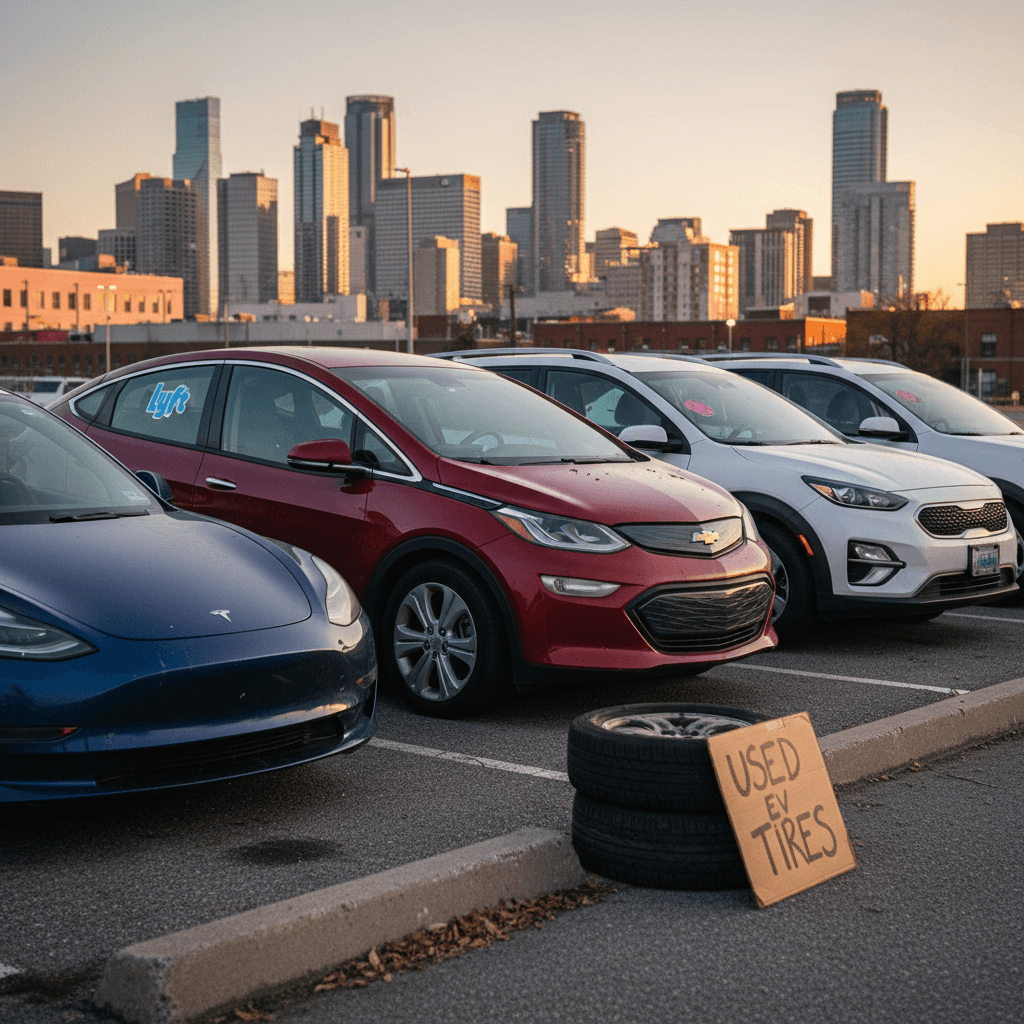
Headline comparison: best used EVs for Lyft
Best used EVs for Lyft drivers at a glance
Approximate figures for typical used examples in good condition. Always verify exact specs, range, and eligibility for your market.
| Model | Typical usable range (used) | Passenger space | Fast charging experience | Used price vs peers | Best for |
|---|---|---|---|---|---|
| Tesla Model 3 | ~220–300 mi (trim & degradation dependent) | Good front, adequate rear | Excellent – Tesla Supercharger network, high power | Higher | Full‑time drivers in big metros, airport runs, premium feel |
| Chevy Bolt EV/EUV | ~180–230 mi | Tight but acceptable rear seats | Average – adequate but not very fast | Lower | Budget‑focused city drivers, part‑time or full‑time in dense areas |
| Hyundai Kona EV | ~200–230 mi | Fine for most riders, smaller cargo area | Good – decent DC fast‑charge rates | Mid | Mixed city/suburb routes, drivers who value efficiency |
| Kia Niro EV | ~210–240 mi | Better rear room and cargo than Kona/Bolt | Good | Mid‑high | Airport, luggage, and taller passengers; comfort‑oriented work |
| Nissan Leaf (40/62 kWh) | ~120–200 mi (highly variable) | Comfortable but not spacious | Limited CHAdeMO network | Lowest | Short‑trip city work, part‑time drivers with solid charging access |
Key stats that matter day‑to‑day: range, comfort, charging, and cost.
Lyft eligibility and practical requirements for used EVs
Before you fall in love with a particular used EV, make sure it’s actually legal for Lyft where you live. Lyft’s rules change by city and tier, but as of early 2026 most markets follow some version of a model‑year cutoff, often in the 10–15‑year range, with major metros like New York, Los Angeles and Chicago enforcing stricter limits and additional safety tech requirements.
Quick Lyft readiness check for a used EV
1. Confirm model‑year eligibility in your city
In many markets, Lyft’s standard tier requires a car roughly 10–15 model years old or newer, with tighter limits for premium options. Plug your VIN into Lyft’s vehicle checker before you start shopping seriously.
2. Verify basic safety tech
Electronic stability control is non‑negotiable. Newer vehicles may also need factory automatic emergency braking and other safety systems to qualify for some tiers.
3. Check title status and history
Salvage or rebuilt titles are often disqualified. A clean history is also your best friend for future resale, especially on high‑mileage EVs.
4. Look at interior condition like a passenger
Ripped seats, damaged plastics, funky smells, all of this shows up in your star ratings and tips. You’re not just buying a drivetrain; you’re buying a rolling waiting room.
5. Make sure there’s room for humans and luggage
If you routinely hit the airport, prioritize trunk space and rear legroom over gimmicky features. An extra carry‑on in the hatch is worth more than another driving mode.
Local rules beat online advice
Battery health matters more than model year
For a rideshare driver, the traction battery is your engine, fuel tank, and retirement plan rolled into one. A 2019 EV with a strong, well‑cared‑for pack can be a better workhorse than a newer car that’s fast‑charged to death on a hot DC charger every day.
How to evaluate a used EV battery for Lyft duty
You’re buying usable miles, not just kWh on a brochure
Key signs of a healthy pack
- Consistent range: Reported range on a full charge lines up reasonably with the car’s original rating and independent owner reports.
- Normal DC charge curves: The car can still accept respectable fast‑charge power (where applicable) without immediately throttling.
- No warning lights: No battery or high‑voltage system alerts on the dash.
Red flags for rideshare use
- Major range loss: A car rated for 250 miles when new that now struggles to deliver 150 in mild weather.
- Uneven cell behavior: Big state‑of‑charge swings, unexplained shutdowns, or dealers hinting you’ll "probably be fine" instead of showing you data.
- Incomplete recall work: Especially important for vehicles like the Chevy Bolt with well‑known battery campaigns.
Where Recharged helps
Ready to find your next EV?
Browse VehiclesCharging strategy for Lyft drivers in an EV
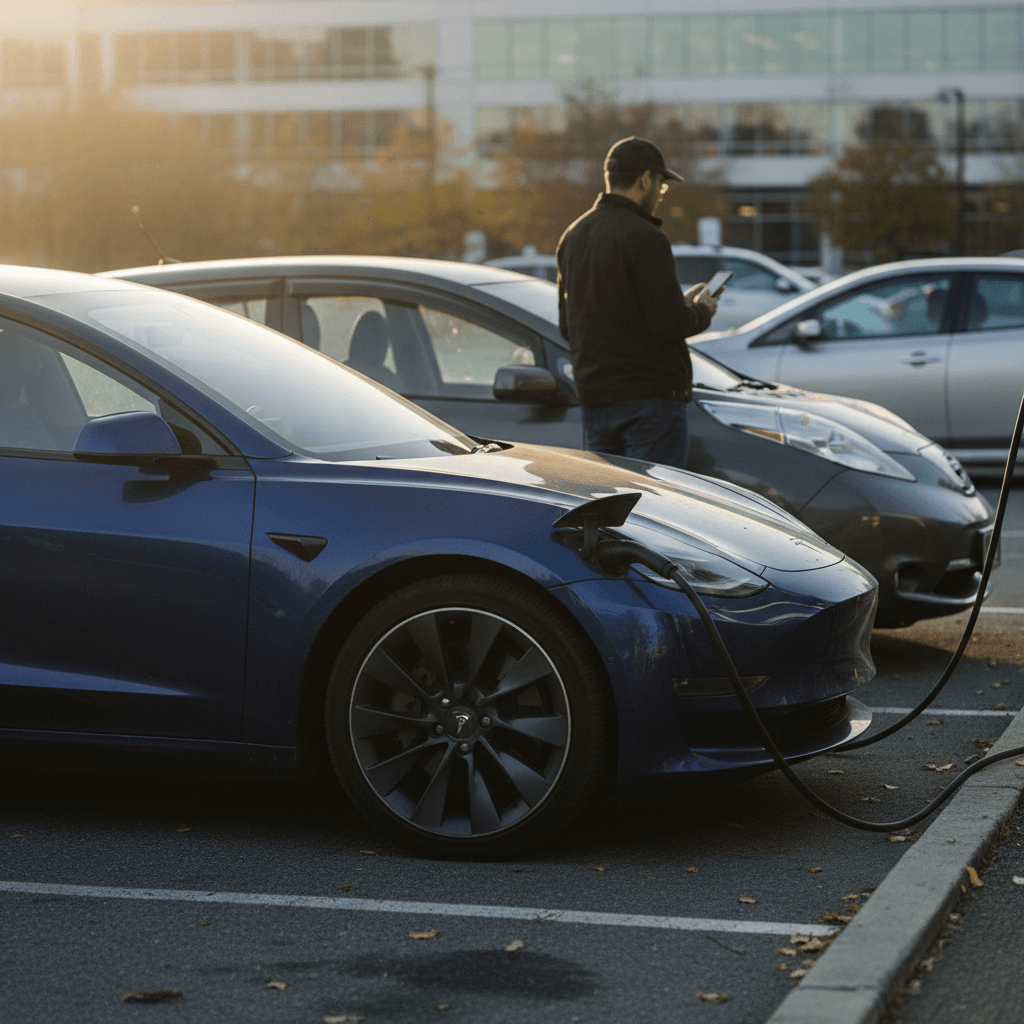
The right car is only half the story; the other half is how and where you charge it. A great EV plus a bad charging plan is a stressful job. A decent EV plus a smart charging routine is a license to print money.
1. Home charging = king
If you can install a Level 2 charger at home (a 240‑volt outlet and a 32–48 amp unit), do it. Overnight charging lets you start every shift full, often on off‑peak electric rates, and almost eliminates mid‑day detours.
2. Map your "work chargers"
If home charging isn’t possible, build a mental map of fast chargers near your usual hotspots, airports, downtown, popular neighborhoods. Favor reliable networks with multiple stalls so you aren’t waiting in line with a half‑dozen other ride‑hail drivers.
3. Charge around your breaks
Think of DC fast charging as your lunch, bathroom, email and stretch‑your‑back time. Plug in, take care of yourself, and get back out with 50–70% instead of waiting to hit 100%, where charging slows to a crawl.
Beware the "fast charge tax"
Financing and depreciation on a used EV “work car”
Rideshare cars live hard lives: huge mileage, lots of stop‑and‑go, passengers in and out all day. That’s bad news for resale value, but it’s also why a carefully chosen used EV can make more sense than buying new. Someone else took the worst of the depreciation hit; you get a tool, not a trophy.
Money principles for a Lyft EV
Think like a small business, not a car enthusiast
Match term to your plan
Payment vs. operating costs
Use financing tools built for EVs
Checklist: choosing the right used EV for Lyft
Your pre‑purchase Lyft EV checklist
Clarify your driving pattern
Estimate how many miles you drive on an average shift, how many days a week, and where, airport, suburbs, dense city, or a mix. Your real‑world pattern should drive your choice more than online reviews.
Decide on minimum usable range
For most full‑time drivers, targeting at least 180–200 miles of *proven* usable range gives breathing room. If you routinely do long airport runs in sprawled metros, more is better.
Audit your charging reality
Can you charge at home? At work? Near your main hot zones? If you’re stuck using public charging only, prioritize cars with faster DC capability and pick models that work well with the most common networks in your area.
Run the total cost per mile
Estimate monthly payment, electricity, insurance and expected maintenance, then divide by your monthly miles. Compare that figure against your current gas car to see how quickly a used EV pays back.
Get professional battery and vehicle health data
Use tools like the Recharged Score Report to see objective battery health, pricing fairness and inspection results. For a work tool you’ll live in, guessing isn’t a strategy.
Sanity‑check Lyft and insurance rules
Confirm your target car’s eligibility in Lyft’s system and get an insurance quote before you buy. An unexpected premium spike can eat the very savings you’re chasing with an EV.
FAQ: best used EVs for Lyft drivers
Frequently asked questions about used EVs for Lyft
Bottom line: which used EV should you buy?
If you’re a Lyft driver in 2026, the real question isn’t whether you should go electric, it’s which used EV will turn the countless hours you spend in that seat into the most profit and the least stress.
- If you want the best all‑rounder and can afford it, a used Tesla Model 3 is the top pick for most full‑timers.
- If you’re focused on value and mostly run city routes, a Chevy Bolt EV/EUV is often the best return on investment.
- If you split time between city and highway and carry lots of people or bags, look hard at a Kia Niro EV or Hyundai Kona EV.
- If you’re part‑time or extremely budget‑constrained, a carefully vetted Nissan Leaf can still make sense, but only with rock‑solid battery health.
Whichever path you choose, treat this like the business decision it is. Run the numbers, verify battery health, confirm Lyft eligibility in your city, and design a charging routine that fits your life. And if you’d like a partner that lives and breathes used EVs, Recharged can help you find, finance, and evaluate the right car, including a full Recharged Score Report so you know exactly what you’re buying before it becomes your office on wheels.