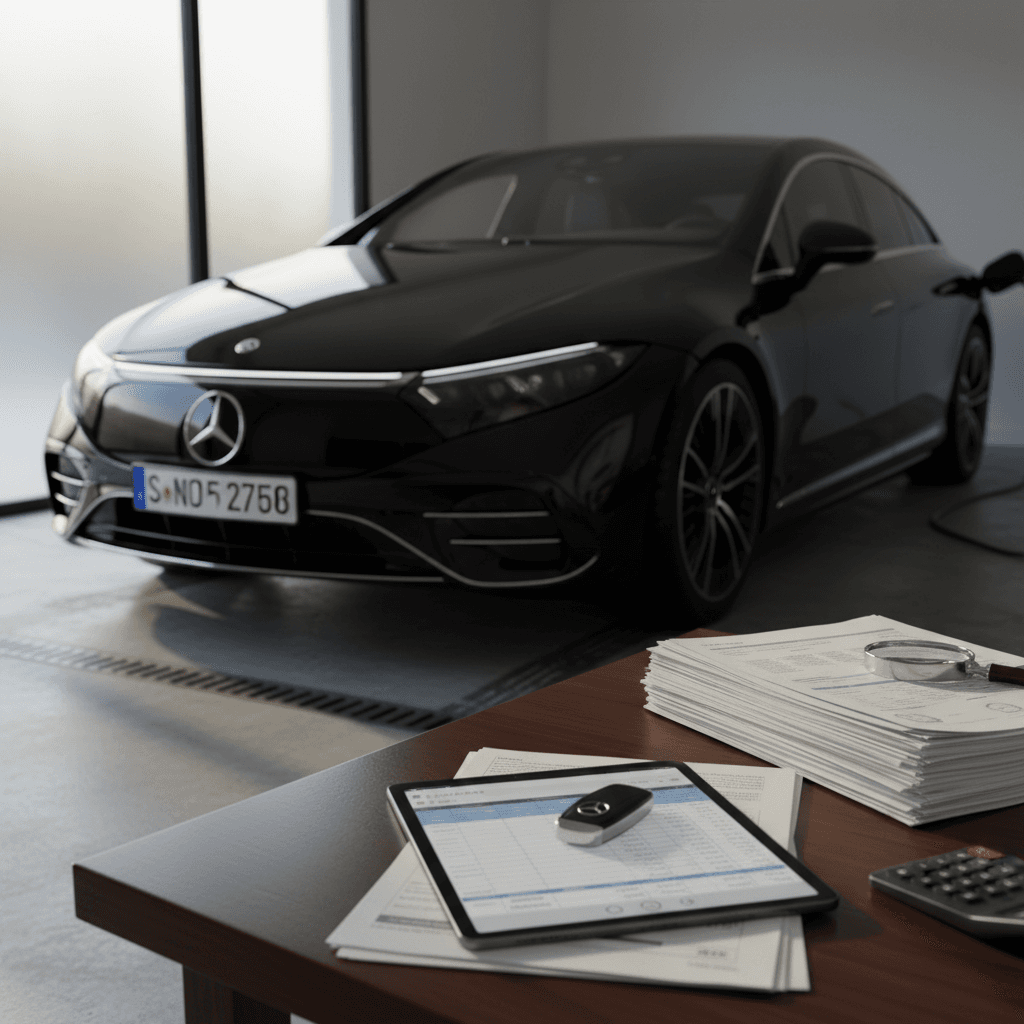
If you’ve fallen for the quiet, spaceship feel of the Mercedes EQS, the next question is less glamorous but just as important: how much is insurance on a Mercedes EQS? Because it’s a six‑figure luxury EV when new, the premiums don’t look anything like a compact crossover’s, and the spread between a careful driver and a careless one can be huge.
Quick take
Mercedes EQS insurance at a glance
Mercedes EQS insurance snapshot (typical U.S. ranges)
These aren’t quotes, your numbers will depend on your ZIP code, insurer, coverage limits, and more. But they’ll give you a realistic sense of where EQS insurance usually lands compared with something like a Tesla Model 3 or Hyundai Ioniq 5.
So…how much is insurance on a Mercedes EQS?
Let’s answer the core question first. How much is insurance on a Mercedes EQS if you’re a typical U.S. driver, carrying full coverage on a relatively new car?
Typical annual Mercedes EQS insurance ranges (U.S.)
Approximate ranges for full‑coverage policies on a Mercedes EQS, assuming good credit and a clean record. Your actual rate can fall outside these bands.
| Driver profile & vehicle | Approx. annual full‑coverage premium | Approx. monthly cost |
|---|---|---|
| 30‑something driver, clean record, EQS 450+ | $2,400–$3,000 | $200–$250 |
| 40‑something driver, clean record, EQS 450+ or EQS 500 4MATIC | $2,700–$3,600 | $225–$300 |
| Younger driver (under 30), clean record, EQS 450+ | $3,000–$4,200+ | $250–$350+ |
| Any age, 1–2 recent at‑fault accidents, EQS 580 | $3,600–$5,000+ | $300–$415+ |
| Older used EQS (out of warranty), liability + high deductibles | $1,200–$1,800 | $100–$150 |
These bands are directional, not guaranteed quotes. Always compare real offers before you buy.
Important context
If you’re financing or leasing, your lender will almost certainly require full coverage (liability, collision, and comprehensive) and may set minimum limits that keep premiums toward the upper end of these ranges.
What actually drives Mercedes EQS insurance costs?
Insurers don’t just see a glamorous electric Mercedes. They see a matrix of risk: what it costs to fix, how often it’s crashed, and how likely it is to be stolen or flooded. With the EQS, a few levers matter more than others.
Key factors that move your EQS premium up or down
Same car, very different bills depending on your profile.
Your driving record
Where you live & park
Annual mileage & usage
Trim level & options
Repair & parts costs
Coverage level & deductibles
Tell your insurer how you really use the car
EQS trims and packages: how they change your premium
From an insurer’s perspective, not all EQS badges are equal. The powertrain, sticker price when new, and the tech packed into the bumpers and doors all tilt the risk profile.
EQS 450+ and EQS 500 4MATIC
- Lower entry price than high‑output trims, which helps keep comprehensive and collision a bit more manageable.
- Still loaded with driver‑assist tech and big wheels, so they’re not “cheap” to fix, but usually cheaper than an EQS 580 or AMG.
- Good candidates if you want the EQS experience with somewhat more reasonable insurance costs.
EQS 580 4MATIC and AMG variants
- Higher MSRP, more performance, and often more complex wheel/tire setups.
- More expensive body panels, brakes, and electronics, so claim payouts are bigger on average.
- Insurers may also assume the car is driven harder, nudging premiums up further.
Packages and wheel choices matter
Do EVs like the Mercedes EQS cost more to insure?
You may have heard that electric vehicles cost more to insure. That’s sometimes true, but the EQS is carrying two price premiums at once: it’s electric, and it’s a full‑size German luxury flagship.
- Battery packs and high‑voltage components require specialized training and equipment to inspect and repair after a crash.
- Body shops may need to recalibrate a forest of cameras, radar units, and lidar sensors after even a minor fender‑bender.
- Parts availability for newer EV‑specific components can be spottier than for long‑running gas models, which can lengthen and complicate repairs.
- Insurers are still building a claims history for many newer EVs, so they sometimes price conservatively until the data matures.
On the flip side, the EQS brings strong crash‑test performance, collision‑avoidance tech, and lower fire risk than you might fear from internet headlines. Some insurers now offer modest EV or green‑vehicle discounts, which can help offset the higher repair potential.
9 ways to lower your Mercedes EQS insurance bill
You can’t negotiate with the EQS’s sticker price when it was new, but you can absolutely shape the insurance conversation. Here are practical levers you can pull before and after you buy.
Practical EQS insurance savings moves
1. Shop more than one insurer
Luxury EV pricing varies wildly between carriers. Get at least three full‑coverage quotes that match deductibles and liability limits before you sign. Many EQS owners leave money on the table by renewing automatically.
2. Adjust your deductibles thoughtfully
If you can afford it, raising your comprehensive and collision deductibles, from, say, $500 to $1,000, can noticeably reduce premiums. Just be honest about what you’d really be comfortable paying out of pocket after a claim.
3. Ask about EV and safety discounts
Some companies offer small discounts for driving an EV or for advanced safety features. The EQS has plenty of both. Make sure every available discount, from green‑vehicle to telematics, is applied to your quote.
4. Consider telematics or usage‑based programs
If you’re a smooth, low‑mileage driver, an app‑based program that tracks braking, acceleration, and time of day can shave real dollars off a high EQS premium, especially if you rarely commute in rush hour.
5. Bundle home and auto when it makes sense
Bundling an EQS with a homeowner’s or renter’s policy can earn a solid multi‑policy discount. For a pricey car, the percentage discount translates into meaningful dollars.
6. Choose the right trim and options
If insurance cost is a major concern, lean toward the EQS 450+ or 500 with sensible wheel sizes instead of the top‑spec AMG with ultra‑low‑profile rubber. You’ll still get the quiet, luxurious ride without maxing out repair costs.
7. Re‑rate your policy as the car ages
As your EQS depreciates, especially if you bought used, revisit your coverage each renewal. There may come a point when carrying full collision on an older, lower‑value EQS doesn’t pencil out the way it did when it was new.
8. Protect your driving record
Obvious, but critical. A single speeding ticket or at‑fault crash will hit harder when the underlying vehicle is expensive. A defensive‑driving course can sometimes remove points or qualify you for a small discount.
9. Compare quotes when buying used
If you’re cross‑shopping a couple of specific EQS VINs, different trims, model years, or mileages, get sample quotes on each. One configuration might be substantially cheaper to insure even if the purchase price is similar.
Where Recharged fits in
Ready to find your next EV?
Browse VehiclesUsed Mercedes EQS insurance: where you can really save
A new six‑figure EQS carries six‑figure‑car insurance. But on the used market, EQS prices have softened faster than many owners expected, and that can work in your favor when it’s time to call the insurance company.
- Lower vehicle value means the maximum collision/comprehensive payout drops, which can bring your premium down over time.
- If you buy an EQS that’s a few years old, insurers have more claims data and repair cost history to lean on, which can stabilize pricing.
- A used EQS you pay cash for or finance at a modest amount gives you more flexibility to tweak coverage limits and deductibles than a brand‑new leased one.
Use the Recharged Score to your advantage
If you’re on the fence between a new build and a well‑cared‑for used EQS, run both through your insurer. You might find the used car lowers your monthly payment twice: once on the loan, again on the insurance.
Sample insurance scenarios for Mercedes EQS drivers
Numbers are easier to digest when you see them in context. These are not quotes, just realistic sketches of how different EQS owners might see very different premiums.
City professional, new EQS 580
Profile: 38‑year‑old, lives in a major metro area, garages at home, commutes 10,000 miles/year.
Vehicle: 2‑year‑old EQS 580 4MATIC with big wheels and full driver‑assist suite.
Likely outcome: Full‑coverage premiums might sit in the mid‑$200s to low‑$300s per month range, especially with higher liability limits.
Suburban family, used EQS 450+
Profile: 45‑year‑old couple, clean records, two‑car household in a suburb with lower traffic claims.
Vehicle: 4‑year‑old EQS 450+ bought used, moderate mileage, bundled with home insurance.
Likely outcome: With bundling and modest deductibles, full‑coverage premiums could land closer to the low‑$200s per month, or less with higher deductibles.
Weekend toy, liability‑only
Profile: 55‑year‑old enthusiast, multiple vehicles, drives the EQS only on weekends and trips, very low annual miles.
Vehicle: Older, paid‑off EQS with declining market value.
Likely outcome: If they drop collision/comprehensive and carry robust liability only, the annual premium might fall under $150 per month, though risk tolerance becomes a bigger part of the decision.
When liability‑only is a bad idea
Insurance checklist before you buy an EQS
Must‑do insurance steps before signing for an EQS
1. Get sample quotes on specific VINs
If you’re choosing between a few EQS cars, ask insurers to quote each VIN. Trim, options, and model year can shift the price, and may nudge you toward one car over another.
2. Decide on your coverage philosophy
Before numbers start flying, know your stance on liability limits and deductibles. High‑value cars deserve high liability limits; skimping here to save a few dollars is rarely worth it.
3. Ask about EV‑specific programs
Some insurers have dedicated EV or high‑value‑vehicle programs with different claims handling, repair networks, or perks like OEM‑parts guarantees. These can matter more with a flagship like the EQS.
4. Verify repair options near you
Check which body shops near you are certified to work on Mercedes EVs and whether your insurer steers work there. Repair logistics matter with a car this complex.
5. Factor insurance into your total budget
Don’t treat insurance as an afterthought. Add your likely premium to your monthly payment, charging costs, and maintenance. At Recharged, we encourage shoppers to look at total cost of ownership, not just the sale price.

FAQ: Mercedes EQS insurance
Common questions about Mercedes EQS insurance
The bottom line on Mercedes EQS insurance
Insuring a Mercedes EQS costs more than insuring a mainstream EV, but it doesn’t have to be a mystery or a nasty surprise. For many drivers, full‑coverage premiums land somewhere between the low‑$200s and low‑$300s per month, with real variation based on trim, driving record, and location. By shopping quotes aggressively, being honest about how you use the car, and considering a well‑priced used EQS, you can enjoy the calm, electric Mercedes experience without letting insurance dominate your budget.
If you’re exploring a used EQS, Recharged can help you look past the sticker and into total cost of ownership, battery health, fair market pricing, insurance expectations, and financing included. That way, when you glide away in near silence, you’ll know the numbers are as solid as the car feels.