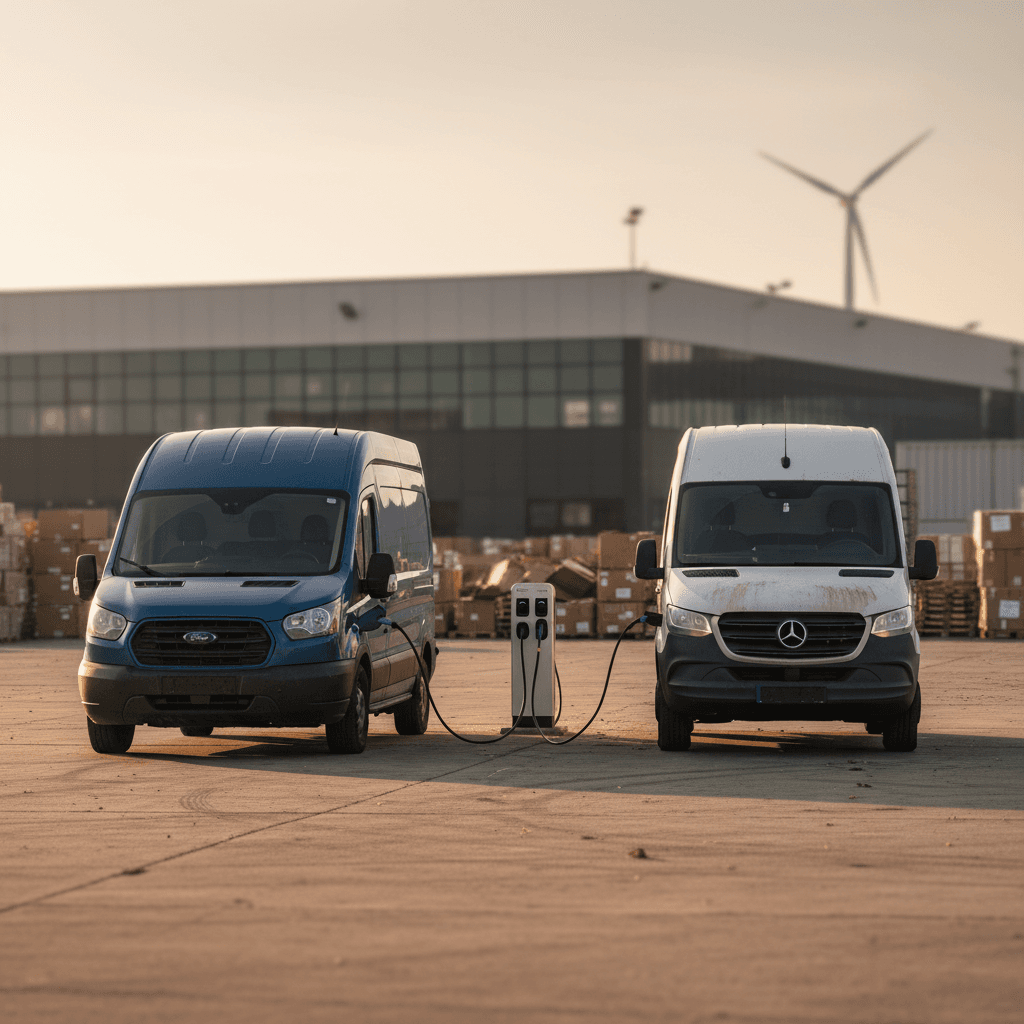
If you’re running routes, hauling tools or building out a small fleet, the question isn’t **if** electric work vans will make sense, it’s **when**. The good news for 2025 is that the first wave of Ford E‑Transits, Mercedes‑Benz eSprinters and Rivian commercial vans is starting to hit the used market, and some are finally priced where contractors and small delivery operators can justify the switch. This guide breaks down the best used electric work vans, how they really perform on the job, and what to inspect before you sign anything.
Who this guide is for

Why used electric work vans are finally worth a look
In the early days, electric work vans were pilot projects: high MSRPs, short range, and most units locked up in big‑fleet contracts. That’s changed. Ford’s E‑Transit has become the **best‑selling electric van in the U.S.**, moving thousands of units a year, which is now feeding a steady stream of off‑lease and low‑mileage used vans into the market. At the same time, Mercedes has launched the long‑range eSprinter in the U.S., and Rivian has opened its formerly Amazon‑exclusive delivery vans to other fleets, with production volume ramping up and eventual used supply to follow.
Where used electric vans make the most sense
Quick look: best used electric work vans
Best used electric work vans at a glance
These are the core models U.S. buyers are most likely to see in the used market over the next 1–3 years.
| Model | Best for | Typical usable range* | Max payload (approx.) | Cargo volume |
|---|---|---|---|---|
| Ford E‑Transit Cargo Van | Best overall small business work van | ~100–130 miles real‑world | Up to ~3,200 lbs | Up to ~487 cu ft |
| Mercedes‑Benz eSprinter | Longer regional routes, premium fleets | Up to ~150–170 miles real‑world (high‑roof long‑range) | Around 2,600 lbs | ~370+ cu ft depending on body |
| Rivian Commercial Van / EDV | Last‑mile parcel and urban delivery | ~120–150 miles real‑world | Around 2,600–2,700 lbs | Up to ~650 cu ft (larger variants) |
Specs are representative of common U.S. configurations; always confirm details for the specific van you’re considering.
About range numbers
Ford E‑Transit: best all-around used electric work van
If you’re searching for the **best used electric work van** today, you’re most likely to land on a Ford E‑Transit. Ford has been selling this all‑electric version of the Transit cargo van in the U.S. since the 2022 model year, with multiple roof heights and body lengths. It shares the basic shell and upfit ecosystem of the regular Transit, which is a huge advantage if you’re already used to building shelves, partitions, and ladder racks around Ford vans.
Ford E‑Transit: where it shines for used buyers
Why many fleets and small businesses are making this their first electric work van.
Familiar platform
The E‑Transit keeps the **same basic cargo box** as the gas Transit, so existing shelving, bins, and racks often bolt right in. That simplifies upfits and keeps body shop guesswork off your plate.
Right-sized range for city routes
Most U.S. cargo versions deliver roughly **100–130 miles of real‑world range** per charge when lightly to moderately loaded, enough for typical urban and suburban routes that return to base every night.
Easy service and parts
With Ford’s large dealer network and strong commercial support, you’re not hunting for a boutique shop when the van needs a HVAC blower motor or door latch. That matters when it’s your rolling workshop.
Ford E‑Transit numbers that matter
Spec tip: onboard power for tools
Used pricing on E‑Transits is driven largely by mileage, battery condition, and how hard the van’s first owner worked it. A lightly used, low‑roof cargo van that served as a mobile IT or telecom rig is usually a very different proposition than a high‑roof unit that spent three years fully loaded on mixed‑weather parcel routes. That’s where independent battery‑health data and service records become critical.
Mercedes eSprinter: best for range and upscale fleets
The **Mercedes‑Benz eSprinter** arrived later to the U.S. but quickly carved out a niche with its longer range and premium cabin. For routes that regularly push past 120 miles in a day but still return to base, the eSprinter’s larger battery and efficient powertrain can reduce range anxiety without moving to a far more expensive bespoke truck chassis.
Pros of a used eSprinter
- Longer range: High‑roof, long‑range versions can realistically deliver around 150–170 miles per charge in mixed driving when lightly to moderately loaded.
- Refined cabin: Mercedes’ MBUX infotainment, better sound insulation, and driver‑assist options can reduce fatigue on long days.
- Strong upfit ecosystem: The diesel Sprinter has long been a favorite for specialty bodies; a lot of that knowledge carries over.
Trade‑offs to consider
- Higher buy‑in: New eSprinters sticker higher than E‑Transits, and that price gap often persists in the used market.
- Payload limits: The big battery and premium features eat into payload versus an equivalent diesel Sprinter.
- Dealer coverage: Mercedes’ commercial dealer footprint is improving, but it’s still thinner than Ford’s in some regions.
Best use cases for a used eSprinter
Rivian Commercial Van / EDV: best for last‑mile delivery
Rivian’s electric delivery vans, originally built exclusively for Amazon, are starting to open up to non‑Amazon fleets under the **Rivian Commercial Van / EDV** banner. These are purpose‑built last‑mile delivery rigs, with tall walk‑in bodies, wide rear and side doors, and interiors optimized for parcel shelves instead of general trades.
Rivian commercial van: strengths and limitations for used buyers
Think like a parcel company before you buy one for general contracting.
Why fleets love it
- Huge cargo space: Larger variants can exceed 600 cubic feet, rivaling or beating many traditional step vans.
- Driver‑focused design: Integrated shelves, low step‑in height, and big glass areas were built around high‑frequency delivery routes.
- Modern tech stack: Native telematics and over‑the‑air updates make fleet management easier.
What to watch out for used
- Highly specialized interior: Shelving and bulkheads are tailored for parcels; converting to a trades van can take real fabrication work.
- Hard‑used duty cycles: Many early vans did heavy stop‑and‑go work; inspect for body wear, door issues, and suspension fatigue.
- Charging footprint: These vans shine when paired with dedicated depot charging, not ad‑hoc public fast charging.
Don’t underestimate upfit costs
Other electric work vans you might see used
Beyond the big three above, you may run into other electric commercial vans in auction lanes or online listings, especially if you buy nationally. These can be interesting opportunities, but parts and service coverage vary widely.
- **BrightDrop Zevo** cargo vans from GM‑backed fleets, primarily ex‑parcel use. Great cargo space; check parts and service options in your region.
- Early **European‑market imports** (like Renault Master E‑Tech‑based vans) that a few operators tried in small volumes. Approach cautiously unless you have strong local support.
- Niche models from smaller manufacturers or pilot programs. These can be affordable, but resale and long‑term support are big question marks.
Be cautious with orphaned platforms
Key specs that matter for used electric work vans
Gas and diesel van buyers are used to thinking **payload, cubic feet, and tow rating**. With used electric work vans, those still matter, but you also need to think in kilowatt‑hours, charging speeds, and real‑world range under load. Here’s how to evaluate spec sheets without getting lost in the marketing.
Five specs to prioritize
Focus on how the van will behave on your actual routes, not just on paper.
Payload and GVWR
Once you know what your crew actually carries, tools, materials, shelving, confirm that the van’s **door‑jamb payload rating** leaves comfortable margin. Remember that heavy upfits eat into capacity.
Battery size (kWh)
All else equal, a larger battery pack offers more usable range but can reduce payload. Look at the **usable** (not just gross) kWh figure when available.
Real‑world range
Compare your daily route length (plus detours and weather headroom) to **conservative range estimates**. In many cases, planning around 70–80% of rated range is smart for work duty.
Charging speed
Check both AC charging (for overnight depot charging) and DC fast‑charging capability if your routes sometimes require mid‑day top‑ups.
Cargo volume and layout
High roofs and extended bodies help squeeze more stops into each run, but also add frontal area that hurts efficiency at highway speeds.
Drive cycle fit
Many electric vans are optimized for **stop‑and‑go city work**, where regen braking shines. Pure highway routes at 70+ mph will hammer range.
Match van to route, not the other way around
Running costs and TCO vs. gas or diesel vans
On paper, electric work vans often cost more to buy than their gas or diesel siblings, even used. But in day‑to‑day operations, they claw back that difference through lower fuel and maintenance costs, especially in markets with high gasoline or diesel prices.
Where electric vans save you money
- Energy costs: Charging overnight on commercial or time‑of‑use rates is often dramatically cheaper than diesel per mile.
- Maintenance: No oil changes, fewer moving parts, and reduced brake wear thanks to regenerative braking.
- Driver satisfaction: Smooth, quiet operation and instant torque can boost retention, which has its own cost benefits.
Costs to keep in mind
- Charging infrastructure: Even a basic Level 2 setup at your depot has upfront costs. For multiple vans, panel upgrades and load management become real projects.
- Battery degradation: Range shrinks over time. That’s why you’ll want objective battery‑health data on any used van.
- Resale risk: Technology is advancing quickly. A great deal today should still pencil out if you need to sell or downsize in a few years.
Think in cost per mile, not MPG
How to inspect a used electric work van
Inspecting a used electric work van is part traditional commercial‑vehicle checklist, part EV‑specific battery and charging review. You’re not just buying a body and a driveline, you’re buying software, charging compatibility, and a battery pack that can make or break your routes.
Used electric work van inspection checklist
1. Verify battery health and range
Ask for a **third‑party battery‑health report** or at least state‑of‑charge and range screenshots at various percentages. Compare expected range to your longest realistic route, not just brochure numbers.
2. Pull telematics and service history
For ex‑fleet vans, request telematics data that shows duty cycle, charging habits, and any derating events. Cross‑check with dealer service records for high‑voltage system work, inverter or DC‑DC converter replacements, and recurring trouble codes.
3. Inspect body and cargo area for hard use
Walk the roof, check door seals and hinges, and look for floor dents from pallet jacks or dropped loads. Electric vans often run heavy urban routes, cosmetic wear is fine, structural damage is not.
4. Test all charging options
Confirm that the van charges properly on **Level 2 AC** and, if equipped, DC fast charging. Look for any history of charging‑port replacements or inverter faults, which can signal deeper issues.
5. Evaluate tires, brakes, and suspension
Electric vans are heavy and accelerative, which can chew through tires and brakes. Uneven tire wear or sagging springs suggest overloaded or abused service life.
6. Confirm software, keys and fleet locks
Make sure you have full access to the OEM app or portal, that fleet settings aren’t still locked to a prior owner, and that all keys, fobs, and PINs are handed over.
Beware of incomplete conversions
How Recharged helps with used electric work vans
Buying a used electric work van isn’t the same as grabbing another gas Transit off a dealer lot. You’re betting your business on battery health, software support, and charging fit, factors that most traditional inspections barely touch. That’s the gap Recharged was built to fill.
What you get when you buy an EV through Recharged
Confidence that your next work van will do the job on day one and year three.
Recharged Score battery diagnostics
Every vehicle on Recharged comes with a **Recharged Score Report**, including objective battery‑health data so you know how much usable range you’re really buying, critical for route planning.
Fair pricing and flexible financing
Recharged benchmarks **fair market pricing** for used EVs and offers financing tailored to small businesses and fleets, so you can keep cash free for inventory and payroll.
Trade‑in, consignment and delivery
You can trade in an existing van, get an instant offer or use consignment, then have your next used electric work van delivered nationwide. EV‑specialist support walks you through charging, route fit, and TCO.
Ready to find your next EV?
Browse VehiclesPlan your transition, not just your next purchase
FAQ: used electric work vans
Frequently asked questions about used electric work vans
Bottom line: choosing the best used electric work van
The **best used electric work van** isn’t the one with the biggest battery or flashiest spec sheet, it’s the one that covers your routes comfortably, carries your tools safely, and keeps your drivers happy without blowing up your budget. For most U.S. buyers today, a well‑spec’d Ford E‑Transit will be the most common and practical option, with the Mercedes‑Benz eSprinter appealing to operators who need extra range and refinement, and Rivian’s commercial vans serving highly specialized last‑mile delivery use cases.
As inventory builds and more of these vans roll off their first leases, the used market will only get better for small businesses. The key is to treat every van like the business asset it is: scrutinize battery health, match specs to routes, and factor total cost of ownership over the next three to five years, not just tomorrow’s payment. With the right due diligence and the right partner, your next work van can be electric, used, and still exactly the tool your business needs.