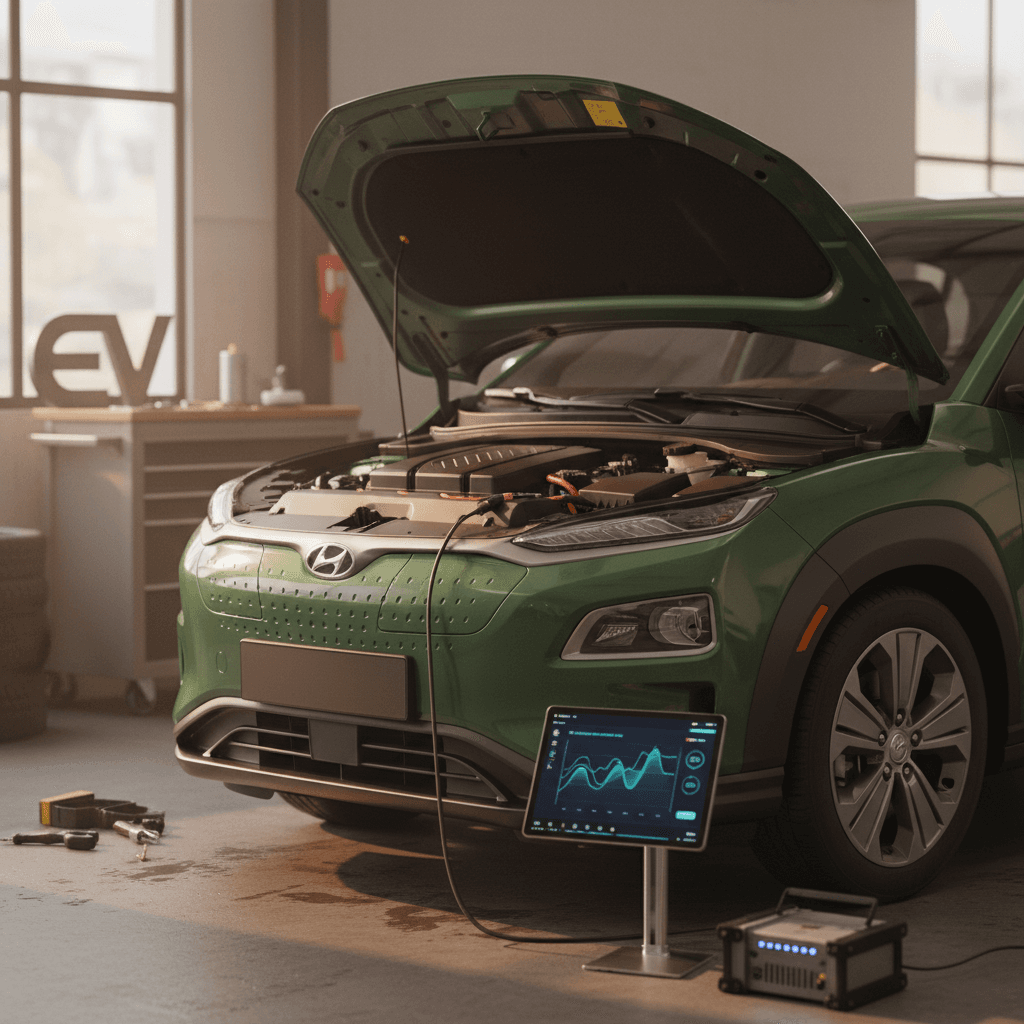
If you’re shopping for a compact EV SUV in 2026, the Hyundai Kona Electric is going to show up in every search result and half the Craigslist ads. It’s efficient, cheap to run, and often undercuts rivals on price. But its reliability story is…complicated. From early battery‑fire recalls to very long‑lived packs and mixed owner surveys, “Hyundai Kona Electric reliability 2026” is not a one‑word answer.
Two very different stories
Hyundai Kona Electric reliability in 2026: the big picture
Let’s start with the headline: the Kona Electric is not a disaster, but it is not a Toyota‑grade appliance either. Early model years were dragged through large battery‑fire recalls and multiple NHTSA campaigns. More recent 2023–2025 cars have fewer high‑profile issues and have even picked up awards for holding their value, which usually correlates with decent long‑term confidence.
Kona Electric reliability snapshot for 2026
So the pattern looks like this: strong battery durability, middling overall reliability, and a heavy dose of recall drama. That’s important if you’re walking a used‑EV lot in 2026 trying to decide between, say, a Kona Electric and a Chevy Bolt EUV or Nissan Leaf.
A 2026 twist: fresh software recall
Where the Kona Electric is actually strong
Real strengths of the Kona Electric
Why so many owners still recommend it despite the drama
Excellent efficiency
Battery durability
Low running costs
Compact & practical
Long battery warranty
Residual value awards
In other words, when a Kona Electric behaves itself, it’s terrific to live with. Quiet, frugal, easy to park, and blessed with a long battery warranty. That’s why so many owners report “no issues at all” while others are writing essays about months‑long repairs.
Common Hyundai Kona Electric problems by model year
Reliability depends heavily on which Kona Electric you’re looking at in 2026. The car spans two main generations with overlapping issues:
Kona Electric reliability by generation
Patterns seen across owner reports, recall campaigns, and service bulletins.
| Generation / years | What to watch for | How serious it is | Buying‑in 2026: red, yellow, green |
|---|---|---|---|
| Gen 1 (2019–2021) | Battery‑fire recalls, high‑voltage battery replacements, motor/gear reduction unit noise, various software updates | High – some packs and components were replaced, and early recall handling was rocky | Red to Yellow: Only consider with full recall history and battery report |
| Gen 1.5 (2022–early 2023) | Far fewer fire incidents but still subject to software/BCM updates, occasional motor or DC‑DC converter issues | Medium – not every car is affected, but you must check VIN for open actions | Yellow: Can be a good buy with clean history and long warranty left |
| Gen 2 (2024–2025+) | Mostly software/electronics glitches (infotainment, driver‑assist), occasional 12V system faults, new BMS recall updates | Low to Medium – annoying more than catastrophic, generally resolved under warranty | Green: Best balance of updated hardware and remaining warranty |
Use this as a high‑level guide; always check the specific VIN for recall and service history.
The battery‑fire era still matters
- High‑voltage battery recalls: Early cars had defective cells or battery packs that could short and, in rare cases, catch fire. Remedy ranged from software patches to full pack replacement.
- Motor / gear reduction unit noise: A subset of owners reported ticking or whining from the drive unit that led to motor or reduction‑gear replacement under warranty.
- Electronics gremlins: A few owners of newer cars mention glitchy infotainment, faulty sensors, or intermittent driver‑assist warnings, annoying, but usually fixable.
- 12‑volt system and "Check EV system" warnings: Occasional reports of the car refusing to start or throwing EV system errors, sometimes tied to a weak 12‑volt battery or software issues.
None of these issues is unique in the EV world; Chevy, Tesla, Nissan and others have all had their moments. The Kona Electric’s problem is concentration: for several years, battery and recall headlines overshadowed what is otherwise a very competent small crossover.
Battery life, degradation and fire history
Here’s the twist: despite the fire headlines, the Kona Electric’s battery chemistry and thermal management are actually one of its strengths. Across owner reports and long‑term tests, many cars with 70,000–150,000 miles still show modest capacity loss and healthy real‑world range, especially when charged mostly on Level 2 and not abused with heat.
Kona Electric battery: the good and the bad
Why you see both horror stories and glowing reports
Battery strengths
- Slow degradation: Many owners report single‑digit or low‑double‑digit capacity loss after years of use.
- Liquid cooling and robust BMS: Helps the pack survive hot climates better than air‑cooled rivals.
- Excellent efficiency: High miles per kWh means you can tolerate a bit of degradation before it feels painful.
Battery concerns
- Fire‑risk batch: Early packs had cell‑manufacturing defects that triggered global recalls and replacements.
- Software‑reliant safety: Several recall fixes are software‑only BMS updates; if those aren’t installed, risk goes up.
- Mixed SOH readings: Onboard state‑of‑health (SOH) estimates are not perfect and can confuse buyers.
Don’t obsess over the SOH number alone
As for the fire history: those incidents were real and understandably shook confidence. But the combination of hardware fixes, software updates and pack replacements has dramatically reduced new incidents. In 2026, the more practical question is: “Has this specific Kona Electric had all recall work done, and how is this particular battery performing?” That’s what will matter to you as an owner.
Recalls, software updates and Hyundai’s warranty safety net
By 2026 the Hyundai Kona Electric has accumulated a thick file of recalls and service campaigns, from pack‑safety fixes to BMS updates and various hardware tweaks. It sounds ominous, but there’s a silver lining: Hyundai has been aggressive about issuing recalls and backing them with long warranties.
- Battery‑management system updates to better monitor and protect the pack.
- Full high‑voltage battery replacements for vehicles in the highest‑risk batches.
- Software updates for charging behavior and range estimation.
- Hardware campaigns for sensors, control modules, and auxiliary components.
What Hyundai’s warranty actually buys you
Still, you cannot assume anything. When you’re evaluating a Kona Electric, pull the VIN and check for open recalls. Ask for service records showing that recall work was completed and note any pack replacements, BMS updates, or high‑voltage repairs. A car that has been through the wringer and is now clean can be safer than one that escaped the early campaigns but never got its software updated.
Real ownership costs: repairs, downtime and dealer experience
From a pure dollars‑and‑cents angle, the Kona Electric is generally cheap to own. Electricity plus tires is most of the story. Where reliability comes into your life is when something does go wrong, because fixing an EV is less about the parts bill and more about time.
When it goes right
- Many owners report years of trouble‑free driving beyond routine maintenance.
- Software‑type issues are often addressed quickly with a service‑center visit and an update.
- Warranty coverage tends to pick up the tab for big items like motors and packs, especially on newer cars.
When it goes wrong
- Limited EV‑certified techs at some Hyundai dealers can mean weeks of downtime waiting for diagnosis and parts.
- Intermittent electrical gremlins (“Check EV system”) can be frustratingly hard to reproduce.
- Out‑of‑warranty high‑voltage repairs, while rare so far, can be expensive enough to total an older car on paper.
Factor in repair downtime, not just cost
This is where buying from a seller who understands EVs, rather than a random corner lot, helps a lot. A car with documented recall work, clear service notes, and a current battery‑health report is less likely to surprise you six months in.
Buying a used Kona Electric in 2026: reliability checklist
If you’re looking at a used Hyundai Kona Electric in 2026, treat reliability as something you can actively investigate, not a mystery. Here’s a practical checklist you can carry onto the lot.
Used Hyundai Kona Electric reliability checklist
1. Decode the model year and generation
Confirm the build year and generation. Be extra cautious with 2019–2021 cars from the core recall window; newer 2024–2025 models are generally a safer bet if your budget allows.
2. Run the VIN for recalls and campaigns
Use the VIN to check for open recalls and verify that previous campaigns, especially battery and BMS updates, have been completed. Ask for service records, not just verbal assurances.
3. Ask for a recent battery health report
Request a printout or screen of battery state‑of‑health and recent diagnostic scans. Pair this with a real‑world test: a full charge followed by a known‑distance drive to see whether displayed range makes sense.
4. Inspect underbody and high‑voltage components
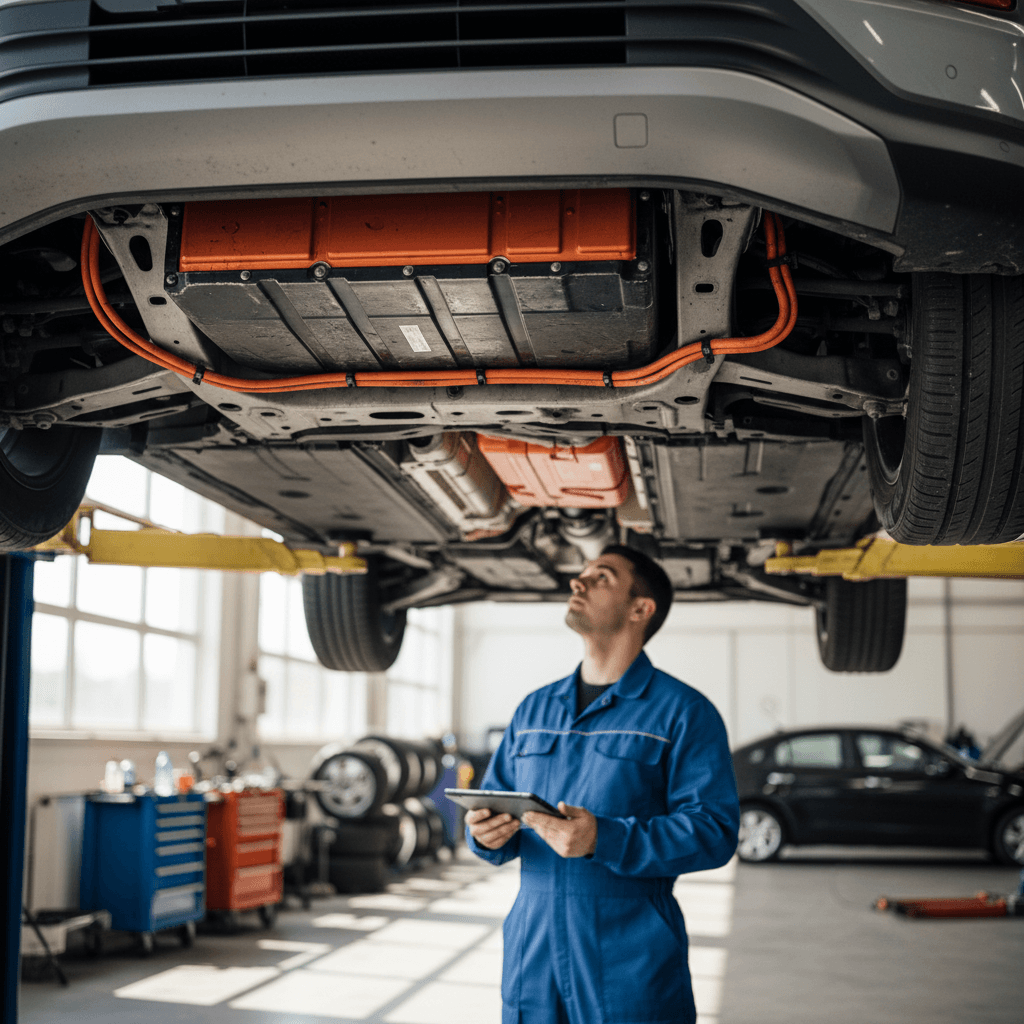
Have the car inspected on a lift. Look for damage or corrosion to the battery case, orange high‑voltage cables, and coolant lines. Impact or rust in these areas can be an expensive future problem.
5. Test for warning lights and drive‑unit noise
On a long test drive, watch for “Check EV system” warnings, odd shudders, or whining/ticking from the motor area. Make gentle and harder accelerations and coasts to listen for abnormal sounds.
6. Evaluate charging behavior
Try both AC Level 2 and, if possible, DC fast charging. Confirm the car charges reliably, reaches expected power levels, and doesn’t suddenly drop the session with unexplained errors.
7. Check remaining factory warranty
Confirm in writing how much battery and powertrain warranty remains and that it transfers to you. This matters hugely for peace of mind with any EV, Kona included.
8. Compare with other used EV options
Before you commit, drive at least one alternative, Bolt EUV, ID.4, Niro EV, etc. A Kona Electric that’s been through major recalls but priced like a saintly Toyota isn’t a smart buy.
How Recharged simplifies this homework
How a Recharged Score can de-risk a used Kona EV
The Kona Electric is exactly the kind of car where granular data beats vague reputation. Its averages are messy; individual cars can be fantastic. That’s why Recharged leans so heavily on diagnostics and history rather than assumptions.
What Recharged checks on a Kona Electric
Beyond a quick test drive and a Carfax
Battery health & charging history
Recall & repair history
Road test & NVH
Fair‑market pricing
Nationwide delivery
EV‑specialist guidance
Ready to find your next EV?
Browse VehiclesIf you already own a Kona Electric and are thinking about selling or trading, Recharged can also give you an instant online offer or consignment option, again backed by that same diagnostic work. The more we know about your car, the easier it is to match it with the right next owner.
Hyundai Kona Electric reliability 2026: FAQ
Frequently asked questions about Hyundai Kona Electric reliability in 2026
Bottom line: should you trust a Kona Electric in 2026?
If you want a compact EV that sips electrons and doesn’t cost Taycan money, the Hyundai Kona Electric belongs on your 2026 short list. Its reliability record is checkered, but not hopeless: early cars lived through serious recalls; later ones are quietly racking up miles with strong batteries and low running costs. The catch is that you can’t buy this car on reputation alone. You have to buy a specific example, with its own history, its own battery, its own scars, or lack of them.
Do that homework, ideally with tools like a Recharged Score battery‑health and history report, and a Kona Electric can be a satisfying, sensible EV that punches well above its price. Skip the diligence, and you’re just rolling the dice on a car that has seen both the best and worst of the EV learning curve.