If you own a Volkswagen ID. Buzz, you’re sitting on one of the most distinctive EVs on the road, but also one that’s in a rapidly shifting market. Choosing the best time to sell a Volkswagen ID. Buzz can easily mean thousands of dollars difference in your pocket.
Context for April 2026
Why timing matters for your ID. Buzz sale
Most new EVs depreciate faster in the first few years than comparable gas vehicles, thanks to rapid tech improvements, aggressive new‑car incentives, and shifting tax credit rules. The ID. Buzz sits at the crossroads of two tricky segments: a premium EV and a niche people‑mover. That means getting the timing wrong, waiting until after a big update or racking up miles past key thresholds, can hit your resale value harder than you expect.
- New‑EV discounts and financing offers pull used values down when factory incentives spike.
- Battery age and mileage milestones (like 36,000 and 60,000 miles) trigger buyer hesitation and lower offers.
- Model‑year changes, especially range, charging, or interior tech upgrades, instantly date earlier ID. Buzz vans.
- Seasonality still matters: family haulers like the Buzz are easier to sell in late spring and summer.
Don’t wait “until it’s paid off”
Quick answer: best time to sell a Volkswagen ID. Buzz
Snapshot: best timing windows for ID. Buzz sellers
Put simply, the best time to sell a Volkswagen ID. Buzz in the U.S. is usually late spring through early summer in the first 3–4 years of ownership, before you cross major mileage milestones or Volkswagen introduces a significantly upgraded return model.
Use market events to your advantage
How the ID. Buzz is depreciating in 2026
Because the ID. Buzz is new to the U.S., real‑world depreciation data is still developing. But we can triangulate from early sales, leasing residuals, and broader EV trends to understand what’s happening to its value.
Main depreciation drivers for the ID. Buzz
What’s actually pulling your van’s value up, or down
High starting MSRP
Niche but loyal audience
Aggressive EV incentives
Lease residuals as a reality check
Years 1–3: Steep but manageable drop
Like most EVs, your ID. Buzz is likely to see its sharpest depreciation in the first 36 months. This is when new‑car incentives on fresh inventory and rapid tech changes (range, charging standards, driver‑assist) weigh heaviest on older builds.
If you plan to sell during this window, earlier is usually better, especially if you’re coming out of a lease or a low‑interest loan.
Years 4–6: Slower price slide, more buyers
Once the big initial drop is behind you, depreciation often slows. At 4–6 years old, a Buzz can look like a value play compared to a new one, particularly if the battery still tests strong and the van has under ~60,000 miles.
This can be an attractive time to sell to budget‑minded families, road‑trippers, or small business owners who want the look and space without paying new‑car money.
Seasonality: best months of the year to sell
Even in the EV world, seasonality still matters. The ID. Buzz behaves like a mix of a minivan and an adventure van, both of which see stronger demand as the weather warms up and families plan road trips.
Typical seasonal demand pattern for used EVs (and ID. Buzz–style vans)
How each part of the year usually feels for sellers in the U.S. used‑EV market.
| Time of year | Demand level | Why it matters for ID. Buzz sellers | Recommended move |
|---|---|---|---|
| January–February | Low to moderate | Buyers are recovering from holiday spending and winter weather makes test drives less appealing in many states. | Sell only if you must, or if you’re trading to capture a specific deal or tax situation. |
| March–April | Rising | Tax refunds hit, families start planning summer travel, and used‑EV interest typically improves. | Strong time to list if you’re under key mileage thresholds and want to move quickly. |
| May–June | High | Prime road‑trip season and school break planning, perfect for marketing a Buzz as a family or adventure van. | Often the best overall window to sell a VW ID. Buzz at a solid price. |
| July–August | Moderate to high | Travel season continues, but shoppers can be more distracted with vacations and back‑to‑school costs. | Still a good time to sell, but be realistic on pricing in hot markets. |
| September–October | Steady | Post‑summer, pre‑holiday lull. Buyers looking now are often serious and value‑oriented. | Good for well‑priced, well‑documented vans; not ideal if you’re overpricing. |
| November–December | Low | Holidays, weather, and year‑end dealer blowouts on new cars pull attention away from used listings. | Hold if you can; consider listing again in early spring unless you receive a strong offer. |
Use this as a guide rather than a rigid rule, local conditions and national incentives can shift things year‑to‑year.
Best seasonal window
Mileage and battery age: key value milestones
Timing isn’t just about the calendar. Across decades of used‑car data, buyers consistently react to certain mileage and warranty milestones, and the ID. Buzz is no exception.
Mileage & battery checkpoints to watch
Where buyers tend to re‑anchor what they’re willing to pay
Under 24,000 miles
Around 36,000 miles
60,000+ miles
On the battery side, Volkswagen backs the ID. Buzz’s high‑voltage pack for 8 years or roughly 100,000 miles (or 160,000 km, depending on market), guaranteeing at least 70% of original capacity. Real‑world testing of similar VW ID‑family batteries has shown relatively modest degradation under normal use, but U.S. buyers still treat warranty remaining as a major confidence factor.
Battery‑driven timing rules of thumb
1. Aim to sell with 3–4+ years of battery warranty left
Listing your ID. Buzz with at least half of its factory battery warranty remaining makes buyers far more comfortable, especially first‑time EV owners.
2. Get a third‑party battery health report
A verified state‑of‑health (SoH) report, like the <strong>Recharged Score</strong>, can prove your pack is performing well and justify top‑tier pricing.
3. Avoid selling right after a DC fast‑charging heavy road trip
If your range display has dipped recently because of high‑speed, cold‑weather, or fast‑charge‑intensive driving, give it a few weeks of normal mixed use so the car’s estimates stabilize before you list.
4. Keep maintenance and software updates current
Documented software updates and service history reassure buyers that your van has the latest fixes and efficiency tweaks.
Market factors unique to the ID. Buzz
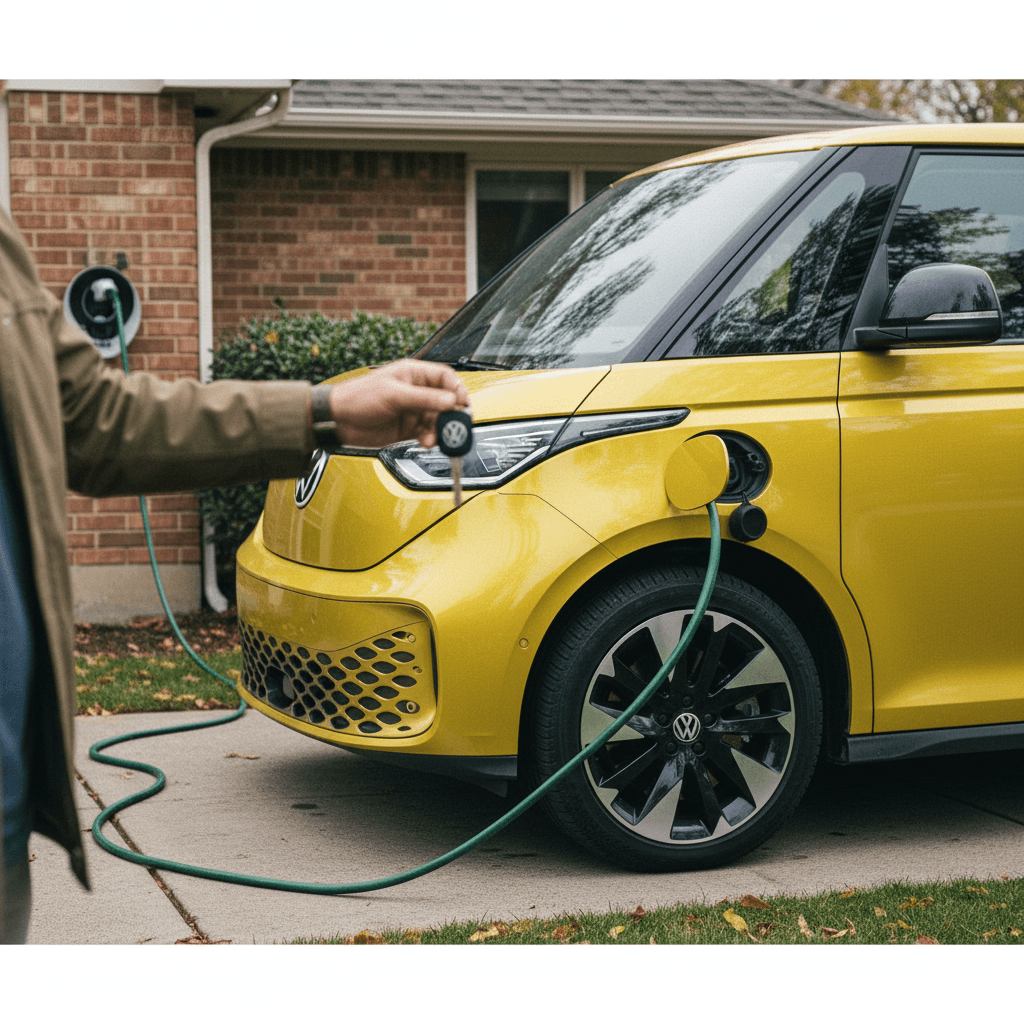
Unlike an everyday compact crossover, the ID. Buzz is both a nostalgic icon and a business tool. That creates a few timing quirks you won’t see with a generic EV SUV.
What makes ID. Buzz timing different
These levers can quickly swing demand up or down
Short initial U.S. run & 2026 pause
Fuel prices & local regulations
Watch your local micro‑market
Personal timing: signs it’s the right time to sell
The “right” time on paper doesn’t matter if it doesn’t line up with your life. Here’s how to blend market wisdom with your personal situation.
When it makes sense to sell sooner
- You’re approaching a big life change (new baby, job relocation, loss of parking) and aren’t sure the Buzz will still fit.
- Your needs have shifted, maybe you don’t road‑trip as much and a smaller EV would lower your payment.
- You’re uneasy about potential future depreciation and would rather take a known hit now than a larger unknown one later.
When waiting might be smarter
- You’re well below your annual mileage allowance and plan to keep driving it for several more years.
- You have a very early, rare, or highly optioned spec that could gain collectible appeal once production pauses are clearly defined.
- Your local used EV market is temporarily flooded, lots of Buzz vans sitting for months at steep discounts.
Think in total cost of ownership
Pricing strategy and prep to maximize value
Once you’ve zeroed in on the right time to sell, your prep work and pricing discipline will determine whether you capture top‑tier money or leave it on the table.
Step‑by‑step: getting your ID. Buzz sale‑ready
1. Get a realistic value range
Look at asking prices for comparable ID. Buzz vans: same year, trim, colors, and mileage. Then check what they’re actually selling for, not just listing prices. Tools that analyze transactions, like Recharged’s pricing engine, are more useful than raw classifieds.
2. Decide your selling path
Private sale usually nets the most money but takes time and effort. A <strong>trade‑in</strong> or <strong>instant offer</strong> with a marketplace like Recharged can be faster and safer, especially for higher‑value EVs.
3. Order a battery health and inspection report
For EV buyers, a trustworthy battery report is like a pre‑purchase inspection on a gas car. Recharged includes a <strong>Recharged Score Report</strong> with verified battery health, so serious shoppers know exactly what they’re getting.
4. Clean, detail, and de‑personalize
Vans accumulate clutter. Give the ID. Buzz a professional detail, remove stickers and personal accessories, and take high‑quality photos that show both its space and its design details.
5. Highlight EV‑specific benefits in your listing
Mention home charging setup, typical range you see in your climate, any included accessories (like portable chargers), and how the van fits into daily life, school runs, camping, road trips.
6. Be ready to move quickly when the right offer appears
The used‑EV market can be jumpy. If you list in a strong month and get a solid offer that matches your research, don’t over‑negotiate, values can slide if new incentives or headlines hit next week.
Don’t ignore charging standards
How Recharged can help you sell your ID. Buzz
The ID. Buzz isn’t a commodity SUV, buyers will have specific questions about battery health, charging, and long‑term ownership. That’s where an EV‑focused platform can make your life easier.
Why sell your Volkswagen ID. Buzz through Recharged?
Support tailored to high‑value used EVs
Recharged Score battery report
Flexible selling options
Nationwide reach & delivery
Ready to find your next EV?
Browse VehiclesYou can complete the entire sale digitally, lean on EV‑specialist support when buyers have detailed questions, and even explore financing for your next EV, all without juggling multiple dealers or marketplaces.
FAQ: best time to sell Volkswagen ID. Buzz
Frequently asked questions about timing your ID. Buzz sale
The best time to sell a Volkswagen ID. Buzz is when market conditions, your van’s age and mileage, and your personal needs all line up in your favor. For most owners in 2026, that means targeting a sale in spring or early summer, well before the 2027 model returns and while you still have generous battery warranty remaining. If you’d like a data‑backed view of what your Buzz is worth right now, and help turning that van into your next EV, Recharged can guide you through every step, from valuation to a verified battery report to a completed sale.