If you own a Kia Niro EV, you’re in a tricky corner of today’s used car market. EV prices have fallen faster than gas cars over the last couple of years, and compact crossovers like the Niro EV sit right where family practicality meets aggressive depreciation. Getting the best time to sell a Kia Niro EV even roughly right can mean thousands of dollars either gained or left on the table.
Quick answer
Why timing matters when you sell a Kia Niro EV
Every car depreciates, but recent data shows used EVs are losing value far faster than gas vehicles in the U.S. Over the last couple of years, used EV prices have fallen by more than 30% year‑over‑year in some segments, while gas cars dropped only a few percent. That gap is driven by rapid improvements in new EV tech, aggressive discounting on new models, and changing incentives, all of which directly affect what your Niro EV is worth.
The Kia Niro EV in particular sits in a crowded space: compact, front‑wheel‑drive, and range‑competitive rather than class‑leading. It’s a sensible daily driver, but that also means buyers have plenty of alternatives. When new EV prices get cut or new tax credits appear, used Niro EV values can move quickly. That’s why the “when” you sell matters almost as much as the “how.”
Why you shouldn’t wait too long
How Kia Niro EVs depreciate vs other EVs
EV depreciation snapshot (big picture)
Kia Niro EVs tend to follow the broader EV pattern: fast early depreciation, then a slower slide. That’s partly because new EVs keep getting cheaper, more efficient, and better‑equipped. When a new Niro EV or rival compact EV gets a big MSRP cut or a fresh tax credit, the used ones have to reprice downward to stay competitive.
If you’re sitting in the first owner’s seat, this dynamic makes the first 3–5 years critical. Sell too early and you’ve paid a lot in depreciation for only a short period of use. Wait too long and you’re competing with newer EVs that charge faster, go farther, or qualify for better incentives.
Think in value bands, not exact numbers
Best time of year to sell a Kia Niro EV
Seasonality still matters, even in an online‑first market. You’re trying to meet your buyer at the moment they have both motivation and money. For most Niro EV owners in the U.S., that means leaning into spring and avoiding the soft spots of late fall.
How the calendar affects Kia Niro EV demand
Use timing to add 5–15% to your final sale price
1. Tax refund season (Feb–Apr)
Many U.S. buyers shop with refund cash in hand. That makes March through early May one of the best windows to sell a Niro EV, especially in family‑friendly trims.
List slightly earlier so your car is live when buyers start browsing.
2. Spring–early summer (Mar–Jun)
Warmer weather, more test drives, and more road‑trip planning all improve demand for crossovers. EV range looks strongest in mild temperatures too, which helps your test‑drive impression.
3. Avoid late fall if you can
November–January often brings tighter budgets, winter weather, and EV‑range skepticism in cold regions. You can absolutely sell then, but you may have to discount more or wait longer.
Calendar playbook for Niro EV sellers
Best time to sell by mileage and model year
Beyond the calendar, two things shape your Niro EV’s value more than anything else: how old it is and how many miles it has. Shoppers anchor on round numbers and mental thresholds: under 36,000 miles feels “lightly used,” while 95,000 feels far riskier than 82,000, even if the mechanical reality isn’t that different.
When to sell a Kia Niro EV by age & mileage
Use this as a starting point, local demand and battery condition still matter.
| Age / Mileage | Typical buyer perception | What it means for you | Best move if you’re here |
|---|---|---|---|
| 0–2 years, under 25k miles | Almost new, warranty rich | Strongest pool of buyers; competes with discounted new cars | List soon if a new price cut or refreshed model is rumored. |
| 2–4 years, 25k–60k miles | Sweet spot for value | Still under or near warranty; depreciation steep but slowing | Often the best window to sell or trade a Niro EV. |
| 4–6 years, 60k–90k miles | Mid‑life, value shoppers | Battery health, service history, and tires/brakes matter a lot | Sell before crossing 75k or 90k miles if possible. |
| 6+ years or 90k+ miles | Budget and high‑mileage buyers | Value driven almost entirely by battery confidence and price | Consider pricing aggressively or selling to a professional buyer. |
If you’re close to the next threshold, consider selling before you cross it.
Mileage milestones that move the needle
- 36,000 miles (common bumper‑to‑bumper warranty cut‑off)
- 60,000–70,000 miles (psychological mid‑life point)
- 100,000 miles (big mental and pricing threshold)
If you’re, for example, at 58,000 miles and thinking about selling in the next year anyway, it usually makes more sense to sell now than to roll past 70,000. The same logic applies if your Niro EV is bumping up against 100,000 miles: the drop just after six digits is often steeper than the last few thousand miles before it.
Reading the EV market before you list
EVs don’t live in a vacuum. The best time to sell a Kia Niro EV also depends on what’s happening with new EV prices, incentives, and competing models. In 2024–2025, we’ve seen new‑EV price wars, tax‑credit reshuffles, and big swings in used EV listing volumes, all of which can change what your Niro EV is worth in a matter of months.
1. Watch new EV prices and incentives
If Kia or its competitors start cutting prices or advertising huge lease deals, buyers will expect used prices to follow. Selling before a widely publicized price cut is almost always better than scrambling to match lower prices afterward.
Also pay attention to federal and state EV incentives. If a rival model suddenly qualifies for a bigger credit while your Niro EV doesn’t, your used value has to adjust to keep up.
2. Track local used‑EV supply
More off‑lease and off‑rental EVs are hitting dealer lots, especially in coastal markets. When the market gets flooded with similar crossovers, buyers can cherry‑pick the lowest‑priced, best‑equipped cars.
A quick scan of local listings, filtering specifically for Kia Niro EV and close alternatives like the Hyundai Kona Electric, will tell you whether you’re early, on time, or late to the party.
Macro vs. personal timing
How battery health affects the best time to sell
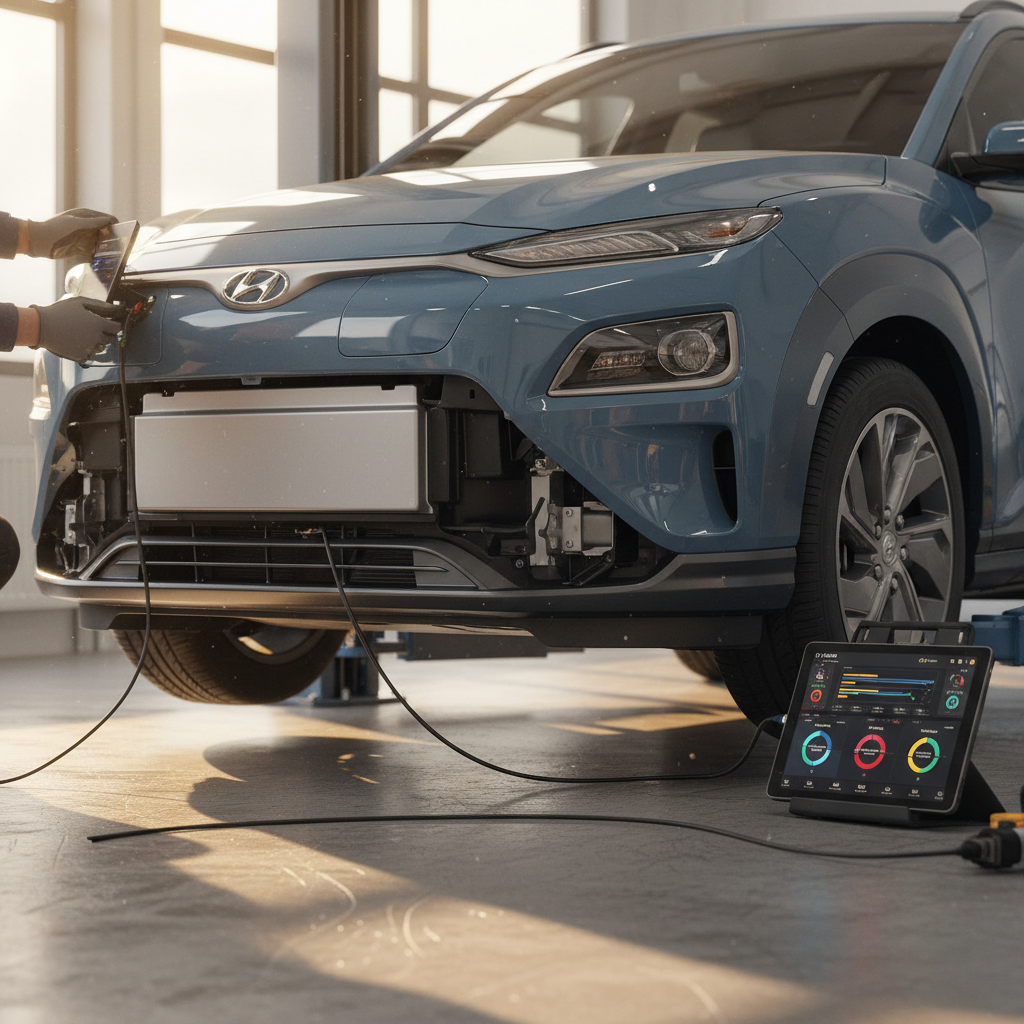
In an EV, the battery isn’t just another component, it’s the car’s economic center of gravity. Two Niro EVs with the same mileage can be worth very different amounts if one shows strong, verified battery health and the other looks tired or unverified. That’s why battery condition can subtly shift the “best time” for you to sell.
Battery health: when to lean in vs. get out
Use diagnostics to turn a black box into a selling point
Strong battery health
If diagnostics show minimal degradation and consistent fast‑charging behavior, you’re holding a rare asset in a nervous market. That can justify waiting a bit longer, especially if you’re in that 2–4 year, 25k–60k mile sweet spot.
But you still want recent documentation when you list; buyers pay for certainty.
Weak or unknown health
If your range has noticeably dropped or you’ve never had the pack properly checked, uncertainty weighs on price. In this case, it’s often better to sell sooner and pair the listing with an independent battery‑health report so buyers can price risk accurately.
How Recharged can help on battery transparency
Steps to maximize your Niro EV’s sale price
Once you’ve decided it’s the right window to sell, execution matters. In a price‑sensitive EV market, the difference between a rushed listing and a well‑prepared one can be the difference between “no bites” and multiple offers over asking.
Pre‑sale checklist for Kia Niro EV owners
1. Confirm your timing
Map your Niro EV’s age and mileage against the table above. If you’re about to cross a big threshold, like 60k or 100k miles, lean toward selling before you do, ideally in the March–May window if you can choose.
2. Get a battery‑health report
Use a trusted shop or EV‑specialist platform to document pack health, DC fast‑charge behavior, and any error codes. If you sell with Recharged, this becomes part of your <strong>Recharged Score Report</strong>, which helps justify pricing and attract serious buyers.
3. Gather service and charging history
Pull records for software updates, tire rotations, brake service, cabin‑filter changes, and any warranty work. If you have consistent home‑charging habits (e.g., mostly charging to 80%), note that in your listing, it reassures range‑conscious buyers.
4. Address cheap turn‑offs
Detail the interior, touch up obvious curb rash on wheels if cost‑effective, replace badly worn wiper blades, and fix inexpensive cosmetic issues. On a mass‑market EV, buyers often pay more attention to visible condition than to having every last option.
5. Price against the real market
Don’t just anchor on what you paid or what pricing guides say. Look up actual <strong>recent listings and sales</strong> for Niro EVs of your year, trim, and mileage in your region. Online marketplaces and EV‑focused platforms give a clearer signal than nationwide averages.
6. Decide where and how to sell
Private‑party listings can yield the highest top‑line price but require time, test drives, paperwork, and fraud vigilance. Instant‑offer services, dealers, and EV‑specialist platforms like Recharged trade some upside for a faster, simpler, more predictable process.
Avoid these value‑killing mistakes
- Waiting until after a major new‑EV price cut to list.
- Pushing past 100,000 miles while still planning to sell “soon.”
- Listing without any battery‑health documentation.
- Under‑pricing early and then being unable to raise price when demand appears.
Where to sell your Kia Niro EV (and how Recharged fits in)
Once you know it’s the right moment, age, mileage, and market‑wise, the final piece is where you sell. Each channel trades off speed, simplicity, and total dollars. For EVs like the Niro, where battery confidence and buyer education matter a lot, your choice of marketplace can have a bigger impact than it would with a gas crossover.
Private‑party sale
Pros: Often the highest potential sale price if you’re patient and market‑savvy.
Cons: Time‑consuming, requires handling test drives, screening buyers, and explaining EV nuances (range, charging, battery health) yourself.
Best for: Owners comfortable with marketing, negotiation, and paperwork who aren’t in a rush.
Traditional dealer trade‑in
Pros: Fast, convenient, one‑stop transaction when you’re buying another vehicle.
Cons: Many dealers still undervalue used EVs and may not account properly for good battery health.
Best for: Owners prioritizing convenience over squeezing every last dollar out of the deal.
EV‑specialist platforms like Recharged
Pros: Built specifically around used EVs, with battery diagnostics, transparent pricing, and nationwide buyer reach. Recharged can buy your Niro EV outright, take it on consignment, or apply it as a trade‑in toward another EV.
Cons: As with any professional buyer, you’re trading some theoretical private‑party upside for speed and lower risk.
Best for: Owners who want EV‑savvy support, verified battery‑health reporting, and a largely digital, low‑friction experience.
What selling through Recharged looks like
- Provide a Recharged Score battery‑health diagnostic so you know exactly what you’re selling.
- Give you an instant offer or help you maximize value via consignment.
- Handle photos, listings, buyer questions, and paperwork while you stay in control of pricing decisions.
- Arrange nationwide pickup and delivery, or work with you at our Experience Center in Richmond, VA.
Ready to find your next EV?
Browse VehiclesFrequently asked questions about selling a Kia Niro EV
Kia Niro EV selling FAQs
Bottom line: When is the best time to sell?
You can’t perfectly time the market, especially in an EV segment that’s evolving as quickly as the Kia Niro EV’s. But you don’t have to. If you focus on a few fundamentals, selling between 2 and 4 years of age, before major mileage thresholds, in a strong seasonal window like March–May, and before major new‑EV price cuts or incentive shifts, you’ll have done more than most owners to protect your equity.
From there, the key is execution: document battery health, present your Niro EV well, and choose the right channel for your risk tolerance and time horizon. If you’d rather not become a part‑time used‑car dealer, Recharged can step in with battery diagnostics, fair market pricing data, and a streamlined way to sell, trade, or consign your Niro EV so you can move confidently into whatever’s next.