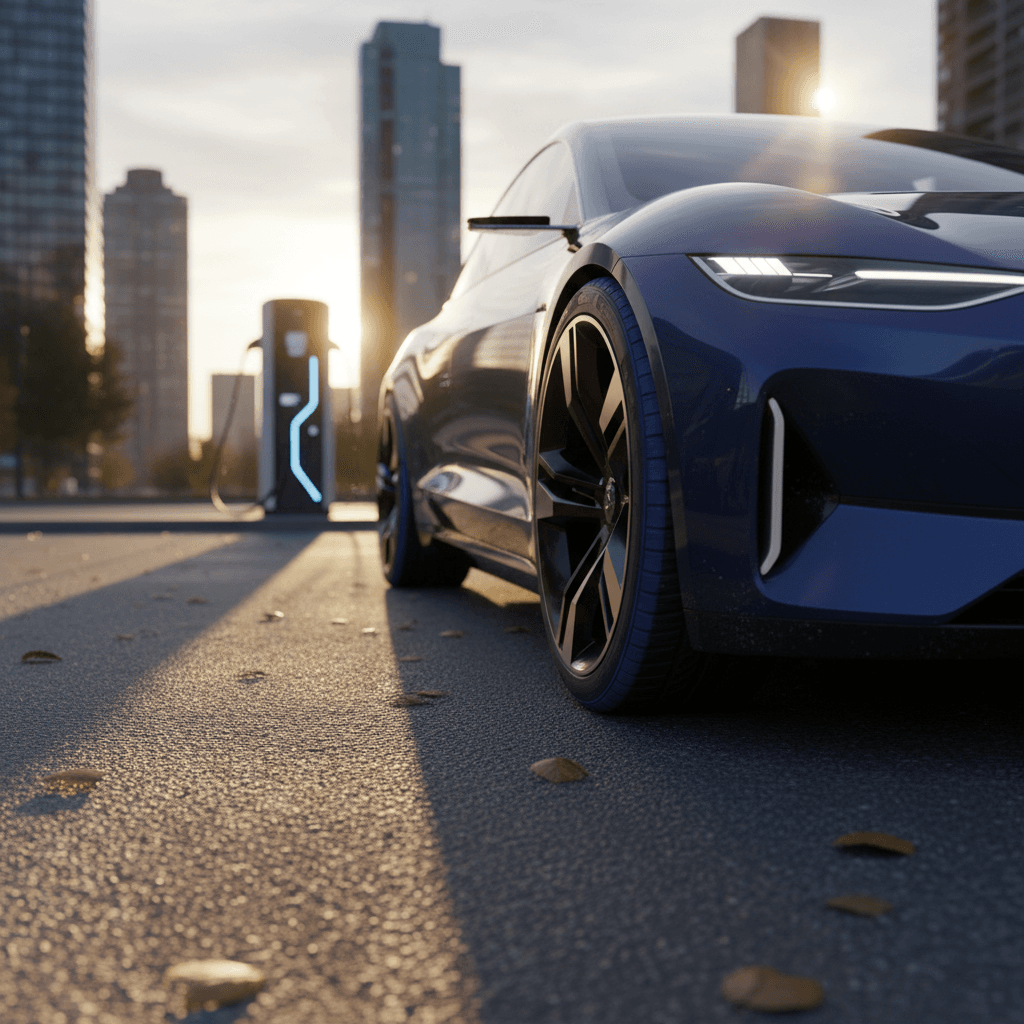
You don’t need a wind tunnel to unlock more range from your EV. Swap the tires. The best low rolling resistance tires for electric cars quietly add free miles on every charge, without touching software or driving like a saint in the right lane.
Quick take
Why low rolling resistance matters for EVs
Rolling resistance is the energy your car wastes just keeping the tires turning. Imagine pushing a shopping cart across smooth concrete versus thick carpet, that’s the same fight happening at the contact patch every time your EV rolls. Low rolling resistance tires use special compounds, construction and tread patterns to waste less energy as heat, so more of your battery goes into forward motion instead of warming the rubber.
How much tires can change your EV’s range
For gas cars, you might shrug off a few percent here or there. In an EV, range is a digital number staring you in the face, and low rolling resistance tires are one of the few upgrades that can add range without adding complexity. That’s why most EVs ship from the factory on LRR rubber.
How much range can low-RR tires really add?
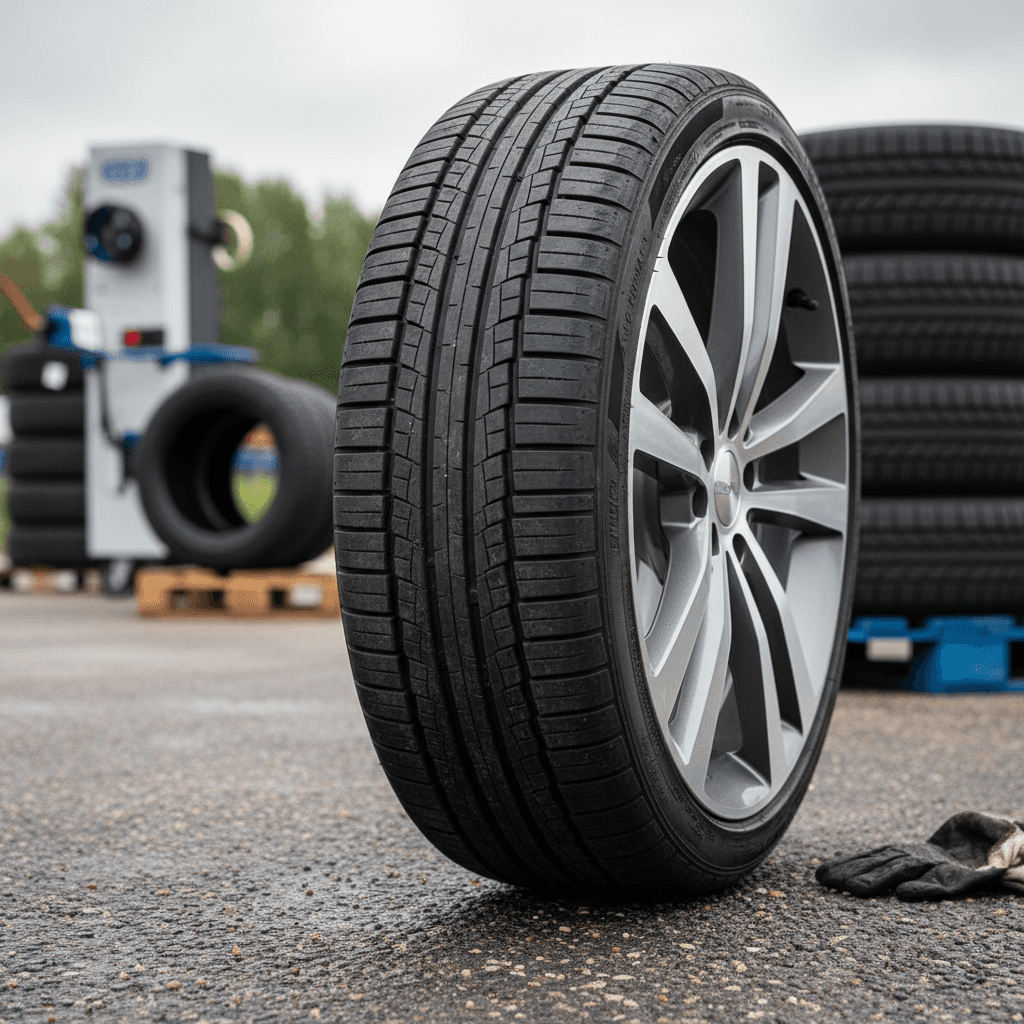
Let’s translate all the lab testing into something you feel on the road. Modern EV tire tests routinely show range gaps of 40–65 km (25–40 miles) between the most efficient and least efficient tire in the same size, on the same car. When one tire delivers ~410 km of range and another ~344 km in the same test, you’re staring at almost a 20% swing.
Realistic range impact of tire choice
Approximate effect of different tire choices on a 300‑mile rated EV.
| Tire type / condition | Typical effect on efficiency | Approx. range on a 300‑mile EV |
|---|---|---|
| Fresh performance tire (max grip) | −5 to −10% | 270–285 miles |
| Average all-season, non‑EV | −3 to −5% | 285–291 miles |
| Dedicated low rolling resistance EV tire | +3 to +7% vs average | 309–321 miles |
| Severely underinflated (−10 PSI) | −3% or worse | ~290 miles or less |
These are estimates, but they line up well with independent EV tire tests and fleet data.
Range isn’t everything
Best low rolling resistance tires for electric cars in 2025
There’s no single “best” tire for every EV and every driver, but a few models keep showing up at the sharp end of independent 2024–2025 tests for low rolling resistance, solid safety performance, and EV‑friendly manners. Below are strong candidates to discuss with your local installer, organized by typical use case.
Standout low rolling resistance tires for EVs (2025)
Use this short list as a starting point, availability and sizing will depend on your car.
Falken e.Ziex (EV‑specific summer)
Best for: Maximizing range in mild climates.
- Designed specifically for EVs with very low rolling resistance.
- Independent EV tire tests have shown it delivering the best range and lowest rolling resistance in the group, albeit with average wet braking.
- A good choice if you road trip a lot on dry highways and care most about efficiency and comfort.
If you regularly drive in heavy rain, you may want to prioritize a tire with stronger wet‑braking scores and accept a small range hit.
Michelin Primacy 4+ / e.Primacy (touring)
Best for: Quiet, efficient commuting.
- Michelin’s efficiency-focused touring lines routinely test with low rolling resistance and strong comfort.
- Balanced performance in dry and wet, with many EV‑ready fitments.
- Ideal if you want a civilized daily tire that adds range without feeling numb.
In some tests it isn’t the outright range champ, but it’s rarely the weak link and tends to wear slowly.
Hankook iON Evo / iON i* (EV range)
Best for: EVs that need both range and grip.
- Hankook’s iON line is built exclusively for EVs, with reinforced structures for extra weight and instant torque.
- Recent EV tire tests have crowned iON Evo a top overall performer, combining good efficiency with excellent braking and handling.
- Great match for heavier crossovers and performance EVs where safety and stability matter as much as efficiency.
Bridgestone Turanza Eco / Enliten family
Best for: OEM‑like efficiency and feel.
- Bridgestone’s Enliten technology focuses on reduced rolling resistance and tire weight, while still supporting heavier EV loads.
- Many European EVs use Turanza Eco‑type tires from the factory for their low consumption.
- Best suited to drivers who want to preserve that new‑EV efficiency and steering feel when replacing tires.
Continental EcoContact / UltraContact NXT
Continental’s eco‑focused lines lean toward balanced safety first, efficiency second. They often post superb wet‑braking and handling scores with mid‑pack rolling resistance. If you drive fast in the wet or do lots of mixed‑weather highway miles, that’s a smart trade.
Pirelli Elect family (Cinturato & P Zero)
Any Pirelli tire with the Elect mark was tuned for EV duty, quieter running, stronger carcass, and low rolling resistance for the category. The Cinturato Elect options skew toward efficiency; the P Zero Elect is what you fit when you want range but refuse to give up steering precision.
Check the sidewall
Summer, all-season, vs winter: low-RR choices
Season and climate change the tire conversation dramatically. A low‑rolling‑resistance summer tire in Phoenix is a dream; the same tire on an icy Vermont backroad is a very bad idea. Here’s how to think about it by season.
Low rolling resistance by season
Pick the category that matches how and where you drive most often.
Summer EV tires
- Lowest rolling resistance and sharpest steering.
- Excellent in warm dry or wet conditions.
- Unsafe in snow or deep cold, compound hardens.
Best in Sun Belt states or as a dedicated summer set in a two‑set strategy.
All-season EV tires
- The default for many US drivers.
- Moderate rolling resistance with decent snow capability.
- Some EV‑tuned all‑seasons now rival summer tires for efficiency.
Great one‑set solution for most temperate climates, especially on crossovers and sedans.
Winter / snow EV tires
- Prioritize snow and ice grip over efficiency.
- Rolling resistance and noise go up, range goes down.
- Some modern winter EV tires use compounds to claw back a bit of efficiency.
If you see regular snow and ice, buy the winter tire first, worry about range second.
Never trade away winter grip
Winter EV tires like Nokian’s Hakkapeliitta EV variants and Michelin’s X‑Ice Snow prioritize ice braking and deep‑cold flexibility but still use construction tricks to keep rolling resistance as low as possible for the category. Think of them as “efficiency‑aware” winter tires, not magic, but better than old‑school snow tires for range.
How to choose the right low-RR tire for your EV
Step-by-step: choosing EV-friendly low rolling resistance tires
1. Start with your owner’s manual and door jamb
Confirm the exact tire size, load index and speed rating your EV requires. EVs are heavy; do not downgrade the load rating just to save money or range.
2. Decide your top priority: range, comfort, or grip
If you road trip a lot and rarely push the car, efficient touring tires make sense. Spirited driver in the rain? Favor wet braking and feel, even if you give up a few miles of range.
3. Look for EV or efficiency labeling
Search for phrases like “EV,” “Elect,” “iON,” “Eco,” or “Enliten,” plus strong rolling-resistance ratings. Online tests often quote a rolling-resistance coefficient or rank tires on efficiency directly.
4. Read independent EV tire tests
Tire makers all claim low rolling resistance; instrumented tests are where the truth comes out. Look specifically for results that measure both range and wet braking on an electric test car.
5. Match the tire to your climate
Mild climate? A low-RR summer or all-season is fine. Regular snow or mountain driving? Choose a winter or all-weather tire with acceptable efficiency, not the slickest eco tire.
6. Don’t forget noise and comfort
EV cabins are quiet, which means tire roar has nowhere to hide. Choose tires with lower noise ratings and user reviews that praise ride quality if you do a lot of highway miles.
Buying a used EV? Check the rubber.
On a used electric car, the tires are front-row evidence of how the previous owner treated the vehicle. Aggressive mismatched tires, worn shoulders, or budget “no‑name” rubber may hint at hard use or poor alignment. When you shop on Recharged, every car comes with a Recharged Score report that covers battery health and overall condition, so you’re not guessing. If the tires are due soon, that’s a negotiation lever, not a deal breaker.
Pair new tires with smart financing
Tires aren’t glamorous, but they’re safety‑critical. If you’re stretching for your first EV, factor a future tire set into the math upfront. Recharged offers financing and trade‑in options that can free up cash so you can afford quality EV‑rated tires when the time comes, instead of settling for whatever’s cheapest in the rack.
Tradeoffs: efficiency vs grip, noise, and cost
If tire engineers could break physics, they’d be doing it in Formula 1, not on your crossover. Every EV tire is a compromise between rolling resistance, grip, noise, and wear. Low rolling resistance conventionally means less hysteresis in the rubber, less flex, less heat, less grip. The trick is to dial back that flex without turning the car into a shopping cart on stone wheels.
What you gain (and lose) with ultra-efficient tires
Use this as a sanity check before you click “order.”
Pros of low-RR EV tires
- More range on every charge, especially noticeable on highway trips.
- Often quieter and smoother than aggressive performance tires.
- Lower energy consumption can mean fewer fast‑charge stops and slower battery wear over years.
- Many are optimized for EV weight and instant torque, reducing squirm.
Cons and compromises
- Sometimes longer wet braking distances than the very grippiest tires.
- Can feel a bit less sharp in hard cornering compared to performance rubber.
- Top-tier EV tires can be expensive up front.
- Range gains shrink if you mostly drive in city stop‑and‑go at low speeds.
City vs highway reality check
Maintenance tips to protect range and tires
Once you’ve paid for good low rolling resistance tires, the worst thing you can do is neglect them. An expensive EV tire run 8–10 PSI low might as well be a cheap one in terms of wasted energy and uneven wear. The good news: small habits go a long way.
Simple habits that protect both range and rubber
Check pressure monthly (and before road trips)
Even a few PSI below spec increases rolling resistance and hurts range. Use a decent gauge and set pressures when tires are cold, referencing the sticker on your driver’s door jamb, not the max on the sidewall.
Rotate tires on schedule
EVs can be hard on front tires thanks to weight and torque. Rotating every 5,000–7,500 miles evens wear so your low-RR benefits last longer instead of dying with one pair of worn fronts.
Get alignment checked after impacts
Pothole, curb kiss, or a nasty railroad crossing? If the steering wheel is off-center or the car wanders, get an alignment. Misaligned wheels scrub off tread and efficiency at the same time.
Watch tread depth and age, not just mileage
Tires gradually lose wet grip as they wear, even if they still look okay. For most daily-driven EVs, replacing around 3–4 mm of remaining tread is a good safety and performance move, especially in wet climates.
Use the right wheels
Oversized wheels with ultra‑low‑profile tires usually add weight and rolling resistance. If you’re chasing range, stick close to your OEM wheel diameter and width, and avoid unnecessary heavy aftermarket rims.
Where tires fit in your overall EV costs
EV owners tend to obsess over kilowatts and public charging rates, then treat tires as a grudge purchase. In reality, a high‑quality, efficient EV tire set can return part of its cost over time in saved energy, and in fewer roadside dramas. Over 40,000–50,000 miles, the difference in electricity use between a cheap, draggy tire and a good low‑RR EV tire can be substantial.
Back-of-the-envelope math
Suppose your EV averages 3.0 mi/kWh on generic all‑seasons and 3.2 mi/kWh on efficient EV tires, a modest 6–7% bump. Over 40,000 miles, that difference saves roughly 250–300 kWh. At $0.20/kWh, that’s $50–60 back in your pocket. Not life-changing, but that’s just the energy line item, add in longer tread life and fewer emergency replacements and the picture gets rosier.
Tires vs battery health
Efficient tires also reduce how often you arrive at fast chargers nearly empty and how much time you spend DC fast charging, both small but real stressors on long‑term battery health. When you’re shopping a used EV, that’s one more reason to look for cars that were treated thoughtfully. Recharged’s battery health diagnostics and Recharged Score help you see that history clearly before you buy.
FAQ: low rolling resistance tires for EVs
Frequently asked questions about low-RR EV tires
Bottom line: are low-RR EV tires worth it?
If you own an electric car, low rolling resistance tires aren’t snake oil or marketing fluff, they’re physics, baked in rubber. The best models in 2025 quietly add range, reduce cabin noise and stand up to EV weight without turning every rainy on‑ramp into a white‑knuckle experience.
The key is to pick a modern EV‑tuned tire that balances efficiency with wet safety and comfort, then maintain it properly. Do that, and you’ll get more real‑world miles from every charge, fewer surprise tire bills, and an EV that still feels like the car you fell in love with on the test drive.
If you’re also thinking about upgrading into a more efficient EV altogether, that’s where Recharged comes in. Every used EV we sell comes with verified battery health, transparent pricing, and expert support, so the only surprises are how much you enjoy driving electric, and how far a smart set of tires will take you.