If you own an EV or you’re shopping for a used one, you’ve probably wondered whether you need an extended warranty, and what the **best extended warranty for an electric car** even looks like. With battery packs that can cost five figures to replace and more electronics than most laptops, it’s a fair question.
Quick takeaway
How EV warranties really work
Before you can pick the best extended warranty for an electric car, it helps to understand what coverage you already have. Electric vehicles generally come with **two major factory warranties**:
- New vehicle ("bumper-to-bumper") warranty – Usually 3–4 years or around 36,000–50,000 miles. Covers most non-wear items: electronics, screens, sensors, interior components, and many mechanical parts.
- Battery and electric powertrain warranty – For EVs, this is the big one. Most brands give at least 8 years/100,000 miles of coverage on the high-voltage battery and drive units. Some go further; for example, several Korean and Japanese brands advertise 10-year/100,000-mile battery coverage on specific models.
Battery warranties usually promise that capacity won’t fall below a certain level, often **70%** of original capacity, within that time frame. And industry data so far suggests that **complete battery failure is rare** within those first 8–10 years. What you’re more likely to see is gradual range loss over time.
Watch the fine print
Why people look for the “best extended warranty” for an electric car
Extended warranties, sometimes called service contracts or vehicle protection plans, are popular with EV owners for three big reasons:
Top reasons EV owners consider extended warranties
It’s less about fear, more about avoiding big surprises.
Battery replacement anxiety
Complex electronics
Long-term ownership
Layer in rising labor rates and parts costs, and it’s no wonder you’re seeing more EV-specific extended warranty products pop up alongside traditional dealer offerings.
What extended warranties usually cover on an EV
There’s no single “best extended warranty for electric cars” because plans vary a lot. But most fall into a few familiar buckets:
Common extended warranty types for electric cars
What most plans actually protect, and what they don’t.
| Plan type | What it usually covers | Typical gaps |
|---|---|---|
| Exclusionary ("bumper-to-bumper") | Most mechanical and electrical components, including ECUs, infotainment, climate control, cameras, many sensors. | Tires, brake pads, glass, trim pieces, cosmetic issues, and often battery capacity degradation. |
| Powertrain or EV system only | Electric motor(s), reduction gear, some high-voltage components, sometimes onboard charger or inverter. | Infotainment, driver-assistance tech, HVAC, suspension, charging port hardware, cosmetic issues. |
| Component-specific EV coverage | High-voltage cables, charge port door actuator, thermal management components, certain ECUs. | Anything outside the defined list, especially wear items and cosmetic issues. |
| Wrap coverage for CPO/used EVs | Extends near-new coverage on certified pre-owned vehicles, often similar to the original new-vehicle warranty. | May exclude battery capacity, pre-existing conditions, and some high-voltage components. |
Names vary by company, but the coverage patterns are surprisingly similar.
Battery coverage is a special case
What the best extended warranty for an electric car should include
A strong extended warranty for an electric car doesn’t have to cover everything. It just has to cover the **right** things for the way you drive and how long you plan to keep the car. Use this as a checklist while you shop plans from your dealer, automaker, or third-party providers:
Features the best EV extended warranty should have
1. Clear high-voltage system coverage
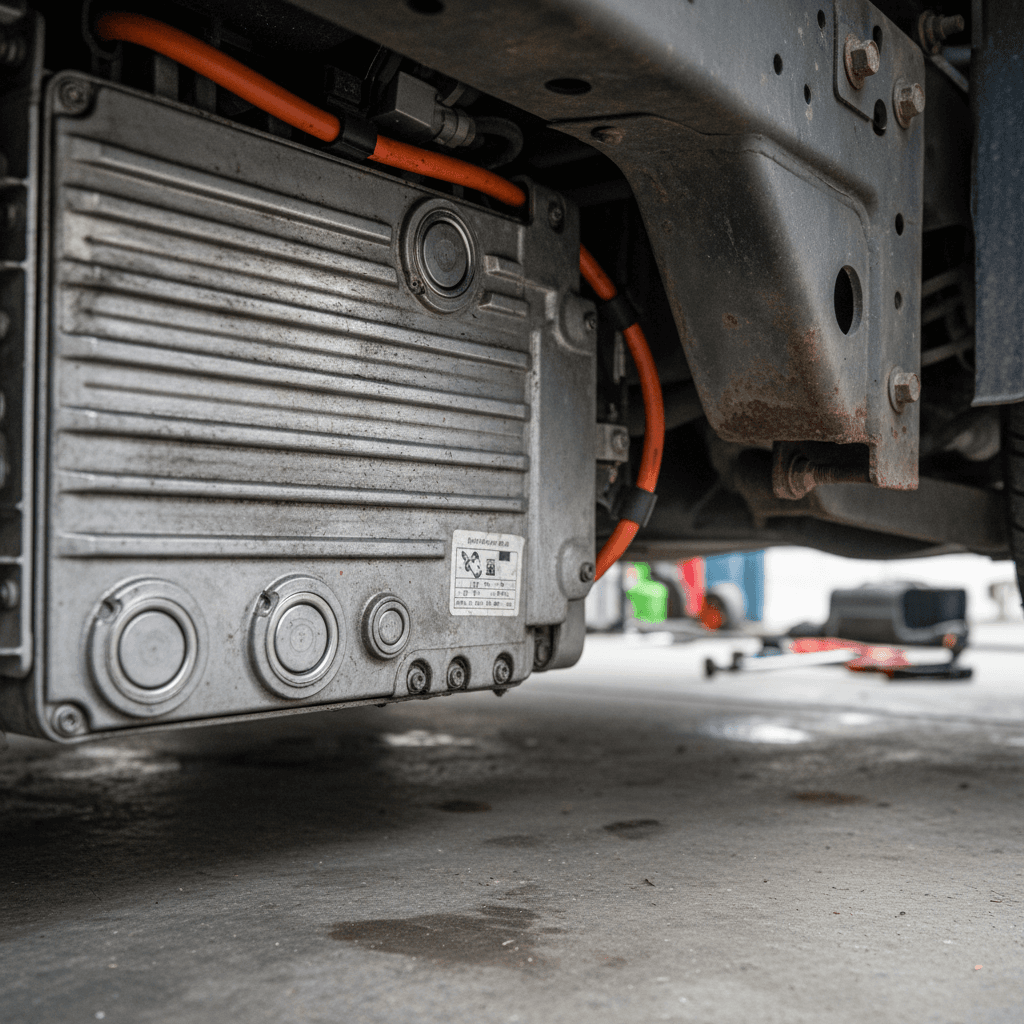
Look for explicit language around <strong>onboard charger, inverter, DC–DC converter, battery pack case, and cooling/heating components</strong>. If these aren’t spelled out, assume they’re not covered.
2. Transparent battery rules
If the plan claims to cover the battery, check the details: Is it only for total failure? What’s the minimum capacity threshold? Are software updates or inspections required to stay eligible?
3. Strong electronics protection
Modern EVs rely on dozens of control modules and sensors. Good coverage should include <strong>infotainment screens, ADAS cameras and radar, parking sensors, and gateway/control modules</strong>, not just drivetrain parts.
4. Reasonable labor and diagnostic coverage
Ask how diagnostic time is covered. EV fault tracing can take hours. The best plans pay for <strong>manufacturer-specified labor times and dealer-level diagnostics</strong>, not just quick fixes.
5. Nationwide repair options
Make sure you can use reputable dealers or independent shops with EV expertise. For road trips, **nationwide coverage and 24/7 roadside assistance** are worth paying for.
6. Simple, honest exclusions
Every plan has exclusions. The good ones put them in <strong>plain English</strong>, especially around pre-existing conditions, modified vehicles, aftermarket accessories, and commercial use.
Pro tip: match term to battery warranty
When an EV extended warranty makes sense
Extended warranties have a bad reputation because they’re often oversold at the finance desk. But for the right driver and the right electric car, they can be genuinely smart protection. Here’s when they deserve a hard look:
High annual mileage
If you commute long distances or road-trip often, you’ll burn through your factory bumper-to-bumper coverage quickly. That leaves lots of years where a failed onboard charger, battery heater, or ADAS sensor is 100% your problem.
In that case, a **mileage-heavy extended plan** that focuses on complex electronics can be a good hedge.
Keeping the car 8–12 years
Planning to keep your EV until the wheels practically fall off? The risk of major out-of-warranty repairs goes up with age, even if the battery is still within its original term. Here, a long-duration plan through at least years 7–10 may pencil out.
Other situations where extended coverage can help
It’s not just about peace of mind, it’s about resale and predictability.
Nervous first-time EV owner
Tight monthly budget
Used EV with limited history
When you can probably skip the extended warranty
There’s another side to the story: plenty of EV drivers are better off **not** buying extra coverage, especially if the plan is expensive or thin on benefits. You may want to pass if:
- You lease your EV or plan to sell it within 3–4 years.
- Your EV already has outstanding factory coverage, like a 10-year battery warranty and generous electronics protection, and you don’t drive huge miles.
- The extended warranty starts immediately, overlapping heavily with existing warranty time instead of extending beyond it.
- The contract excludes most EV-specific components, or the seller can’t clearly answer questions about high-voltage and battery rules.
- You’re comfortable budgeting and saving cash for potential repairs instead of paying for coverage you may never use.
Red flags to walk away from
How to compare extended warranties for electric cars
Comparing extended warranties for electric cars is a bit like comparing phone plans: the marketing is loud, the fine print is quiet, and the details matter. Here’s a structured way to evaluate offers side by side.
EV repair realities behind extended warranties
Side-by-side comparison checklist
1. Start with your VIN and build sheet
Factory coverage varies by trim, battery size, and in some cases original in-service date. Use your VIN in the automaker’s portal or at a dealer to confirm <strong>exact factory warranty start and end dates</strong>.
2. Line up start and end dates
Make a simple timeline: new vehicle warranty, battery warranty, and proposed extended coverage. The best plans **begin when the original coverage ends**, not day one of ownership.
3. Compare covered components line by line
Highlight high-voltage parts, infotainment, ADAS, and thermal management. If one plan lists these by name and the other doesn’t, that’s a clear quality difference.
4. Look at deductibles and claim limits
A lower upfront cost sometimes hides high per-visit deductibles or per-claim caps. Run a scenario or two: “If my onboard charger fails for $2,000, how much would I actually pay?”
5. Check transferability
If you might sell the car before the contract ends, confirm whether the plan is **transferable to the next owner**, and whether there’s a transfer fee. Transferable coverage can boost resale value.
6. Research the administrator
Google the warranty administrator, not just the seller. Look for reviews about claim denials, slow payments, or great service. Who actually pays the bills matters more than the logo on the brochure.
Best-case outcome
Extended warranty vs just saving for EV repairs
There’s a perfectly valid alternative to buying any extended warranty: **self-insuring** by setting money aside for future repairs. For many EV owners, especially those with reliable models and modest mileage, this is the smartest move.
When a warranty can win
- You want predictable monthly costs more than you want to maximize every dollar.
- You’d struggle to cover a sudden $3,000–$5,000 repair bill without financing or stress.
- You’re buying a higher-mileage or early-generation EV where future repair patterns are less clear.
When saving usually wins
- You’re disciplined about setting aside cash, say, $50–$100 a month, in a repair fund.
- Your EV still has years of strong factory coverage and a solid reliability record.
- You prefer flexibility: if your car stays trouble-free, that money becomes a down payment on your next EV instead of sunk warranty cost.
A hybrid strategy that works well
How Recharged helps with warranty decisions
If you’re shopping a used EV, it can be hard to know whether you’re buying a future champion or someone else’s science experiment. That’s exactly the problem Recharged was built to solve.
What Recharged brings to the table
Better information = better warranty choices.
Recharged Score battery health report
Expert EV guidance
Flexible ownership tools
Ready to find your next EV?
Browse VehiclesBecause Recharged vehicles are thoroughly vetted and include transparent battery health data up front, many customers discover they’re comfortable **skipping pricey add-on warranties** and instead putting that money toward a better car, lower payment, or a dedicated repair fund.
Thinking about a used EV?
EV extended warranty FAQ
Frequently asked questions about extended warranties for electric cars
The best extended warranty for an electric car isn’t a magic shield against every repair. It’s a carefully chosen tool that fits your specific EV, your driving habits, and your budget. Start by understanding your existing factory coverage, then decide whether extra protection fills a real gap or just adds cost. And if you’re shopping used, begin with the foundation that matters most: a healthy battery and transparent history. That’s where Recharged comes in, so the only surprises with your EV are the good kind, like how little you’re stopping for gas.