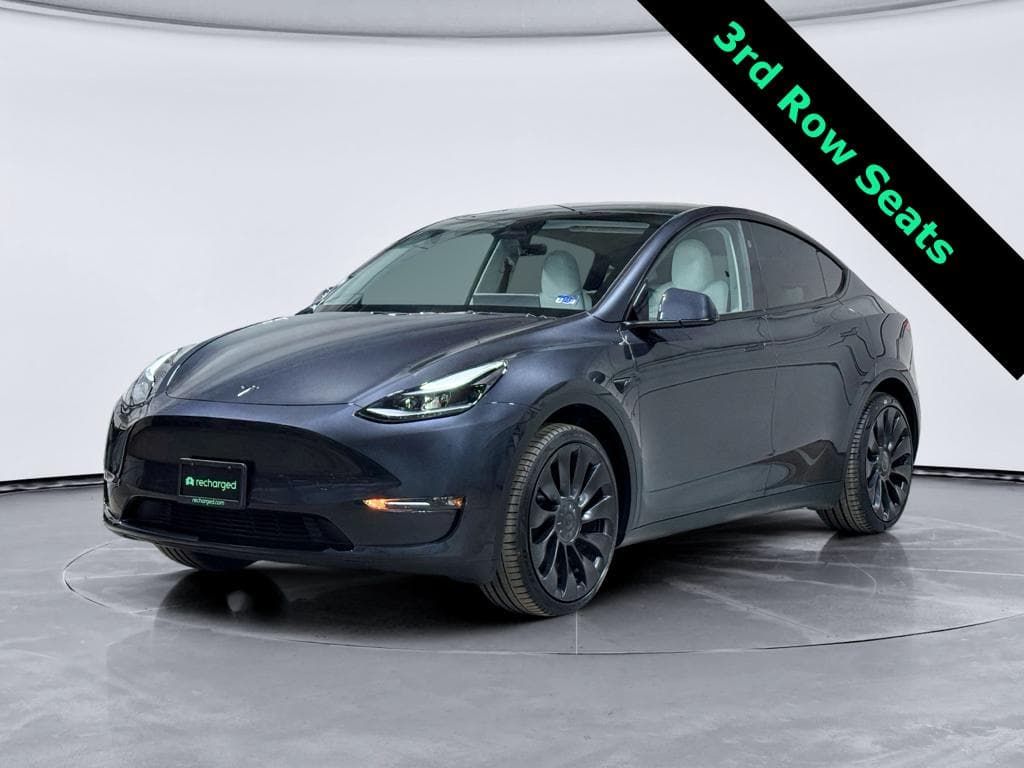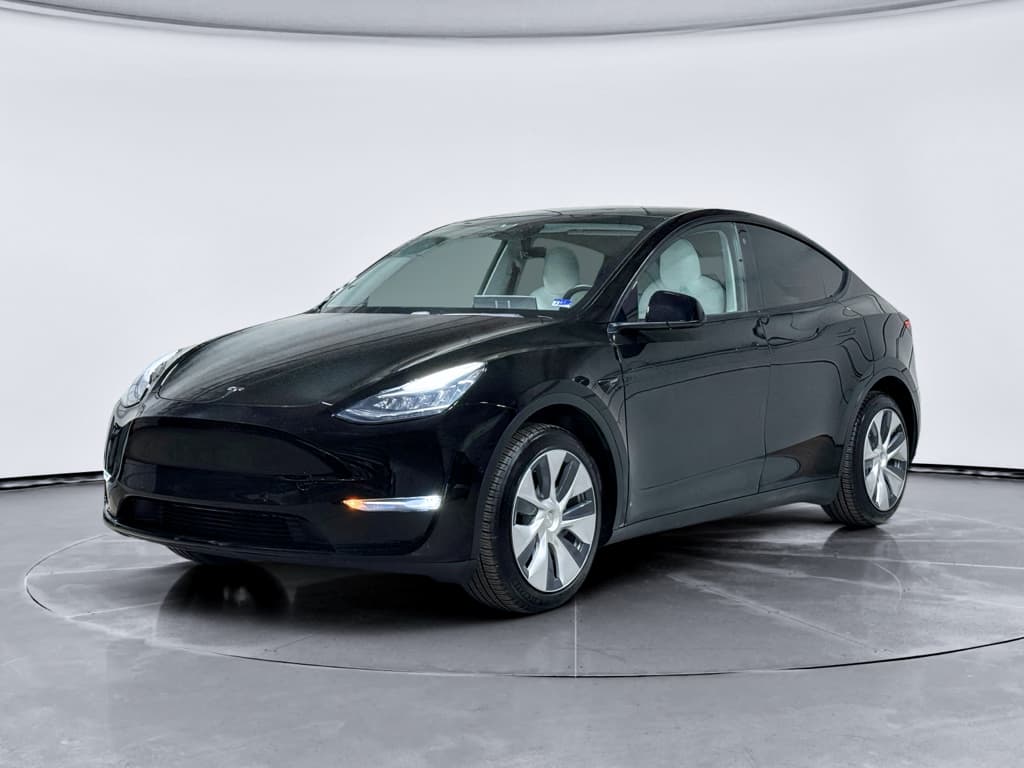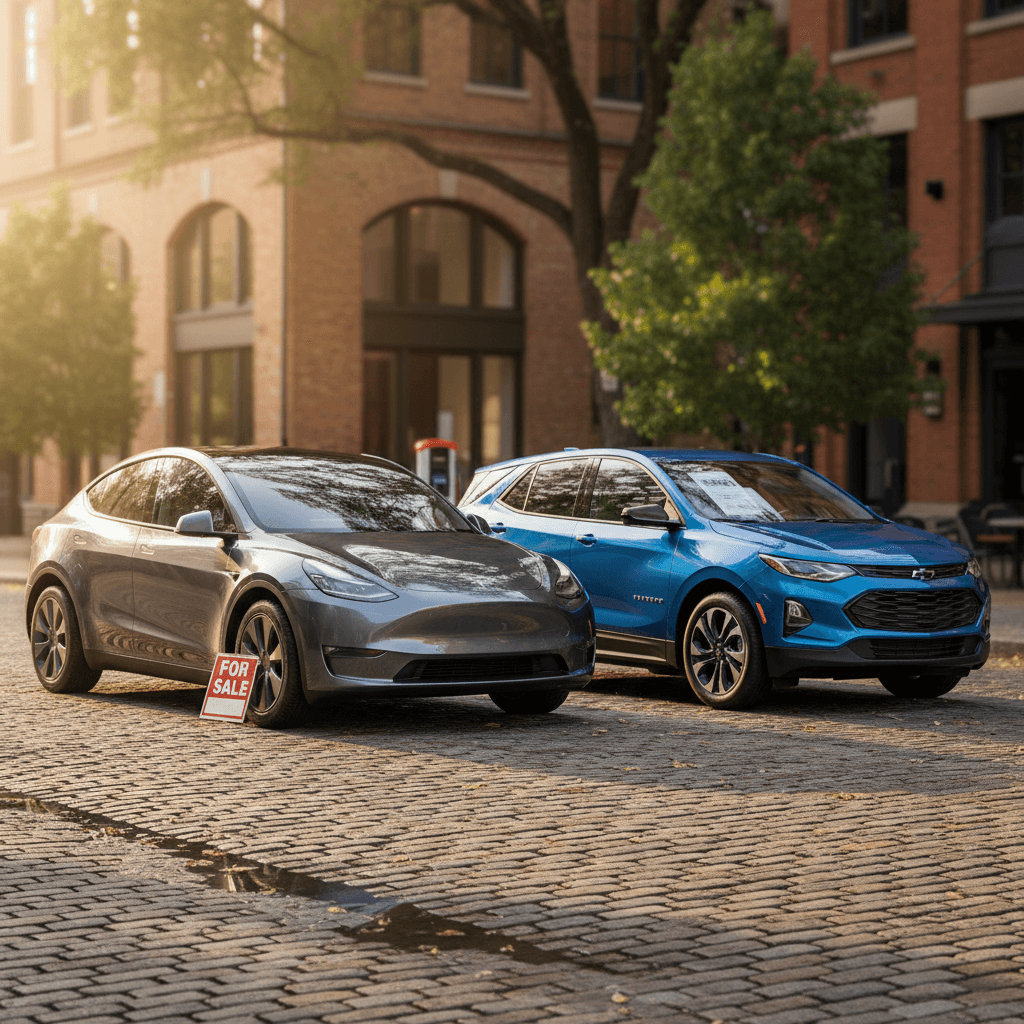
Cross-shopping a used Tesla Model Y vs Cadillac Lyriq puts you at the center of the fastest-growing corner of the EV market: midsize luxury electric SUVs. One is the volume leader with unmatched charging access and a huge used supply; the other is a newer, plush entry from a legacy brand that’s still rare on the secondhand market. If you’re trying to decide which fits your life and budget, this breakdown is built for you.
Why this comparison matters now
Overview: Used Tesla Model Y vs Cadillac Lyriq
Tesla Model Y (used)
- Role: Benchmark family EV crossover with massive sales volume and parts availability.
- Battery & range: Most 2022–2024 Long Range trims are EPA-rated around 318 miles; Performance closer to 303 miles.
- Charging: Native NACS port with full access to Tesla Superchargers plus growing third-party NACS infrastructure.
- Strengths: Charging network, efficiency, software, driver-assist tech, cargo space, mature used market.
- Watch-fors: Ride quality, cabin noise, build quality variation, and relatively steep depreciation on earlier model years.
Cadillac Lyriq (used)
- Role: Newer luxury EV SUV with focus on comfort, quiet, and design.
- Battery & range: 102–108 kWh pack with EPA range typically in the low-to-mid 300s depending on trim (around 319–326 miles for many RWD/AWD models).
- Charging: CCS1 DC fast charging up to about 190 kW with the option to use Tesla Superchargers via a GM-approved NACS adapter.
- Strengths: High-end interior, refined ride, strong safety ratings, generous standard equipment.
- Watch-fors: Much smaller used pool, first- and second-year product quirks, and dealer-based service experience that can vary by store.
How to frame your decision
Quick specs and what changes on the used market
Core spec comparison (typical 2023–2024 trims)
EPA figures when new; expect some real-world variation and minor battery aging on used examples.
| Model | Drivetrain | EPA range (new) | Battery size (approx.) | Fast-charging peak | Drive type |
|---|---|---|---|---|---|
| Tesla Model Y Long Range | Dual motor | ≈318 mi | ≈75–82 kWh | ≈250 kW (Supercharger) | AWD |
| Tesla Model Y Performance | Dual motor | ≈303 mi | ≈75–82 kWh | ≈250 kW (Supercharger) | AWD |
| Cadillac Lyriq RWD | Single motor | ≈326 mi | 102–108 kWh | ≈190 kW (CCS1) | RWD |
| Cadillac Lyriq AWD | Dual motor | ≈303–319 mi | 102–108 kWh | ≈190 kW (CCS1) | AWD |
Always confirm exact specs for the VIN you’re considering, trims and options matter.
Used vs new specs
Range and battery health in the real world
On paper, a used Tesla Model Y and Cadillac Lyriq land in roughly the same range neighborhood, around 300 miles either way, depending on drivetrain and wheels. In practice, range is as much about efficiency and battery health as it is about raw kWh.
Range and battery: how they really compare
What you’re likely to see day-to-day, not just in lab tests
Used Tesla Model Y
- Efficiency: Among the most efficient SUVs on sale, which helps turn a smaller pack into competitive range.
- Degradation: Many owners report modest loss in the first 50,000–80,000 miles, with range stabilizing afterward when the pack is treated well.
- Patterns: Frequent DC fast charging and always charging to 100% can accelerate wear, important questions to ask the seller.
Used Cadillac Lyriq
- Battery size: A larger 102–108 kWh pack means strong range even if you lose a few percent over time.
- Age factor: Most used Lyriqs on the market today are 2023–2025 models with relatively low mileage, meaning less time for degradation to show up.
- Unknowns: With fewer high-mileage Lyriqs in circulation, long-term degradation data is still maturing compared with Tesla’s large fleet history.
How Recharged de‑risks battery questions
If you routinely drive 150–200 miles or more in a day, both SUVs can handle that comfortably when new. On the used market, the Model Y brings a deeper track record but more unit-to-unit variation. The Lyriq leans on a larger pack and newer model years, but with less long-term data. Your best move is to lean on third-party battery reports and avoid cars with obvious fast-charging abuse or evidence of repeated 100% charges left sitting in hot climates.
Charging experience and road-trip usability
Tesla Model Y: still the charging benchmark
- Connector: Native NACS port, which is quickly becoming the North American standard.
- Network access: Direct, app-integrated access to Tesla Superchargers, still the most reliable, dense fast-charging network in the U.S.
- Speed: Peak DC rates around 250 kW on compatible Superchargers; real-world sessions often ramp down but are still brisk.
- Planning: In-car trip planner that routes you through chargers with estimated arrival state of charge and dwell time.
Cadillac Lyriq: catching up quickly
- Connector: CCS1 for now, with GM supplying NACS DC adapters so owners can use thousands of Tesla Superchargers.
- Network access: Access to GM’s Ultium Charge 360 partners plus CCS networks like Electrify America, coverage can be spottier by region.
- Speed: DC fast charging peaks around 190 kW. Real-world testing shows roughly 100 miles added in the first 15 minutes on a low battery, and about 149 miles in 30 minutes on a fast charger.
- Planning: Growing software support, but still not as tightly integrated as Tesla’s end-to-end ecosystem.
Road-tripper’s rule of thumb
Tech, comfort, and driving feel
Cabin and tech: minimalist vs lounge-like
Both are modern EVs, but they appeal to different tastes
Tesla Model Y: clean and tech‑forward
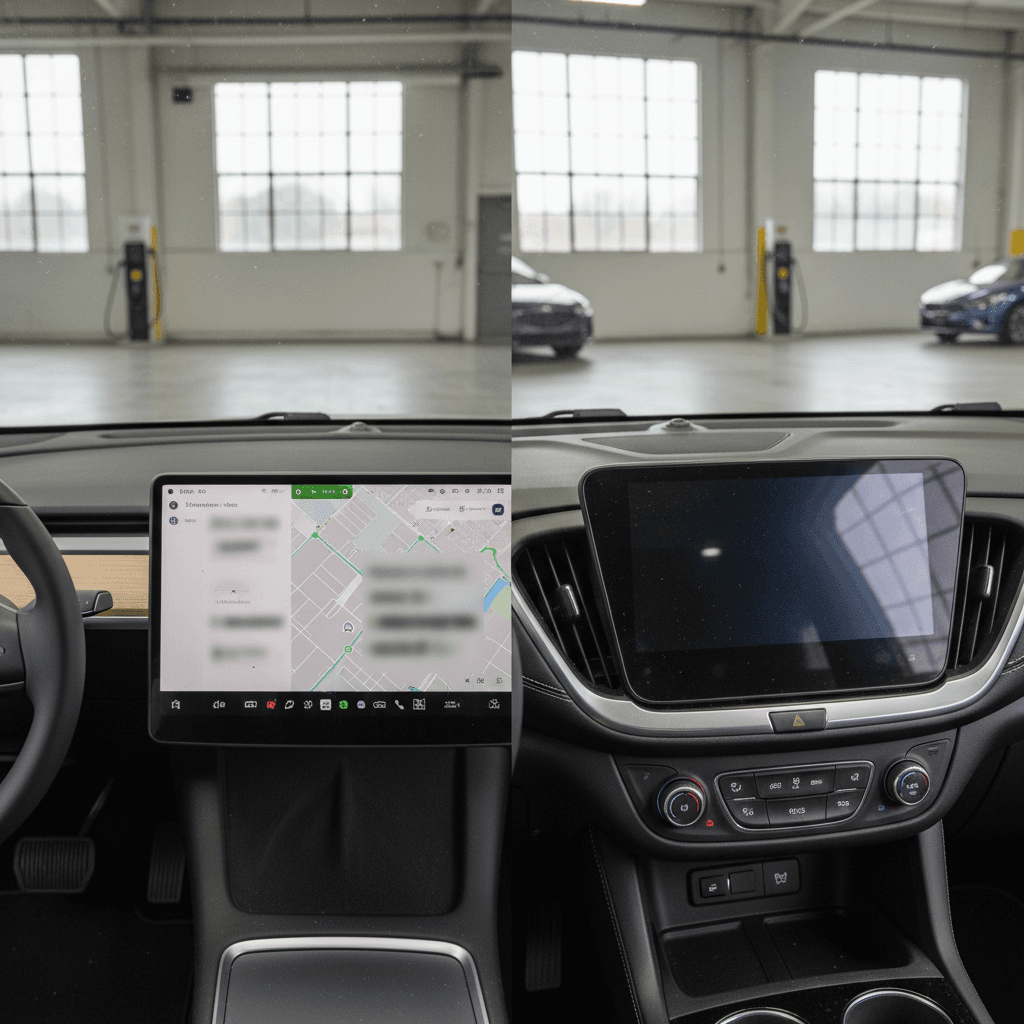
- Interface: Single 15-inch center touchscreen runs almost everything, no traditional gauge cluster.
- Over-the-air updates: Frequent software updates that can tweak range, add features, and refine driver-assistance over time.
- Interior feel: Minimalist, airy cabin with large glass roof. Some shoppers find materials and fit-and-finish more basic than price suggests.
- Driving feel: Quick, responsive, and efficient. Ride can be firm and road noise more noticeable, especially on earlier builds and larger wheels.
Cadillac Lyriq: luxury-first approach
- Interface: Expansive curved display that stretches across the dash, with more familiar physical controls than Tesla in key areas.
- Materials: Softer touchpoints, more sound insulation, and design flourishes that feel closer to a traditional luxury SUV.
- Comfort: Quieter cabin and more compliant ride, especially on trims without the largest wheel options.
- Driving feel: Heavier, relaxed demeanor that prioritizes comfort over razor-sharp handling, still plenty quick in AWD and performance trims.
Safety is a strong suit for both
If you love tech and don’t mind a learning curve, the Model Y’s software-first approach is hard to beat, especially with Tesla’s advanced driver-assistance features. If you want a quieter commute, a richer interior, and a layout that feels more like a traditional luxury SUV, the Lyriq leans in your direction.
Depreciation, pricing, and value for money
How the used market is shifting
This is where the story gets interesting. A few years ago, Teslas routinely commanded top-dollar on the used market. Recently, average used Tesla prices, Model Y included, have slipped below the broader used-car market. That’s partly because so many off-lease and trade-in Teslas have hit dealer lots, putting downward pressure on prices.
The Lyriq, by contrast, is newer and produced in lower volumes. Used examples are still relatively scarce, so asking prices hold closer to new MSRPs. You’re often paying more for the badge and the fresh design, but you also tend to get fewer miles and more remaining factory warranty.
Where Recharged fits in on pricing
How shoppers typically trade off price vs age
Illustrative patterns you’ll often see in today’s used listings (exact numbers vary by mileage, trim, region, and incentives).
| Scenario | Used Model Y | Used Lyriq | What you’re trading |
|---|---|---|---|
| Budget-focused family | Older (2021–2022), higher miles, noticeably cheaper | Newer (2023–2024), low miles, significantly higher price | Model Y: better deal but older tech and more wear; Lyriq: newer and nicer, but stretches budget. |
| Luxury shopper | High-spec Performance or long-range Model Y, still discounted | Well-optioned Lyriq Luxury or Sport trim, closer to new MSRP | Model Y: more performance per dollar; Lyriq: more comfort and perceived prestige. |
| Value sweet spot | Mid-mileage 2023 Model Y, good service history | Early-build 2023 Lyriq with modest miles | Y: proven and cheaper to run; Lyriq: early production, so check for TSBs and software updates. |
Always compare specific VINs and local listings; this is a directional snapshot, not a price quote.
Ownership costs, reliability, and service
Model Y: mature ecosystem, DIY-friendly
- Energy costs: Excellent efficiency keeps electricity bills low compared with many EV SUVs.
- Repairs: Tesla’s vertically integrated model means software and many hardware issues are handled at Tesla service centers or via mobile technicians. Parts are relatively easy to source, but collision repair queues can be long in some areas.
- Warranty: Many used Model Ys still carry remaining battery and powertrain coverage; verify dates and mileage before you buy.
- Reliability patterns: Early squeaks, panel alignment, and minor fit-and-finish issues are common complaints, though the underlying powertrain is generally robust.
Lyriq: traditional dealer network, newer tech
- Energy costs: Larger, heavier SUV means higher consumption than a Model Y, so expect somewhat higher electricity use per mile.
- Repairs: You’ll work with Cadillac dealers. Some are rapidly building EV expertise; others are still ramping up, which can affect turnaround times.
- Warranty: Because Lyriq is newer, many used examples are still deep into their basic and powertrain warranties, which can be a big peace-of-mind factor.
- Reliability patterns: As a first-generation EV SUV on GM’s Ultium platform, the Lyriq is still proving itself. Pay attention to recalls, software campaigns, and customer service bulletins.
Don’t skip a pre‑purchase EV inspection
Which used EV SUV is right for you?
Who should buy a used Tesla Model Y vs Cadillac Lyriq?
Use these profiles as a sanity check before you shop
Pick a used Tesla Model Y if…
- You road-trip often and want the smoothest fast-charging experience.
- You value efficiency, software, and cargo space more than soft-touch materials.
- You’re comfortable with a minimalist cabin and learning a new interface.
- You want a deep, liquid used market with lots of trims, colors, and price points to choose from.
Pick a used Cadillac Lyriq if…
- You prioritize comfort, quiet, and design over ultimate efficiency.
- Most of your driving is local or regional with decent CCS coverage.
- You like the idea of a newer vehicle with more remaining factory warranty.
- You want your EV to feel like a luxury SUV first and a tech product second.
In other words, the used Model Y is the pragmatic choice for many households, especially if you’re stretching every dollar and logging highway miles. The Lyriq leans toward buyers who want a more traditional luxury experience and are willing to pay for a newer platform. Either way, treating battery health, charging access, and verified pricing as non‑negotiables will matter more than which logo sits on the steering wheel.
Checklist: Buying a used Model Y or Lyriq
Nine steps before you sign on a used EV SUV
1. Confirm remaining warranty
Ask for the in‑service date and mileage, and confirm what’s left on the basic and battery/powertrain coverage for the specific VIN.
2. Get a battery health report
Treat this like an engine compression test on a gas car. Use a platform like Recharged that includes a Recharged Score battery assessment, or pay an EV‑savvy shop to pull detailed data.
3. Review charging history
Look for patterns of constant DC fast charging or long periods at 100% state of charge, which can affect long-term battery health.
4. Test fast charging, not just Level 2
If possible, plug into a DC fast charger during the test drive and confirm that speeds look normal for the model and conditions.
5. Inspect tires and brakes
EVs are heavy and can chew through tires and pads more quickly. Uneven tire wear can also point to alignment issues or rough use.
6. Check ADAS and infotainment
On both models, verify that features like adaptive cruise, lane-keep assist, cameras, and the main screen work as expected with no strange glitches.
7. Ask about software updates
Confirm that the vehicle is on current or near‑current software, and that there are no outstanding recall or update campaigns, especially on early-build Lyriqs.
8. Validate charging compatibility
For a Model Y, ensure you have home charging options and understand NACS adapters for non‑Tesla networks. For a Lyriq, confirm you’ll get a GM‑approved NACS adapter if you plan to rely on Tesla Superchargers.
9. Compare total cost of ownership
Look beyond sticker price. Factor in insurance, electricity rates, expected maintenance, and, if buying through Recharged, transparent delivery costs and financing terms.