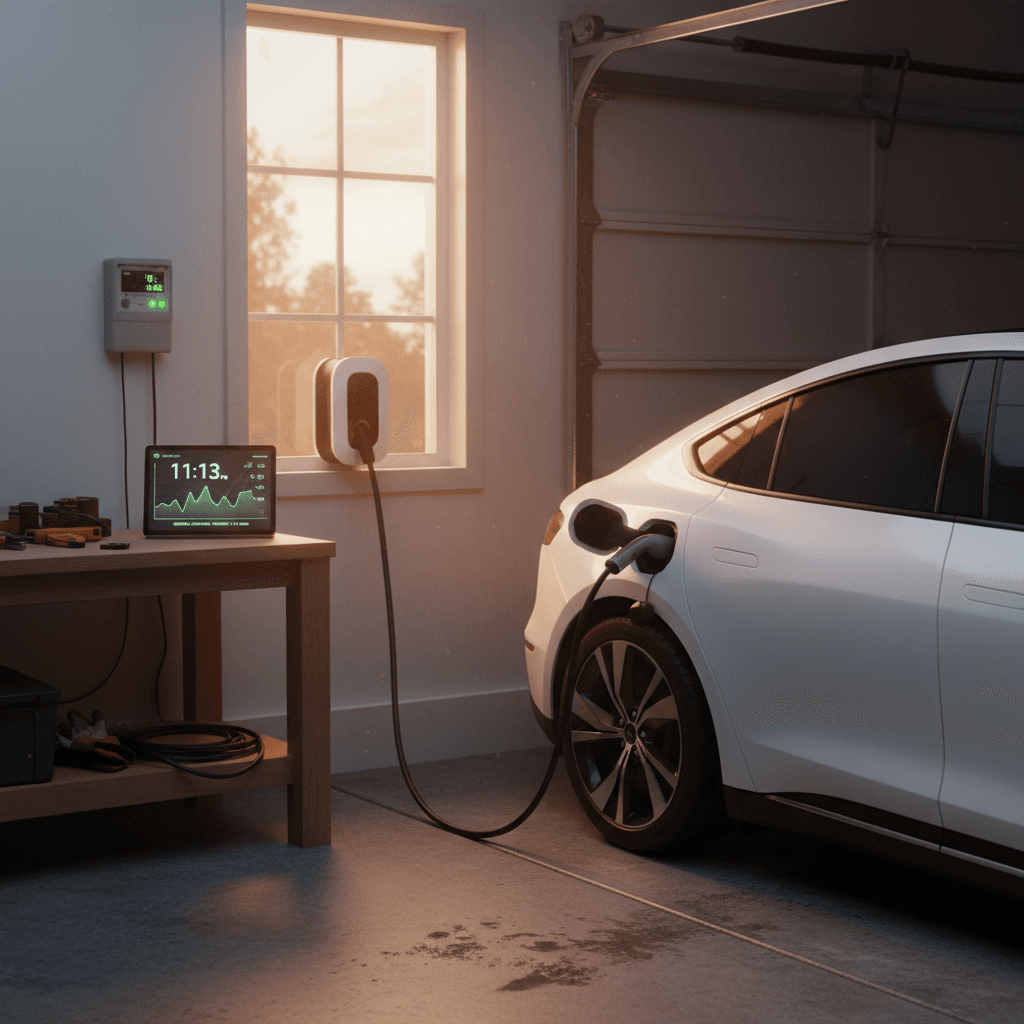
Picking the best electricity tariff for EV charging is the quiet hero of affordable electric driving. You’ll see endless debates about charging networks and battery sizes, but the real money is often made, or lost, on your utility bill and the EV time you actually plug in.
Quick take
Why your electricity tariff matters for EV charging
An EV turns your home into a mini fueling station. That means your car’s energy cost is tied directly to your electricity tariff, how and when your utility charges you for power. With average U.S. residential electricity running around 16–17 cents per kWh in 2025, and public charging often over 30 cents per kWh, the way you buy electricity at home can easily double or halve your fuel bill.
EV charging cost in 2025 at a glance
If you just plug in whenever you get home and ignore the clock, you’re probably paying a flat rate, or worse, peak pricing, for most of your charging. But with the right tariff and schedule, you can turn your EV into a giant off‑peak sponge, soaking up cheap electricity while the grid is quiet and your family is asleep.
EV driver rule of thumb
Key electricity tariff types for EV drivers
Utilities don’t all use the same playbook, but most EV drivers in the U.S. will see some mix of these tariff types. Understanding them is step one to finding the best electricity tariff for EV charging in your area.
Common residential electricity tariffs for EV owners
Know what you’re on before you chase something better
1. Flat-rate tariff
What it is: You pay the same ¢/kWh 24/7.
- Simple and predictable.
- No reward for off‑peak charging.
- Still cheaper than public charging, just not optimized.
2. Time-of-use (TOU) tariff
What it is: Price changes by time of day, peak, shoulder, and off‑peak.
- Peak: late afternoon / early evening.
- Off‑peak: overnight, often weekends.
- Ideal for scheduled EV charging.
3. EV-specific plan
What it is: A TOU plan designed around EV charging.
- Extra‑low overnight rate (sometimes called “super off‑peak”).
- May require a separate meter or smart charger.
- Best fit if you drive a lot of miles.
4. Tiered or block pricing
Some utilities charge one rate for your first block of usage and a higher rate after you cross a threshold. An EV can push you into the upper tier quickly.
- Good if your baseline use is low.
- Can get expensive fast if you add a lot of EV miles without off‑peak relief.
5. Demand or whole-house demand charges
Less common for homes, but some utilities bill based on your highest 15–30‑minute usage spike.
- Level 2 charging plus other big loads can trigger high demand fees.
- Smart charging or power‑limited charging helps avoid big spikes.
Watch the small print
What is the best EV time to charge?
In most of the U.S., the best EV time to charge is overnight during your utility’s off‑peak window. That often means sometime between 9–11 p.m. and 6–8 a.m., depending on your region and plan. Some EV‑focused tariffs also offer a super off‑peak window in the very early morning hours, say, midnight to 5 a.m., with the lowest rates of the day.
- Check your bill or utility portal for a TOU graph that shows when peak, shoulder, and off‑peak rates apply.
- Identify the cheapest window that still fits your lifestyle, often midnight to early morning.
- Use your EV’s built‑in charge scheduling or your charger’s app to start charging when that window opens.
- Aim to finish charging before the morning peak (often 6–9 a.m.) whenever possible.
Set it and forget it
How much can you save with off-peak EV charging?
Let’s put some realistic numbers around this. Suppose you drive 1,000 miles a month and your EV averages 3 miles per kWh. That’s about 333 kWh of charging per month. Your savings come down to the difference between your peak and off‑peak rates.
Example: Monthly cost of 333 kWh of EV charging
Illustrative numbers based on typical 2025 U.S. residential rates. Check your own utility for exact pricing.
| Tariff & timing | Rate (¢/kWh) | Monthly EV cost | Annual EV cost |
|---|---|---|---|
| Flat-rate: any time | 17¢ | $56.61 | $679 |
| TOU: mostly peak (late afternoon/early evening) | 25¢ | $83.25 | $999 |
| TOU: mostly off-peak overnight | 12¢ | $39.96 | $480 |
| EV plan: super off-peak window | 9¢ | $29.97 | $360 |
How your EV charging bill changes with different tariffs and EV times.
Charging in the wrong EV time window on a TOU plan can actually cost you more than a simple flat rate. But if you lean into off‑peak or super off‑peak charging, you can cut your home fueling bill for that same driving pattern by roughly half.
What this means in real life
Ready to find your next EV?
Browse VehiclesHow to choose the best electricity tariff for EV charging
Finding the best electricity tariff for EV charging isn’t about chasing the lowest single number you see in a rate brochure. It’s about matching the tariff to your driving, your home, and your habits. Here’s a straightforward decision process you can walk through in an evening.
Step-by-step: finding your best EV tariff
1. Map your real EV usage
Estimate your monthly miles and your car’s efficiency (mi/kWh). Many EVs show this on the dash or in the app. Multiply miles ÷ mi/kWh to get kWh per month.
2. Read your current bill
Look for your current ¢/kWh, any TOU periods, and whether you’re on a flat or time‑based tariff. Note any minimums, fees, or seasonal changes.
3. Compare available plans
On your utility’s website, look for EV, TOU, or overnight plans. Grab the peak, off‑peak, and shoulder rates, plus any enrollment or metering requirements.
4. Run the math for YOUR hours
Take your monthly kWh and calculate cost if 80–100% of charging happens off‑peak vs. if you accidentally charge during peak. Don’t forget to include your non‑EV household use.
5. Factor in lifestyle and flexibility
If you work nights, share the driveway, or have unpredictable schedules, you may not hit the off‑peak window every time. A simpler flat rate might be better than a great EV tariff you can’t realistically use.
6. Revisit once a year
Rates change, and so does your driving. Mark a calendar reminder to re‑check tariffs annually, especially if you add a second EV or move.
Think beyond your car
Smart charging apps, EV tariffs, and automation
Once you’ve locked in a good tariff, the next step is making sure you actually charge in the right EV time window. Modern EVs and chargers are surprisingly good at this, as long as you tell them what you want.
Three ways to automate cheap EV time charging
Use the tech you already own to stay in the off‑peak lane
1. Built-in vehicle scheduling
Most EVs let you set:
- A start time (e.g., 12:00 a.m.).
- A departure time (ready by 7:00 a.m.).
- Target charge limits (80–90%).
If you’re new to this, start here, it’s the simplest option.
2. Smart home chargers
Wi‑Fi–enabled Level 2 chargers can talk to your utility, your car, or both.
- Schedule by tariff window.
- Limit power to avoid tripping breakers.
- Track detailed costs & usage in the app.
3. Utility & third‑party apps
Some utilities and energy apps use live or day‑ahead pricing signals.
- “Charge when cheap” modes.
- Pause charging in rare price spikes.
- Future features like vehicle‑to‑grid exports.
Let software do the hard work
Common pitfalls to avoid with EV tariffs
EV tariffs can look great on a marketing page and disappointing on your actual bill. These are the traps that catch a lot of first‑time EV owners.
- Signing up for TOU and then charging at 6 p.m. anyway because it’s convenient.
- Ignoring higher daytime rates that make running the A/C or heat pump more expensive.
- Overlooking fixed fees, demand charges, or minimum usage requirements.
- Assuming an EV plan is always cheaper than a simple flat rate for low‑mileage drivers.
- Forgetting to update your charge schedule after a time change, move, or new work hours.
When an EV tariff can cost you more
EV tariffs when you don’t own your home
Renters, condo owners, and anyone who relies heavily on public charging face a different set of choices. You may not control the building’s electricity tariff, but you still have levers to pull.
If you have access to a shared or assigned outlet
- Ask your landlord or HOA how electricity is billed and whether TOU is available.
- If you’re reimbursing them, see if you can pay based on the building’s off‑peak rate.
- Use a smart plug or charger with metering so everyone trusts the numbers.
If you rely mostly on public charging
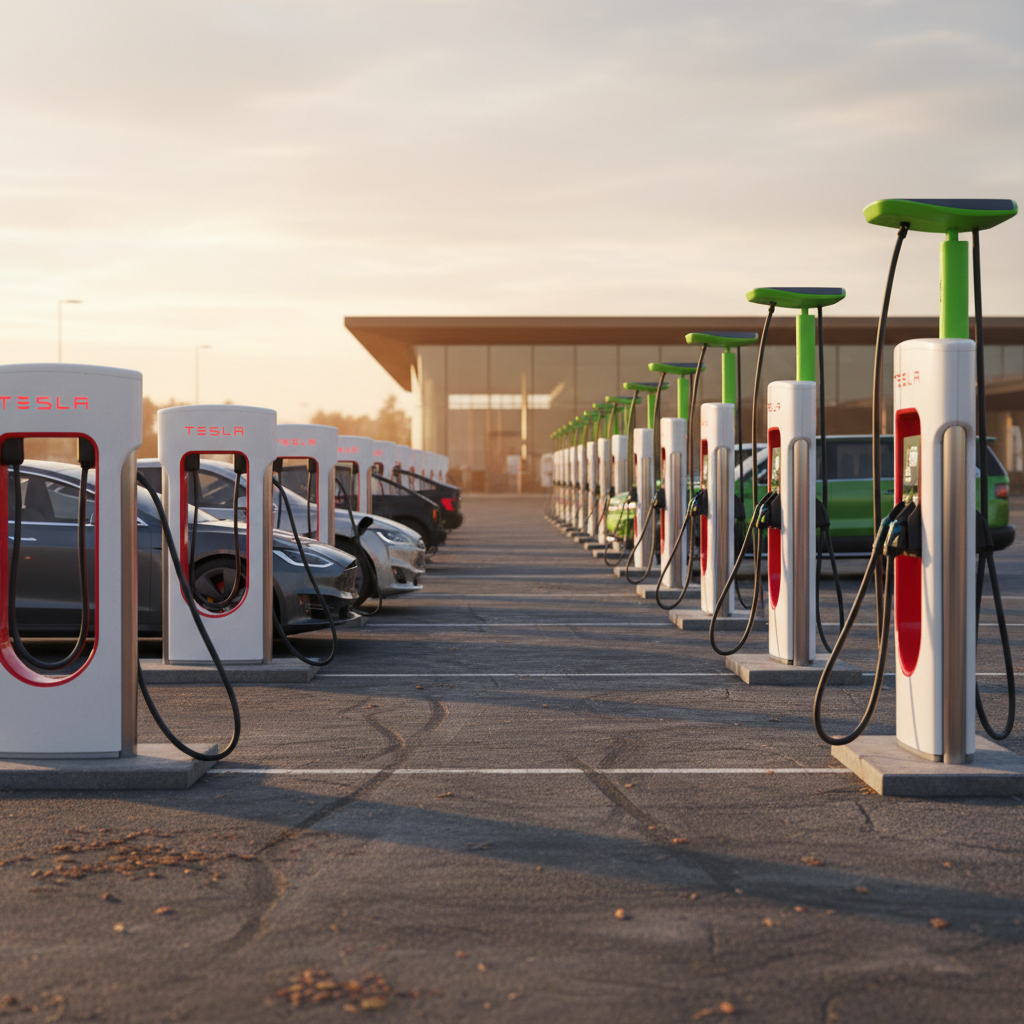
- Look for off‑peak or membership pricing on your favorite networks.
- Favor slower Level 2 stations when time allows, they’re often cheaper per kWh.
- Use home charging whenever you can, even if it’s just a few nights a week at a friend or family member’s house on a fair reimbursement arrangement.
The bigger picture
How your electricity tariff affects used EV shopping
At Recharged, we talk a lot about battery health, charging history, and total cost of ownership. Your electricity tariff, and how you plan to use it, belongs in that conversation, especially when you’re comparing used EVs.
Tariffs, used EVs, and what to think about before you buy
Tie your charging costs to the right car, not just the right price
1. Big battery vs. smaller pack
Larger batteries cost more to fill but let you stretch out charging.
- With a great off‑peak tariff, a big pack you charge weekly can be very cheap per mile.
- On a flat rate, a smaller, efficient car may make more sense.
2. DC fast charging dependence
If your lifestyle means lots of road trips or apartment living, you’ll lean more on public charging.
In that case, the gap between public prices and your home tariff matters more than tiny differences between home plans.
3. Battery health and overnight charging
Gentle, overnight home charging on a reasonable tariff is good for both your wallet and your battery.
Every Recharged vehicle comes with a Recharged Score report, including verified battery health and charging history, so you can see how the car has been treated so far.
How Recharged fits in
FAQ: Best electricity tariff for EV charging & EV time
Frequently asked questions
Bottom line: finding your EV time sweet spot
The best electricity tariff for EV charging is the one that lines up with how you actually live, drive, and plug in, not just the one with the lowest number on a postcard. For many drivers, that means a time-of-use or EV-specific plan, a simple overnight charge schedule, and a bit of awareness about when the rest of your home uses power.
If you’re already driving electric, or thinking about a used EV, you don’t need to obsess over kilowatt‑hour spreadsheets. Spend one evening understanding your tariff options, set your preferred EV time in the car or charger, and then let automation do the rest. When you’re ready for your next EV, Recharged can help you pair a car with healthy battery life, transparent pricing, and an energy plan that keeps your monthly costs in check for years to come.