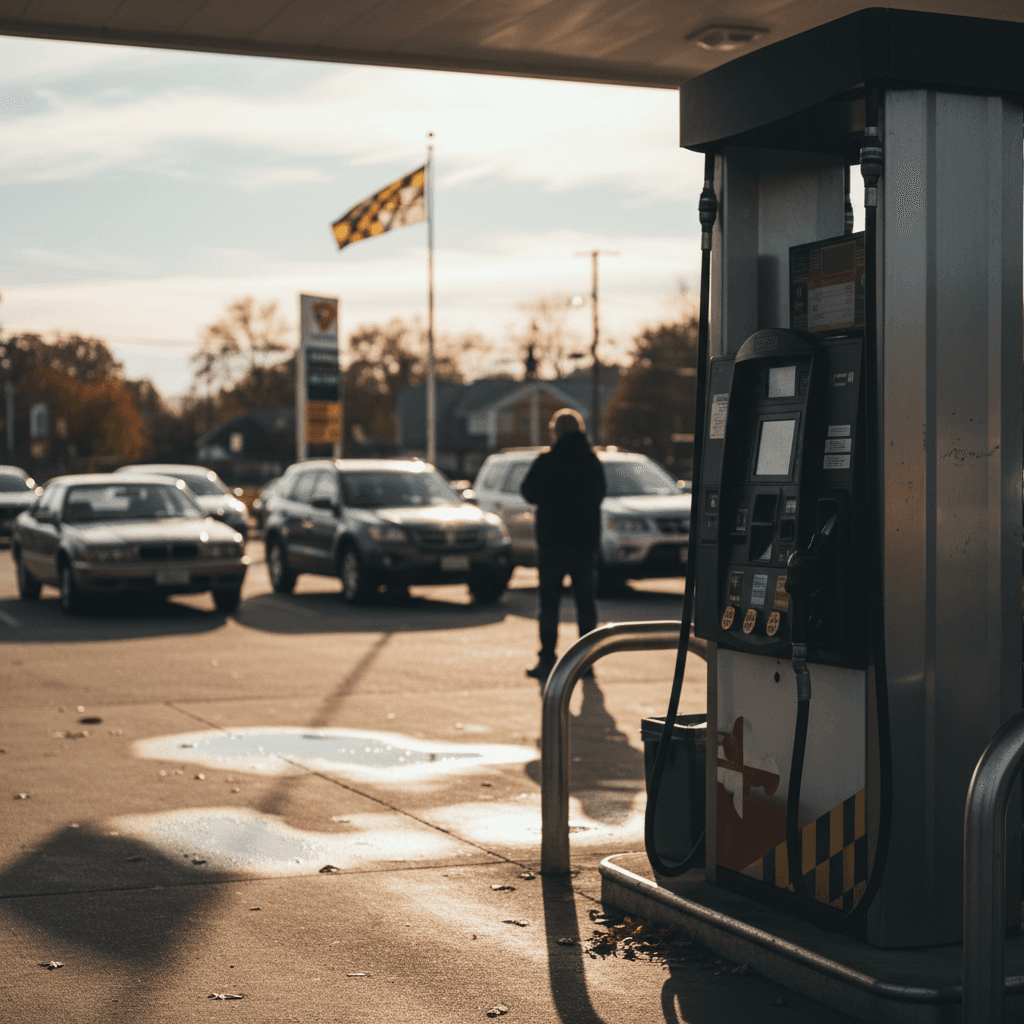
If it feels like every time you pass a station the numbers have jumped again, you’re not imagining it. Gas prices in Maryland in 2026 have swung from bargain-basement this past winter to sticker shock this spring, and it’s forcing a lot of drivers to rethink how, and what, they drive.
Context: Prices jumped fast in early 2026
Maryland gas prices in 2026: the snapshot
Key 2026 gas price numbers for Maryland
The headline for 2026 so far is simple: gas is unpredictable again. Maryland flirted with sub‑$3 averages at the end of 2025, then climbed sharply as crude prices firmed up, demand returned with warmer weather, and the state’s inflation‑indexed gas tax reset higher on July 1, 2025. You can expect more of the same choppiness through the rest of 2026, rather than a smooth, gentle trend in either direction.
Why gas prices in Maryland are so volatile in 2026
1. Global oil and seasonal fuel
Maryland doesn’t refine its own oil. Pump prices here trace back to global crude markets and seasonal fuel requirements. Winter 2025–26 saw lower prices as refineries switched to cheaper winter blends. Then, as they ramp up for summer and global tensions nudge crude upward, Maryland stations must pay more wholesale, and you see it in the digits on the street corner.
2. Local demand and competition
From I‑95 to the Capital Beltway, Maryland’s corridors stay busy. High commuter volumes between Baltimore, D.C., and the suburbs mean steady demand, so stations don’t have much incentive to discount heavily. Local competition still matters, one aggressive station can drag a whole intersection down a few cents, but in 2026 the floor is simply higher than many drivers were used to in late 2025.
Layered on top of all that is the simple fact that Maryland has a relatively high state fuel tax compared with the national average. When wholesale costs spike, the “fixed” tax stacked on each gallon makes the jump feel brutal at the nozzle.
Expect more short, sharp spikes
Maryland gas tax 2026 and how it hits your wallet
Maryland’s gas tax is one of the quiet villains of your monthly budget. The state uses an inflation‑linked excise tax on every gallon of gasoline and diesel, and it’s reset each July based on inflation and other factors. By mid‑2025, the combined state fuel tax on gas had climbed into the mid‑40‑cents‑per‑gallon range, plus the federal government’s 18.4‑cent tax on top of that.
What’s in a gallon of gas in Maryland?
Where your money actually goes when you squeeze the handle
Raw fuel cost
This is the base price of gasoline coming out of the refinery, driven by crude oil prices, refining margins, and seasonal blends. It’s the piece you hear about on the news when oil prices spike.
Taxes & fees
Between Maryland’s inflation‑indexed fuel tax and the federal excise tax, you’re paying well over half a dollar per gallon before you ever get to station overhead and profit.
Station markup
What’s left keeps the lights on at the station, pays credit‑card fees, and leaves room for profit. It’s often just a few cents per gallon; convenience store sales are where many stations really make money.
Why the gas‑tax holiday talk matters
How much does driving on gas really cost in Maryland?
You don’t experience gas prices as an academic “average.” You feel them per tank, per month, and over the life of your car. Let’s make that concrete for a typical Maryland driver in 2026.
Sample 2026 gas costs for Maryland drivers
Assuming regular gas around $4.05 per gallon and typical real‑world fuel economy.
| Vehicle type | Real‑world mpg | Miles per year | Gallons per year | Annual fuel cost (≈$4.05/gal) |
|---|---|---|---|---|
| Compact sedan | 30 mpg | 12,000 | 400 | $1,620 |
| Small SUV / crossover | 25 mpg | 12,000 | 480 | $1,944 |
| Large SUV / pickup | 18 mpg | 15,000 | 833 | $3,370 |
| Older minivan | 20 mpg | 15,000 | 750 | $3,038 |
Your numbers will vary, but the pattern is the same: lower mpg or higher miles driven amplifies every price spike.
If you’re used to thinking about gas in terms of “it used to be $40 to fill up,” 2026 has been a rude awakening. With prices hovering around $4 per gallon, a 15‑gallon fill is now in the $55–$65 range, and that adds up fast if you’re commuting from Frederick to D.C. or running a small business on the road.
Track cost per mile, not just per tank
Who feels 2026 gas prices the most in Maryland?
- Long‑distance Beltway and I‑95 commuters putting 60–80 miles on the odometer every weekday.
- Drivers in older SUVs, pickups, and minivans that struggle to crack 20 mpg.
- Rideshare and delivery drivers who live by their mileage and idle time.
- Families juggling multiple gas vehicles in the driveway, all doing kid‑shuttle duty.
- Rural and small‑town residents who have to drive farther for basic errands and medical appointments.
If you recognize yourself in that list, 2026 gas prices aren’t just annoying, they’re shaping where you work, which trips you say yes to, and how much you can put aside each month. That’s exactly why more Maryland households are running the numbers on at least one electric vehicle in the mix.
Gas vs. EV costs in Maryland for 2026
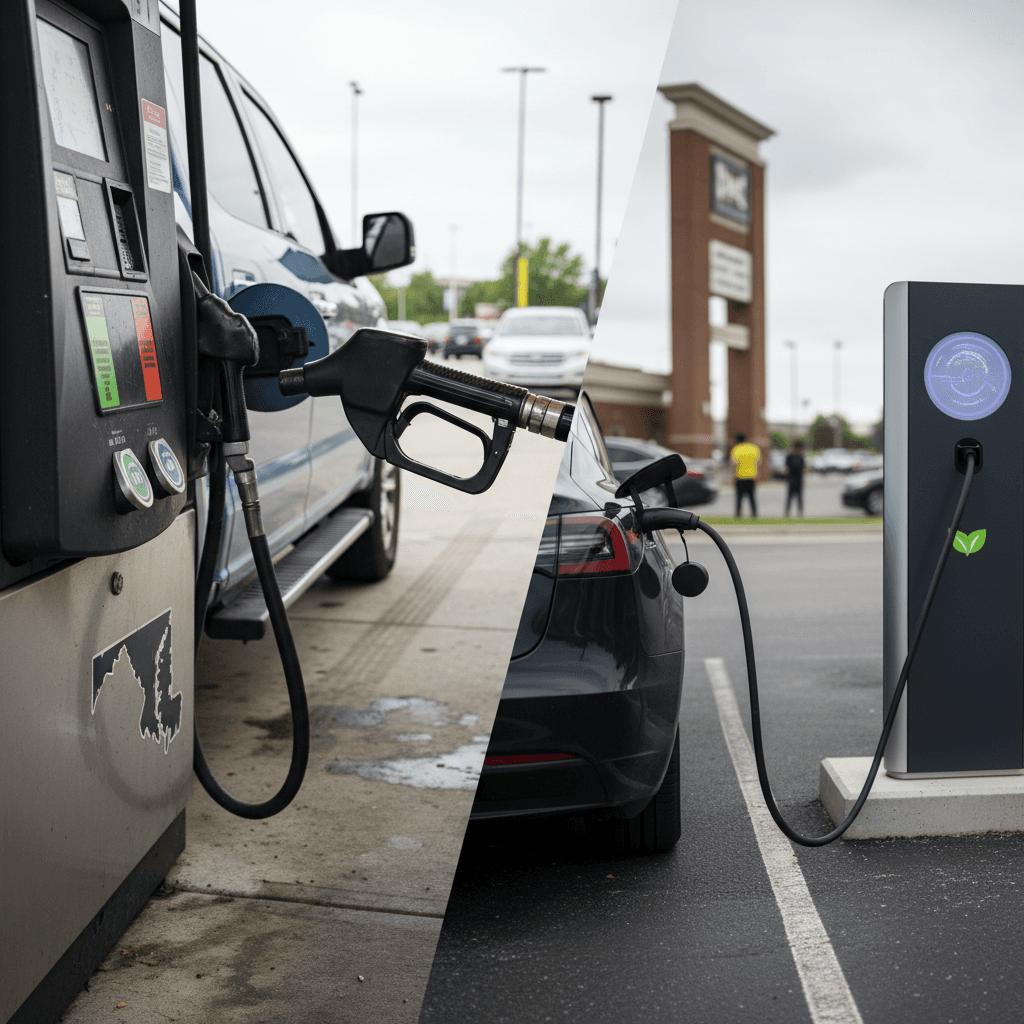
When you compare a gas car to an electric vehicle, focus on what you pay to travel the same distance. In Maryland’s 2026 landscape, the gap is getting wider, especially if you can charge at home.
At‑the‑pump vs. at‑the‑plug in Maryland
A simple 2026 cost comparison for a typical commuter
Gas vehicle example
- Vehicle: 25‑mpg small SUV
- Miles per year: 12,000
- Gas price: ≈$4.05/gal
- Fuel cost: About $1,900–$2,000 per year
Every 25‑cent jump per gallon adds roughly $75–$100 per year at this mileage.
Electric vehicle example
- Vehicle: Efficient used EV (3 mi/kWh)
- Miles per year: 12,000
- Home electricity: ≈14¢/kWh
- Energy used: ~4,000 kWh/year
- Charging cost: Around $550–$650 per year at home
Public fast charging can be more expensive, but smart home charging keeps costs predictable.
Where Recharged fits in
Ready to find your next EV?
Browse VehiclesWhen does switching to an EV make financial sense?
Questions to decide if 2026 is your EV year
1. How many miles do you drive per year?
If you’re under 8,000 miles a year, fuel savings will be modest. Over 12,000–15,000 miles, the numbers start to favor an EV strongly, especially with Maryland gas consistently around or above $4 per gallon.
2. Can you charge at home or at work?
Having a driveway, garage outlet, or workplace charging is a huge advantage. Level‑1 charging (a standard outlet) can work for shorter commutes; Level‑2 makes life easier. Recharged’s specialists can help you understand what you’d need at home.
3. What’s your current car costing you?
Add fuel, maintenance, and any looming repairs, transmission, timing belt, exhaust, emissions failures. A reliable used EV can strip out oil changes, many brake jobs, and most of the under‑hood surprises that come with aging gas cars.
4. How long will you keep the next vehicle?
The longer you keep it, the more those lower running costs matter. Buying a solid used EV and driving it 6–8 years can turn 2026’s high gas prices into long‑term savings instead of long‑term pain.
5. Do you qualify for incentives or cheap financing?
Between possible used EV tax credits and attractive EV‑focused financing, your real monthly payment might be closer to your current gas and maintenance spend than you think. Recharged can help you explore <strong>financing</strong> and potential savings in one place.
Practical ways to save on gas in Maryland right now
Not everyone is ready to jump into an EV this year, and that’s okay. You still have levers to pull while you watch how gas prices in Maryland in 2026 shake out.
- Use warehouse clubs and grocery store loyalty programs that knock 5–20 cents off per gallon when you stack rewards.
- Avoid the most expensive locations: stations right off I‑95 and near airports often carry a premium. A short detour into town can save 10–30 cents per gallon.
- Combine errands and commute trips to reduce cold starts and back‑tracking. Short, stop‑and‑go hops are terrible for fuel economy.
- Keep tires properly inflated and remove roof racks or cargo boxes you don’t need, small aerodynamic and rolling‑resistance tweaks add up over thousands of miles.
- If your vehicle has an “eco” mode, use it. Softer throttle response and earlier upshifts shave consumption without changing your route.
- Know when to walk away from repairs. If a major engine or transmission job is looming on a thirsty vehicle, it may be time to redirect that money into a more efficient car instead of doubling down.
Don’t chase cheap gas across town
FAQ: Gas prices in Maryland 2026
Frequently asked questions
Bottom line for Maryland drivers in 2026
If you drive in Maryland, you’re living with a new reality in 2026: gas prices are higher, jumpier, and more influenced by forces far outside your control than ever. You can trim the fat with smarter routes and station choices, but those are Band‑Aids, not cures.
The real decision is whether you want to stay tied to the pump or start shifting some of your miles to the plug. For many Maryland households, especially commuters and high‑mileage drivers, the math is beginning to favor at least one EV in the driveway. That doesn’t have to mean a brand‑new luxury car.
On Recharged, you can browse used electric vehicles with transparent battery health, realistic range estimates, and expert support from first question to final e‑signature. In a state where fuel taxes and global markets can swing your budget overnight, locking in lower, more predictable driving costs isn’t just about being green. It’s about getting back a little control every time you turn the key, or press the start button.