If you’re the kind of driver who tops off the tank only when the low‑fuel light is practically begging, the best electric car for you in 2026 is one that makes “fueling” almost invisible. The **best electric car for people who hate gas stations in 2026** isn’t just about big range, it’s about smart charging, a calm ownership experience, and choosing a car that fits your life so well you barely have to think about energy at all.
Quick take
Who this guide is for (and what “hating gas stations” really means)
“I hate gas stations” can mean a few different things. Maybe you dislike the smell, the wasted time, the late‑night sketchy lighting, or the constant reminder that fuel prices are out of your control. Going electric solves the gas part overnight, but the **right** EV can also dramatically cut how often you have to think about charging at all.
- Drivers with long commutes who never want to think about fuel during the workweek.
- Parents who don’t want to wrangle kids in a cold, windy forecourt ever again.
- Road‑trippers who prefer coffee stops on their terms, not when the fuel gauge panics.
- City and suburban drivers who want to plug in once or twice a week and forget it.
This guide focuses on EVs, new and used, that minimize **time spent at public chargers** and make it easy to run your life off a home plug or a few well‑timed fast‑charging sessions a month.
What makes an EV great for people who hate gas stations?
Key ingredients of a great “gas‑station‑free” EV
More than just a big battery
Serious usable range
Look for at least 260–280 miles EPA if you mostly stay local, and 300+ miles if you road‑trip a few times a year. More range means fewer charging stops and more flexibility when plans change.
Fast, reliable charging
DC fast‑charging capability of 150 kW or more lets you add 150–200 miles in about half an hour on modern networks. That turns a mandatory fuel stop into a quick stretch and restroom break.
Easy home or work charging
If you can plug in at home or at work, even on a modest Level 2, you’ve effectively moved the gas station to your driveway. You wake up or leave work with a "full tank" and rarely need public chargers.
Don’t chase range you’ll never use
Top new 2026 EVs if you want the fewest stops
By 2026, many mainstream EVs in the U.S. hover around **300 miles of EPA‑rated range**, with real‑world results depending on how and where you drive. Here are standout 2025–2026 models widely expected to keep you as far from fuel pumps as possible, using current public data and early test results where available.
New 2025–2026 EVs for drivers who hate stops
Representative trims focused on range and long‑leg comfort, not track times.
| Model (2025–2026) | Type | Approx. EPA Range (mi) | DC Fast Charge Peak | Why it suits gas‑station haters |
|---|---|---|---|---|
| Lucid Air Touring / Grand Touring | Luxury sedan | 390–410 | Up to ~300 kW | Class‑leading efficiency and huge range; you can skip chargers others rely on. |
| Tesla Model 3 Long Range (updated) | Compact sedan | 330–340 | ~250 kW | Great mix of price, range, and access to Tesla’s dense Supercharger network. |
| Hyundai Ioniq 6 Long Range RWD | Midsize sedan | 320–361 | Up to ~235 kW (800V) | Sips energy on the highway and charges very fast when you finally do stop. |
| Hyundai Ioniq 5 / Kia EV6 Long Range RWD | Compact crossover | 300–320 | Up to ~235 kW (800V) | Comfortable family crossovers with true road‑trip legs and blazing fast charging. |
| Chevrolet Equinox EV FWD (2025+) | Compact crossover | ~300+ | Around 150 kW | More than 300 miles of range at an attainable price, ideal if you hate both gas stations and big payments. |
| Ford Mustang Mach‑E Premium RWD (extended battery) | Compact crossover | ~310 | Around 150 kW | Balances fun and range; a sweet spot for mixed city–highway driving. |
Ranges are approximate U.S. EPA values where available; actual U.S. availability and final numbers may vary by model year and trim.
Look beyond the headline range
Best used EVs that let you ditch gas stations on a budget
The smartest play for many gas‑station haters is a **used long‑range EV**. Someone else took the depreciation hit; you get plenty of range for thousands less. The key is verifying **battery health** so you don’t unknowingly give back 40–50 miles of capability.
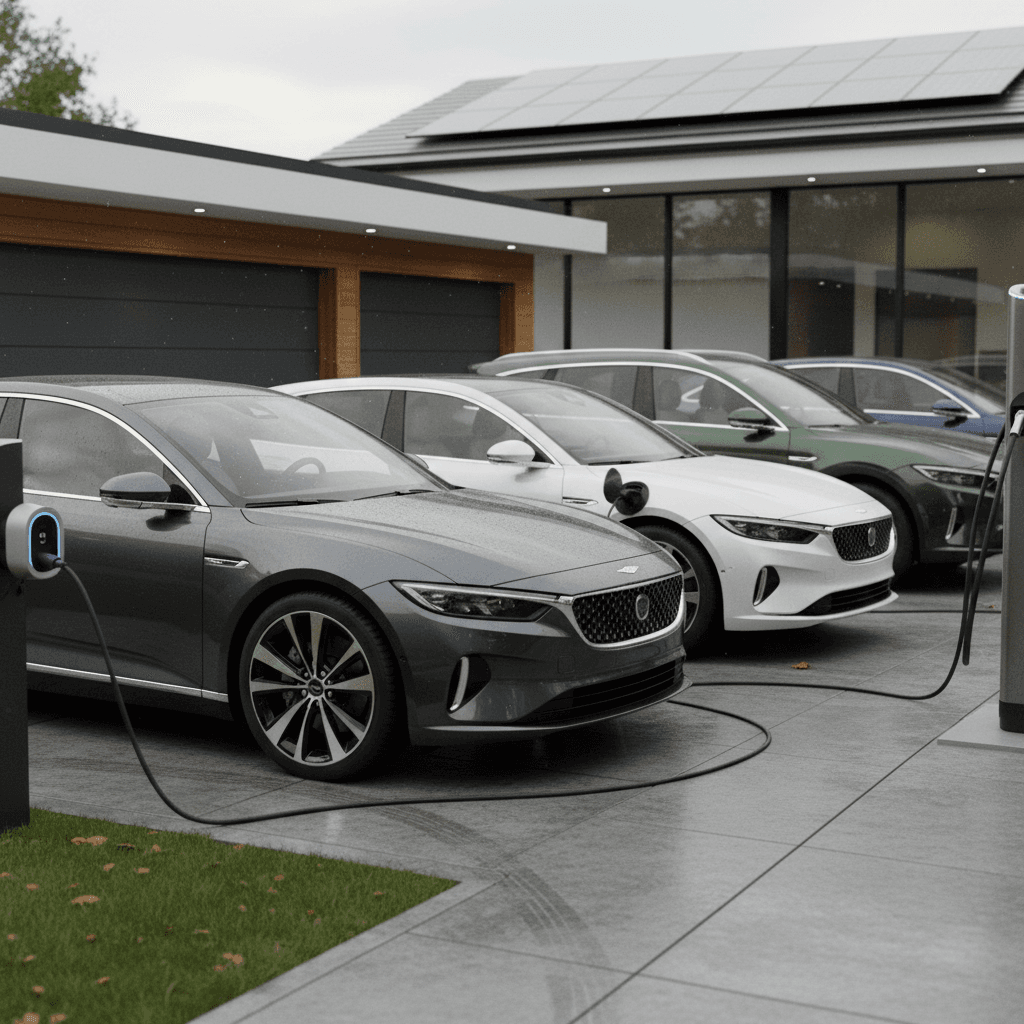
Used EV reality check for 2026 shoppers
Used EV sweet spots if you never want to see a gas station
These are representative used EVs often available with strong range and fast charging at reasonable prices.
| Model (used) | Typical EPA Range when new | Why it’s great for gas‑station haters |
|---|---|---|
| Tesla Model 3 Long Range (2019–2023) | 310–358 miles | Excellent efficiency, easy access to Superchargers, and plenty of range even with modest degradation. |
| Hyundai Kona Electric (64 kWh, 2019–2024) | 258 miles | Compact but surprisingly efficient; many owners see real‑world ranges close to EPA in mixed driving. |
| Hyundai Ioniq 5 / Kia EV6 (77.4 kWh, early years) | 290–310 miles | Ultra‑fast 800‑V charging means even a short stop adds a lot of miles. |
| Chevrolet Bolt EUV (2022–2024) | 247 miles | Range is lower, but with home charging it easily covers daily life; often very affordable on the used market. |
| Tesla Model Y Long Range (2020–2024) | 316–330 miles | Family‑friendly space with range that makes most public charging optional for day‑to‑day driving. |
Availability and pricing vary by region; check local listings and battery reports rather than assuming every example is equal.
Where Recharged fits in
Range vs. charging speed vs. efficiency: which matters more?
1. Range: how far you go between “fuelings”
Range is the obvious one: more miles on a charge means you can ignore chargers longer. But the shape of your driving matters. If you do a 60‑mile round‑trip commute and errands, even a 240‑mile EV gives you three easy days between charges.
2. Charging speed: how long you’re stuck when you must stop
DC fast‑charge rates tell you how quickly you can get back on the road. A modern EV that can accept 150–250 kW can often go from 10–80% in around 20–30 minutes, enough time for a restroom break and a snack, not a full lunch.
3. Efficiency: how quickly you burn through the battery
Two EVs with the same battery size can behave very differently. An efficient sedan might deliver 3.5–4.0 mi/kWh, while a boxy SUV sees closer to 2.5–3.0. If you hate stopping, a sleek, efficient shape and reasonable wheels often matter as much as raw battery size.
Pick two out of three, intentionally
How much range do you really need to avoid “fueling” anxiety?
You don’t need 500 miles of range to stop thinking about fuel, just as you never needed a 40‑gallon gas tank. What you need is enough range that your **worst‑case days**, winter weather, headwinds, unexpected detours, still feel comfortable.
Right‑sizing your range for 2026
1. Map your real daily miles
Look at a typical busy day: commute, kid drop‑offs, errands, maybe a side trip. For many U.S. drivers that’s still under 70 miles. Double it to build in a bad‑weather buffer.
2. Decide how often you’re okay charging at home
If you’re happy to plug in most nights, a 240–260 mile EV can feel luxurious. If you’d rather plug in once or twice a week, 280–320 miles makes that easy.
3. Count true long‑distance trips per year
If you take one big road trip a year, renting another vehicle may be cheaper than over‑buying range. If you’re on the highway every other weekend, you’ll value a 300+ mile EV with fast charging.
4. Factor in weather and elevation
Cold climates, mountain passes, and high speeds can trim 20–30% off range. If that describes your life, overshoot your calculated need by at least 50–70 miles.
5. Consider passengers and cargo
Roof boxes, bike racks, and heavy loads all eat into efficiency. If you’re hauling a lot, choose an EV whose rated range feels redundant on paper.
The trap: buying for the 1% day
Charging strategies for drivers who hate stopping
The right **charging strategy** can make even a modest‑range EV feel nearly invisible to live with. Think of charging as a background task, not a chore.
Four strategies to keep “fueling” out of sight, out of mind
Mix and match depending on your home and work situation
Home Level 2: the ultimate gas‑station killer
Installing a 240‑V Level 2 charger at home turns your driveway into your personal energy station. Plug in when you get home; wake up with a full battery. For many owners, public charging becomes a road‑trip‑only event.
If you rent or live in a condo, ask your landlord or HOA about EV‑ready parking, many states now offer incentives for property owners to add it.
Workplace charging: free miles while you earn dollars
If your employer offers charging, treat it like topping off a phone at your desk. Even a modest Level 2 at work can cover most of your weekly miles and keep weekend home charging minimal.
Planned fast‑charge stops on road trips
Modern route planners, built into many EVs or via apps, can schedule **15–30 minute DC fast‑charge stops** exactly where you’d want a break anyway. With 300 miles of range, you might stop once every 3–4 hours of driving.
Weekly “big charge” instead of daily trickle
If you don’t have home or work charging but have access to reliable fast chargers, a weekly 45–60 minute top‑up can keep you rolling. Think of it as errands day: groceries, a walk, and a charge while you’re already out.
Don’t cheap out on charging planning
How Recharged helps you pick the right gas‑station‑free EV
Finding the best electric car for people who hate gas stations in 2026 isn’t just about reading spec sheets, it’s about understanding **how a specific used EV will behave in your real life**. That’s where Recharged comes in.
Why Recharged is built for gas‑station haters
Used EVs, but with the kind of transparency you wished gas cars had
Recharged Score battery health diagnostics
Every vehicle includes a Recharged Score Report with verified battery health and range. You see how the pack is performing today, not just what it was rated for years ago.
Fair market pricing & easy financing
Transparent pricing, EV‑savvy financing options, and the ability to trade in your gas car make it easy to step out of the fuel line and into an electric driveway.
Nationwide delivery & expert support
Browse and buy completely online, lean on EV specialists for questions, and have your car delivered. If you’re not near an EV‑dense metro, Recharged brings the right car to you.
Ready to find your next EV?
Browse VehiclesUse the experts
FAQ: Best electric car for people who hate gas stations
Common questions from gas‑station haters
Bottom line: How to choose your 2026 EV and almost never see a gas station again
If you hate gas stations, your best electric car in 2026 is the one that makes energy feel boring, in the best possible way. Aim for an EV with at least 280–320 miles of real‑world range, strong DC fast‑charging capability, and a clear plan for where it will charge most of the time, ideally at home or work.
New long‑range models like the **Lucid Air**, **Tesla Model 3 and Model Y Long Range**, and the **Hyundai Ioniq 5/6 and Kia EV6** make public charging an occasional event, not a weekly chore. On the used side, a well‑vetted long‑range sedan or crossover with a documented battery health report can deliver nearly the same freedom at a far lower cost.
The real secret is matching the car to your life, not your fears: know your miles, your roads, and your charging options, then pick the machine that turns “fueling” into something that happens mostly while you sleep. And if you’d like help, Recharged’s combination of battery‑health diagnostics, EV‑focused support, financing, and nationwide delivery makes it easier than ever to step out of the gas line for good.