If you’re shopping for the best certified pre owned cars right now, you’re trying to thread a tricky needle: you want late‑model reliability and modern tech, but you don’t want new‑car prices. Certified pre-owned (CPO) programs exist to solve exactly that problem, yet not all brands or cars are created equal, and EVs add a whole new layer with battery health.
What this guide covers
Why certified pre-owned is worth a look in 2025
Certified pre-owned by the numbers
After a volatile new‑car market, used inventory is still tight, which means clean, low‑mileage cars are valuable. Instead of throwing them onto the used lot as‑is, automakers run them through factory‑backed inspection and warranty programs and sell them as certified pre-owned. You pay a bit more up front, but you usually get newer hardware, better reliability odds, and coverage that can rival a new‑car warranty.
Why experts like CPO
CPO vs. regular used: what’s the real difference?
Certified pre-owned (CPO)
- Usually off-lease cars 2–5 years old with mileage caps (often under 50,000 miles).
- Multi‑point inspection (commonly 100–200+ checklist items) performed by brand‑affiliated technicians.
- Factory‑backed extended warranty layered on top of any remaining new‑car coverage.
- Extras like roadside assistance, trip‑interruption coverage, and sometimes complimentary maintenance or service loaners.
Traditional used
- Any age or mileage, from any source (auction, trade‑in, rental, private party).
- Dealer inspection quality varies; private‑party cars may have had no professional inspection at all.
- Typically sold as‑is or with only a short dealer warranty.
- Lower upfront price, but more risk and less protection if something goes wrong.
When CPO makes the most sense
Best certified pre-owned programs in 2025
You can’t talk about the best certified pre owned cars without talking about the programs behind them. The same car under a weak CPO program is a different ownership experience than under a strong one. Several independent rankings look at warranty length, inspection standards, and ownership costs to find standouts.
Standout CPO programs to target
These brands combine strong reliability with class-leading certified coverage.
Lexus – benchmark CPO coverage
L/Certified by Lexus has become the gold standard for many shoppers. Its CPO warranty can offer up to six years of coverage from the original in‑service date, often with unlimited miles, plus roadside assistance and service loaners.
For buyers who prioritize long‑term peace of mind, especially on luxury SUVs, Lexus sits at the top of many 2025 CPO rankings.
Mini, Honda, Mazda – mass‑market value
Mini has taken top honors in some 2024–2025 CPO evaluations for its generous warranty on fun-to-drive small cars. Honda and Mazda also earn high marks for a blend of strong reliability records, reasonable certification premiums, and low long‑term ownership costs.
Acura, Jaguar, Infiniti – premium alternatives
Acura has surged to the front of several premium‑brand CPO rankings thanks to solid coverage on already-reliable vehicles. Jaguar is frequently cited for a strong warranty even if long‑term reliability is more mixed, while Infiniti provides a lower‑cost entry into luxury CPO ownership.
Don’t chase the badge alone
Top certified pre-owned cars and SUVs by type
Different buyers need different things from the “best” certified pre owned cars. A commuter wants low running costs; a family wants safety and space; an enthusiast wants steering feel more than cargo volume. Below is a short list of nameplates that consistently surface in 2024–2025 reliability and value rankings, especially when found as CPO.
High‑confidence CPO picks by role
These models are frequently recommended by independent testing organizations as strong used buys. Focus on 3–5‑year‑old examples with clean history reports.
| Role | Example models to target | Why they work well as CPO |
|---|---|---|
| Small sedan commuter | Toyota Corolla, Mazda3, Honda Civic | Strong reliability, good safety tech, and excellent fuel economy make them ideal daily drivers. |
| Family SUV | Toyota RAV4, Honda CR-V, Mazda CX-5 | Roomy, efficient, and long‑lived; plentiful off‑lease inventory powers good CPO selection. |
| Hybrid sedan | Toyota Camry Hybrid, Honda Accord Hybrid | Hybrid systems with long reliability track records and big real‑world fuel‑savings potential. |
| Three‑row family hauler | Mazda CX-9, Toyota Highlander | Good crash-test scores, real‑world durability, and strong resale value. |
| Entry luxury sedan/SUV | Lexus ES, Lexus NX, Acura RDX | Luxury comfort with mainstream‑car reliability; CPO coverage closes the risk gap even further. |
| Enthusiast car | Mazda MX-5 Miata, VW GTI | Driver‑focused, relatively simple, and well‑supported in the aftermarket, great fun-per-dollar when bought carefully. |
Always verify specific model years and powertrains, reliability can change with redesigns or engine options.
Think trim and options, not just model
Where EVs fit in the certified pre-owned world
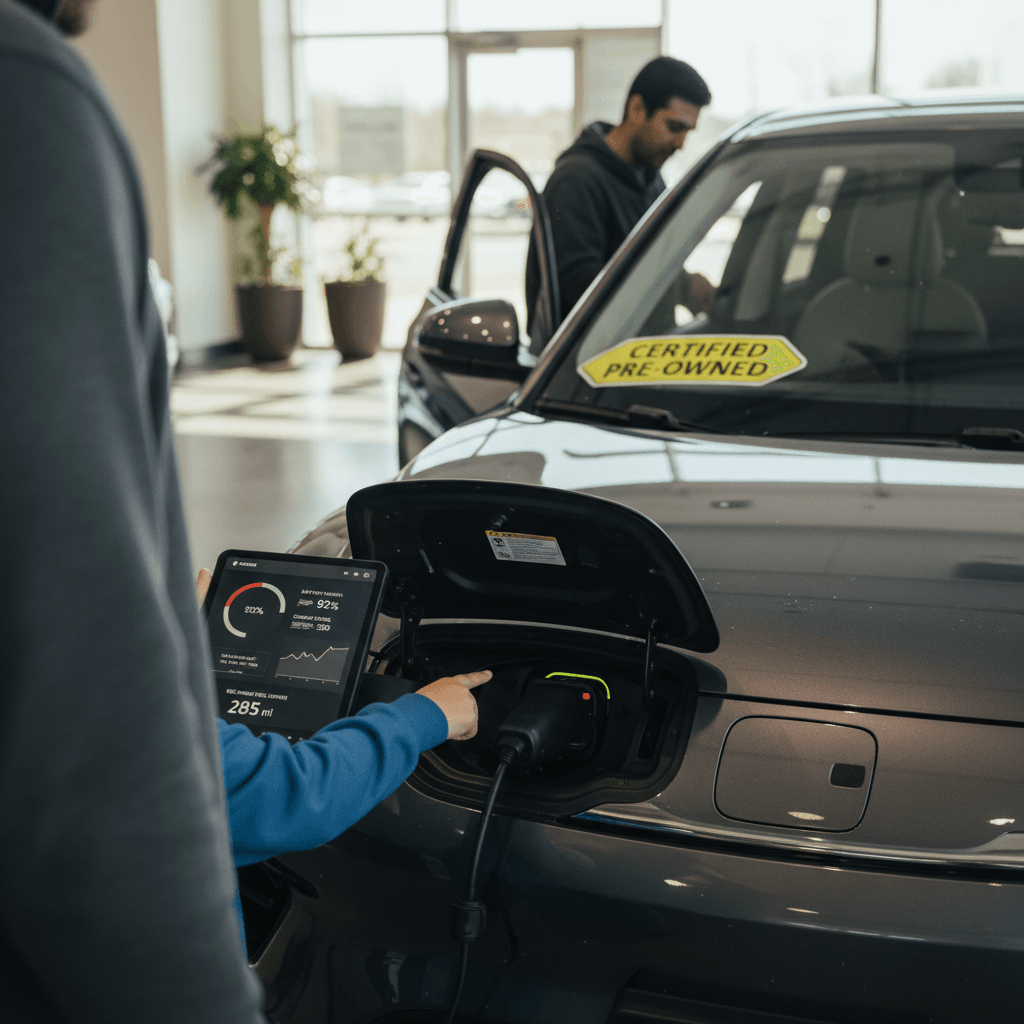
So far we’ve talked mostly about gas and hybrid models. But the used market has matured enough that certified pre-owned EVs deserve their own spotlight. They’re also where a company like Recharged can change the game by going deeper on battery health than typical CPO programs do.
Used EVs that make especially strong CPO buys
Focus on models with solid real‑world reliability and healthy used‑market support.
Mainstream EV values
- Chevrolet Bolt EV/Bolt EUV – Affordable entry point to EV ownership with usable range and low running costs.
- Nissan Leaf (2nd gen) – Best in cooler climates; simple, proven drivetrain and plenty of inventory.
- Hyundai Kona Electric – Compact but surprisingly practical, with good efficiency and range for the size.
Higher‑end EV standouts
- Tesla Model 3 – Dominant in the used EV market; strong charging network access and over‑the‑air updates.
- Hyundai Ioniq 5 – Exceptional fast‑charging performance and modern packaging.
- Ford Mustang Mach‑E – Blends SUV practicality with engaging performance and solid tech.
How Recharged approaches “certified” for EVs
How to evaluate any certified pre-owned car
Seven checks for a high‑quality CPO car
1. Read the actual CPO warranty booklet
Don’t rely on a brochure. Confirm what’s covered (powertrain only vs. bumper‑to‑bumper), the deductible per visit, total term in years and miles, and whether coverage is transferable if you sell the car later.
2. Verify the inspection checklist and who did it
Ask to see the completed multi‑point inspection form. A factory franchise store and a tech trained on that brand are preferable, especially for hybrids and EVs.
3. Cross‑check mileage and vehicle history
Pull a history report and make sure mileage, ownership history, and title status match what you’re being told. Avoid anything with branded titles (salvage, flood, lemon buy‑backs) even if it somehow slipped into a CPO program.
4. Look for remaining original warranty
The best certified pre owned cars often still have part of the original new‑car warranty left. Layered with CPO coverage, you can end up with several years of protection at a used‑car price.
5. Drive it like you’ll actually use it
On your test drive, recreate your real use: highway speeds, stop‑and‑go, parking maneuvers, and climate control. Noises, vibrations, or driver‑assist quirks often only show up at speed or in traffic.
6. For EVs, demand real battery data
For electric vehicles, ask for state‑of‑health information, DC fast‑charging history, and any battery warranty claims. With Recharged, this is baked into the Recharged Score Report so you’re not guessing.
7. Do a value sanity check
Compare the CPO asking price to similar non‑certified cars. If the premium is far beyond 5–10%, the math may not pencil out. In some cases, a non‑certified car plus an extended service contract is the better move.
Common pitfalls when buying certified pre-owned
- Assuming “certified” means accident‑free, CPO standards vary by brand, and some allow previous repairs.
- Ignoring fine print on wear‑items like brakes, tires, and infotainment screens.
- Overpaying for cosmetic add‑ons rolled into the CPO price (paint sealant, nitrogen in tires, etc.).
- Forgetting about interest rates, some CPO programs have special APR offers, others don’t.
- Treating EV batteries like a black box instead of a major, inspectable component.
Watch the EV battery warranty limits
FAQ: best certified pre-owned cars and programs
Frequently asked questions about certified pre-owned cars
Putting it together: is CPO right for you?
The best certified pre owned cars in 2025 tend to have three things in common: they come from brands with strong reliability track records, they sit inside robust CPO programs with meaningful warranty coverage, and they’re 3–5‑year‑old examples that avoid the steepest depreciation while keeping modern safety and tech. Whether you’re eyeing a Lexus NX, a Honda CR‑V, or a used Tesla Model 3, those fundamentals don’t change.
If you’re shopping specifically for an electric vehicle, think of the battery and charging history as your new “engine and transmission.” That’s where Recharged goes beyond traditional CPO programs: every EV we sell comes with a Recharged Score Report, verified battery health diagnostics, fair‑market pricing, and EV‑specialist support from first click to final delivery, online or at our Experience Center in Richmond, VA.
Next step: explore pre-owned EVs the easy way
Ready to find your next EV?
Browse Vehicles