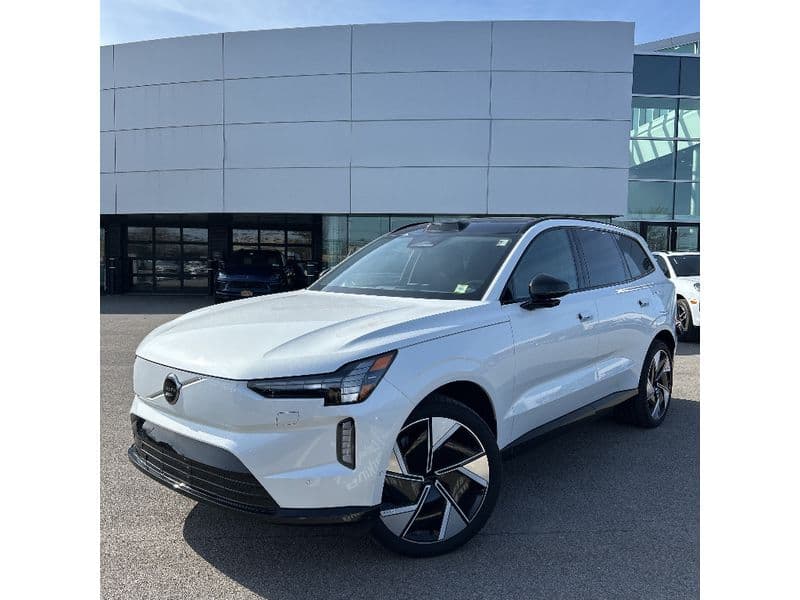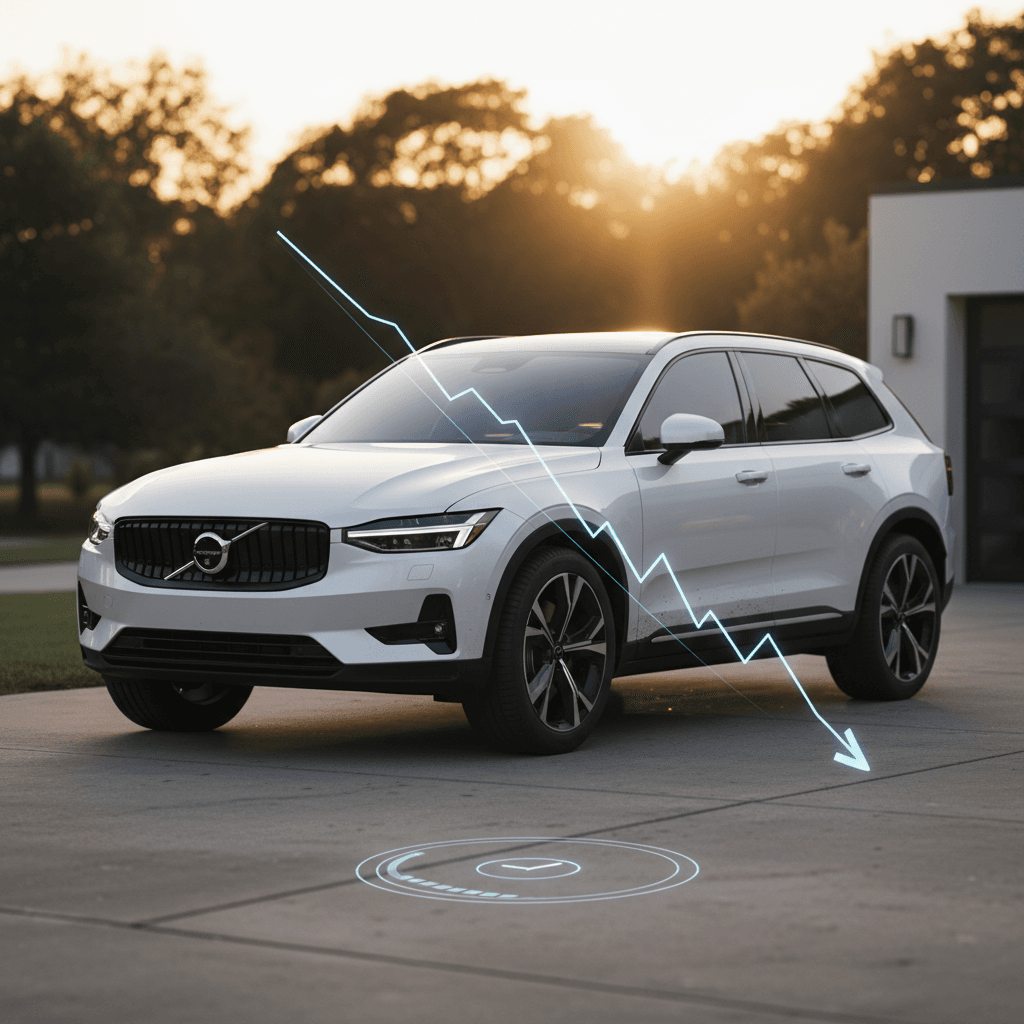
If you’re eyeing a new Volvo EX90, or waiting for the used market to mature, the big financial question is simple: what will this electric SUV be worth in 5 years? Understanding the Volvo EX90 depreciation curve over 5 years can help you decide whether to buy new, shop used, or wait on the sidelines.
A quick word on data
Why Volvo EX90 depreciation matters over 5 years
Depreciation is simply how fast your vehicle loses value over time. For a high-priced electric SUV like the Volvo EX90, even small percentage changes translate into large dollar amounts. A 10% swing on an $85,000 vehicle is $8,500, more than a full year of payments for many buyers.
- You’re considering ordering a new EX90 and want to know the likely 3–5 year hit.
- You’re planning to keep an EX90 long term and want to understand total cost of ownership.
- You’re waiting for the right time to buy used and want to know when the curve flattens.
- You’re comparing EX90 to other luxury EV SUVs like the Tesla Model X, Mercedes EQE SUV, or BMW iX.
Rule of thumb
How EV and luxury SUV depreciation works
To make sense of the Volvo EX90’s future resale value, it helps to understand the forces that shape EV depreciation and luxury SUV depreciation more generally. The EX90 sits at the intersection of both.
Two forces shaping Volvo EX90 value
It’s both an electric vehicle and a premium three-row SUV
EV-specific factors
- Battery health & range: Perceived pack longevity, remaining range vs. new.
- Charging experience: Access to fast-charging networks and home charging.
- Tech pace: How quickly newer EVs outperform older ones on range and efficiency.
Luxury SUV factors
- Brand & image: Volvo’s reputation for safety and understated luxury.
- Features & options: High original MSRP means more dollars to lose.
- Demand for 3-row EVs: Family-hauler practicality can support used prices.
Why EVs can look worse on paper
Projected Volvo EX90 5-year depreciation curve
Because the Volvo EX90 is new, no one can show you a real 2019–2024 resale chart. What we can do is build a reasonable projection based on Volvo’s historical resale performance, early luxury EV data, and how similar three-row EVs are behaving on the used market today.
Illustrative Volvo EX90 5-year depreciation curve
Example projection for a well‑kept EX90 with typical mileage in the U.S. market. Actual resale values will vary by trim, options, mileage, battery health, and market conditions.
| Age | Odometer (approx.) | Estimated value (% of original) | Estimated resale price |
|---|---|---|---|
| Year 1 | 12,000–15,000 miles | ~80–83% | $68,000–$71,000 |
| Year 2 | 24,000–30,000 miles | ~70–75% | $59,500–$63,750 |
| Year 3 | 36,000–45,000 miles | ~60–65% | $51,000–$55,250 |
| Year 4 | 48,000–60,000 miles | ~52–58% | $44,200–$49,300 |
| Year 5 | 60,000–75,000 miles | ~45–52% | $38,250–$44,200 |
Assumes an $85,000 new purchase price including destination and popular options. Values are rounded and illustrative, not guaranteed resale numbers.
How this compares to traditional luxury SUVs
Big-picture takeaways from the 5-year curve
Important disclaimer
Factors that could shift the EX90 depreciation curve
Your individual Volvo EX90 won’t follow a perfect textbook curve. Real-world resale value is shaped by how you spec it, how you drive it, and how quickly the broader EV market changes.
What can push EX90 value up or down?
Think in terms of tailwinds and headwinds.
Potential value tailwinds
- Battery longevity: If EX90 packs age gracefully with limited range loss, buyers will pay more for older examples.
- Strong safety story: Volvo’s safety reputation, and the EX90’s tech, can support resale.
- Tight supply: If new EX90 supply is constrained, used values often rise.
- Improved charging access: Broader DC fast-charging coverage makes older EVs easier to live with.
Potential value headwinds
- Rapid tech leapfrogging: If future EVs deliver far better range or charging speed at lower prices, earlier models take a hit.
- Big incentives on new EVs: Factory discounts or expanded tax credits on new vehicles can undercut used prices.
- Battery concerns: High-profile degradation or recall issues would hurt confidence and resale.
- High interest rates: Expensive financing can cap what buyers are willing to pay for used luxury EVs.
Watch the right signals
Volvo EX90 vs other luxury EV SUVs
One way to sanity-check EX90 projections is to look at what’s already happening with peers in the market. We don’t have 5-year EX90 data yet, but we do have an emerging picture for other large electric SUVs.
Tesla Model X & similar EVs
- Early hit, then stability: Many buyers saw a big initial drop, then relatively stable values once the vehicles reached 3–5 years old.
- Brand and network help: Tesla’s brand strength and Supercharger access have supported used demand.
- Software updates: Over-the-air improvements can keep older vehicles feeling modern longer.
Why EX90 may behave differently
- Different buyer profile: Volvo attracts buyers who prioritize safety, comfort, and design over outright performance.
- Three-row practicality: True three-row seating can boost used demand from families.
- Less hype, more substance: Historically, that’s led Volvos to depreciate a bit faster than German rivals when new, but also to become smart buys on the used market.
Where the EX90 could shine
How buying a used Volvo EX90 changes the math
From a pure value standpoint, the most interesting part of the Volvo EX90 depreciation curve isn’t years 0–3. It’s what happens after someone else absorbs that early hit, which is exactly where used EV buyers win.
New vs. 3-year-old Volvo EX90: illustrative comparison
How depreciation reshapes the ownership picture if you buy new versus buying after the steepest part of the curve.
| Scenario | Purchase price | 3-year later value | Your depreciation cost |
|---|---|---|---|
| Buy new, sell after 3 years | $85,000 | ~$52,700 (62%) | About $32,300 lost |
| Buy 3-year-old, sell at 6 years | $52,700 | ~$39,500 (75% of your buy-in) | About $13,200 lost |
Assumes $85,000 new transaction price and a 3-year-old example at 62% of original price with similar equipment.
What this means in plain English
Advantages of waiting for a used Volvo EX90
Lower upfront cost
Let the first owner pay for the steepest part of the curve, and you step in once the price has settled into a more affordable band.
Known reliability picture
By year 3–4, common issues, if any, tend to be well documented, giving you better visibility into long-term ownership.
Battery health is measurable
With a proper battery diagnostic (like the <strong>Recharged Score</strong>), you’re not guessing about pack condition or future range.
More rational option mix
Used inventory tends to gravitate toward the trims and option packages that actually sold well in the real world.
How to minimize depreciation as a Volvo EX90 owner
You can’t control the broader market, but you can absolutely influence where your individual EX90 lands within that depreciation band. Think of it as moving yourself toward the top of the range instead of the bottom.
Practical steps to protect EX90 resale value
Choose a broadly appealing spec
Middle trims with popular colors and options usually hold value better than extreme builds, either bare-bones or fully maxed out. Think about what a second owner will want, not just what you want.
Keep mileage in check
Depreciation curves assume typical usage. Running far above average mileage per year will pull your EX90 below the curve, especially in the first 5 years.
Prioritize battery health
Avoid frequent 100% fast-charging, don’t store the vehicle at full charge for long periods, and keep it within a moderate state-of-charge window for daily use. Document service and software updates.
Maintain detailed records
Buyers (and lenders) pay more for vehicles with <strong>clear, complete service history</strong>. Keep every invoice, software update note, and inspection report.
Time your exit strategically
If you’re selling, aim to do it <strong>before a big design refresh</strong> or right before warranty coverage ends, points where many buyers enter the market.
Don’t overlook financing impact
How Recharged helps you judge used EX90 value
When you’re shopping for a used Volvo EX90, you’re not just buying a badge and a battery pack, you’re buying whatever’s left of someone else’s depreciation curve. That’s where having objective, EV-specific data matters.
Why shop a used EX90 through Recharged
Transparency and EV-specific insight you won’t get from a generic listing site.
Recharged Score Report
Fair market pricing
Specialist EV support
Ready to find your next EV?
Browse VehiclesIf you already own an EX90 and are thinking about your exit strategy, Recharged can help there as well, with instant offers, trade-in options, or consignment-style listings that showcase your vehicle’s battery health and service history to the right buyers.
Volvo EX90 depreciation: FAQ
Frequently asked questions about Volvo EX90 depreciation
Bottom line: what the 5-year curve means for you
If you buy a new Volvo EX90 today, you should plan on the possibility that it will be worth roughly half its original price after 5 years, give or take, assuming typical mileage and solid battery health. That doesn’t make it a bad purchase, it simply means depreciation is a major part of your total cost of ownership, just as it is with any high-end SUV.
If you’re more value-driven than first-adopter, the best move may be to let someone else take the early hit and shop a carefully vetted used EX90 once the market matures. That’s exactly the opportunity Recharged is built for: transparent battery health, fair market pricing, nationwide delivery, and EV specialists who speak your language.
Whether you end up in a new EX90 or a used one, go in with your eyes open. Understand the depreciation curve, buy (or lease) with a realistic exit plan in mind, and use real EV data, not guesswork, to judge value. That’s how you turn a cutting-edge electric SUV into a smart long-term decision instead of an expensive experiment.