You only get one first car. For most people, the best beginner car isn’t the one that looks hottest on Instagram, it’s the one that quietly saves your skin, your wallet, and your sanity. In 2025, that increasingly means looking at safe, modestly powered used cars, and, very often, used electric vehicles.
Before we start: gas vs. electric
What Makes a Great Beginner Car in 2025?
Four non‑negotiables for a first car
If a car fails any of these, it’s not a great beginner car, no matter how cool it looks.
Safety first
Easy to control
Affordable to own
Simple to live with
You’ll notice “max horsepower” and “loud exhaust” didn’t make the list. For a new driver, forgiveness beats flair. The best beginner car is the one that gives you room to learn from your mistakes without punishing you for every misjudged merge or parking lot tap.
Why getting the first car right matters
Think like an insurance adjuster, not a TikTok creator
Why a Used EV Is Often the Best Beginner Car
Here’s the twist in 2025: thanks to falling used EV prices and generous (but time-limited) federal tax credits through September 30, 2025, a used electric vehicle can often be cheaper to buy and far cheaper to run than a comparable gas car. Add in one‑pedal driving and instant torque that’s easy to modulate, and EVs make surprisingly good best beginner car candidates.
Why used EVs work so well as first cars
- Simple driving experience: No gears to shift, no engine revs to manage. Just go and stop.
- Strong low‑speed response: Great for city traffic and short on‑ramps, where beginners are most nervous.
- Low running costs: Electricity is usually cheaper than gas per mile, and there’s no oil to change.
- Less to break: Fewer moving parts can mean fewer surprise repairs once the car has a clean bill of health.
Common concerns (and realistic answers)
- "What about range?" Many beginners mostly commute, go to class, or run errands. For that use, even a 150–200‑mile EV is plenty.
- "Charging seems complicated." If you can plug in at home or work 3–4 nights a week, it becomes as routine as charging your phone.
- "Aren’t EVs expensive to buy?" Used EV prices have dropped sharply, and federal tax credits up to $4,000 for qualifying used EVs run through Sept 30, 2025.
After that date, credits are slated to end under current law, so timing matters.
The battery question
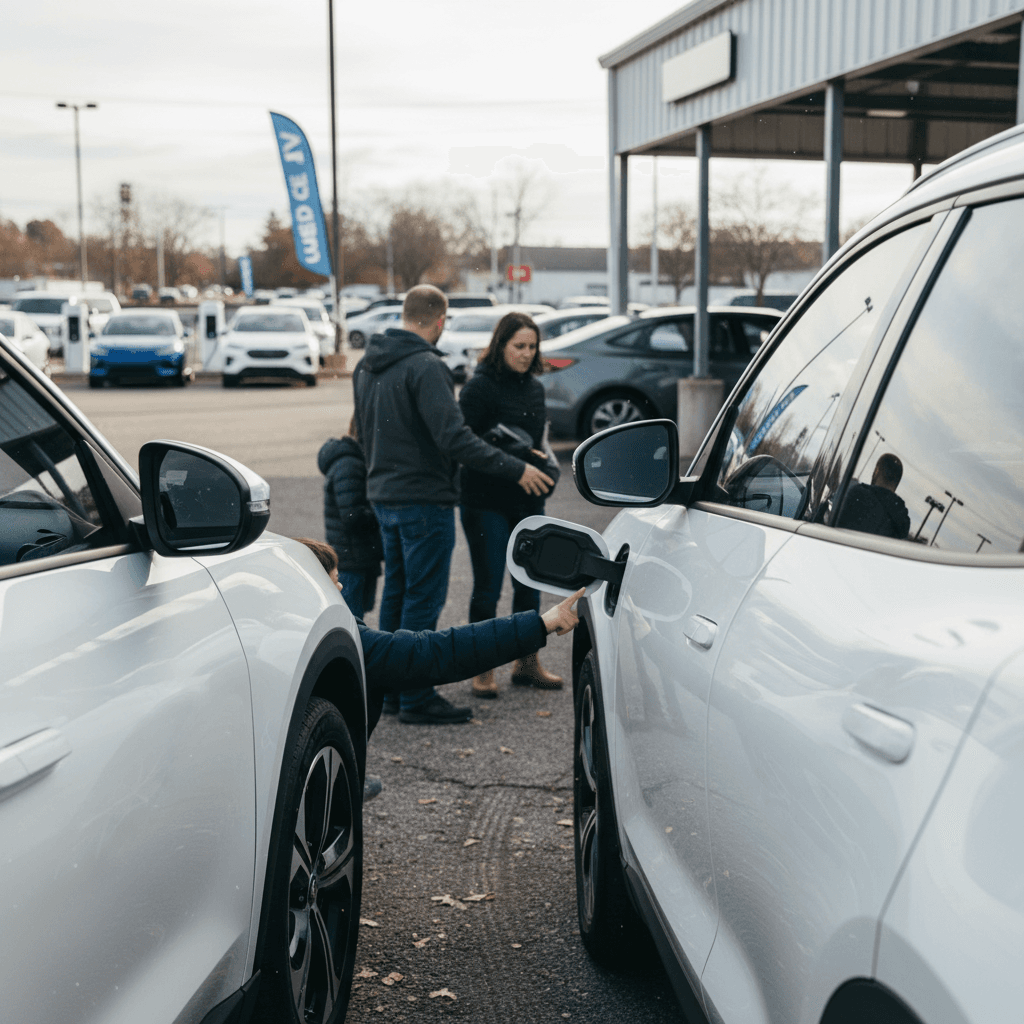
Best Beginner Cars: Top Used EV Picks
Let’s get specific. Here are used EVs that work brilliantly as beginner cars in the U.S. market, focusing on value, safety tech, and ease of use. Exact prices vary by mileage and trim, but the ballparks below are realistic for clean, well‑kept examples in late 2025.
Used EVs that make excellent beginner cars
Approximate U.S. used pricing assumes typical mileage and condition; local markets vary.
| Model | Why it works for beginners | Typical used price* | Approx. EPA range | Highlights for new drivers |
|---|---|---|---|---|
| Chevrolet Bolt EV (2019–2023) | Compact hatch that feels familiar coming from a gas car, with great range for the price. | $13,000–$18,000 | ~238–259 miles | Lots of standard safety tech on newer years, easy to park, excellent efficiency. |
| Hyundai Kona Electric (2020–2024) | Small SUV stance with a calm ride and a cabin that doesn’t overwhelm. | $17,000–$24,000 | ~258–261 miles | Hyundai SmartSense driver aids, long battery warranty, useful cargo space. |
| Kia Niro EV (2019–2023) | Crossover flavor with a friendly driving position, ideal if you want more space than a hatchback. | $16,000–$22,000 | ~239–253 miles | Comfortable, efficient, and often very good value on the used market. |
| Nissan Leaf (2018–2024) | The "default" affordable EV; not glamorous, but simple and approachable. | $8,000–$16,000 | ~150–212 miles (battery and trim dependent) | Excellent city car, especially for shorter commutes; plentiful used supply keeps prices down. |
| Volkswagen ID.4 (2021–2023) | If you need a little more room and comfort, this is a gentle, SUV‑like step up. | $22,000–$28,000 | ~209–260+ miles | Comfortable ride, modern driver assistance, and a relaxed character that flatters new drivers. |
Prices are estimates and may be lower or higher in your area.
Shortcut: what to prioritize in a used EV
Ready to find your next EV?
Browse VehiclesBudget Examples: How Much Beginner Cars Really Cost
Let’s translate this into real‑world money. Below are simplified examples for U.S. buyers in late 2025, ignoring taxes and fees and assuming decent credit. Actual numbers will vary, but the relative picture holds.
Scenario 1: Student, tight budget
You’re a college student or new grad, driving 7,000–8,000 miles a year.
- Car: Used Nissan Leaf or older Chevy Bolt around $12,000–$14,000.
- Financing: ~$230–$260/mo for 60 months with modest down payment.
- Energy: Home charging can be the equivalent of roughly $35–$50/month in electricity for typical commuting.
- Ideal if: Most of your driving is local and you can plug in at home or at campus.
Scenario 2: Young professional, more driving
You commute farther, take weekend trips, and need more range.
- Car: Used Hyundai Kona Electric or Kia Niro EV around $18,000–$22,000.
- Financing: ~$320–$380/mo for 60 months.
- Energy: Higher mileage, but still usually cheaper than a 30–35 mpg gas car in most regions.
- Ideal if: You frequently do 80–150‑mile days and want SUV practicality.
Scenario 3: Parent buying a first car for a teen
Safety is the headline, convenience is second.
- Car: Later‑model Bolt EV or ID.4 around $20,000–$25,000, depending on trim.
- Financing: ~$360–$430/mo for 60 months.
- Upside: Strong safety scores, good crash protection, and the ability to "geo‑fence" use by charging at home only.
- Ideal if: You want to keep fueling under your roof and limit random late‑night gas‑station trips.
Where Recharged fits in
Safety Tech That Actually Helps New Drivers
Modern cars are festooned with acronyms: AEB, ACC, LKA, BSM. Some of it’s life‑saving; some of it is just marketing garnish. For a beginner car, these are the systems that genuinely earn their keep:
- Automatic Emergency Braking (AEB): Watches the road ahead and can hit the brakes if the driver reacts too slowly.
- Forward Collision Warning (FCW): Alerts you if you’re closing on traffic too quickly.
- Blind‑Spot Monitoring (BSM): Warns of cars lurking in your blind zones before you change lanes.
- Lane‑Keeping Assist (LKA): Gently nudges the steering if you begin to drift out of your lane without signaling.
- Rear Cross‑Traffic Alert: A godsend in crowded parking lots, warning of cars or pedestrians as you back out.
Turn the volume down, not the system off
How to Choose Your First Car Step by Step
A simple playbook for picking your best beginner car
1. Define your real use case
List your week in miles. How far is school or work? How often do you take long trips? The best beginner car for a 5‑mile city commute is different from one for a 60‑mile freeway slog.
2. Set a hard total budget
Decide on a maximum monthly payment and stick to it. Remember to include insurance, charging or fuel, and parking. At Recharged, you can see estimated monthly costs for each EV upfront.
3. Decide: EV, hybrid, or gas
If you can charge at home or work, a used EV is usually the best beginner car financially. If not, look closely at efficient hybrids or frugal gas compacts.
4. Prioritize safety and visibility
Shortlist cars with strong crash scores, good outward visibility, and easy parking manners. If possible, do a nighttime test drive, glare and headlight performance matter.
5. Check history and condition
Always look for vehicles with clean histories and documented maintenance. Recharged vehicles include a condition report plus the Recharged Score, covering battery health, price fairness, and more.
6. Test drive with a calm co‑pilot
Bring a trusted friend or parent, not your most hype‑driven buddy. You’re evaluating comfort, confidence, and how the car behaves in bad pavement and stop‑and‑go traffic, not 0–60 runs.
EV-Specific Checklist for First-Time Buyers
If you decide your best beginner car is going to be electric, do yourself a favor and run through this EV‑specific checklist before you sign anything.
EV details that matter more than you think
Confirm battery health, not just mileage
Battery age, fast‑charging history, and climate all affect range. A Recharged Score battery health report gives you objective data so you’re not guessing.
Check real‑world range vs. your life
Take the EPA range, knock off 20–30% for winter, highway speeds, and aging, and make sure that number still comfortably covers your longest typical day.
Understand charging where you live
Can you use a Level 2 charger at home or in your building? If not, is there reliable public charging near your routine paths? Level 1 (120V) is fine for very short daily mileage.
Look at warranty coverage
Many EVs carry 8‑year/100,000‑mile battery warranties from new. Check how much time and mileage is left, that’s your safety net against rare but expensive failures.
Review included charging equipment
Does the car come with a portable charger? Is it compatible with your outlets? Budget for a home Level 2 solution if you’ll rely on the EV daily.
Compare insurance quotes
Some EVs, especially performance‑oriented ones, can be pricier to insure. Get quotes on specific models before you fall in love with that dual‑motor spec.
Common Mistakes When Picking a Beginner Car
Avoid these beginner‑car booby traps
They’re common, predictable, and totally avoidable.
Buying the car your friends love, not the car you need
Ignoring total cost of ownership
Over‑buying on power
Skipping inspection and history
Red flags for any "first car" listing
FAQ: Best Beginner Car Questions Answered
Frequently Asked Questions About Beginner Cars
The Bottom Line on the Best Beginner Car
The best beginner car in 2025 is not the loudest, lowest, or fastest thing you can afford. It’s the car that quietly expands your world without shrinking your bank account or your odds of getting home in one piece. For a huge and growing number of drivers, that’s a safe, modestly powered used EV with verified battery health, sensible range, and the right safety tech.
If you’re ready to make that first leap, start by clarifying your daily mileage, your charging options, and your real budget. Then compare a few of the used EVs on this list, Bolt EV, Kona Electric, Niro EV, Leaf, ID.4, through a lens of safety and total cost, not just style. And if you’d like a guide in your corner, Recharged can help you shop, finance, and inspect a used EV end‑to‑end, so your first car feels less like a gamble and more like a great decision you’ll appreciate every single morning you hit the start button.