Battery cooling doesn’t make headlines like 0–60 times or range estimates, but it quietly determines how your EV feels to live with every day. A smart battery cooling system means faster charging, more consistent range in heat and cold, and a pack that still performs years down the road, critical if you’re considering a used electric vehicle.
Battery cooling in one sentence
Why battery cooling matters in modern EVs
How temperature affects your EV experience
EV batteries are picky about temperature. Too hot, and you risk accelerated degradation, performance loss, and in extreme cases safety concerns. Too cold, and the chemistry slows down, cutting range and limiting how quickly you can charge. Battery cooling, and, just as important, controlled heating, is the hardware and software that keeps the pack in its preferred zone while you drive, fast charge, or park.
Think of it like an engine cooling system, on steroids
Battery cooling basics: What an EV is trying to do
1. Keep temperatures even
It’s not just about the average temperature. If some cells run hotter than others, they age faster and limit the whole pack. Good cooling keeps temperatures uniform from cell to cell.
2. React to changing conditions
Highway cruising on a mild day is easy. But fast charging, towing, mountain grades, or 100°F heat require much more aggressive cooling, and the car has to adjust on the fly.
3. Protect chemistry and safety
Battery management systems monitor temperature, voltage, and current. If things get too hot, the car can ramp up coolant flow, reduce power, or slow fast charging to stay within safe limits.
4. Use as little energy as possible
Every watt spent on cooling (or heating) is a watt not available for driving. Thermal systems are designed to balance comfort, performance, and efficiency.
Main types of EV battery cooling systems
When you hear enthusiasts talk about “air‑cooled” versus “liquid‑cooled” batteries, they’re really talking about how the pack sheds heat. Under the skin, most systems share the same basic elements: a heat source (the cells), a way to move heat away, and a radiator or chiller to dump it into the environment.
Four common battery cooling approaches
From simple air flow to advanced immersion systems
Air cooling
How it works: Fans push cabin or outside air across the pack.
- Lower cost and simpler hardware
- Works for smaller packs, mild climates
- Can struggle in high heat or under repeated fast charging
Liquid cold plates
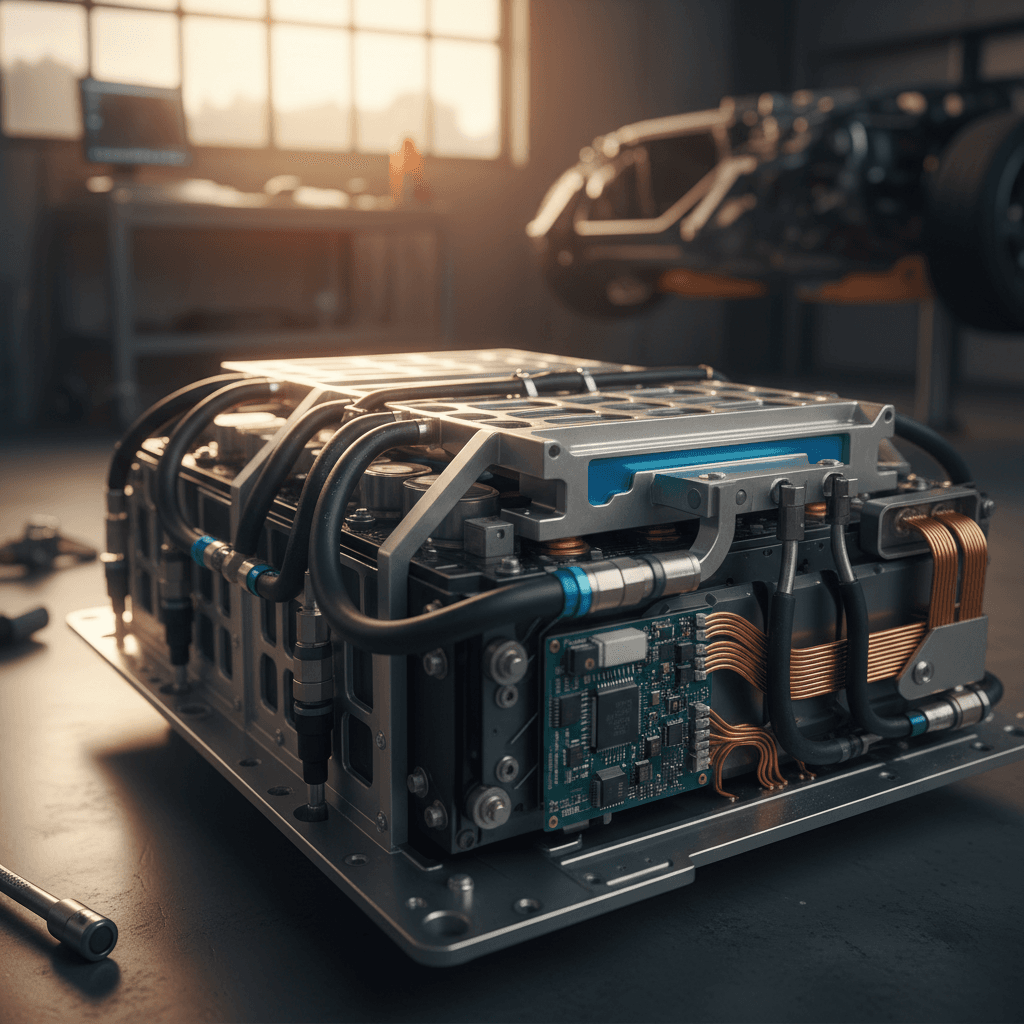
How it works: Coolant flows through channels in metal plates (or serpentine tubes) touching the cells.
- Much higher heat transfer than air
- Good temperature uniformity across cells
- Standard on most modern long‑range EVs
Refrigerant-based cooling
How it works: The battery shares the car’s A/C refrigerant circuit, giving very fast cooling when needed.
- High cooling capacity for fast charging
- More complex plumbing and controls
Immersion cooling (emerging)
How it works: Cells sit in a bath of electrically insulating fluid that circulates or even boils to carry heat away.
- Nearly uniform temperatures and very high cooling power
- Still rare in passenger EVs; more common in prototypes and heavy‑duty or fleet concepts
Where liquid cold plates fit in
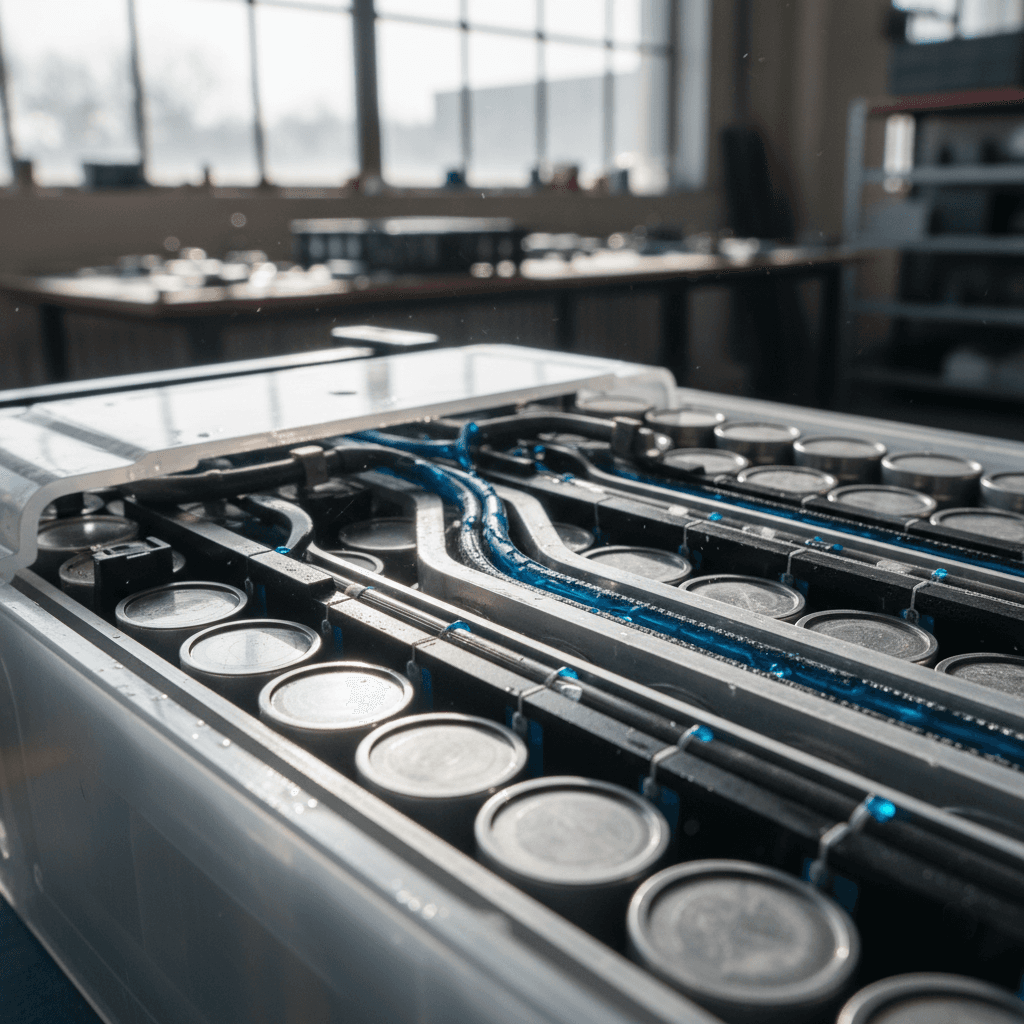
A closer look at air-cooled vs. liquid-cooled batteries
Air-cooled vs. liquid-cooled EV battery systems
Key tradeoffs that affect real-world performance and resale value.
| Feature | Air-cooled battery | Liquid-cooled battery |
|---|---|---|
| Heat removal | Relies on fans and ducted air | Coolant in cold plates or channels transfers heat efficiently |
| Temperature uniformity | Harder to keep all cells even | Much better control pack-wide |
| Fast charging in heat | Often throttles quickly | Can sustain higher power safely |
| System complexity | Simpler, cheaper | More components (pump, radiator, valves) |
| Usage today | Smaller packs, some older models | Most mainstream modern EVs |
Most modern long-range EVs use liquid cooling; a few early or budget models rely on air cooling, which can limit fast charging in hot climates.
Used EV shopping risk: older air-cooled packs
How battery cooling affects fast charging
Ultra-fast DC charging is essentially a controlled stress test for your battery. You’re forcing a huge amount of energy into the cells in a short time, and that energy shows up as heat. A strong thermal management system is what lets modern packs accept high charging power while keeping cell temperatures within a safe window.
- As you plug into a DC fast charger, the battery management system checks pack temperature and state of charge.
- If the pack is too cold or hot, the car may heat or cool the battery before allowing peak power.
- During the charging session, coolant flow ramps up, and some vehicles tie in the A/C system to pull extra heat out.
- As the pack fills up, the car gradually reduces charging power, partly to protect the chemistry, partly because the cells naturally accept less current near full.
Why preconditioning matters
What your cooling system is doing during a fast charge
Three parallel jobs while you grab coffee
Watching cell temps
Routing coolant
Shaping the charge curve
Good cooling = stronger used EV value
Ready to find your next EV?
Browse VehiclesCooling, safety, and battery life
Safety is the quiet backdrop to every conversation about battery cooling. Extreme overheating in a damaged or abused pack can trigger what engineers call thermal runaway, a chain reaction where cells vent and heat neighboring cells. Modern EVs are designed so this is extraordinarily rare, and thermal management is a big part of that defense.
How cooling systems protect your battery over time
Maintain a narrow temperature band
Liquid cold plates and smart controls keep most packs in a tight operating window, easing mechanical and chemical stress on the cells.
Reduce hot spots between cells
Even small temperature differences can cause cells to age at different rates. Good cooling designs aim for uniformity, not just low averages.
Limit high-temperature fast charging
If conditions aren’t ideal, the car will simply slow charging. It’s annoying in the moment, but it’s a built-in protection layer for long-term health.
Coordinate with the BMS
The battery management system constantly compares temperature, current, and voltage. If anything looks off, it can intervene long before safety is at risk.
Thermal management is no longer a side feature in EVs, it's core to how automakers deliver range, fast charging, and durability that meet mainstream expectations.
Cold weather, heat pumps, and thermal management
Most drivers notice battery cooling when it’s hot out, but thermal management works just as hard in the cold. At low temperatures, lithium-ion cells become sluggish. You’ll see lower power, slower charging, and fewer miles from the same state of charge until the pack warms up.
Heat pumps: not just about cabin comfort
What happens in the cold
- Internal resistance rises, so you lose some usable power.
- Charging speeds drop, especially if you plug in with a cold-soaked pack.
- More energy goes to heating the cabin and battery instead of the wheels.
How your EV fights back
- Preconditioning warms the pack before fast charging.
- Heat pumps and coolant loops recycle waste heat from the motor and inverter.
- Software may hold back full power until the pack reaches a comfortable temperature.
Practical cold-weather habits
What to look for in battery cooling when buying a new or used EV
Battery cooling rarely appears on a window sticker, but it’s one of the first things engineers talk about behind the scenes. If you’re shopping for an EV, especially a used one, there are a few questions worth asking.
Key battery cooling questions for shoppers
Translate engineering jargon into buy-or-walk signals
What type of cooling does it use?
Check owner forums, reviews, or spec sheets to learn whether the pack is primarily air‑cooled or liquid‑cooled. For larger packs and frequent fast charging, liquid is the safer long-term bet.
Where has the car lived?
An air‑cooled EV that spent years in Phoenix fast charging daily is a different story than one from coastal Washington. Climate and use history matter.
Is there objective battery health data?
Dashboards only tell part of the story. Look for third‑party diagnostics or, if you’re buying through Recharged, review the Recharged Score report that measures real battery health and thermal performance.
How you plan to use the car
If you expect frequent road trips, towing, or regular DC fast charging, favor models with robust liquid cooling and good real-world fast‑charge curves. For shorter commutes and mostly home Level 2 charging, cooling demands are milder.
What a good inspection includes
Beyond test driving, a solid used‑EV check should note software updates, cooling-system service history, and any active battery or thermal management alerts. A structured inspection, like the one baked into every Recharged Score, surfaces these details up front.
Where Recharged fits in
Owner tips: Helping your battery cooling system out
The good news: your EV is constantly managing battery temperature in the background. But a few habits can make the system’s job easier and protect your pack over the long haul.
Everyday practices that support healthy battery temperatures
Use scheduled charging
If possible, schedule overnight Level 2 charging so the pack finishes close to your departure time. The battery will be warm and ready, especially in winter.
Avoid repeated fast charges on a hot day
One long DC fast‑charge session on a road trip is fine. Chaining several back‑to‑back in extreme heat gives the cooling system a serious workout, and your pack will respond by slowing down charging anyway.
Don’t panic about temporary power limits
If your car limits power or charging speed because the battery is too hot or cold, that’s a protective feature, not a defect. Give it time to adjust.
Keep software up to date
Automakers routinely refine thermal strategies via over‑the‑air updates. Staying current can improve both comfort and long‑term battery care.
Service the cooling system when recommended
Coolant changes, leak checks, and pump inspections aren’t glamorous, but they’re vital. Treat them like timing belt service on an engine car, non‑negotiable for longevity.
Battery cooling FAQ
Frequently asked questions about EV battery cooling
The bottom line on battery cooling and EV shopping
Battery cooling is one of those invisible systems that makes or breaks long‑term EV ownership. The right thermal management setup quietly enables reliable range, confident fast charging, and a pack that still feels strong well into the car’s second owner, and that matters in a used‑EV market that’s growing fast.
If you’re cross‑shopping models, prioritize EVs with well‑documented liquid cooling, realistic fast‑charging behavior, and good real‑world track records in your climate. And if you’re buying used, don’t settle for guesses about battery health. A data‑driven report like the Recharged Score gives you visibility into how the pack and its cooling system have fared so far, so you can choose an EV that will stay cool, and stay strong, for years to come.