When you search for the average price of an electric car, the numbers are all over the map. One headline says EVs are too expensive, another says prices are crashing. None of that helps when you’re just trying to figure out, “What will an electric car actually cost me in 2025?”
A quick reality check
What electric cars really cost in 2025
Snapshot: Electric car prices in 2025 (US)
Those are broad averages. In the real world, your price depends heavily on whether you’re shopping new vs used, and whether you want a compact hatchback, family SUV, or a luxury rocket ship that happens to plug in.
Think in bands, not exact numbers
Average new electric car price vs gas cars
New electric vehicles still carry a price premium over gas cars in most segments, but that gap has been shrinking as battery prices fall and automakers discount 2024–2025 inventory.
Average new vehicle prices in 2025 (US estimates)
Big‑picture averages to show how new EVs stack up against new gas vehicles. Real transaction prices vary by brand, trim, and incentives.
| Vehicle type | Average new price (gas) | Average new price (EV) | Notes |
|---|---|---|---|
| Compact car | $25,000 | $33,000 | Entry‑level EVs like small hatchbacks and sedans. |
| Midsize sedan | $30,000 | $38,000 | Roomier EV sedans often bundle more tech as standard. |
| Compact SUV | $34,000 | $42,000 | The heart of the EV market; many family‑friendly options. |
| Midsize SUV | $42,000 | $52,000 | Three‑row and premium‑trim EV SUVs push averages up. |
| Luxury sedan/SUV | $60,000+ | $70,000+ | Both gas and EV prices climb fast in the luxury space. |
All prices are approximate before tax, registration, and incentives.
Beware of base‑model mirages
If you’re payment‑sensitive, that new‑car premium matters. But it’s only one side of the ledger. Over 5–7 years, lower fuel and maintenance costs can offset a good chunk of that higher sticker, especially if you do a lot of miles or can charge at home on off‑peak rates.
Average used EV prices by segment
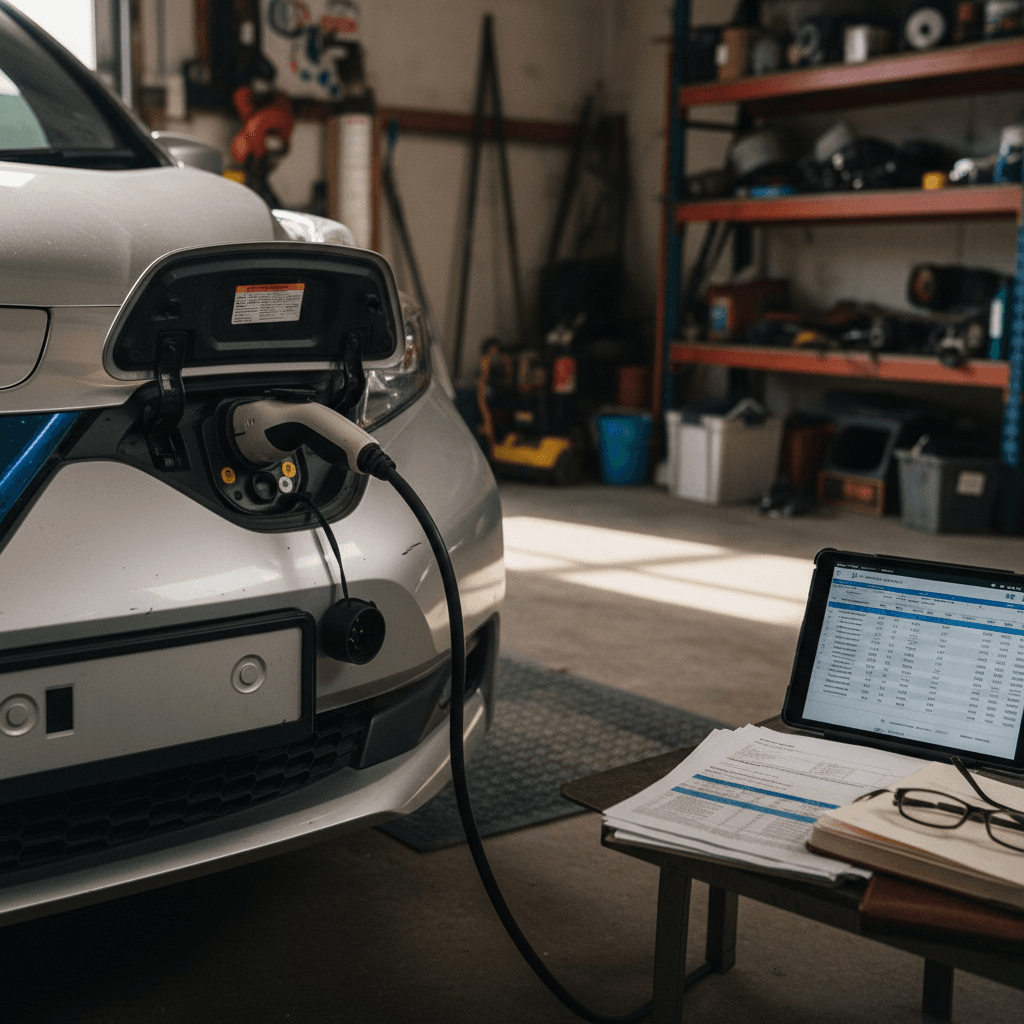
Used is where electric cars start looking very attractive. Early buyers absorbed the steepest part of depreciation, and you get to swoop in after prices and real‑world reliability have settled into focus.
Typical used EV asking prices in 2025 (US)
Approximate price bands for popular used EV segments with normal mileage and clean history.
| Segment | Model year range | Typical price band | What you can expect |
|---|---|---|---|
| Older city EVs (short range) | 2017–2020 | $12,000–$20,000 | Smaller batteries, often under 150 miles of range, great second cars or city commuters. |
| Compact hatchbacks & sedans | 2020–2023 | $18,000–$28,000 | Modern safety tech, 200+ miles of range in many cases. |
| Compact SUVs | 2020–2023 | $25,000–$35,000 | The sweet spot for many families, more room, good range, reasonable prices. |
| Midsize & 3‑row SUVs | 2021–2024 | $32,000–$45,000 | More space and power, but higher prices and insurance costs. |
| Luxury EVs & performance models | 2020–2023 | $40,000–$65,000+ | Heavier depreciation means big savings vs new, but still premium money. |
Actual prices depend on battery health, trim, mileage, and local market conditions.
Why used EVs punch above their weight
Ready to find your next EV?
Browse VehiclesIf your budget tops out in the mid‑$20,000s, you’re firmly in used‑EV territory, and that’s not a compromise. It’s often the smartest way to get into an electric car without stretching your finances.
Beyond sticker price: total cost of ownership
1. Energy costs: electricity vs gasoline
If you drive 12,000–15,000 miles a year, fuel is one of your biggest ongoing costs.
- Typical EV: Many drivers see the equivalent of paying $1.25–$1.75 per gallon when charging at home, especially with off‑peak rates.
- Typical gas car: You’re at the mercy of pump prices, which can swing wildly year to year.
For a lot of households, switching to an EV cuts annual fuel spend by hundreds or even a couple of thousand dollars.
2. Maintenance & repairs
EVs have fewer moving parts: no oil changes, spark plugs, timing belts, or exhaust systems.
- Brake wear is often lower thanks to regenerative braking.
- Routine service mostly means tires, cabin filters, and brake fluid checks.
That doesn’t make EVs maintenance‑free, but over 5–8 years they typically cost less to keep on the road than their gas counterparts.
Look at the 5‑year cost, not just day one
How incentives change the real price you pay
In the United States, federal and state incentives can move the needle by thousands of dollars, especially on new EVs that meet current rules. The catch: eligibility changes often, and it depends on the specific vehicle, where it’s built, your income, and whether you buy or lease.
- Federal tax credits: Many new EVs qualify for up to several thousand dollars in federal tax credits when purchased or, in some cases, leased.
- Point‑of‑sale discounts: Some credits can be applied at the dealership or online checkout so you don’t have to wait for tax time.
- State & local incentives: Depending on where you live, you may see extra rebates, HOV lane access, or reduced registration fees.
Incentives are a moving target
Used EVs sometimes qualify for smaller incentives too, which can make the already‑lower average used price even more appealing. That’s one reason you’ll see strong demand in the $15k–$30k used EV bracket.
Monthly payment examples: real budgets, real cars
Most of us shop by monthly payment, not MSRPs. Here’s how those average EV prices can translate into real‑world monthly numbers. These are simplified examples, not quotes, but they’ll give you a sense of the ballpark.
Sample monthly payments based on average EV prices
Illustrative examples assuming 10% down, ~7% APR, and 72‑month financing. Your actual rate will depend on credit, lender, and market conditions.
| Scenario | Vehicle price | Down payment (10%) | Estimated monthly payment | Who this fits |
|---|---|---|---|---|
| Budget used EV commuter | $20,000 | $2,000 | ~$300/month | Short‑range or older compact EV for city driving or a second car. |
| Family‑friendly used SUV | $30,000 | $3,000 | ~$450/month | Roomier used EV SUV with modern safety and features. |
| New compact EV | $35,000 | $3,500 | ~$525/month | Entry‑level new EV with solid range, before any incentives. |
| New family EV SUV | $45,000 | $4,500 | ~$675/month | Comfortable new electric SUV for families or road‑trip fans. |
Numbers are rounded for simplicity and should be treated as estimates, not offers.
How Recharged can help with payments
How to get the best price on a used EV
Smart steps to lower your EV cost
1. Decide on your true range needs
A shorter‑range EV with a healthy battery is often much cheaper than a long‑range model. If you mostly commute 40–60 miles a day and have home charging, you don’t need 300 miles of range.
2. Prioritize battery health over low miles
A low‑mileage EV isn’t automatically a better value. Ask for a <strong>battery health report</strong>. At Recharged, every vehicle comes with a Recharged Score that includes verified battery diagnostics.
3. Stay flexible on color and options
If you’re willing to compromise on paint color or a few options, you can often find the same model several thousand dollars cheaper than the “perfect” spec.
4. Consider slightly older model years
The difference between a 2022 and a 2024 model can be thousands of dollars, even if real‑world range and features aren’t dramatically different.
5. Factor in trade‑in or instant offer
Rolling your current vehicle into the deal can soften the blow of the EV price. Recharged can give you an instant offer or help you sell via consignment to maximize your proceeds.
6. Shop nationwide, not just locally
EV prices vary a lot by region. A nationwide marketplace like Recharged lets you compare vehicles across markets and ship the right one to your driveway.
Don’t be afraid of delivery
Common mistakes people make when judging EV price
Four pricing traps to avoid
Each of these can cost you real money or peace of mind.
Judging only by sticker price
Looking only at MSRP or the asking price ignores fuel, maintenance, and incentives. You might walk away from a $40k EV that’ll save you thousands versus a $32k gas SUV over the years.
Ignoring battery health
Two identical EVs on paper can be worlds apart in reality. Without a battery diagnostic, you’re guessing at the most expensive part of the car.
Overbuying on range
Chasing maximum range means paying for capacity you’ll rarely use. In many households, a 230–260 mile EV works perfectly at a much lower price than a 320‑mile flagship.
Shopping only within 20 miles
EV markets are patchy. Expanding your search radius, or using a dedicated EV marketplace, opens up better‑priced, better‑equipped cars.
The biggest red flag: vague or missing battery info
FAQ: Average price of an electric car
Frequently asked questions about EV prices
Should you buy new or used EV right now?
When a new EV makes sense
- You qualify for strong incentives that substantially cut the real price.
- You want the latest driver‑assist tech, infotainment, or the longest possible range.
- You plan to keep the car 7–10+ years, so you’ll use most of the battery’s lifespan.
- You value a factory warranty and don’t mind paying for it.
When a used EV is the smarter move
- You want a monthly payment in the $300–$500 range.
- You’re comfortable with 200–260 miles of real‑world range.
- You appreciate getting more car for the money as early depreciation wears off.
- You like the idea of a Recharged Score report that tells you exactly what kind of battery you’re getting.
If you take nothing else from all the noise around the average price of an electric car, remember this: averages don’t buy cars, people do. Your best deal is the EV that fits your life, your budget, and your charging situation, with a battery you can trust. That’s exactly the corner of the market Recharged lives in: verified used EVs, transparent pricing, financing options, trade‑ins, and nationwide delivery so you can focus on the right car, not just the loudest headline.