If you’re looking at an Audi Q8 e-tron, new or used, one of the first questions you’ll have is simple: how fast does it really charge? Specs are one thing, but an Audi Q8 e-tron charging speed test has to answer what matters on the road: how long you’ll be parked from 10–80%, how flat the charging curve is, and how it stacks up against other luxury EV SUVs.
Key takeaway on Q8 e-tron charging
Overview: Why Q8 e-tron charging speed matters
The Q8 e-tron is a big, comfortable, long‑range SUV. That also means a large battery, so charging performance makes or breaks the ownership experience. A fast, flat charging curve can turn this Audi into a credible road‑trip machine; a slow or peaky curve can make it feel like an airport layover on wheels.
- You’re planning regular highway trips and want realistic stop times.
- You’re cross‑shopping Q8 e-tron with BMW iX, Mercedes EQE SUV, Tesla Model X/Y or similar.
- You’re considering a used Q8 e-tron and want to understand battery and charging behavior before you buy.
- You mainly charge at home but still care about occasional DC fast‑charge performance.
Tip for test drives
Audi Q8 e-tron battery and charging basics
First, it helps to untangle the Q8 e-tron lineup. Charging performance depends on which battery you have.
Audi Q8 e-tron variants and battery sizes
Key battery and DC charging specs for the main Q8 e-tron versions you’ll see in the U.S. and Europe.
| Variant | Net usable battery | Peak DC charge power | Typical 10–80% time (claimed) |
|---|---|---|---|
| Q8 50 e-tron | ~89 kWh | 150 kW | ≈28 minutes |
| Q8 55 e-tron | 106 kWh | 170 kW | ≈31–33 minutes |
| SQ8 e-tron | 106 kWh | 170 kW | ≈31–33 minutes |
Battery size drives both range and how long you’ll sit at a fast charger.
Audi’s own technical documentation confirms 150 kW max DC power for Q8 50 and up to 170 kW for Q8 55 and SQ8, with both larger‑battery models targeting roughly 31 minutes from 10–80% under ideal conditions. The key promise: the car holds high power close to 80% instead of diving early, which is what many owners are really testing when they watch the charging graph climb and hold.
Audi Q8 e-tron fast charging by the numbers
Official Audi Q8 e-tron charging speeds and times
On paper, the Q8 e-tron looks strong. Audi quotes a 10–80% DC charge in roughly 28 minutes for the Q8 50 and roughly 31 minutes for the Q8 55 and SQ8, assuming an ultra‑rapid charger and ideal conditions. Peak power is 150 kW or 170 kW depending on model, but the story doesn’t stop at the peak.
Spec sheet vs. roadside reality
How Audi’s official numbers translate into what you’ll see on the charger screen.
What Audi publishes
- Q8 50: up to 150 kW, ~28 min 10–80%.
- Q8 55 & SQ8: up to 170 kW, ~31 min 10–80%.
- Optional 22 kW onboard AC charger for faster Level 2.
What tests show
- Real tests often see 10–80% in ~32–35 minutes for Q8 55/SQ8.
- Average power over the session around 130–140 kW when conditions are good.
- Charging curve stays relatively flat, especially vs. some rivals that taper early.
Specs assume ideal conditions
Real-world charging speed test: what drivers actually see
Independent testing of the Q8 55 and SQ8 e-tron broadly backs up Audi’s claims, but adds useful nuance if you’re planning road trips. Several long‑distance tests and ADAC’s instrumented work show peak power at or near 170 kW, but just as important, an average of roughly 130–140 kW over the full 10–80% window when conditions are right.
Example DC fast‑charge session (Q8 55)
- Arrive at 12% on a 175 kW CCS charger.
- Power quickly ramps to 160–170 kW by ~15% SOC.
- Stays above 140 kW up through roughly 60–65%.
- Tapers gradually toward 90–100 kW approaching 80%.
- Total time from 10–80%: about 32–34 minutes in mild weather.
What that feels like on a trip
- Stop length is roughly one coffee + restroom break.
- You’ll typically add 120–150 miles of realistic highway range in that window, depending on wheel size, speed and weather.
- Because the curve is relatively flat, you’re not punished as harshly for going past 60% as you might be in some rivals.
Good news for used buyers
Understanding the Q8 e-tron charging curve
When shoppers say they want an Audi Q8 e-tron charging speed test, they’re usually watching the shape of the charging curve, not just the big number on the spec sheet. In practice, the Q8 e-tron is less about record‑breaking peaks and more about maintaining relatively high power for a long slice of the state‑of‑charge (SOC) window.
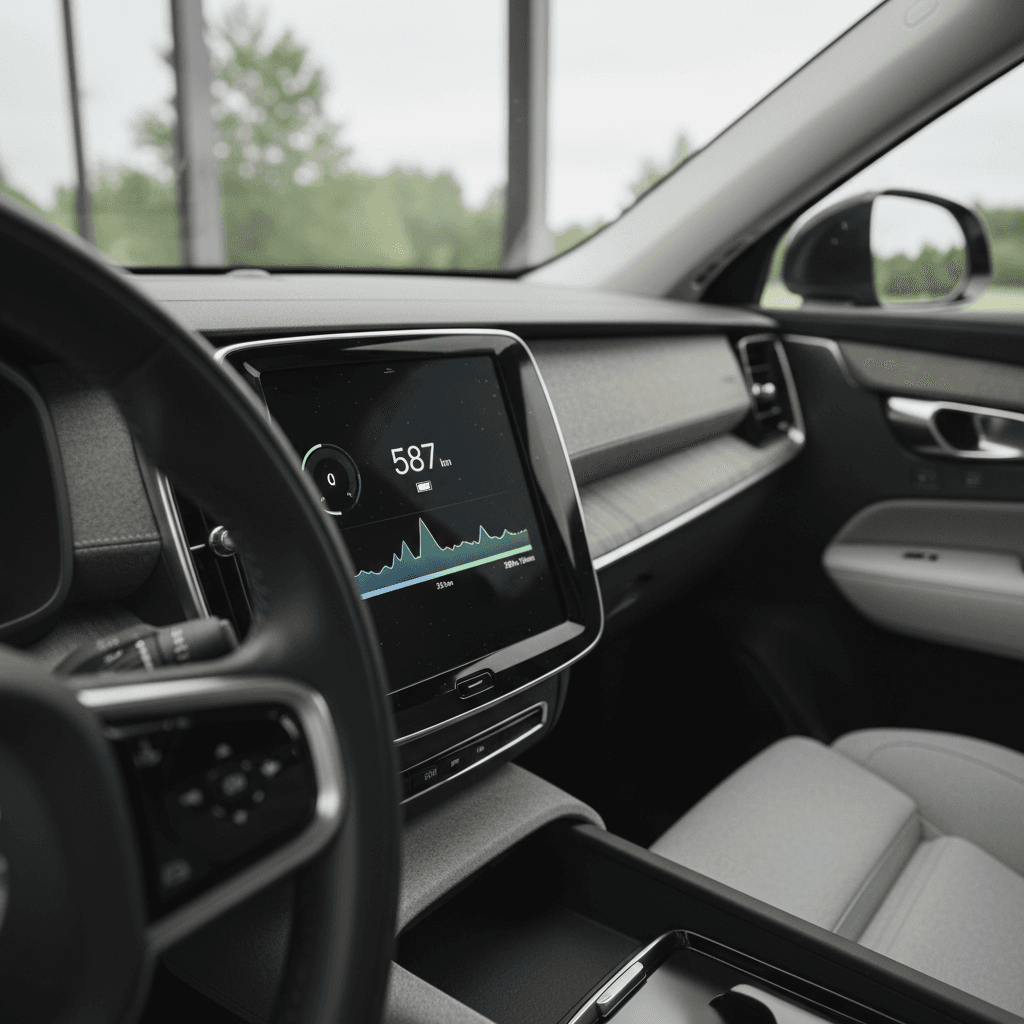
- Early ramp (0–20%): The car ramps quickly to 150–170 kW when the battery is warm and the charger can deliver it.
- Mid‑pack (20–60%): Power commonly stays above 130–140 kW, which is where the Q8 e-tron earns its reputation for a “flat” curve versus some rivals that start tapering hard in the 40–50% range.
- Upper range (60–80%): You’ll see a gradual taper, but many tests still show 90–110 kW approaching 80%, better than the 60–70 kW some competitors fall to by then.
- Above 80%: As with most EVs, power steps down more noticeably. For road trips, there’s rarely a reason to go above 80% unless you’re trying to skip the next charger.
Best SOC window for road trips
Home and Level 2 charging: how long does it take?
Most Q8 e-tron owners will do the bulk of their charging at home or work, not on highway DC chargers. Here, the story is simpler but still important if you’re comparing to smaller‑battery EVs.
Q8 e-tron AC charging options
How long you’ll typically wait on Level 2, depending on your setup.
7.2–7.7 kW home wallbox
- Common 240V/32–40A home setup.
- Full charge on 106 kWh pack: roughly 14–16 hours from empty.
- Overnight 8–10 hours is plenty for daily top‑ups.
11 kW onboard (standard)
- On three‑phase or robust home AC in some markets.
- 0–100% in roughly 11–12 hours for 106 kWh pack.
- In the U.S., you’ll be limited by what the wallbox and panel can supply.
22 kW onboard (optional)
- Available in some markets as an upgrade.
- Can cut full‑charge time to roughly 6–7 hours if you actually have 22 kW AC available.
- Most useful for fleets, high‑mileage drivers, or locations with powerful AC infrastructure.
Safety note on Level 2
Road-trip strategy for the Audi Q8 e-tron
Put all of this together and you can build a simple playbook for long‑distance driving in a Q8 e-tron, whether you’re crossing a state or crossing the country.
Q8 e-tron fast‑charge playbook
1. Start with a warm battery
Fastest charging happens when the high‑voltage battery is warm. Try to hit your first DC stop after at least 30–45 minutes of highway driving, especially in cold weather.
2. Arrive lower, leave around 75–80%
Aim to arrive with 10–20% remaining, then unplug around 75–80%. That keeps you in the flattest part of the charging curve and improves average kW per minute stopped.
3. Prioritize 150 kW+ chargers
The Q8 e-tron can take advantage of high‑power sites. While it will work fine on 50–75 kW chargers, you won’t see the 170 kW potential there and your stop times will stretch closer to an hour.
4. Watch the station, not just the car
If the charger is throttled, shared with another EV, or struggling to hold current, your car’s performance test is meaningless. Always sanity‑check the station’s rated output and how busy the site is.
5. Use range, not SOC, to plan
Think in miles you need to reach the next charger plus buffer, not just battery percentage. With the Q8 e-tron’s big pack, topping to 85–90% occasionally may make sense if the next stop is sparse.
6. Build in 5–10 minutes of overhead
Real‑world stops include parking, app setup, cable handling, and food. When you see 31 minutes 10–80% on paper, assume 35–40 minutes out of your schedule per stop.
How the Q8 e-tron’s charging compares to rivals
The Q8 e-tron doesn’t top the charging‑speed leaderboards, but it plays near the front of the pack for large luxury EV SUVs, especially when you look past peak numbers and focus on the actual time you’re parked.
Charging speed comparison: Q8 e-tron vs key rivals
Approximate peak DC powers and typical 10–80% times for comparable luxury EV SUVs.
| Model | Usable battery | Peak DC power | Typical 10–80% time |
|---|---|---|---|
| Audi Q8 55 / SQ8 e-tron | 106 kWh | 170 kW | ~31–33 min |
| Audi Q8 50 e-tron | ~89 kWh | 150 kW | ~28–30 min |
| BMW iX xDrive50 | ~105 kWh | 195 kW+ | ~31–35 min |
| Mercedes EQE SUV 500 | ~90 kWh | 170–170+ kW | ~32–36 min |
| Tesla Model X Long Range | ~95 kWh | 250 kW+ | ~25–30 min (wide range) |
The Audi focuses on a flat charging curve rather than record‑breaking peaks.
Where Audi lands
Charging considerations for used Q8 e-tron shoppers
If you’re shopping the used market, charging performance is more than a spec, it’s part of the health of the car you’re buying. That’s where a structured evaluation becomes powerful.
What to check on a used Q8 e-tron
Simple checks that tell you a lot about charging performance and battery health.
1. Battery health & history
- Look for a verified battery health report, not just “it feels fine.”
- Ask how often the car was DC fast charged vs. home charged.
- Check if the software is up to date; OEM updates can improve charging behavior.
2. Real or simulated charge test
- If possible, do a short DC session from ~10–40% and watch peak and sustained power.
- On Level 2, confirm the car reaches expected current (e.g., 32–48A depending on the EVSE).
- Listen for unusual cooling fan behavior or errors in the cluster.
How Recharged helps
Ready to find your next EV?
Browse VehiclesFAQ: Audi Q8 e-tron charging speed and testing
Frequently asked questions
Bottom line: is the Audi Q8 e-tron a fast charger?
If your benchmark is raw peak numbers, the Audi Q8 e-tron sits just behind the very quickest EVs on sale. But if your benchmark is how long you’re actually parked from 10–80%, the story is better: real‑world tests show roughly 30–33‑minute stops for the big‑battery models and high, sustained power well into the mid‑pack SOC range. For a large, comfortable SUV with a 90–100+ kWh usable pack, that’s competitive and, more importantly, predictable.
For shoppers in today’s used market, that predictability is a selling point. It means a well‑maintained Q8 e-tron can deliver the kind of repeatable, coffee‑break‑length charging stops that make electric road trips feel normal instead of experimental. If you’re weighing a Q8 e-tron against other luxury EVs, or if you want a deeper look at a specific VIN’s battery and charging health, Recharged can pair you with expert EV support, a Recharged Score Report, and flexible financing or trade‑in options so you get the right SUV and the charging experience you expect.