Recharged
EV Stories Feed
Tesla Model 3 Battery Degradation: Real Data, What’s Normal, and How to Slow It Down
Photo by Manny Becerra on Unsplash
Battery & Range

Tesla Model 3 Battery Degradation: Real Data, What’s Normal, and How to Slow It Down

By Recharged Editorial Team10 min read
tesla-model-3battery-degradationbattery-healthused-ev-buyingev-rangelfp-batteryfast-chargingwarrantyrecharged-score

If you own, or are thinking about buying, a Tesla Model 3, you’ve probably heard conflicting stories about Tesla Model 3 battery degradation. Some drivers report almost no loss after years, others complain about big range drops. The truth sits in the middle: degradation is real, but for most Model 3 owners it’s gradual, predictable, and manageable, especially if you understand what’s normal and how to protect the pack.

Key takeaway in one sentence

Most Tesla Model 3 batteries lose roughly 5–10% of capacity in the first few years, then degrade slowly, and Tesla’s warranty only steps in if capacity falls below about 70% within 8 years and 100,000–120,000 miles (depending on trim).

Why Tesla Model 3 battery degradation matters

Your Model 3’s battery is its most expensive component and the single biggest driver of usable range and resale value. A pack that’s lost 8% of capacity is usually a non‑issue day to day. A pack that’s down 25–30% can change how you road‑trip, how often you charge, and what a used car is worth. If you’re shopping used, understanding degradation is the difference between a great deal and a car that feels tired long before the loan is paid off.

Tesla Model 3 battery degradation at a glance

5–10%
Typical early loss
Common capacity loss in the first 50,000–60,000 miles for many Model 3s, before the curve tends to flatten.
70%
Warranty floor
Tesla guarantees at least 70% battery capacity for 8 years or 100k–120k miles, depending on Model 3 variant.
100k+
High‑mileage examples
Plenty of Model 3 owners report 10–20% loss after 100,000+ miles, often still very usable in daily driving.
Highest
Value driver
Battery health is usually the #1 factor in the fair market price of a used Model 3 versus similar cars.

How Tesla Model 3 battery degradation actually works

All lithium‑ion batteries lose capacity over time. Your Model 3 uses either an NCA (nickel cobalt aluminum) or LFP (lithium iron phosphate) pack, and both follow the same basic pattern: faster loss early, then a slower, gradual decline. The first 5–8% often disappears in the first few years as the battery “settles.” After that, the degradation curve usually flattens and each additional percent takes much longer to appear.

Important nuance

A temporary drop in displayed range after a software update or cold snap doesn’t always mean permanent battery damage. Look at long‑term trends, not a single reading.

Real-world Tesla Model 3 battery degradation data

There’s now a lot of real‑world data from early Model 3s sold in 2017–2019 and newer LFP‑equipped cars. Long‑term fleet tracking, owner apps, and public anecdotes all point in a similar direction: Model 3 packs hold up well compared with many other EVs, but aggressive fast‑charging and extreme climates can move you to the upper end of the degradation range.

Real Model 3 battery stories (approximate snapshots)

These examples illustrate the spread you can expect in the used market.

High‑mileage commuter

~65,000 miles, 5 years, Long Range
Owner reports roughly 10% capacity loss, which lines up with what many long‑distance commuters see.

Moderate driver, LFP

~45,000 miles, ~1 year, RWD LFP
Some owners report 3–5% loss, even with heavy use, thanks to LFP’s calendar‑driven aging and frequent 100% charging being safe.

Hard‑used example

100,000+ miles, older Long Range
It’s not unusual to see 15–20% degradation in heavily supercharged, high‑mileage cars, still within Tesla’s warranty band.

How this compares to lab expectations

Independent long‑term tests have seen around 6–8% capacity loss in ~25,000 miles of mixed use, with projections in the mid‑60% range at 120,000 miles for hard‑charged vehicles. That still meets Tesla’s 70% warranty threshold, but shows how use patterns matter.

Warranty: what Tesla considers “acceptable” degradation

Tesla’s warranty is a good window into what the company considers normal Model 3 battery degradation. For U.S. buyers today, the Battery and Drive Unit Limited Warranty for Model 3 guarantees a minimum of about 70% capacity retention within a specific time and mileage window.

Tesla Model 3 battery & drive unit warranty (U.S.)

Coverage numbers may vary slightly by build year; always verify your specific car in the Tesla app or owner’s manual.

Model 3 variantYearsMileage limitMinimum capacity Tesla guarantees
Rear‑Wheel Drive / Standard Range8 years100,000 miles~70% battery capacity
Long Range / Performance8 years120,000 miles~70% battery capacity

All Model 3 packs are warrantied against dropping below roughly 70% capacity during the stated period.

Warranty doesn’t cover all degradation

Tesla explicitly warns that some gradual energy loss over time is expected and not a defect. The company typically won’t replace a pack under warranty unless it falls below the ~70% threshold within the covered period, or has a separate hardware fault.

What speeds up (or slows down) Model 3 battery degradation

You can’t stop degradation, but you can absolutely influence which end of the curve you land on. Two identical Model 3s can age very differently depending on climate and charging habits. The goal is to keep the pack cool, avoid living at extreme states of charge, and limit how often you slam it with very high charging power.

Major factors that affect Model 3 battery degradation

Think of these as dials you can turn up or down over the life of the car.

Factors that accelerate degradation

  • Frequent DC fast charging at Superchargers or other high‑power stations, especially back‑to‑back sessions.
  • Keeping the car near 100% for long periods (NCA packs in particular don’t like this).
  • Regularly running down to near 0% before charging.
  • Living in sustained high heat (parking in the sun for days, hot climates without shade or garage).
  • Very aggressive driving that constantly heats the pack.

Habits that slow degradation

  • Daily charging to a moderate level, often 60–80% for NCA packs.
  • Using Level 2 home charging as your default, saving DC fast charging for trips.
  • Parking in the shade or a garage to reduce heat soak.
  • Letting the car sleep instead of constantly waking it with third‑party apps.
  • Enabling scheduled charging so it finishes just before you drive.

Simple rule of thumb

If you treat your Model 3’s battery like your phone’s, constantly fast‑charging from nearly empty to 100%, you’ll likely see faster degradation. Treat it gently and it usually rewards you with a long, predictable life.

LFP vs NCA: different Model 3 batteries age differently

Not all Tesla Model 3 batteries are the same. Earlier U.S. cars primarily used NCA chemistry, while many newer Rear‑Wheel Drive (RWD) cars use LFP packs. That matters, because the best‑practices for charging and what “normal” degradation looks like change slightly between them.

Visitors also read...

NCA packs (LR & Performance, many older SR+)

  • Prefer living between roughly 10–80% for daily use.
  • Long periods at 100% or very high heat can accelerate degradation.
  • Often see a noticeable early drop (5–8%), then a long plateau.
  • Best for drivers who regularly road‑trip and value energy density.

LFP packs (many newer RWD/Standard Range)

  • More comfortable sitting at higher states of charge.
  • Tesla often recommends charging to 100% once a week or even daily.
  • Degradation is influenced more by calendar age than mileage.
  • Very stable chemistry, but cold‑weather performance can feel different.

How to know which battery you have

In the Tesla app or on the charge screen: if your daily charge slider is labeled up to 100% and the car is a recent RWD/Standard Range, you likely have LFP. Earlier LR/Performance cars in North America almost always use NCA.

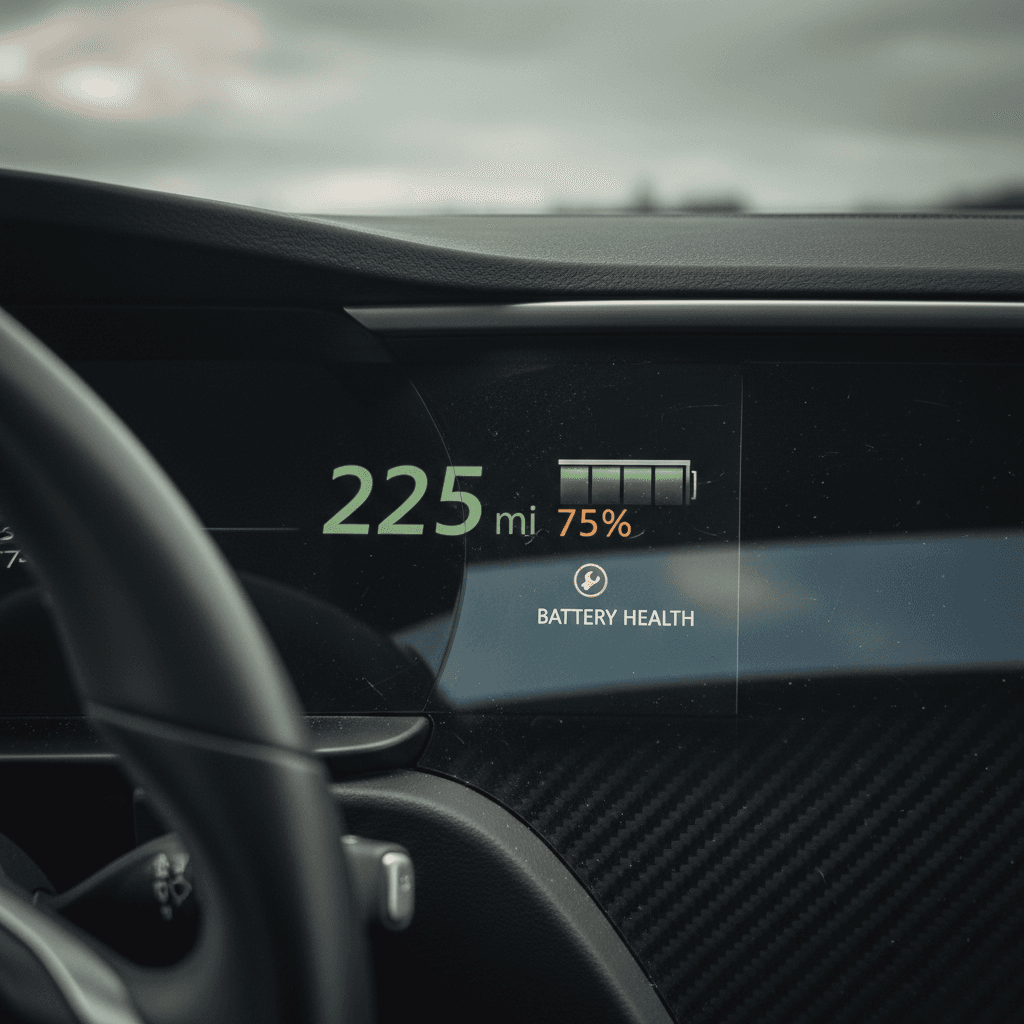
Closeup of a Tesla Model 3 screen showing battery range and state of charge
Watching your projected range over months, not days, is the best way to spot real battery degradation trends.Photo by Vlad on Unsplash

How to check battery health on a used Tesla Model 3

If you’re buying a used Model 3, the battery is the homework assignment you can’t skip. A car that looks perfect on the outside can hide a pack that’s been fast‑charged daily or roasted in extreme heat. You want a clear, data‑driven view of current battery health, not just a salesperson’s reassurance that “it still charges fine.”

Used Model 3 battery check: quick playbook

1. Look at rated range at a known state of charge

Ask the seller to charge the car to 90% or 100% and show the displayed range. Compare it to the original EPA rating for that trim. A modest gap (for example, 8–12%) is common; a huge gap can be a red flag that deserves more digging.

2. Check odometer and usage pattern

A 5‑year car with 20,000 miles that lived in Phoenix and fast‑charged weekly can be worse off than a 5‑year car with 70,000 miles that mostly slow‑charged in a mild climate. Ask directly about how and where the previous owner charged.

3. Scan for battery‑related alerts or service history

Review the car’s service records for high‑voltage battery or drive‑unit work. Occasional checks are normal; repeated warnings or prior pack repairs call for a professional inspection.

4. Use a third‑party battery report or app, cautiously

Tools like Tessie or Scan My Tesla can estimate degradation from logs, but they’re only as good as the data and calibration. Use them as one input, not the final word.

5. Get an independent battery health report

Whenever possible, lean on a structured diagnostic. At Recharged, every used EV includes a <strong>Recharged Score Report</strong> with verified battery health, so you’re not guessing how much capacity is left.

6. Confirm remaining warranty coverage

Use the VIN in the Tesla app or owner website to confirm when the 8‑year battery and drive‑unit warranty expires and which mileage band applies to that specific car.

How Recharged reduces the guesswork

When you buy a used Model 3 through Recharged, you get a Recharged Score battery health report, transparent pricing that reflects real pack condition, and EV‑specialist support. You’ll know exactly how the battery is performing before you sign anything.

Habits that protect your Tesla Model 3 battery

Once you own the car, day‑to‑day habits matter more than any one road trip. The good news: you don’t need to obsess over every percent. Focus on a few high‑impact behaviors that keep the pack in its comfort zone most of the time.

Don’t chase 0% degradation

Small differences, say 7% loss instead of 9%, won’t change your life. Aim for reasonable habits you can stick with, not perfection. Your sanity matters as much as the battery graphs.

Model 3 battery degradation: when to worry (and when not to)

A lot of anxiety around EV batteries comes from misreading normal behavior as failure. To decide whether your Model 3’s degradation is a problem, look at both the numbers and how the car fits your life. A 12% loss on paper doesn’t matter if you still have plenty of range for commuting and weekend trips.

Usually not a big deal

  • Loss of roughly 5–12% capacity over 3–6 years and 40,000–80,000 miles.
  • Range bounces a little after software updates or big temperature swings.
  • The car still easily covers your daily driving on a single charge.
  • No repeated battery‑related alerts or power‑limiting messages.

Worth investigating further

  • Displayed capacity seems down 20%+ well before the battery warranty window.
  • You see frequent warnings about battery performance, charging limits, or power reduction.
  • Range loss has accelerated sharply in the last 6–12 months without a clear reason.
  • The car can no longer comfortably do trips that used to be easy at the same speeds.

Document issues early

If you suspect abnormal degradation, and the car is still under Tesla’s battery warranty, start documenting with dated screenshots and service visits. That paper trail helps if the pack ever crosses Tesla’s replacement threshold.

Row of used electric cars, including sedans similar to a Tesla Model 3, parked on a dealership lot
On the used market, two Model 3s can look identical on the outside but have very different battery histories, and very different values.Photo by Jānis Silenieks on Unsplash

Tesla Model 3 battery degradation FAQ

Frequently asked questions about Model 3 battery degradation

Bottom line for used Tesla Model 3 shoppers

Tesla Model 3 battery degradation is real, but it’s also fairly predictable once you understand the patterns. A well‑cared‑for Model 3 that’s lost 8–12% of capacity after several years is usually a strong used buy, especially if it still fits your daily range needs. The real risk isn’t degradation itself, it’s buying blind, without knowing how that specific car was used and charged.

If you’re considering a used Model 3, treat battery health like you would an engine compression test on a gas car: essential, not optional. Look for transparent range data, remaining warranty, and ideally a third‑party battery diagnostic. At Recharged, every EV we sell comes with a Recharged Score Report and EV‑specialist guidance, so you can focus on finding the right car, not worrying what’s hiding inside the pack.


Discover EV Stories & Insights

Dive into our magazine-style feed with expert reviews, industry news, charging guides, and the latest electric vehicle trends, all in one place.

Explore Articles Feed

Related Articles

Kia Niro EV Battery Degradation: Real-World Guide for 2025
Battery & Range9 min

Kia Niro EV Battery Degradation: Real-World Guide for 2025

Learn how the Kia Niro EV battery degrades over time, real‑world range loss, warranty coverage, and how to slow degradation, especially if you’re shopping used.

kia-niro-evkia-e-nirobattery-degradation
Chevrolet Equinox EV Battery Degradation: Real-World Guide for 2026
Battery & Range9 min

Chevrolet Equinox EV Battery Degradation: Real-World Guide for 2026

Worried about Chevrolet Equinox EV battery degradation? Learn what to expect, GM’s warranty limits, and how to slow degradation, plus tips for buying used.

chevrolet-equinox-evbattery-degradationultium-battery
Rivian R1S Battery Degradation: Real‑World Data, Causes & How to Slow It
Battery & Range10 min

Rivian R1S Battery Degradation: Real‑World Data, Causes & How to Slow It

Worried about Rivian R1S battery degradation? Learn real‑world data, warranty limits, causes, and how to protect range, especially when buying a used R1S.

rivian-r1sbattery-degradationbattery-health
Rivian R1T Battery Degradation: Real‑World Data, Warranty & Care Guide
Battery & Range9 min

Rivian R1T Battery Degradation: Real‑World Data, Warranty & Care Guide

Worried about Rivian R1T battery degradation? See real owner data, Rivian’s 8-year warranty, expected capacity loss, and simple habits to protect range.

rivian-r1tbattery-degradationbattery-health
Volkswagen ID.4 Battery Degradation: Real‑World Data, Causes, and How to Slow It Down
Battery & Range10 min

Volkswagen ID.4 Battery Degradation: Real‑World Data, Causes, and How to Slow It Down

Worried about Volkswagen ID.4 battery degradation? See real‑world data, what causes range loss, warranty basics, and how to protect a used ID.4’s battery.

volkswagen-id4battery-degradationbattery-health
Tesla Model S Battery Degradation: Real Data, Causes, and How to Slow It Down
Battery & Range10 min

Tesla Model S Battery Degradation: Real Data, Causes, and How to Slow It Down

Worried about Tesla Model S battery degradation? See real-world data, what causes range loss, warranty limits, and how to protect battery health, especially on a used Model S.

tesla-model-sbattery-degradationbattery-health

Big Story


Pre-qualify with no impact to your credit

Fast and easy

Answer a few simple questions, get prequalified.

No hit to your credit

All credit types are welcome. You'll see your approval status shortly after finishing.

Time to browse

Shop with comfort, then get financing through Recharged.

Recharged

Discover EV articles