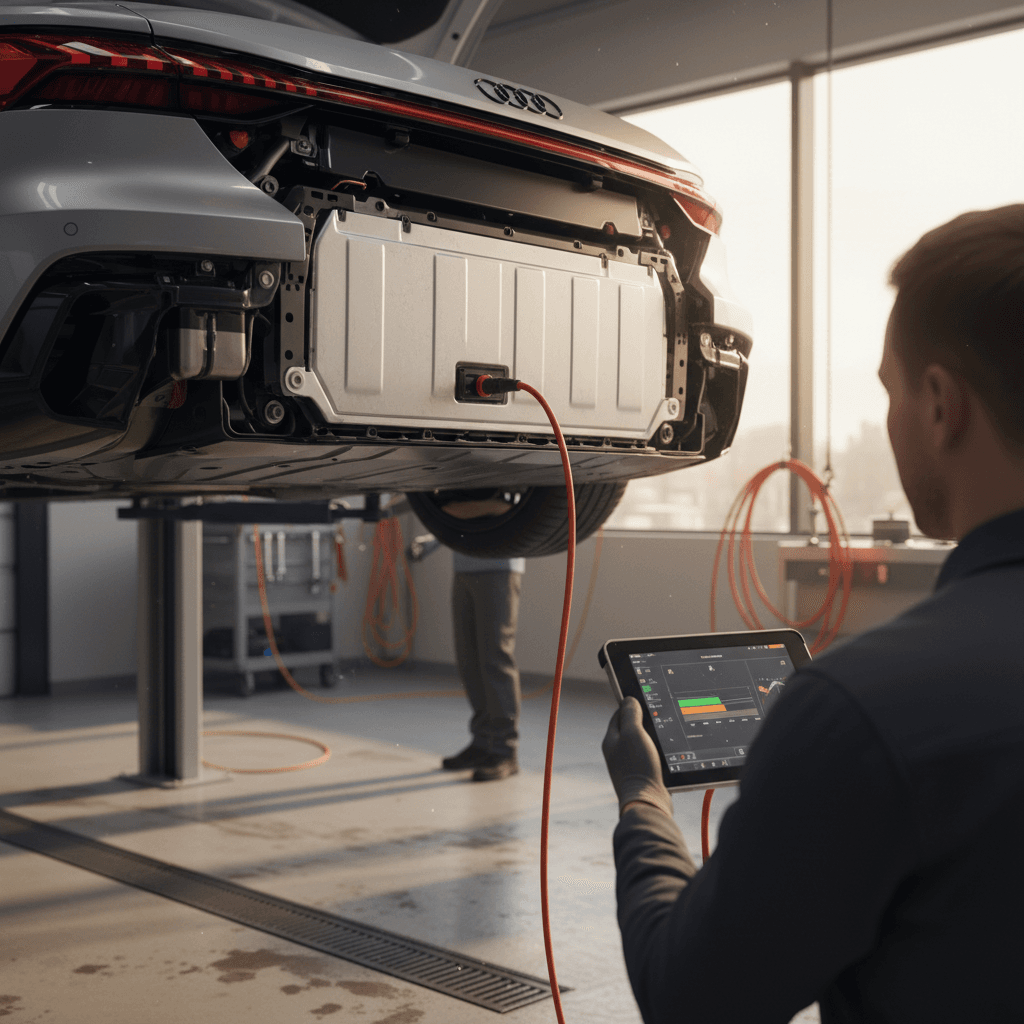
If you’re considering an Audi e-tron GT, or already own one, the big question is usually the battery. You’ve heard about Audi’s 8‑year/100,000‑mile high‑voltage battery warranty, but what does that actually cover, what doesn’t it cover, and how does it work if you’re buying used? This guide breaks the Audi e-tron GT battery warranty down in plain language so you know where you’re protected and where you’re on your own.
Quick answer
Overview: Audi e-tron GT battery warranty in plain English
- High‑voltage traction battery: typically 8 years/100,000 miles from first in‑service date for U.S. e-tron models, including the e‑tron GT.
- New vehicle limited warranty (bumper‑to‑bumper + powertrain): 4 years/50,000 miles for the rest of the car in the U.S.
- Roadside assistance: 4 years with unlimited miles on new Audi vehicles in the U.S., which can help if the car becomes undriveable due to a covered issue.
- Battery warranty is separate from the 12‑volt accessory battery and normal wear items.
Think of the e-tron GT battery warranty as a long‑tail safety net specifically for the expensive high‑voltage pack. If a cell group, module, or pack‑level component fails prematurely due to a manufacturing defect, and it’s still within 8 years/100,000 miles, Audi is generally on the hook to repair or replace it. But that doesn’t mean every drop in range is automatically a warranty claim, and it doesn’t mean Audi has to give you a brand‑new, 0‑mile pack.
Audi e-tron GT warranty fast facts
How long the Audi e-tron GT battery warranty lasts
Audi’s EV warranty structure for the e-tron GT is pretty straightforward once you break it into pieces. In the U.S., you’re looking at two overlapping clocks: the shorter new‑vehicle warranty that covers almost everything, and the longer high‑voltage battery warranty that keeps running after the basic coverage expires.
Audi e-tron GT U.S. warranty overview
Approximate coverage terms for recent Audi e-tron GT model years in the U.S. Always confirm details in the specific vehicle’s warranty booklet.
| Coverage type | What it covers (high level) | Term (time) | Term (miles) |
|---|---|---|---|
| New Vehicle Limited Warranty | Most components: electronics, suspension, interior, body hardware, powertrain | 4 years | 50,000 miles |
| High‑voltage traction battery warranty | e‑tron GT main battery pack and internal modules | 8 years | 100,000 miles |
| Corrosion perforation | Rust‑through on body panels (not surface rust) | 12 years | Unlimited |
| Roadside assistance | Towing, jump starts, lockout help, etc. | 4 years | Unlimited |
Battery coverage runs longer than the basic warranty, but it doesn’t turn the whole car into an 8‑year bumper‑to‑bumper plan.
Start date matters
Outside the U.S., the exact terms can vary by region, some markets use kilometers instead of miles or may have slightly different battery conditions. If you’re importing a car or shopping across borders, you’ll want to read that market’s warranty booklet closely. For a U.S.‑market car staying in the U.S., plan around the 8‑year/100,000‑mile benchmark.
What the e-tron GT battery warranty actually covers
The high‑voltage battery warranty is designed to protect you from defects in battery materials or workmanship, not from every possible battery‑related disappointment. In practice, that means it should cover failures that aren’t just normal aging.
High‑voltage battery: what’s typically covered
Think "defects and failures," not "wear and tear".
Internal battery defects
Coverage generally includes defective cells or modules inside the traction battery that cause warning lights, fault codes, or a no‑start condition. Audi may replace individual modules or, in severe cases, the entire pack.
Pack‑level components
Major components that are integral to the pack, such as internal wiring, busbars, contactors, or built‑in battery control electronics, are usually considered part of the high‑voltage battery assembly.
Safety‑related failures
If the battery develops a condition that triggers high‑voltage isolation faults, overheating warnings, or other safety concerns due to a defect, that’s squarely in warranty territory as long as time and mileage limits haven’t been exceeded.
Audi also highlights that the battery pack is built with modular, serviceable sections. In many cases, an Audi EV technician can replace only the affected modules rather than the entire pack. That’s still a major job, but far more manageable than a full pack swap, and it’s exactly the type of repair the battery warranty exists to cover when a defect is the root cause.
Good news for used buyers
What isn’t covered: battery warranty limitations and fine print
Where most owners get surprised is on the exclusion side. Audi’s warranty language makes it clear that some battery‑related issues, even expensive ones, can fall outside coverage depending on the cause.
- Normal degradation: All lithium‑ion batteries lose capacity with time and use. Gradual range loss that’s considered "normal" for the vehicle’s age and miles typically isn’t a warrantable defect on an e-tron GT.
- Damage from abuse or improper use: If the pack is damaged in a crash, by improper lifting/jacking, deep underbody impacts, or unauthorized modifications/tuning, Audi can deny coverage.
- Environmental and storage misuse: Leaving the car unused at very low state of charge for extended periods, chronically overheating it, or ignoring cooling system faults can be grounds for denial if they contribute to failure.
- 12‑volt battery and accessories: The small 12‑V battery that runs accessories is considered a wear item and is not part of the high‑voltage battery warranty. Many owners see that battery replaced outside EV coverage.
- Software updates and performance expectations: The warranty doesn’t guarantee that software updates won’t change displayed range or charging behavior over time, and it doesn’t promise any specific charging speeds at every station.
Don’t assume "anything labeled battery" is covered
The takeaway: the 8‑year number is real and valuable, but it isn’t a blank check for every electrical or energy‑related issue. Before you buy a used e-tron GT, it’s worth getting clarity on which components are still protected under the battery warranty and which are now in the "you pay" zone.
Degradation vs. failure: how Audi treats range loss
The Audi e-tron GT doesn’t publish a simple U.S.‑market promise like "we’ll replace the pack if it drops below X% capacity" the way some brands do. Internally, Audi tracks battery health and acceptable degradation curves, but the warranty focuses on defects, not a guaranteed percentage of original range.
What counts as normal degradation?
Most EVs, including the e-tron GT, see the fastest capacity loss in the first couple of years, then a slower decline. Losing a modest amount of range over 4–6 years, especially in hot or cold climates or with frequent DC fast‑charging, is typically seen as normal wear, not a defect.
- Small drops in displayed range over time
- Slightly slower charging at very high states of charge
- Range swings with weather and driving style
What looks more like a failure?
A sudden, dramatic loss of range or the car entering reduced‑power modes with battery‑related warnings is a very different story. That can indicate failed modules, isolation faults, or other defects that the high‑voltage battery warranty is meant to cover if you are still within 8 years/100,000 miles.
- Warning lights or messages related to high‑voltage system
- Car refusing to fast‑charge or start
- Range dropping drastically in a short period with no obvious cause
Will Audi guarantee a minimum state of health?
New vs. used e-tron GT: how the battery warranty transfers
One reason the e-tron GT is interesting on the secondary market is that the battery warranty usually follows the car. That’s good news if you’re shopping a 2–4‑year‑old example, there can still be meaningful coverage left. But the details matter.
How battery coverage works for first and later owners
Same pack, different remaining runway depending on age and miles.
If you’re the first owner
Buy a new e-tron GT today and you’ll get the full:
• 4 years/50,000 miles bumper‑to‑bumper
• 8 years/100,000 miles high‑voltage battery
You don’t need to do anything special to "activate" coverage, just keep up with maintenance and avoid abuse or modifications that could give Audi reason to deny claims.
If you’re buying used
The battery warranty countdown started when the original buyer took delivery. A 2022 e-tron GT first sold in July 2022 will have battery coverage until July 2030 or 100,000 miles, even if you’re the third owner.
What you get is whatever time and mileage are left, not a new 8‑year clock. That’s why it’s critical to verify the in‑service date before you finalize a used purchase.
Factory vs. extended vs. CPO
Common real‑world scenarios (and how warranty applies)
To make this concrete, let’s walk through a few scenarios we see shoppers and owners run into. None of this is legal advice, but it should help you set realistic expectations before you buy, or before you head to the dealer with a concern.
Typical scenarios for Audi e-tron GT battery coverage
1. Sudden loss of range at 40,000 miles, 3 years in
If the car suddenly loses a large chunk of usable range, displays high‑voltage warnings, or refuses to DC fast‑charge, that smells like a defect. With 3 years/40,000 miles, you’re within both the 4‑year/50,000‑mile basic warranty and the 8‑year battery warranty. Expect Audi to diagnose it under warranty and, if they confirm a failed module or pack issue, repair it at their expense.
2. Gradual range fade at 85,000 miles, 7 years in
Here you’re near the end of the 8‑year/100,000‑mile battery term. If the range has gradually tapered, Audi will likely call that normal wear, even if it’s annoying. Unless diagnostic data shows an out‑of‑family defect, this is usually not a battery‑warranty case.
3. Track days and lots of DC fast‑charging
Audi explicitly markets the e-tron GT as a performance EV, and occasional track use or fast‑charging alone doesn’t void coverage. But if aggressive use contributes to accelerated degradation or overheating and Audi can attribute the condition to misuse or non‑recommended operation, it may complicate a claim. Keeping logs and following Audi’s usage guidance helps your case.
4. Underbody impact damaging the pack
If you high‑center the car or hit debris that punctures the battery enclosure, that’s usually treated like collision or impact damage, not a warranty defect. You’d be looking at an insurance claim, not a free pack replacement, even if the car is only a year old.
5. Buying a 4‑year‑old e-tron GT from a non‑Audi dealer
If the in‑service date is within 8 years and total miles under 100k, the remaining battery warranty should still apply, even if you buy the car from an independent retailer. Your challenge is verifying the history and making sure any prior repairs or modifications don’t raise red flags for future claims.
Protecting your coverage: owner responsibilities
Battery warranties come with strings attached. Audi expects you to operate and maintain the e-tron GT in a way that doesn’t accelerate damage, and they reserve the right to deny claims if abuse, neglect, or unauthorized mods are involved. The bar isn’t unreasonable, but it’s worth knowing what’s typically expected.
- Follow Audi’s maintenance schedule: Even though EVs have fewer moving parts, Audi still specifies inspections and service intervals. Skipping them, especially if cooling or high‑voltage checks are involved, can backfire later.
- Use recommended charging practices: Regular DC fast‑charging is allowed, but Audi prefers you keep the car plugged in and use scheduled charging/pre‑conditioning rather than running the pack to 0% and leaving it there.
- Avoid unsupported modifications: Aftermarket tuning, non‑OEM high‑voltage repairs, or hardware that changes electrical behavior can be used against you if something fails.
- Address warning lights promptly: If the car displays high‑voltage system, cooling system, or battery‑related warnings and you keep driving for months, it’s easier for Audi to argue that damage was caused by neglect.
- Document issues and service: Keep service records and, if you’re seeing odd behavior, jot down dates, mileages, and photos of instrument‑cluster warnings. That history helps if you need to escalate a claim.
Keep your paperwork tight
How Recharged evaluates e-tron GT battery health
If you’re shopping a used e-tron GT, the factory battery warranty is only half the story. What you really care about is how healthy the pack is today, and how confident you can be in it for the years you’ll actually own the car. That’s where Recharged’s EV‑specific diagnostics come in.
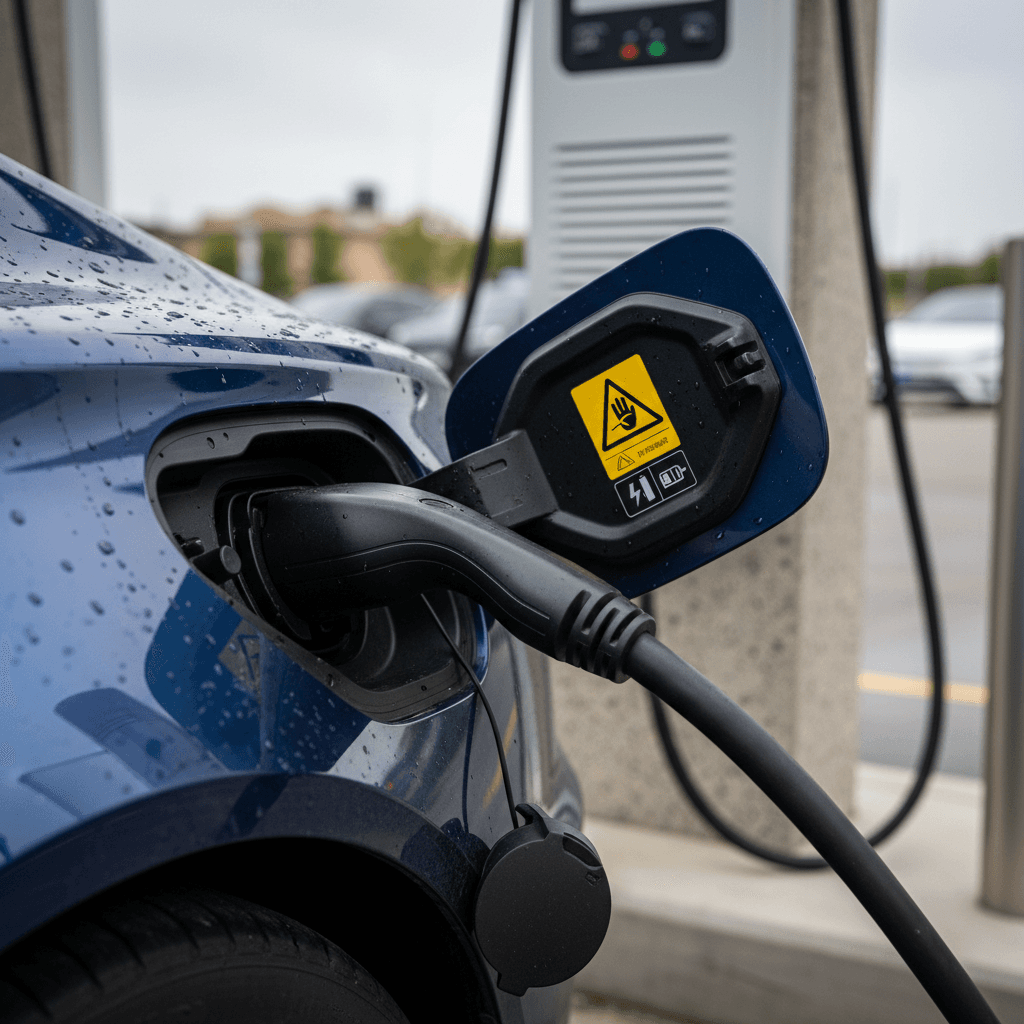
What you get with a Recharged e-tron GT
Beyond just whisper‑level mileage and a clean Carfax.
Battery health report
We pull and interpret high‑voltage battery data, state of health, fault codes, and charge history indicators, so you see how the pack is actually aging, not just whether it’s still under warranty.
Transparent warranty status
Every e-tron GT on Recharged comes with clear warranty timelines: in‑service date, remaining basic coverage (if any), and remaining battery warranty based on miles and years.
Fair pricing + EV expertise
Because we live and breathe EVs, our pricing and guidance reflect real‑world ownership costs, from potential out‑of‑warranty repairs to long‑term battery behavior.
Ready to find your next EV?
Browse VehiclesYou can shop fully online, finance, trade in, or even get an instant offer for your current car, with nationwide delivery and EV‑specialist support. And if you’re weighing an e-tron GT against another EV, our advisors can help you compare battery warranties, degradation patterns, and total cost of ownership apples‑to‑apples.
FAQ: Audi e-tron GT battery warranty
Frequently asked questions
Bottom line: should you worry about the e-tron GT battery?
The Audi e-tron GT’s battery warranty isn’t a magic force field, but it’s legitimately strong: 8 years/100,000 miles of high‑voltage coverage plus 4 years/50,000 miles on the rest of the car puts it broadly in line with other premium EVs. If a genuine defect crops up in the pack, you’re unlikely to be left holding the bag during that window. What it doesn’t do is guarantee you a specific number of miles of range forever or cover every electrical gremlin once the basic warranty expires.
So if you’re shopping used, the smart play is to combine that factory battery warranty with hard data on pack health and a clear view of remaining coverage. That’s exactly the gap Recharged tries to close with our Recharged Score battery diagnostics, transparent pricing, and EV‑specialist support. With the right information, an e-tron GT can be a thrilling, credible long‑term EV, not a warranty roulette wheel.