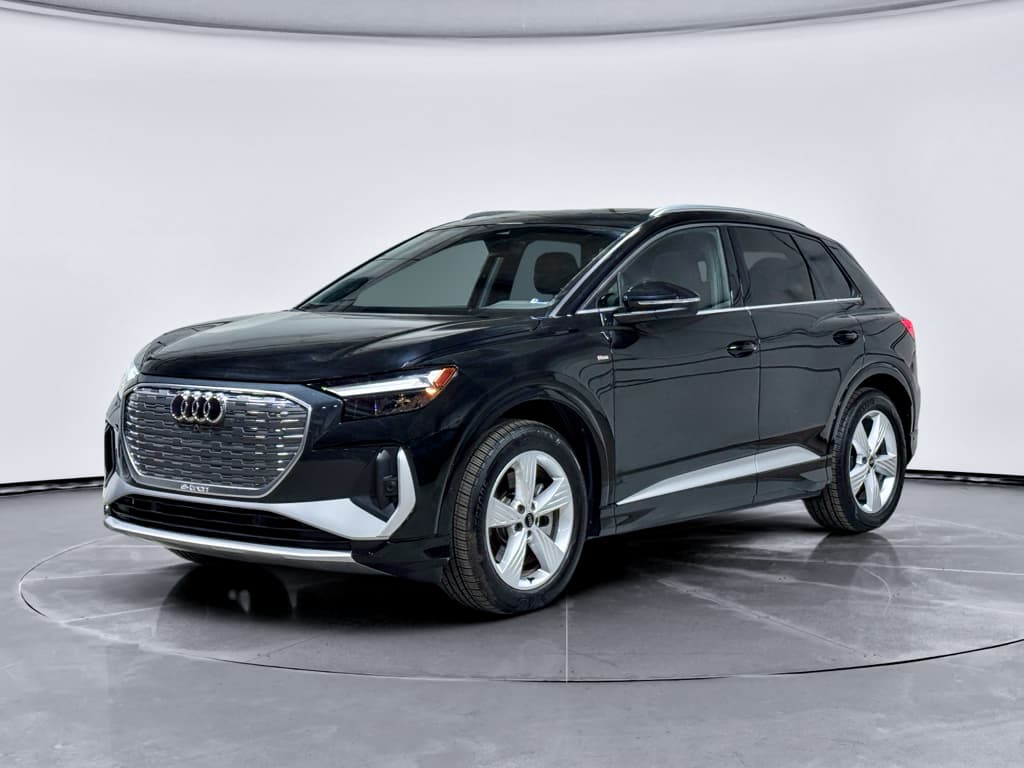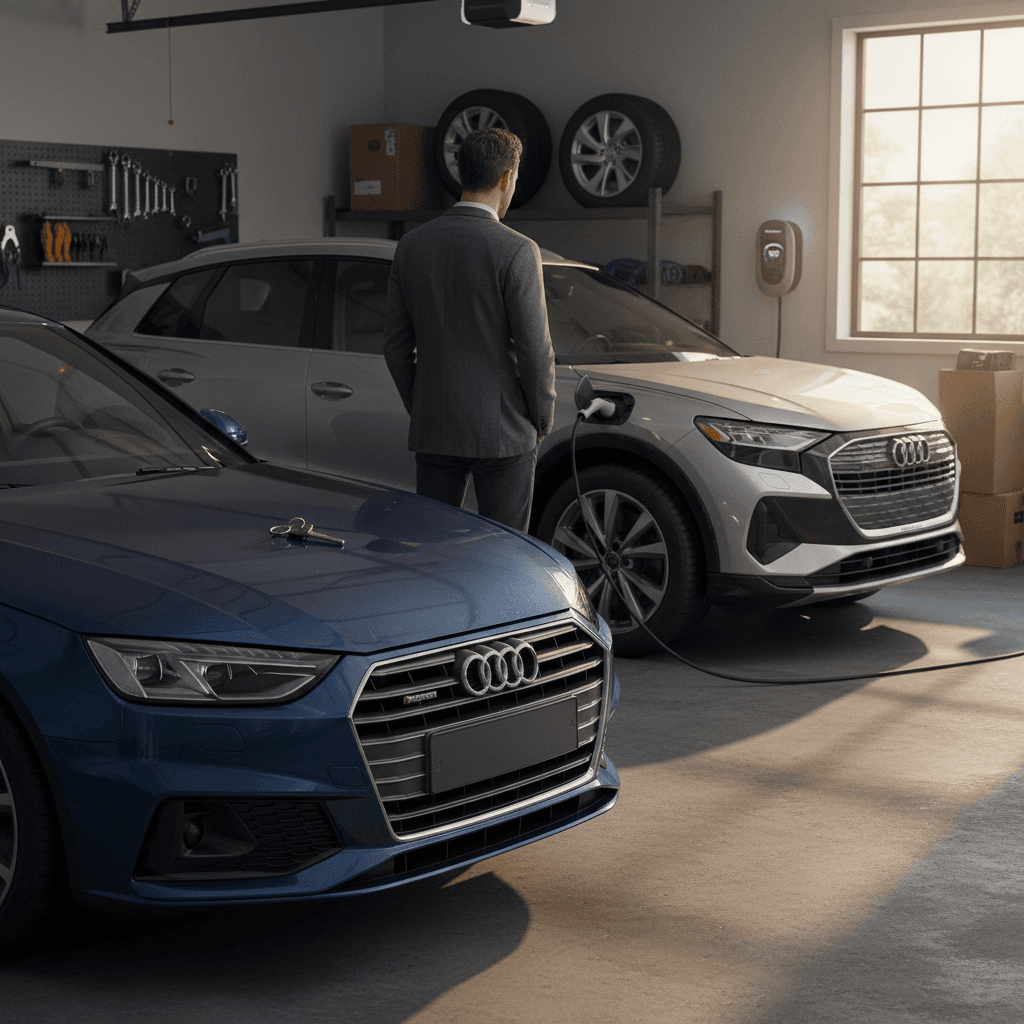
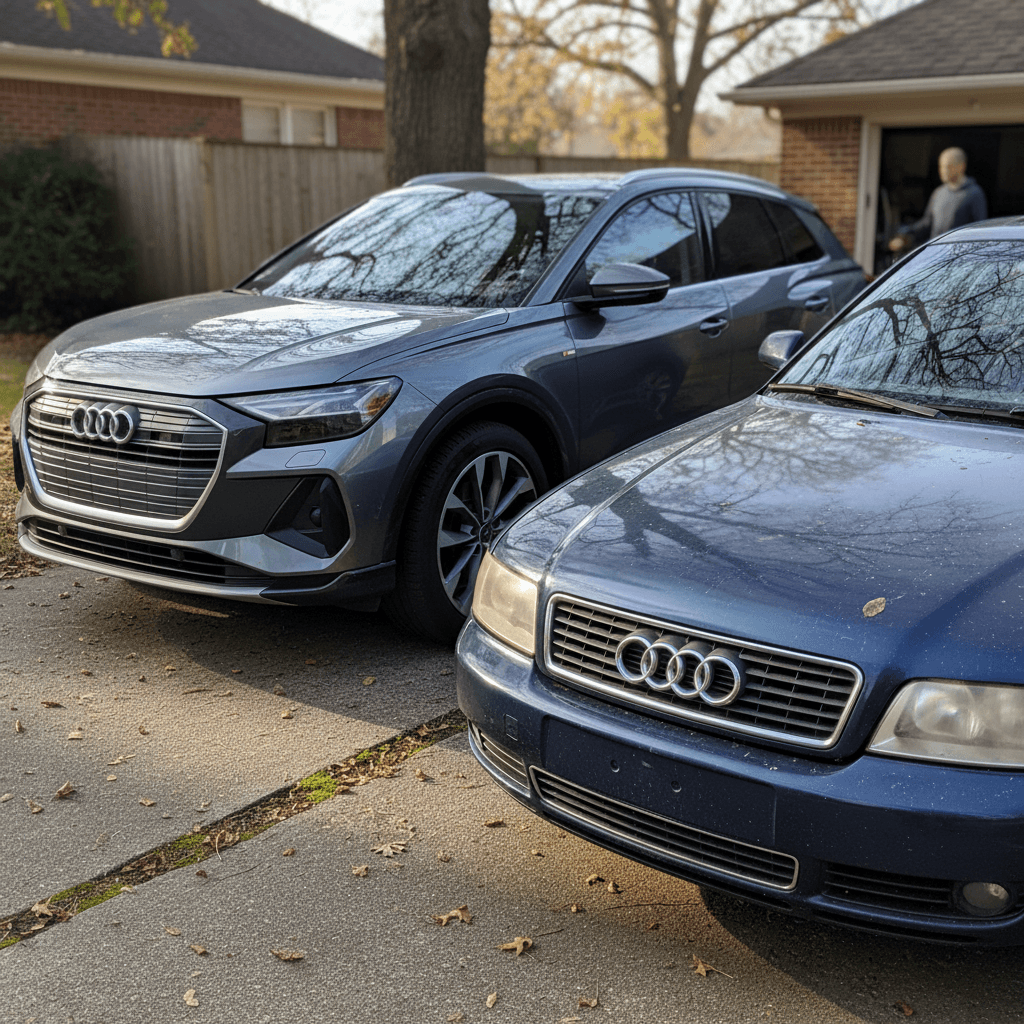
You know exactly what an Audi A4 feels like: low-slung, buttoned‑down, a quiet assassin of interstate miles. The idea of trading that in for an Audi Q4 e-tron, a taller, heavier, fully electric SUV, raises a real question: are you gaining modernity or surrendering everything you liked about the car in the first place?
The short version
From Audi A4 to Audi Q4 e-tron: What actually changes
Let’s frame the move clearly. The A4 is a compact luxury sedan; the Q4 e-tron is a compact luxury electric SUV. On paper, 2025–2026 Q4 e-tron trims bring batteries in the mid‑70 kWh net range, EPA‑style ranges around the high‑200s for rear‑drive variants, and DC fast charging now capable of roughly 165–175 kW on the latest updates. In other words, you’re not leaping into sci‑fi; you’re swapping gasoline refinement for electric refinement.
A4-to-Q4 e-tron snapshot (typical U.S. models)
Important context on range
Living taller: Space, comfort and driving position
What you gain over the A4
- Seating position: You sit higher, with a more commanding view over traffic. If you’ve ever wished your A4 rode like a Q5, this scratches that itch.
- Cargo space: The Q4 e-tron’s hatch and square roofline make strollers, golf bags and IKEA runs much easier than an A4’s trunk.
- Ingress/egress: Less bending and twisting. For passengers with mobility issues, the Q4 is the better answer.
What you lose (or at least change)
- Sleekness: The Q4 is tidy for an SUV, but you’re trading the A4’s low, athletic stance for practicality.
- Trunk separation: The sedan’s traditional trunk isolates luggage and road noise; the Q4’s open cabin lets sound and cargo mingle more.
- Parking feel: Footprint is similar, but the SUV body feels bulkier until your spatial brain recalibrates.
In daily life, an ex‑A4 driver is most likely to smile at the Q4 e-tron when loading it. The hatch opening is generous, the floor is relatively low, and the split‑fold rear seats, combined with a boxier roofline, make the car feel like a small moving van on weekends and a calm commuter pod on weekdays.
Driving feel: From quattro sedan to electric SUV
For an A4 owner, the biggest emotional hurdle is how the Q4 e-tron drives. The A4 is an excellent all‑rounder: light steering, tidy body control, and, if you have quattro, the reassuring feeling that bad weather is simply someone else’s problem. The Q4 e-tron keeps that Audi character, but it’s interpreted through the physics of a 5,000‑ish‑pound battery crossover.
A4 vs Q4 e-tron: How they actually feel on the road
Same badge, very different powertrains and priorities
Power delivery
A4: Builds speed in a familiar, rev‑and‑shift way. Turbos spool, gears change, you feel the process.
Q4 e-tron: Instant shove. There’s a satisfying, one‑gear surge from a stop and effortless 30–60 mph passing.
Ride and refinement
A4: Firm‑but‑fair suspension, especially on S line cars, with a subtle athletic edge.
Q4 e-tron: Earlier models were criticized for a slightly jittery ride over broken pavement; later software and damper updates softened the edges. Still more comfort‑tuned than sporting.
Steering and handling
A4: More precise, with a lower center of gravity and less body roll, especially noticeable on a fast back road.
Q4 e-tron: Secure and predictable, but heavier. You feel the mass in quick transitions, even if grip is strong.
Test-drive tip for A4 owners
Range and charging: Anxiety vs reality
If you’re coming from an A4 that can do 450–550 highway miles on a tank, the Q4 e-tron’s rated 260–290 miles, before weather and driving style, can feel like a haircut. The trick is that an EV forces you into a different rhythm: more frequent stops that are far shorter, and almost all of your “fueling” happens while you sleep.
A4 fuel stops vs Q4 e-tron charging stops
How your long‑trip routine changes when you go electric
| Scenario | Audi A4 (gas) | Audi Q4 e-tron (EV) |
|---|---|---|
| Daily 30–50 mi commute | Refuel every 1–2 weeks | Plug in at home; barely visit public chargers |
| Weekend 200–250 mi trip | One stop, 5 minutes for gas | Start full, possibly skip charging or do a short top‑up |
| 500–600 mi road trip | 2–3 fuel stops (~10 minutes each) | Plan 3–4 DC fast‑charge stops (~25–35 minutes each) |
Actual numbers will vary by specific model year, battery, wheels and weather, but the pattern is consistent.
What home charging actually looks like
- Recent Q4 e-tron models support around 11.5 kW AC charging at home, meaning a full charge in roughly 7–9 hours from low state of charge.
- DC fast charging has improved since launch; refreshed models can hit roughly 150–175 kW on a strong charger, taking the battery from about 10–80% in the 25–35 minute window.
- Sticking to the common 10–80% band for daily use helps battery longevity but slightly reduces effective range versus the brochure number.
If your life is mostly commuting, kid‑ferrying and errands, the Q4 e-tron is dramatically more convenient than an A4, you stop “going to get fuel” and just leave the car plugged in. If you regularly hammer out multi‑state drives at 80 mph, you’ll need to make peace with a new cadence of coffee‑length charging breaks.
Tech, interior quality and daily usability
Audi’s great party trick has always been interiors that look like they were designed by someone who also rearranges their kitchen drawers for fun. The Q4 e-tron keeps that basic DNA, solid switchgear, crisp displays, muted materials, even if some A4 owners feel the layout is a half‑step more VW‑group pragmatic than “old Audi bank vault.”
Inside the Q4 e-tron through an A4 owner’s eyes
What will feel familiar, and what won’t
Familiar Audi touches
- Steering wheel and controls: The weighting, stalk logic and general driving interface will instantly feel like home.
- MMI logic: Menus, fonts and overall UX echo recent A‑cars and Q‑cars, especially with wireless Apple CarPlay and Android Auto.
- Material choices: Even in lower trims, touchpoints tend to feel more thoughtfully finished than many direct EV rivals.
New EV quirks
- More screens, fewer buttons: HVAC and drive‑mode tweaks are increasingly screen‑based. Some A4 owners miss dedicated knobs.
- Software dependence: Like most modern EVs, the Q4 leans heavily on software; early owners have reported occasional bugs and infotainment hiccups that get fixed via updates.
- One‑pedal expectations: Regenerative braking is present but not as aggressive as in some EVs, so you may still use the brake pedal more than you expected.
A note on software and recalls
Running costs, depreciation and used-Q4 value
From an A4, your instinct is to think about monthly payment, fuel, maintenance and resale. The Q4 e-tron re‑weights that equation. You’ll often pay more up front for a similar‑age Q4 than an A4, but you’ll spend far less on fuel and many routine services over the time you own it.
Where the Q4 e-tron saves you money
- Electricity vs gas: In much of the U.S., home charging works out to the equivalent of “paying” roughly $1–$2 per gallon of gas, depending on local rates.
- Less routine service: No oil changes, fewer moving parts in the powertrain, and regenerative braking can extend brake life.
- Incentives and HOV: Depending on your state and whether you buy new or used, there may be tax credits or carpool‑lane perks that never applied to your A4.
Where you need to be cautious
- Depreciation: Like many EVs, the Q4 e-tron has seen brisk early depreciation. That’s good news if you’re buying used now, but something to remember if you’re eyeing a new one.
- Out‑of‑warranty repairs: EV‑specific parts and high‑voltage components can be costly if issues arise after warranties expire.
- Charging infrastructure: If you can’t charge at home and rely heavily on DC fast charging, your energy costs may narrow the gap with gasoline.
Why used Q4 e-trons are interesting right now
Ready to find your next EV?
Browse VehiclesWho should actually switch from A4 to Q4 e-tron?
A4 owners who will love the Q4 e-tron… and who won’t
Be honest about how you drive, not how you wish you drove
Great candidates
- You mostly drive under 60 miles a day and can install home charging.
- You want a taller driving position and easier kid‑ and cargo‑duty than your A4 offers.
- You prize quiet, smooth commuting more than carving up back roads.
On the fence
- You split time between city commuting and frequent 300–400 mile road trips.
- You live in a cold climate without a garage and worry about winter range hit.
- Your building has shared chargers, but they’re often occupied or unreliable.
Should probably stay with an A4 (for now)
- You routinely do 500+ mile days and hate the idea of planning charging stops.
- You have no realistic way to charge at home or work.
- You bought the A4 specifically for its long‑legged highway feel and don’t want more height or weight between you and the road.
Buying a used Audi Q4 e-tron: Checklist
If you decide the Q4 e-tron fits your life better than your A4, the smartest move, financially, is often a used example that’s been properly checked. An EV is only as good as its battery and software support, so you want more than a quick test drive and a handshake.
Essential checks before you buy a used Q4 e-tron
1. Get an objective battery health report
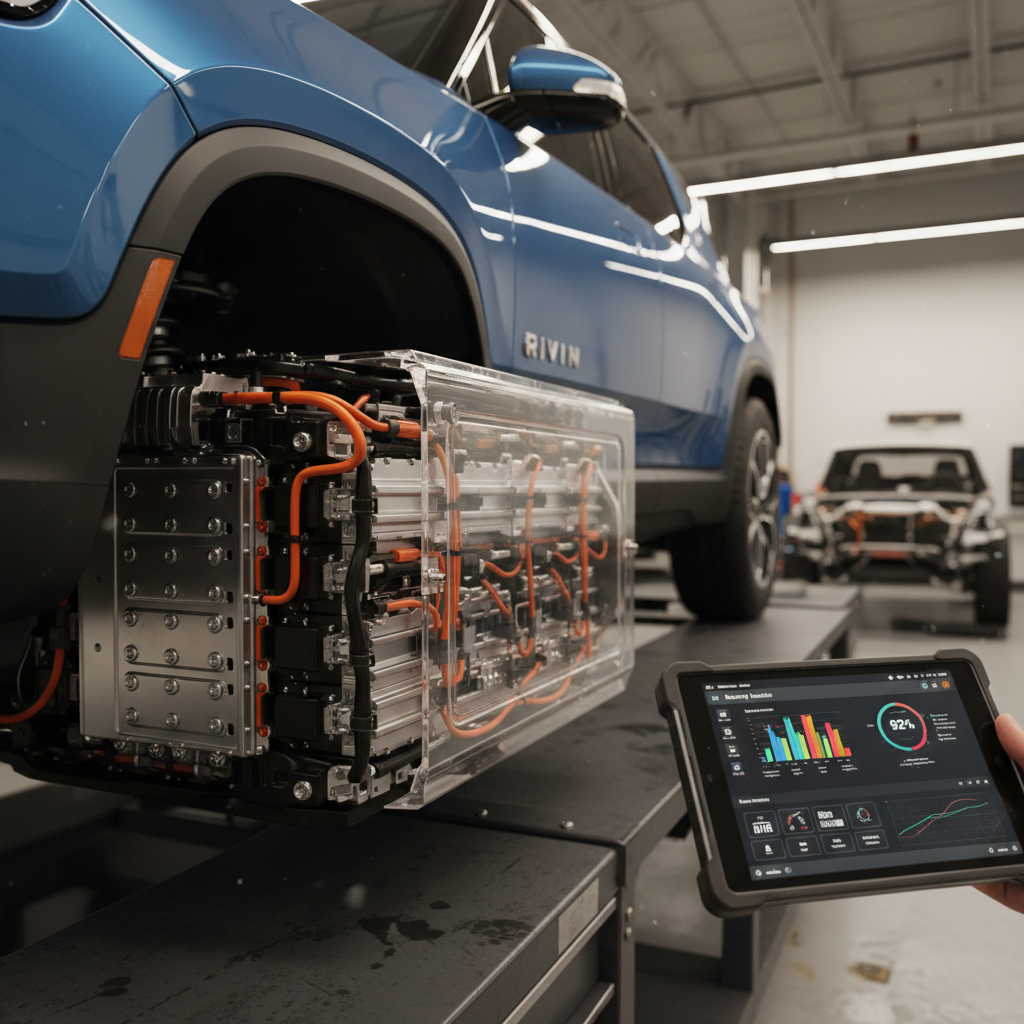
Request a <strong>third‑party battery scan</strong> that shows usable capacity versus new. At Recharged, every Q4 e-tron includes a <strong>Recharged Score</strong> that quantifies battery health, fast‑charging history and estimated long‑term degradation.
2. Verify software updates and recalls
Ask for a printout from an Audi dealer or specialist showing that the latest software updates are installed and any recall work, especially related to the on‑board charger and high‑voltage systems, has been completed.
3. Inspect charging history and hardware
Look for signs of damage or corrosion on the charge port and cables. A car that’s been DC fast‑charged exclusively isn’t necessarily a deal‑breaker, but it’s useful context when you interpret battery‑health results.
4. Check real-world range on a test drive
Start near 80–90% charge and drive a known route at your normal speed. Compare miles driven vs. percentage used; it will quickly tell you whether the car’s range matches your needs and the dashboard estimate is realistic.
5. Look for uneven tire wear and suspension issues
The Q4 e-tron’s weight can punish cheap tires and neglected alignment. Uneven wear on the inner shoulders or a nervous, wandering feel on the highway can hint at suspension or alignment issues you’ll want fixed before signing.
6. Run the numbers on ownership costs
Price out your home charging setup, expected electricity costs and any remaining warranties. A marketplace like <strong>Recharged</strong> can help you compare fair market pricing on multiple used Q4s and estimate total cost of ownership against keeping your A4.
Don’t skip high-voltage checks
Audi A4 to Q4 e-tron: Frequently asked questions
Bottom line: Is the Q4 e-tron a worthy A4 successor?
If the Audi A4 is the archetypal modern German sedan, measured, competent, quietly satisfying, the Audi Q4 e-tron is that same sensibility translated into the language of electrons and crossovers. You surrender some of the A4’s athletic poise and long‑legged range, and in return you gain silent torque, SUV practicality and the guilty pleasure of never stopping at a gas station again.
For the right owner, someone with home charging, mostly sane daily mileage and a growing need for space, the Audi Q4 e-tron feels like a genuine upgrade from an A4, not a compromise. For the wrong owner, high‑mileage interstate warrior, no access to reliable charging, it will feel like a beautiful, slightly exasperating experiment. The key is to be brutally honest about how you drive today, not how you intend to drive someday.
If you’re EV‑curious but not ready to sign up for new‑car depreciation and unknown battery history, browsing Recharged for a used Q4 e-tron with a transparent Recharged Score is a low‑risk way to see whether this electric Audi is the natural sequel to your A4, or whether your next move should be something else entirely.