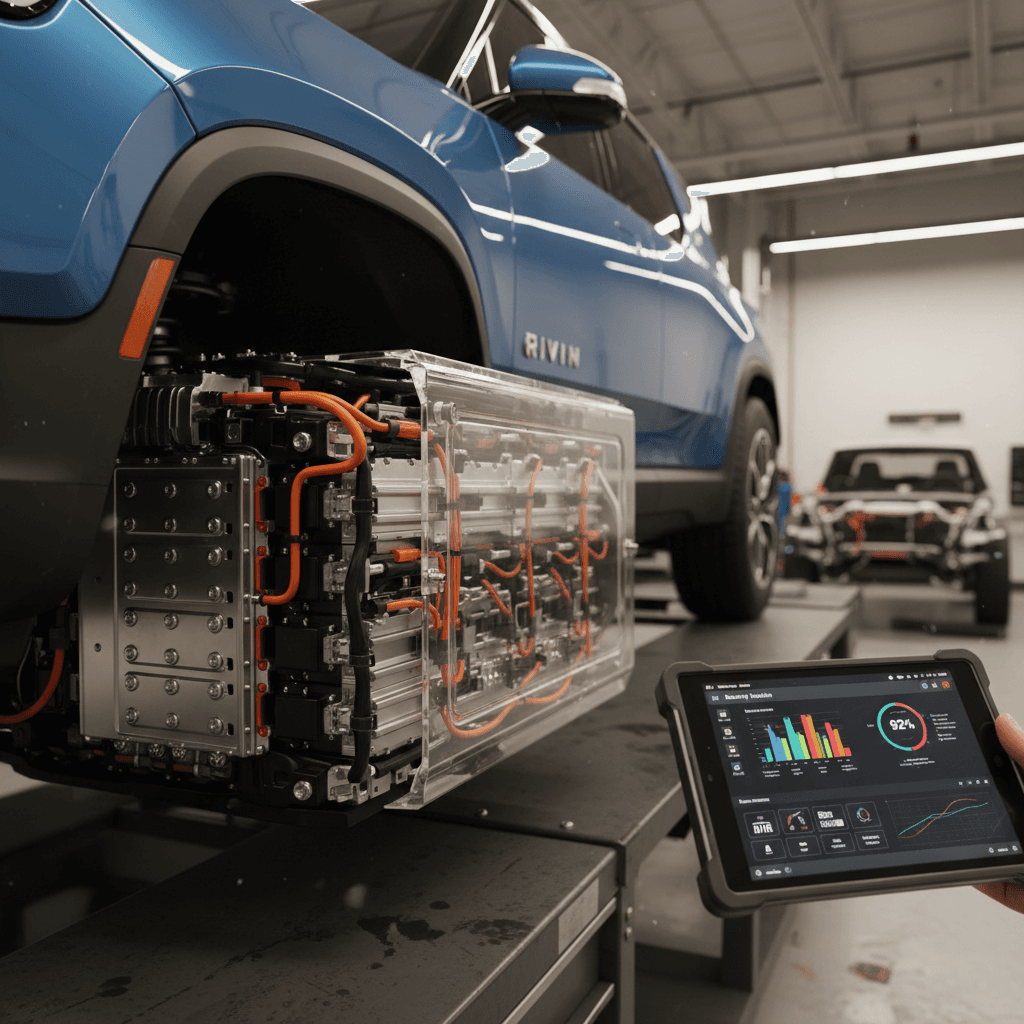
If you’re eyeing a Rivian R1S, or already have one, the big question is obvious: how long will the R1S battery last before range really drops off? With an SUV this expensive and this capable, battery lifespan isn’t a nerdy side topic. It’s the core of whether an R1S still feels like a road-trip hero in year ten, or a driveway ornament you plan your life around.
Short answer
Rivian R1S battery lifespan at a glance
Rivian R1S battery lifespan in plain numbers
Most modern EVs, including the Rivian R1S, lose a little capacity quickly in the first year or two, then settle into a slower decline. Across large EV datasets, average packs are holding around 90% of their original capacity after roughly 6–7 years. Rivian’s long warranty and early owner reports suggest the R1S is tracking in that same ballpark, often better for low‑mileage, gently used trucks.
Rivian R1S battery warranty: how long it covers you
Rivian R1S battery and drive unit warranty
How long Rivian promises to stand behind your R1S battery and motors.
| R1S generation | Components covered | Time limit | Mileage limit | Capacity guarantee |
|---|---|---|---|---|
| Gen 1 R1S (early builds) | High‑voltage battery & drive units | 8 years | 175,000 miles | At least 70% pack capacity |
| Newer Gen 2 R1S | High‑voltage battery & drive units | 8 years | 150,000 miles | At least 70% pack capacity |
| All R1S | Basic vehicle coverage | 5 years | 60,000 miles | Does not include normal battery degradation |
Always confirm exact terms for your model year and region in Rivian’s latest warranty booklet.
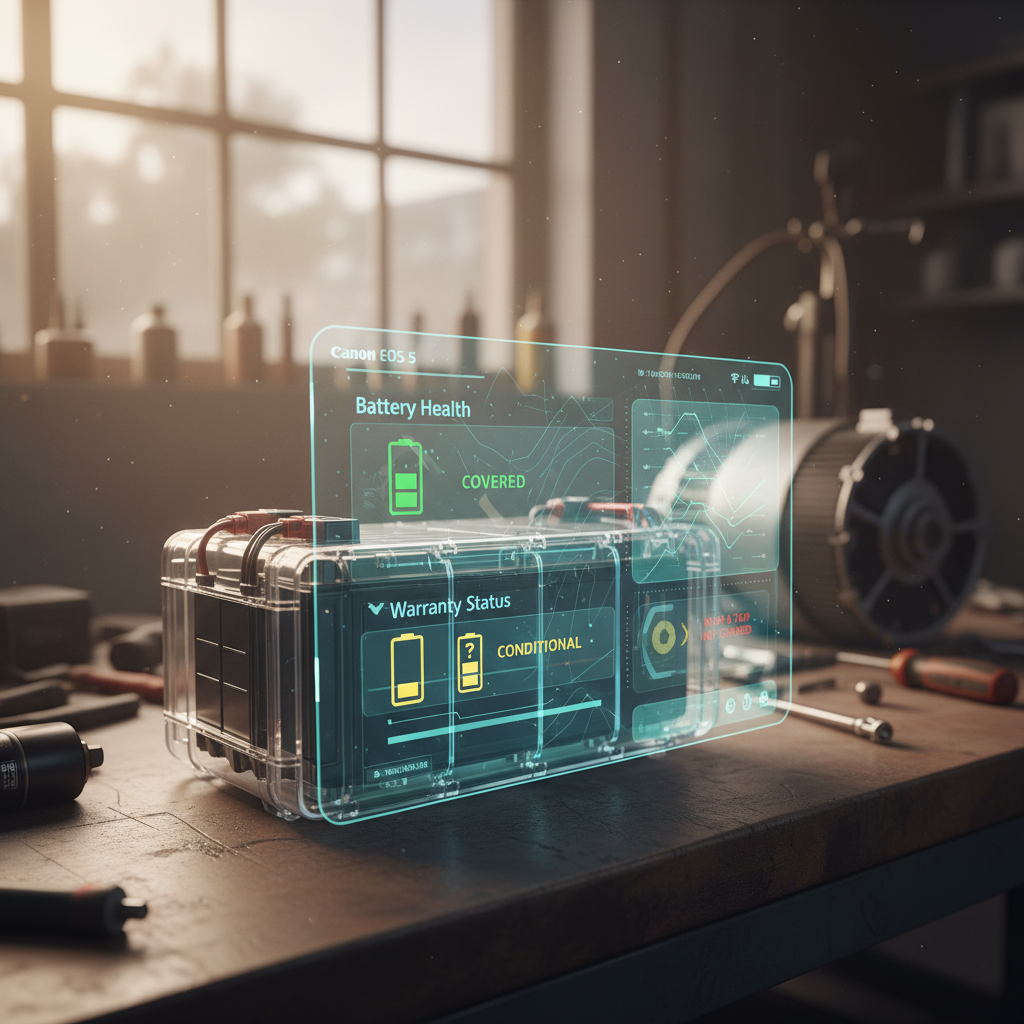
Rivian’s battery warranty is generous by industry standards. The key line is the capacity guarantee: Rivian will repair or replace the pack if it falls below about 70% of its original usable capacity within the warranty window. That’s Rivian’s official answer to “Rivian R1S battery lifespan how long” for the first 8 years of the truck’s life.
Warranty ≠ total lifespan
Real-world R1S battery degradation: what owners are seeing
We now have several years of Rivian R1‑series ownership data, including high‑mileage drivers and plenty of road‑trippers. The headline: R1S batteries are not dropping like flies. In fact, most owners are reporting less degradation than they expected.
- Many early R1T/R1S owners with 50,000–80,000 miles are seeing only a few percent loss in displayed capacity or real‑world range, sometimes so small it hides in day‑to‑day variability.
- Owners who road‑trip heavily and fast‑charge a lot generally see more fade, but still far from the 70% warranty floor in the first 5–6 years.
- Some Rivian software updates have changed how rated range is calculated, which can make degradation look worse, or better, on paper than it is in reality.
- A few outlier cases show steeper decline or pack issues, but they are treated as individual warranty or service events, not a pattern of systemic failure.
Why real degradation is hard to read
If you zoom out to the wider EV world, large independent datasets now put average EV battery fade around 2–3% capacity loss per year. That aligns very nicely with Rivian’s warranty promise of still having ~70% capacity after 8 years on reasonably used trucks.
What actually limits R1S battery lifespan?
1. Calendar age
Even if you barely drive, lithium‑ion cells age chemically over time. Think of it as a slow background fade that keeps ticking just because years are passing. That’s why a 10‑year‑old, 40,000‑mile R1S may have similar capacity to a 10‑year‑old, 120,000‑mile truck with gentle highway use.
2. Use and abuse
High mileage, repeated full‑throttle launches, constant towing at highway speeds, living on DC fast chargers, parking full in brutal heat, those are the things that chew up battery life faster. They aren’t instant death, but they compound over years.
3. Temperature
Heat is the battery’s enemy. Prolonged parking above 100°F, or fast‑charging a hot pack over and over, accelerates chemical wear. Cold is different: it temporarily reduces performance and range, but most of that comes back when the pack warms up, unless you always push it hard while it’s freezing.
4. Depth of charge
Living at the extremes, frequently charging to 100% and running down close to 0%, adds stress over time. R1S owners who routinely float between roughly 20–80% for daily driving will almost always see slower degradation than those who top off and drain to empty every day.
The fastest way to shorten battery life
How your habits change R1S battery life
Habits that help (or hurt) your R1S battery
You have more control over battery lifespan than you might think.
Daily charging level
Best: Setting your daily limit around 60–80% and only going to 100% before trips.
Hurts: Leaving the truck at 100% overnight or for days at a time.
Fast‑charging use
Best: Using DC fast charging mainly on road trips, and unplugging once you’ve got enough to reach the next stop.
Hurts: Relying on fast charging for most miles, especially in very hot or very cold weather.
Parking & climate
Best: Parking in a garage or shade and pre‑conditioning while plugged in.
Hurts: Long‑term outdoor parking in extreme heat with a full or nearly empty battery.
None of this means you need to baby your Rivian. It’s built for real‑world use, including towing and fast charging. But if you build a few good habits into your routine, the answer to “Rivian R1S battery lifespan how long” moves from the low end of that 10–15‑year window to the high end, especially if you keep the truck beyond its warranty.
R1S battery lifespan in cold and hot climates
Where you live matters as much as how you drive. A Rivian R1S doing easy miles in coastal Oregon will age differently from one towing in Phoenix or spending winters outside in Minnesota.
- Cold climates: You’ll see lower winter range and slower charging, but most of that is temporary. As long as you pre‑condition the battery when it’s freezing and avoid hard driving or fast charging on an ice‑cold pack, long‑term degradation doesn’t skyrocket.
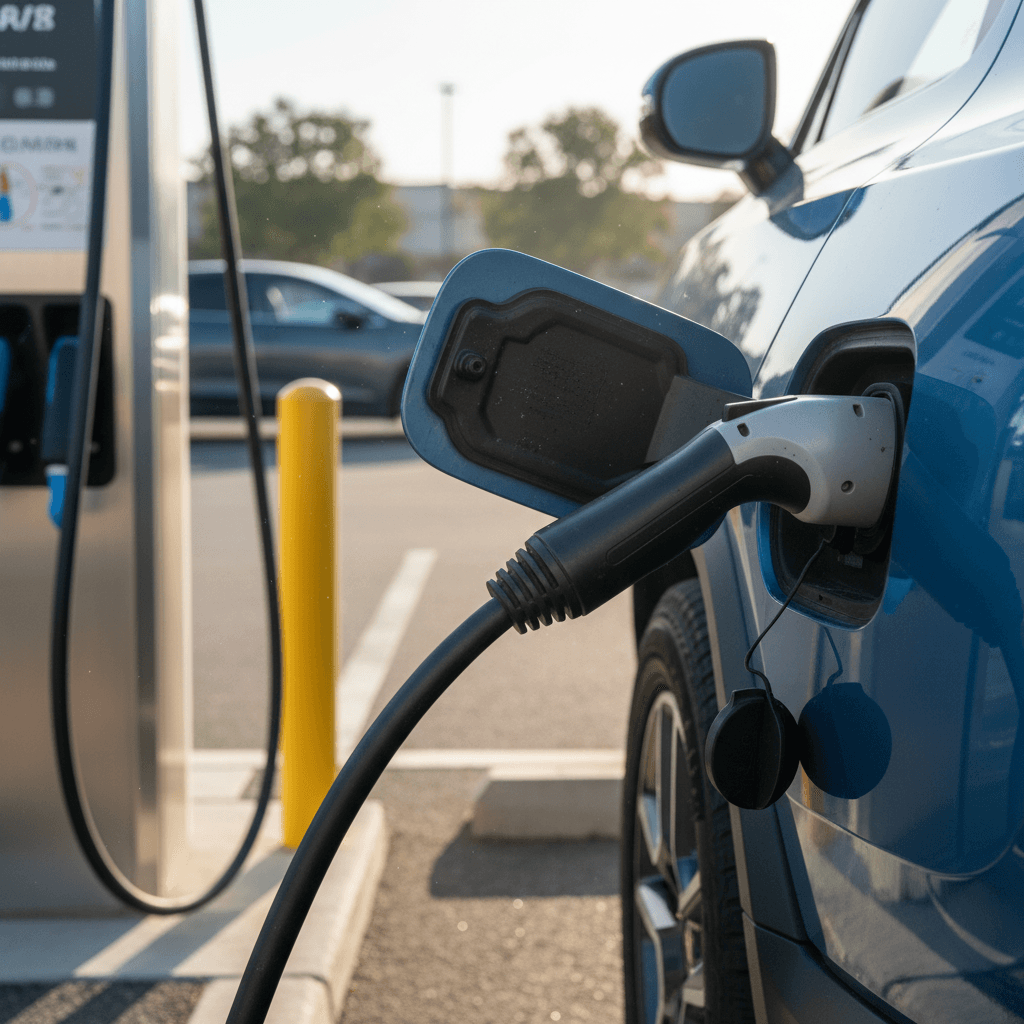
- Hot climates: This is where you need to be deliberate. Repeatedly parking at high state of charge in 100°F+ weather, or fast‑charging a hot pack over and over, is the classic recipe for faster fade.
- Mixed climates: For most of the U.S., your R1S will oscillate between “slightly annoyed by winter” and “a bit warm in summer.” Thoughtful charging limits and parking out of direct sun do most of the work here.
Simple climate trick
Buying a used Rivian R1S: battery lifespan and resale value
If you’re shopping used, battery health is the single biggest swing factor in how a Rivian R1S will feel to live with 5–10 years from now. Two trucks can look identical on the outside and on the odometer, yet have very different remaining battery life depending on how they were charged, driven, and stored.
Key battery questions to ask on a used R1S
1. What’s the in‑service date?
Warranty follows years and miles from when the R1S was first sold, not the model year on the window sticker. That date tells you how much of the 8‑year battery coverage is left.
2. How was it charged day to day?
Ask whether the previous owner mostly used home Level 2 charging, how often they fast‑charged, and whether they set a daily charge limit.
3. Highway vs. city vs. towing miles
Gentle highway commuting is easier on packs than constant short trips or heavy towing in heat. High mileage alone isn’t the villain, usage pattern is.
4. Any battery or high‑voltage repairs?
Look for documentation of any pack or drive‑unit service. A properly replaced pack isn’t a dealbreaker, but you want to know what was done and when.
5. How does range compare to new?
On a warm day at 100%, does the rated range or real highway range feel way off from what a comparable R1S should do? Large unexplained gaps are a yellow flag.
Because so much of battery health lives beneath the surface, buying through a platform that actually measures it is a huge advantage. Every used R1S sold through Recharged includes a Recharged Score Report with verified battery health and fair‑market pricing, so you’re not guessing how much life is left in the pack you’re paying for.
How to check Rivian R1S battery health
Unlike some older EVs, the R1S doesn’t give you a big, friendly “battery health” percentage in the main menus. But you can still get a decent sense of how healthy an R1S pack is with a mix of common‑sense checks and data.
Practical ways to read R1S battery health
Start simple; bring in experts when the numbers really matter.
Watch rated range
On a mild day, charge to 100% and note the projected range. Compare it to what a new R1S with the same pack and wheels should show. A gap of a few percent is normal; huge gaps need more digging.
Do a real‑world drive
Reset a trip meter and drive a known route at steady highway speeds. Compare actual miles driven versus percent battery used. Big mismatches over several drives can hint at degradation or tire/roof‑rack drag.
Use professional diagnostics
Advanced tools can look at pack behavior in more detail than the Rivian app. Recharged’s Score Report uses pack‑level diagnostics to give a clear, independent view of battery health on used R1S listings.
When the numbers look boring, that’s good
Extending your R1S battery life: simple habits that work
You don’t need a PhD in electrochemistry to get a long, useful life out of your R1S battery. A handful of easy habits stack the odds in your favor and keep that big SUV feeling fresh much longer.
7 habits that lengthen R1S battery lifespan
1. Set a sane daily charge limit
For daily driving, use the app or in‑car settings to cap charging around 60–80%. Save 100% charges for mornings when you’re actually heading out on a long trip.
2. Don’t fear fast charging, just don’t live on it
Use DC fast charging freely on road trips, but avoid depending on it for everyday commuting when a Level 2 home or workplace charger is available.
3. Avoid sitting full in extreme heat
If the truck will sit outside in hot weather, try not to leave it at or near 100% for days. Park with the battery in the middle of the gauge instead.
4. Pre‑condition in deep cold
On very cold mornings, pre‑condition the cabin and battery while plugged in before you hit the road. That reduces stress on the pack and improves winter range.
5. Go easy on the last few percent
Regularly running the pack down into single digits won’t kill it, but avoiding very low states of charge as a daily habit takes some strain off the cells.
6. Keep software up to date
Rivian continuously refines thermal management and charging behavior via software. Staying current means your battery gets the latest protections and optimizations.
7. Match tires and accessories to your use
Big all‑terrain tires, heavy wheels, and roof racks all eat into efficiency. They don’t directly damage the battery, but forcing the truck to work much harder for every mile adds up over time.
Plan for the long game
FAQ: Rivian R1S battery lifespan and health
Rivian R1S battery lifespan: frequently asked questions
Bottom line: how long will a Rivian R1S battery last?
Put it all together and the picture is reassuring. Modern EV packs are tougher and more carefully managed than early skeptics predicted, and the Rivian R1S is no exception. With Rivian’s 8‑year battery warranty, industry‑wide data showing only a couple percent capacity loss per year, and real‑world owners reporting modest degradation, it’s reasonable to expect an R1S battery to stay road‑trip‑worthy for a decade or more.
Your habits do matter: how often you fast‑charge, where you park, and how high you set your daily charge limit all nudge your Rivian toward the low or high end of that lifespan range. If you’re buying used, don’t guess, lean on objective battery checks like the Recharged Score Report to make sure the R1S you choose has the kind of battery life that matches your long‑term plans.