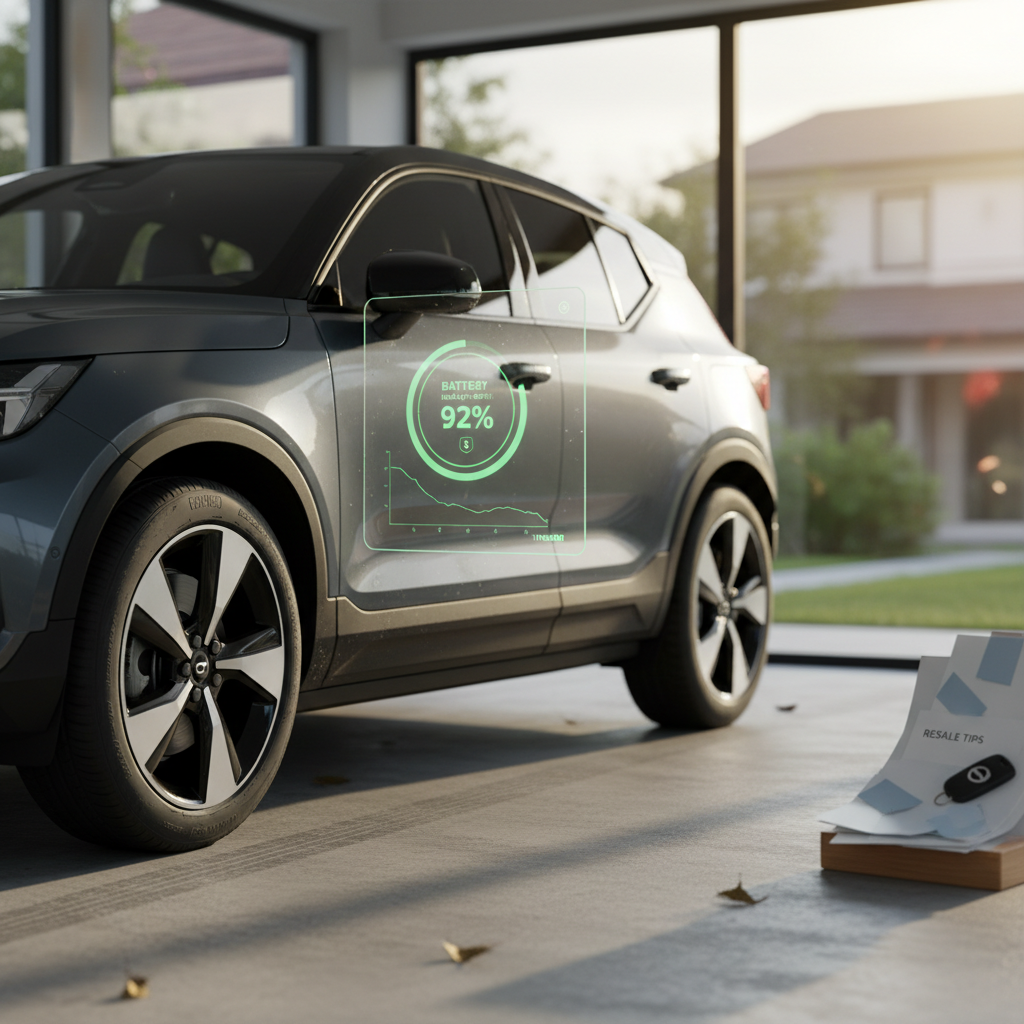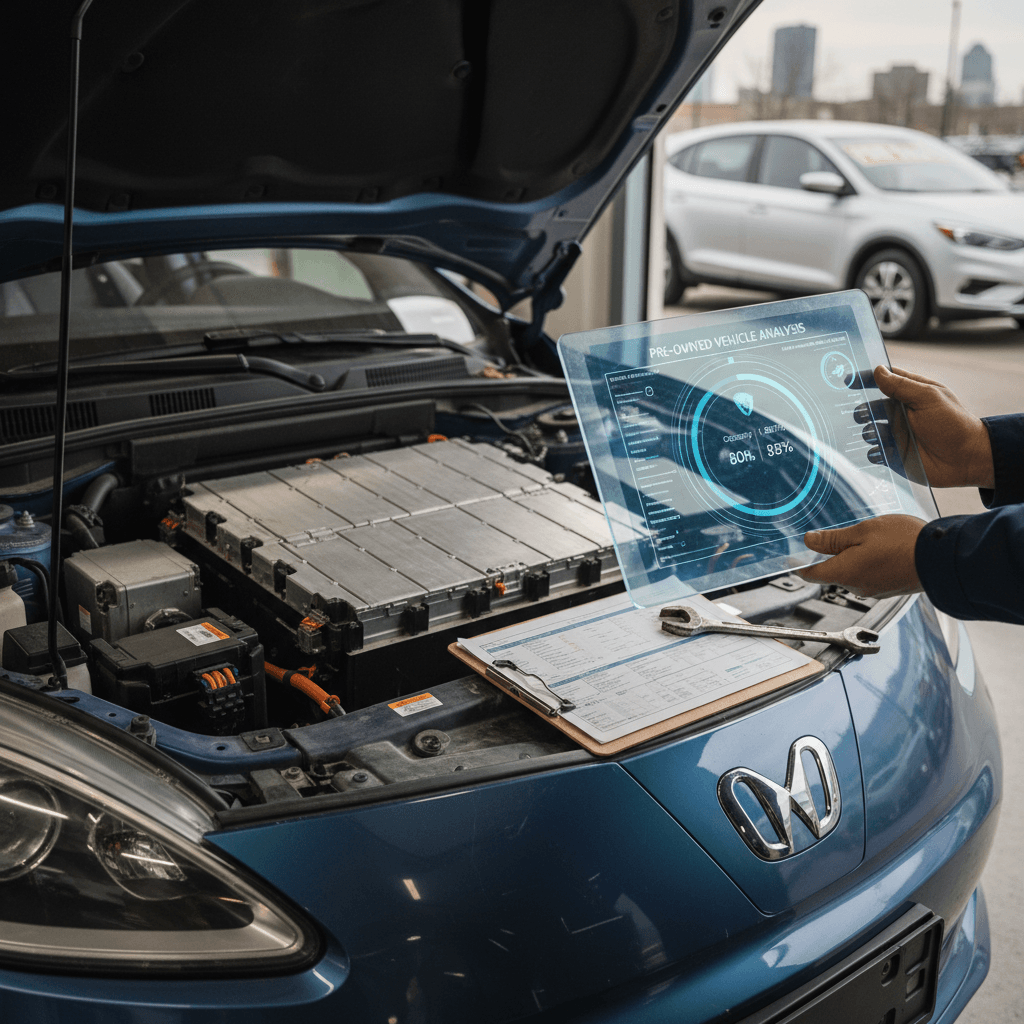
You’re not imagining it: used EV prices have been going down, and in some cases, they’ve fallen much faster than comparable gas cars. After a steep slide from 2023 through 2025, the market in early 2026 is more complicated: many used electric vehicles are still cheaper than they were a couple of years ago, but some models are stabilizing or even ticking back up.
Why this matters
Short answer: Are used EV prices going down?
Used EV price trends at a glance
The data is clear: yes, used EV prices have been going down, and in many segments they’re still soft. Industry analyses through 2024 and 2025 show average prices for 1–5‑year‑old used EVs dropping around 15% year over year, while similar gas and hybrid vehicles were nearly flat. In some months of 2024, used EVs were down close to 25–30% versus a year earlier.
But it’s not a straight line forever. By late 2025 and into early 2026, the steepest part of the slide appears to be over for many popular models. Some used EVs are still drifting down in price, others have flattened out, and a few niche models are actually rebounding due to limited supply or renewed demand.
Big‑picture takeaway
How we got here: Why used EV prices plunged from 2022–2025
To understand where prices are headed in 2026, it helps to look back at what drove the big swing in the first place. Between 2022 and 2025, the used EV market went from shortage to surplus in record time.
Four forces that pushed used EV prices down
These combined to create one of the fastest depreciation cycles we’ve seen in modern car history.
1. Aggressive new‑EV price cuts
When manufacturers, led by Tesla, slashed new EV prices in 2023 and 2024, it instantly undercut values of nearly‑new used cars.
- New EV average prices fell by double digits in 2023–2024.
- Shoppers could suddenly buy new for not much more than lightly used.
2. Tax credits favoring new and some used EVs
Federal incentives changed how buyers do the math.
- Point‑of‑sale $7,500 credits on many new EVs made them more attractive than 1–2‑year‑old used cars.
- A separate used‑EV credit (up to $4,000 on sub‑$25,000 cars) pulled prices down toward that threshold.
3. Wave of off‑lease EVs hitting the market
Early mainstream EVs leased in 2020–2022 started returning in volume by 2023–2025.
- Lease returns and rental fleets dumped thousands of similar EVs at once.
- More supply than demand means dealers had to cut prices to move them.
4. Buyer caution about range and batteries
Many shoppers still worried about degradation, real‑world range, and charging access.
- That skepticism pushed resale values down versus equivalent gas or hybrid models.
- Even well‑cared‑for EVs were treated as higher‑risk by many buyers and lenders.
Why this hit EV owners so hard
What used EV prices look like in early 2026
By early 2026, we’re in a new phase. The easy headline, “used EV prices are crashing”, is no longer accurate across the board. Instead, we’re seeing a market that’s split by age, model, and battery range.
1–3 year‑old used EVs
- Still pressured by new‑car discounts and remaining tax credits.
- Prices are down sharply from 2022 peaks, but big additional drops are less common now.
- Well‑equipped models with long range are holding value better.
4–7 year‑old used EVs
- These absorbed much of the 2023–2025 depreciation.
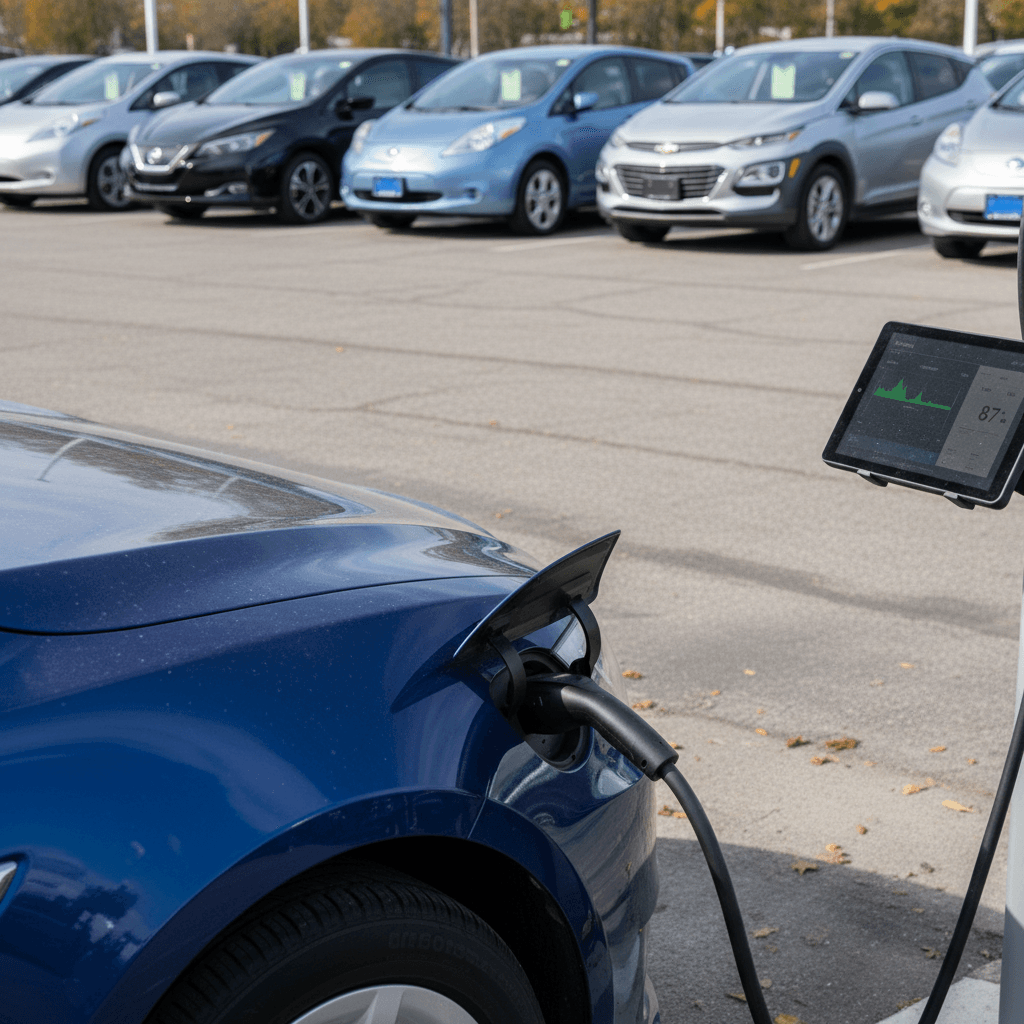
- Affordable city‑range EVs (older Leafs, Bolts) are now genuine budget buys.
- Values could soften further if buyers remain fixated on 250+ mile range.
Overall, the data still shows used EVs depreciating faster than gasoline and hybrid vehicles, just at a more moderate pace than in the worst of the 2023–2024 slide. For buyers, that means there are still plenty of attractive prices, especially if you’re open to a 3–6‑year‑old EV instead of the very latest model year.
Which used EVs are still dropping fastest?
Not all used EVs behave the same. If you’re wondering whether prices are going down on the specific model you’re eyeing, it helps to group them by segment and technology.
Used EV segments and typical price behavior
How different types of used EVs have tended to depreciate relative to each other.
| Segment | Typical Range | Recent Price Trend | What It Means for You |
|---|---|---|---|
| Older city EVs (Leaf, early i3, original Bolt) | 100–170 mi | Still soft, often very cheap | Great bargains if you have short commutes and home charging; long‑term resale will remain weak. |
| Mainstream crossovers (Model Y, ID.4, Mustang Mach‑E, IONIQ 5, EV6) | 220–300+ mi | Big drops 2023–2025, now mixed | Many are attractively priced; higher‑range trims and AWD hold value better. |
| Luxury EVs (Taycan, e‑tron, EQE, iX) | 220–300+ mi | Some of the steepest cuts | Depreciation can be brutal, but you may snag a former $80k+ car for half that. |
| Short‑range compliance cars & niche models | <150 mi | Weak demand, often very low prices | Only buy if the use‑case is narrow (city use, second car) and the price reflects limited appeal. |
These are generalized patterns; actual pricing will vary by mileage, region, and condition.
Watch out for “cheap for a reason” EVs
Are used Tesla prices going down or stabilizing?
Tesla deserves its own section because it has such an outsized impact on the EV market. In 2023 and 2024, used Tesla prices fell sharply, especially Model 3 and Model Y, which were affected by Tesla’s aggressive new‑car price cuts and by rental fleets unloading inventory.
By 2025, some data showed Tesla values still dropping faster than the industry average, but the gap began to narrow. In early 2026, the picture is more nuanced:
- Popular models like Model 3 and Model Y are still generally cheaper than they were in 2022, but the most dramatic month‑over‑month drops have eased.
- Higher‑end Teslas (Model S, Model X) that were hit hardest have, in some cases, found a more realistic price floor, especially for long‑range and Plaid versions.
- Local factors matter: in markets with strong EV adoption and good charging, clean used Teslas can sell quickly if priced right; in regions with weaker EV infrastructure, they may need bigger discounts.
Good news if you’re shopping used Tesla
Will used EV prices keep going down? Key forces to watch
No one can guarantee exactly what any one model will be worth in three years, but you can watch a few big levers that heavily influence whether used EV prices drift down, flatten out, or bounce.
5 factors that will shape used EV prices from 2026 onward
These are the forces I’d watch as a shopper, or as someone considering selling or trading an EV.
1. Future tax credit changes
Any change to federal or state EV incentives can instantly alter the math between new and used.
If new EV credits shrink or disappear, used EVs may look relatively more attractive and hold value better.
2. Automaker pricing and inventory
When manufacturers cut new EV prices or dump excess inventory into fleets, used prices usually follow.
Conversely, production cuts or popular models selling out can firm up used values.
3. Charging infrastructure growth
As fast‑charging networks expand, especially with more NACS (Tesla‑style) connectors, used EVs become practical for more people.
Better real‑world usability supports higher resale values over time.
4. Battery longevity data
The more evidence we see that modern EV batteries can comfortably last 8–12+ years with manageable degradation, the more confident used‑EV buyers and lenders become.
5. Overall EV demand
Economic conditions, interest rates, and consumer sentiment toward EVs all play a role.
In a strong economy with supportive policy, demand for affordable used EVs can rise even if new sales slow.
6. Competition from new low‑cost EVs
If truly affordable new EVs in the low‑$20,000s become widely available, that will put fresh pressure on used values, especially for older, shorter‑range models.
The most likely scenario
How to tell if a used EV is fairly priced today
In a market that’s still settling, you can’t just glance at a window sticker and assume it’s fair. A smart used‑EV buyer looks at the whole value picture, especially battery health and incentives, not just the asking price.
Checklist: Evaluating a used EV’s price in 2026
1. Compare to similar listings and recent sales
Look at multiple sources, large classifieds platforms, dealer sites, and EV‑focused retailers like Recharged. Focus on the same model year, trim, mileage, and region. If the car you’re eyeing is an outlier, it should have a very good reason (like rare options or an exceptional battery report).
2. Check battery health, not just odometer
Two cars with the same mileage can have very different usable range. A <strong>verified battery health report</strong>, like the Recharged Score we provide on every car, can reveal whether you’re getting near‑new performance or paying full price for a tired pack.
3. Factor in available tax credits
See whether the vehicle qualifies for the federal used‑EV credit (subject to price caps and income limits) or any local incentives. A car that’s priced just under the $25,000 cap, for example, might effectively cost $4,000 less after credits.
4. Consider charging and connector compatibility
Is the EV NACS‑ready, CCS, or CHAdeMO? Does it include adapters? As the industry migrates toward the Tesla/NACS standard, models with better future‑proofing may retain value better than orphaned standards.
5. Look at total ownership cost, not just price
Lower fuel and maintenance costs often offset higher depreciation. Estimate your electricity vs gasoline costs, insurance, and maintenance. A slightly higher purchase price can still be the smarter move over 5–7 years.
6. Ask how long you plan to keep it
If you’ll hold the car 5–8 years, short‑term price swings matter less. If you might resell in 2–3 years, you’ll want a model and price point that won’t be devastated by the next technology or incentive change.
How to protect yourself from future EV depreciation
You can’t control the market, but you can absolutely control how exposed you are to the next round of price shifts. Think less like a speculator and more like a pragmatic owner who wants great transportation value.
Smart ways to limit downside
- Buy at the right part of the curve. Often that’s a 3–6‑year‑old EV that’s already absorbed the steepest initial depreciation.
- Prioritize range and charging speed. EVs with real‑world 230+ mile range and solid DC fast‑charging keep broader appeal longer.
- Check battery health upfront. A healthy pack is the foundation of future resale value and everyday usability.
Financing and trade‑in tactics
- Avoid ultra‑long loans. Stretching to 84 months on a technology that’s evolving quickly is asking to be upside‑down.
- Know your trade‑in leverage. Getting a competitive instant offer or consignment option can help you move out of an older EV before the next big shift.
- Think in terms of "cost per year". Focus on what the car will cost you annually (payment, energy, maintenance, expected depreciation), not just the sticker.
A practical rule of thumb
Where Recharged fits in: Transparent pricing and battery health
One challenge in this rapidly evolving market is simply knowing who to trust. Two used EVs can look identical in photos yet have very different stories hiding in the battery and pricing history. That’s exactly the problem Recharged was built to solve.
How Recharged helps you shop in a falling‑price market
We’re focused on used EVs only, so our tools and process are tailored to these exact questions.
Verified battery health with Recharged Score
Every EV on Recharged comes with a Recharged Score Report, including independent battery diagnostics.
That lets you compare not just model years and mileage, but real‑world battery condition and range, critical for judging whether a price makes sense.
Fair, data‑driven pricing
We benchmark every vehicle against live market data, auction trends, and EV‑specific depreciation patterns.
Our goal is simple: no mysteries. You see how we arrived at the price and how it compares to similar EVs nationwide.
Flexible ways to buy and sell
Recharged offers financing, trade‑ins, instant offers, and consignment, plus nationwide delivery and an Experience Center in Richmond, VA.
That means you can move into your next EV, and out of your current one, with specialists who understand how fast this segment is changing.
Ready to find your next EV?
Browse VehiclesFAQ: Used EV prices and timing your purchase
Frequently asked questions about used EV prices
Bottom line: Is now a good time to buy a used EV?
If your main question is, “Are used EV prices going down?” the answer over the last few years has been an emphatic yes. In early 2026, that story is evolving: prices are still buyer‑friendly, but the worst of the free‑fall looks to be behind us for many models.
For shoppers, this is actually a sweet spot. You can take advantage of the resets that have already happened, especially on 3–6‑year‑old EVs, without needing to gamble on another massive downturn. Focus on battery health, realistic range for your life, and total cost of ownership rather than timing the exact bottom.
If you’d like expert help navigating that balance, Recharged was built around exactly these questions. Every used EV we sell comes with a Recharged Score battery‑health report, transparent market pricing, EV‑savvy financing options, and support from specialists who live and breathe this market. In a segment where prices can move fast, having that information on your side is one of the best protections you can buy.