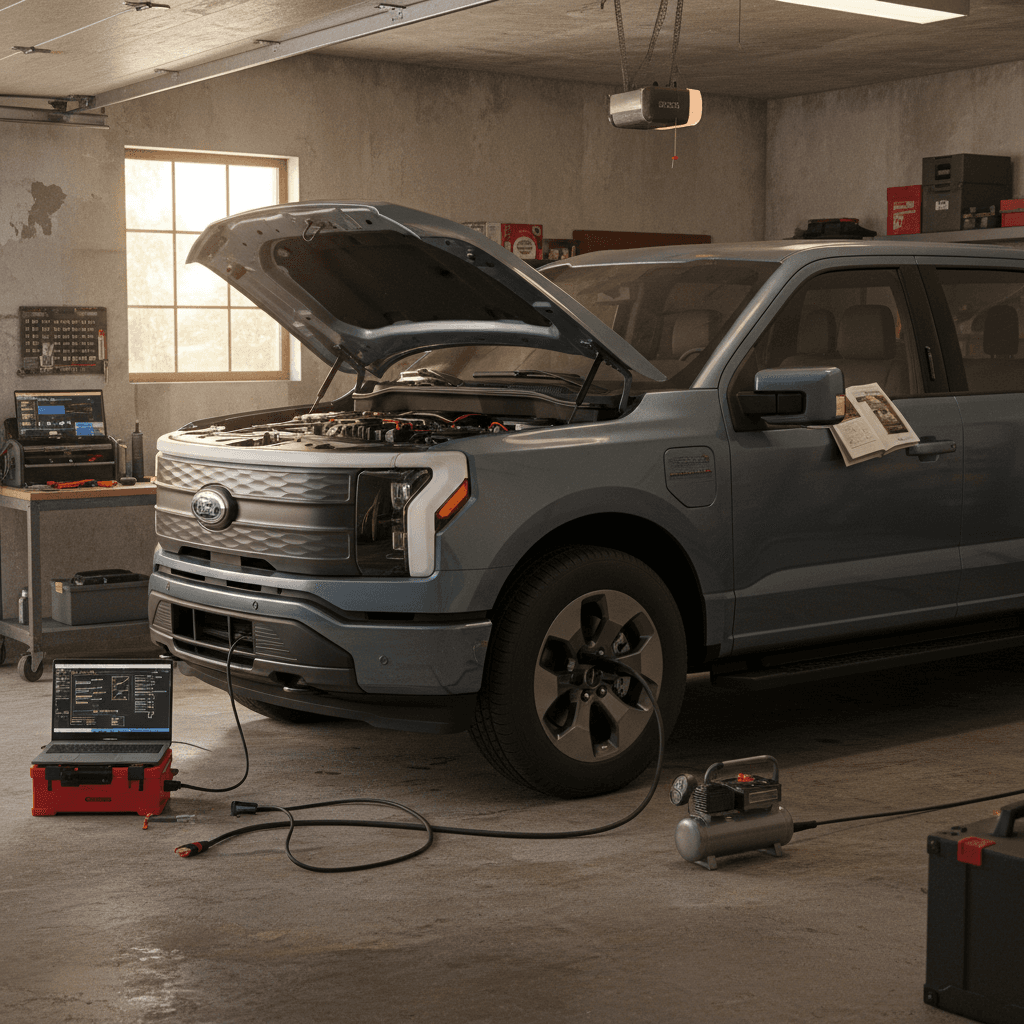
By 2024, the Ford F-150 Lightning was no longer a science experiment. It was America’s best‑known electric pickup, a rolling billboard for Ford’s EV ambitions. But if you’re shopping a 2024 Lightning, or trying to decide whether to keep yours, you’re probably asking a more intimate question: what actually goes wrong with these trucks, and how hard is it to fix?
Context: 2024 is a mid‑cycle Lightning
2024 F-150 Lightning problems at a glance
Where 2024 Lightning owners report trouble
On the whole, the 2024 Lightning’s motors, battery pack shell, and basic drivetrain have proven stout. The frustrations live elsewhere: recalls, charging quirks, software bugs, and some old‑fashioned truck hardware that wasn’t torqued to spec. The good news is that most fixes are straightforward if you know what to look for.
Major 2024 F-150 Lightning recalls you must check
Before you worry about mysterious EV gremlins, start with the boring but essential stuff: recalls. Every 2024 Lightning you consider, new or used, should be fully recall‑current. Here are the big campaigns that touch the 2024 model year and what they mean for you.
Key 2024 F-150 Lightning recall campaigns
Always run the VIN through Ford and NHTSA tools to see the exact recall list for a particular truck.
| Issue | What can happen | Model years affected | Typical fix |
|---|---|---|---|
| Front suspension control arm hardware | Loose upper control‑arm ball‑joint nut may lead to loss of steering control or abnormal tire wear. | Primarily 2024–2025 F-150 Lightning | Inspect front suspension; retorque or replace control arm/ball joint hardware. |
| Rollaway risk – integrated park module software | Truck may not fully lock into Park; in rare cases the vehicle can roll when "P" is selected. | 2022–2026 F-150 Lightning (including 2024) | Update integrated park module software; performed at dealer or via OTA when available. |
| High‑voltage/battery control software | Incorrect fault detection or thermal logic can reduce performance or, in worst cases, increase safety risk. | 2022–2024 F-150 Lightning (select VINs) | Reflash high‑voltage battery control modules with updated software. |
| Camera / driver‑assist software glitches | Delayed or frozen camera image, incorrect warnings, or driver‑assist faults. | Overlapping F‑series and EV campaigns; some 2024 Lightnings included | Infotainment and camera software update, often via OTA. |
This table highlights the major 2024 Lightning recall themes; exact campaign numbers and dates vary by VIN.
Don’t assume recalls are done
Quick recall checklist for a 2024 Lightning
1. Run the VIN through Ford and NHTSA
Use Ford’s owner site and the NHTSA VIN lookup to pull the official recall list for that specific truck, don’t rely on model‑year summaries.
2. Ask for service records
Look for repair orders that specifically reference recall codes (for example, campaign numbers starting with "24S" or "25S"). Screen‑grabbed emails are not enough.
3. Inspect front suspension and tires
On a test drive, listen for front‑end clunks and look for uneven tire wear that might hint the control‑arm recall was ignored or done poorly.
4. Confirm software level
In the truck’s settings or FordPass app, check that software is reasonably current. A truck stuck on very old firmware may have pending safety updates.
5. Ask about mobile vs dealer repairs
Some recall work can be done by a mobile technician; others require a lift and alignment. Factor the inconvenience into your purchase decision.
Battery and charging issues: what’s normal vs a problem
The Lightning’s battery pack is the star of the show and, so far, not the villain. The biggest 2024 complaints aren’t catastrophic failures; they’re about charging behavior, especially DC fast charging, and real‑world range falling short of the window sticker.
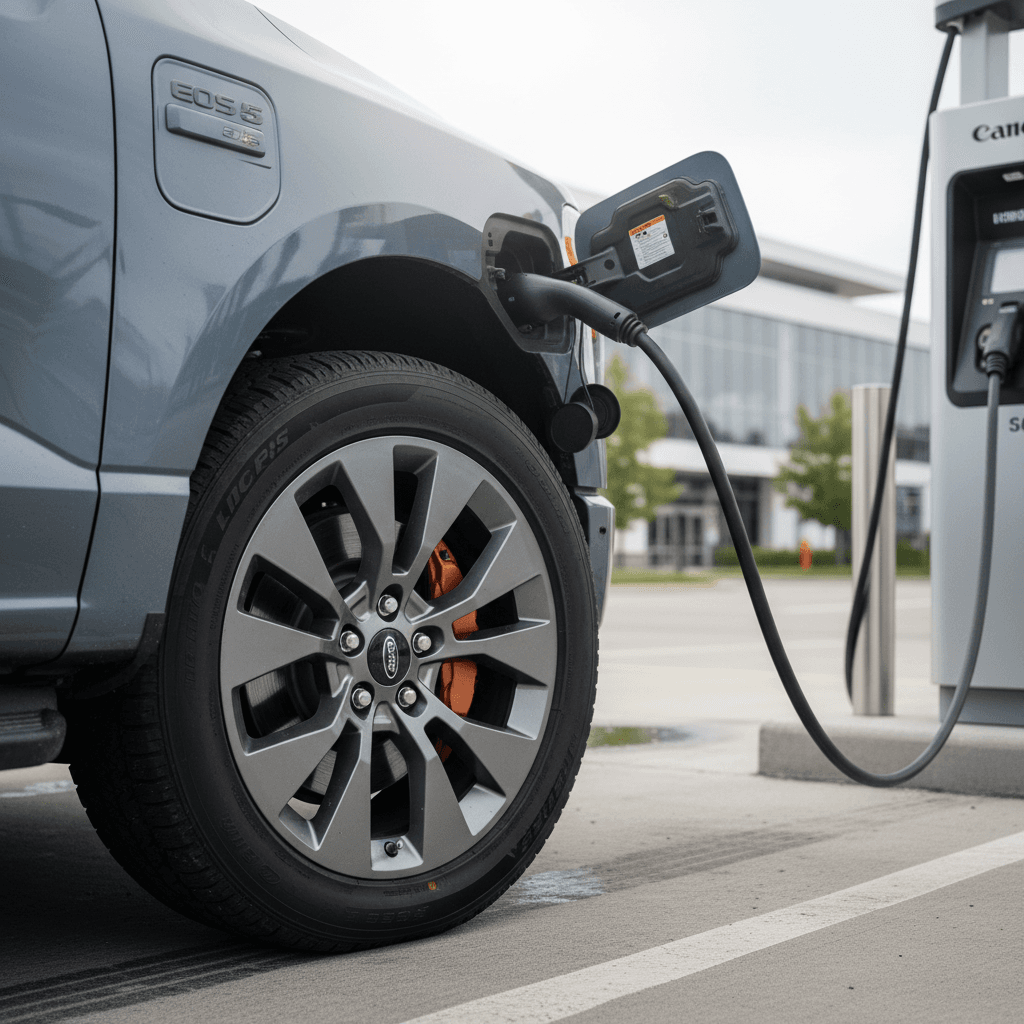
Common 2024 Lightning battery & charging complaints
Most of these are more about expectations and setup than failing hardware.
Slow DC fast‑charge speeds
Owners expect 150 kW all the time; what they often see is 60–110 kW, especially in cold weather or above ~60% state of charge.
The Lightning’s charge curve is conservative to protect the pack, and many public chargers under‑deliver their advertised output.
Cold‑weather range loss
In winter, a heavily optioned 2024 Lightning can lose 30–40% of its rated range when driven at highway speeds, especially with a load or trailer.
That’s not unique to Ford; it’s physics. But trucks with off‑road tires and racks suffer more.
Inconsistent state‑of‑charge estimates
Some owners report the guess‑o‑meter dropping faster than expected, or big swings after DC fast charges.
This is typically a calibration quirk, not a dying battery cell.
Know the real DC fast‑charge target
Simple charging "fixes" you can do yourself
- Precondition the battery by setting a DC fast charger as your destination in navigation before you arrive.
- Arrive low: aim to plug in between 10–30% state of charge for the best speeds.
- Avoid topping off at DC unless necessary, above ~80%, the truck will intentionally slow to protect the battery.
- Test multiple networks: many "slow Lightning" stories are actually bad chargers.
When it’s probably a real problem
- You never see more than ~60–70 kW on a 150 kW+ charger, even with a warm battery and low state of charge.
- The truck repeatedly fails to start a DC session across different stations and cables.
- You get high‑voltage battery or powertrain warnings in the cluster or FordPass app.
- Range suddenly drops by 20–30% with the same routes, speeds, and weather.
In these cases, have a Ford EV‑certified dealer pull logs and check for open TSBs or software updates.
Software and electronics glitches
If the Lightning has an Achilles’ heel, it’s not the motors or the frame, it’s the fact that Ford tried to turn a work truck into an iPad on 35‑inch tires. Sync 4A, the cluster, cameras, BlueCruise, the FordPass app: when they all sing in harmony the truck feels futuristic. When they don’t, you’re stuck power‑cycling a six‑figure pickup like a smart TV.
Typical 2024 Lightning software & electronics issues
Annoying more often than truly dangerous, but still worth understanding.
Infotainment and camera bugs
- Frozen or blank center screen requiring a reboot.
- Delayed or frozen rear‑view camera image when shifting to Reverse.
- Bluetooth or CarPlay randomly disconnecting.
Most are addressed with over‑the‑air (OTA) updates or a dealer software reflash.
Driver‑assist and sensor quirks
- Random "front sensor blocked" or blind‑spot fault warnings in clear weather.
- BlueCruise refusing to engage on mapped highways for no obvious reason.
- Trailer assist or parking aids cutting out intermittently.
Again, calibration and software dominate here; hardware failures are less common.
12‑volt battery: the quiet troublemaker
- If the truck repeatedly fails OTA updates, ask the dealer to check for module faults and complete the update via their diagnostic system instead of just trying again at home.
- If the rear camera image glitches, ask specifically whether your VIN is covered by any camera or Sync‑related software campaigns.
- If BlueCruise behavior changes after an update, request a documented road test with a technician so you have a paper trail while under warranty.
Ride, suspension, and hardware complaints
The Lightning may be an EV, but it’s still very much an F‑150 underneath: control arms, ball joints, leaf springs, the whole Detroit toolkit. That means some of its problems are blissfully old‑school, no coding required.
Common physical issues on 2024 Lightnings
These are the ones you can often hear, feel, or see.
Front suspension clunks
Loose front suspension hardware, especially the upper control‑arm ball‑joint nut, can cause clunks over bumps or vague steering. On 2024 trucks it’s serious enough to earn its own recall.
Uneven or rapid tire wear
A heavy EV truck on soft compound tires can chew through rubber quickly, especially if alignment is off after suspension work. Inspect inner shoulders carefully.
Water & weather seals
A minority of owners report water in the frunk or minor wind noise from door and window seals, especially on trucks with repeated windshield or body repairs.
The upside: gutsy core hardware
How to spot 2024 Lightning issues on a test drive
You don’t need an engineering degree to separate a good 2024 Lightning from a bad one. You just need a methodical loop and a willingness to ignore the sales patter while you listen to the truck.
Step‑by‑step test‑drive checklist for a 2024 Lightning
1. Start with a cold boot
Unlock the truck after it has been sitting. Watch how quickly the screens wake up, whether any warning lights linger, and whether cameras work on first try when shifting to Reverse.
2. Low‑speed shake‑down
Drive slowly over speed bumps and tight turns in a parking lot. Listen for front‑end clunks, creaks, or pops that might hint at loose suspension hardware.
3. Highway and lane‑keep
On a brief highway run, see if the truck tracks straight with a light hand on the wheel. Test lane‑keeping or BlueCruise (if equipped) to confirm sensors and cameras behave as advertised.
4. Regen and one‑pedal feel
Toggle through regenerative braking modes. Abrupt, inconsistent, or noisy transitions can sometimes hint at software calibration issues or brake hardware that needs attention.
5. Quick DC fast‑charge test (if possible)
If you’re seriously considering the truck, stop at a nearby DC fast charger. Even a 10–15 minute session will tell you whether it connects cleanly and reaches a healthy charge rate.
6. Final scan of screens and app
Before you hand back the keys, scroll through the settings and vehicle information pages. Look for stored fault codes, failed update messages, or obviously outdated software versions.
Bring the FordPass app to the party
Fixes, warranty coverage, and ownership strategies
Living with a 2024 Lightning is less about wrenching and more about managing software, recalls, and consumables. Here’s how to stack the deck in your favor once the truck’s in your driveway.
Use Ford’s warranty while you have it
- Bumper‑to‑bumper coverage will handle most electronics and interior issues in the early years, use it for every glitch, no matter how small.
- Electric‑vehicle component warranties cover the high‑voltage battery and drive units for longer (typically 8 years / 100,000 miles in the U.S. for defects).
- Build a paper trail of complaints, especially for intermittent software bugs. It helps if you ever need goodwill repairs outside the base warranty.
Smart maintenance for fewer headaches
- Proactively replace the 12‑volt battery once it shows age or if you see repeated low‑voltage warnings.
- Rotate tires frequently and check alignment yearly; the Lightning’s weight is hard on rubber.
- Schedule time for recall and TSB updates instead of letting them pile up, many address nuisance issues owners live with for no good reason.
- Keep home charging equipment in top shape; a flaky home charger can masquerade as a truck problem.
How Recharged helps with fixes
Buying a used 2024 Lightning: red flags and green lights
On the used market, a 2024 Lightning can be either a clever buy, letting someone else pay for the early depreciation, or a very expensive beta test. The trick is separating tired trucks from well‑cared‑for ones.
What to look for in a used 2024 Lightning
Same truck, very different ownership stories.
Red flags
- Multiple owners in a short time with sparse records.
- No proof of recall work on front suspension or park‑system software.
- Uneven tire wear, especially on the inner shoulders.
- Frequent DC fast‑charging history with work‑truck cosmetics: dings, ladder racks, aftermarket wiring.
- Persistent warning lights or failed OTA updates the seller brushes off.
Green lights
- Single‑owner or corporate lease with documented maintenance.
- Recall‑complete status, confirmed by recent dealer paperwork.
- Tidy underbody, intact aero panels, and no evidence of off‑road abuse.
- Healthy DC fast‑charge behavior in a brief test.
- Independent battery assessment, such as the Recharged Score, showing strong pack health.
Leaning on a marketplace that understands EV trucks
Ready to find your next EV?
Browse VehiclesFAQ: 2024 Ford F-150 Lightning problems
Frequently asked questions about 2024 Lightning issues
The 2024 Ford F-150 Lightning is not a fragile science project, nor is it a flawless electric savior. It’s a heavy, fast, deeply digital truck whose problems cluster around code, charging etiquette, and a few old‑fashioned pieces of hardware Ford had to recall. Go in with clear eyes, armed with VIN checks, a disciplined test drive, and real battery data, and you can land a Lightning that spends its time hauling, not haunting your service advisor.