Are Teslas expensive to fix? In 2025, the honest answer is: they can be, especially after a collision, but day‑to‑day maintenance is often cheaper than with a comparable gas car. The trick is understanding where the real costs hide so you can budget smartly, shop insurance wisely, and, if you’re buying used, choose the right car upfront.
The big picture
Quick answer: Are Teslas expensive to fix?
Teslas: cheap to maintain, pricey to crash
Think of it as two different stories, maintenance vs. repairs after something goes wrong.
1. Routine upkeep
There’s no engine, no oil, no spark plugs, no timing belt. For basic maintenance, tires, cabin filter, brake fluid, Teslas often cost less than similar luxury gas cars.
2. High‑tech components
When something big fails, battery, drive unit, electronics, repairs can run thousands of dollars, especially out of warranty. These issues are rare, but expensive.
3. Collision repairs
Industry data shows EVs, including Teslas, cost roughly 20–30% more to repair after crashes than comparable gas vehicles due to labor time, parts and calibration.
So if you rarely crash and keep up on basic care, a Tesla isn’t automatically a money pit. But if you’re unlucky, or under‑insured, repair bills can sting. That’s why understanding the specific cost drivers matters more than any blanket “EVs are expensive” headline.
How EV repair costs stack up in recent studies
How Tesla repair costs compare to gas cars
To answer “are Teslas expensive to fix?” you have to separate collision repairs from normal ownership costs. The averages can sound scary, but they’re not telling the whole story.
Collision repair: usually more expensive
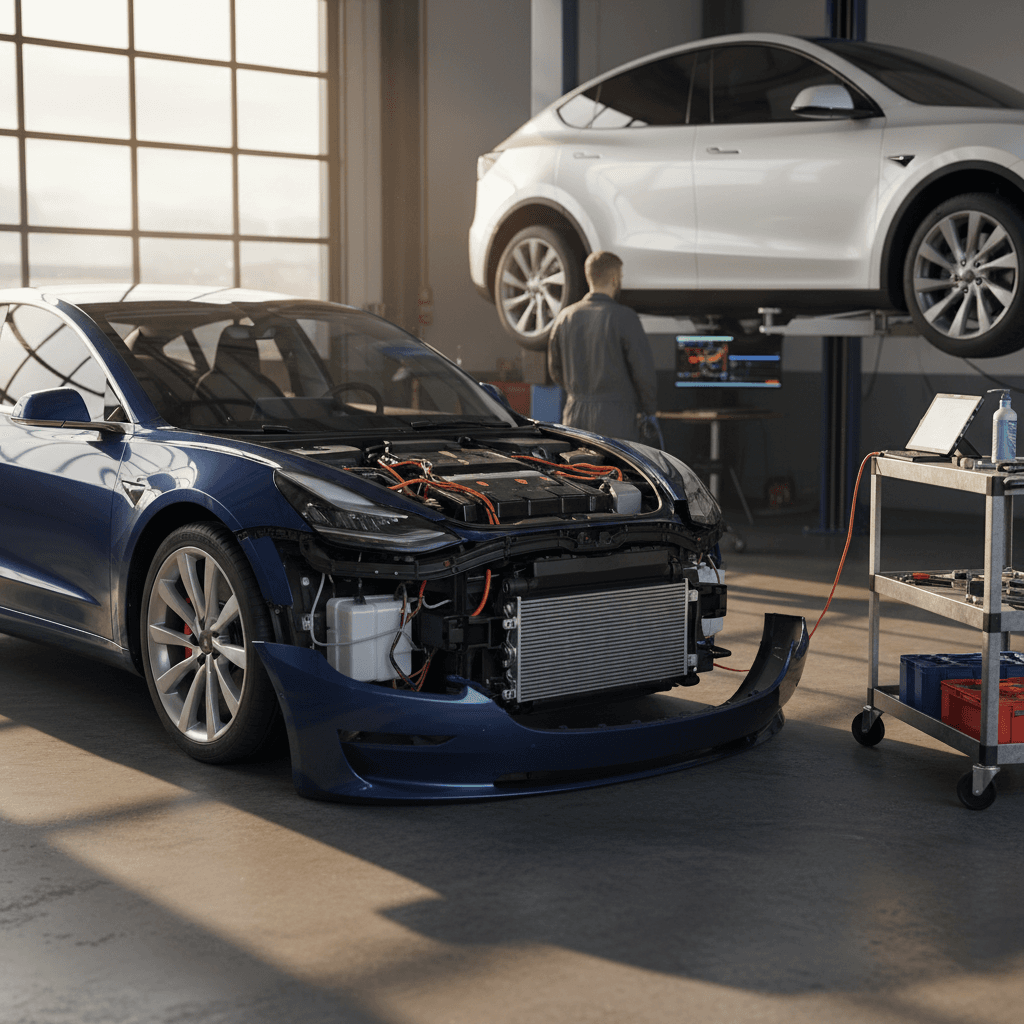
- Higher labor time: Shops often spend almost double the mechanical labor hours on EVs versus gas cars because they have to safely power down, sometimes remove, and later re‑install and test the high‑voltage battery.
- More calibration: Teslas are loaded with cameras, radar, and sensors. After a crash, those systems often need calibration, adding technician time and specialized equipment.
- Higher severity: Recent insurance reports put average EV collision repair bills roughly $1,000–$1,300 higher than ICE vehicles in the U.S.
Routine ownership: often cheaper
- No oil changes, belts, or exhaust: You skip a long list of standard gas‑car service items entirely.
- Lower brake wear: Strong regenerative braking means pads and rotors often last much longer, especially on city‑driven Model 3 and Model Y.
- Simpler powertrain: Electric motors have far fewer moving parts than engines or transmissions, so there’s less to break in day‑to‑day use.
Over a few years, many owners find their total maintenance spend is lower in a Tesla than in a similar‑price gas car, even if collision coverage and major repairs cost more.
Focus on total cost of ownership
What’s actually cheaper to maintain on a Tesla
- No oil changes or transmission fluid services, ever.
- No timing belts, spark plugs, fuel injectors, or emissions systems to service or replace.
- Regenerative braking greatly reduces brake wear for most drivers.
- Software updates can fix some issues over the air, without a shop visit.
- Fewer fluid leaks and gasket failures, because there’s no engine.
Tesla’s official maintenance schedule today is almost shockingly light compared with a luxury gas sedan: check brake fluid every couple of years, swap the cabin filter, rotate tires, watch wiper blades and brake pads. Many owners go years without a major service invoice, especially while the car is under warranty.
Where Teslas can be expensive to fix
If you’ve heard nightmare stories about Tesla repair bills, they almost always fall into one of a few buckets: collision damage, high‑tech electronics, or out‑of‑warranty drivetrain or battery work.
Common high‑cost Tesla repair scenarios
1. Collision & bodywork
Modern crash structures, aluminum panels, and hidden sensors mean even moderate hits can bend expensive parts. Rear bumpers, hatches, and quarter panels often involve significant labor and calibration.
2. Screens & electronics
Center screens, cameras, wiring, and control modules can cost four figures to replace out of warranty. Failures are uncommon, but when they happen you’ll feel it.
3. Battery & drive unit
The traction battery and motor are long‑life components by design, but repairs or replacements outside warranty can be the most expensive repairs on the car.
Why “small” damage isn’t always cheap
Battery repairs and replacement costs
Battery fear is the number‑one reason people ask if Teslas are expensive to fix. The reality: full pack replacements are rare, but if you ever need one out of warranty, it’s one of the priciest repairs you’ll see on any car.
How Tesla battery‑related costs typically break down
These are ballpark ranges from owner reports and independent shops in 2024–2025; exact pricing varies by model, pack, and region.
| Repair type | Typical scenario | Approximate cost range (USD) | Notes |
|---|---|---|---|
| High‑voltage coolant or sensor repair | Coolant leak, sensor fault, contamination around pack | $800–$2,500 | Often handled by Tesla Service; can prevent larger failures if caught early. |
| Module‑level repair (independent shop) | A few weak modules in an otherwise healthy pack | $2,000–$6,000 | Requires specialized EV shop; not always offered by Tesla directly. |
| Used/remanufactured pack swap | Pack damage from road debris or moderate degradation out of warranty | $8,000–$14,000+ | Cost depends heavily on model (3/Y vs S/X) and source of replacement pack. |
| Brand‑new pack replacement | Severe pack failure outside warranty | $15,000–$20,000+ | Most owners will never see this; many cars will be replaced before the pack is. |
Battery packs are engineered to last hundreds of thousands of miles, but understanding potential costs helps you buy confidently, especially used.
The good news on Tesla batteries
Insurance and collision repair for Teslas
Insurance is where Tesla repair costs show up before anything ever breaks. Insurers care about how expensive the average claim is, and Teslas, like most EVs, still cost more to fix after a crash than comparable gas cars.
- EVs, including Teslas, now average roughly 20–30% higher repair costs after collisions than similar ICE vehicles in multiple 2023–2024 insurance studies.
- Average BEV collision repairs in the U.S. hover around $6,000+ per claim, compared with roughly $5,000 for ICE vehicles.
- EV repairs also tend to take several days longer, which increases rental‑car coverage costs for insurers.
- Because Teslas dominate U.S. EV sales, they make up the bulk of EV collision claims, so their repair patterns heavily influence EV insurance pricing.
Why insurance quotes can shock new Tesla shoppers
Independent EV shops vs. Tesla Service
Ten years ago, if you needed a Tesla repaired, your choices were Tesla, or Tesla. In 2025, the landscape is better but still uneven. Your costs will depend heavily on who does the work.
Tesla Service Centers
- Pros: Factory tools, genuine parts, and technicians who work on Teslas all day long. Strong choice for warranty work and complex diagnostics.
- Cons: Labor rates can be high, and wait times for appointments or parts can stretch days or weeks in some markets.
- Best for: Warranty repairs, software‑linked issues, and anything involving the high‑voltage battery or Autopilot hardware.
Independent EV Specialists
- Pros: Often lower hourly rates, more flexibility in repair options (like module‑level battery work or used parts), and a more personal relationship with the shop.
- Cons: Availability varies by region, and some jobs still require Tesla’s tools, software access, or parts authorization.
- Best for: Out‑of‑warranty mechanical work, suspension, brakes, cosmetic fixes, and smarter options on older vehicles where you’re watching every dollar.
How Recharged can help here
Ready to find your next EV?
Browse VehiclesHow to keep Tesla repair costs manageable
Smart moves to keep Tesla ownership affordable
1. Get insurance quotes before you buy
Prices can vary wildly between carriers and states. Shop multiple quotes on the specific Tesla model and trim you’re considering, with the actual VIN if possible.
2. Understand what’s still under warranty
Tesla’s battery and drive‑unit warranty typically runs 8 years with a mileage cap. A car with years of coverage left can dramatically reduce your risk on big‑ticket failures.
3. Check tire and wheel history
Teslas, especially Performance trims, can chew through tires and bend wheels on rough roads. Factor in a possible set of tires or a downsized wheel swap in your budget.
4. Use off‑peak charging and software tools
Scheduled charging at off‑peak rates cuts your ownership costs and reduces stress on the battery. Keep software up to date to catch bug fixes and efficiency improvements.
5. Build a relationship with a shop
If there’s a reputable EV‑certified body shop or independent Tesla specialist nearby, get to know them before you need them. Familiar customers often get faster help when things go wrong.
6. Choose your deductible wisely
Higher deductibles can lower monthly premiums, but make sure you can comfortably cover that amount. With a Tesla, a $500 difference in deductible can be a rounding error on a big repair.
Buying a used Tesla with repair costs in mind
A brand‑new Tesla spreads warranty protection over the riskiest early years. With a used Tesla, you’re inheriting someone else’s driving, charging, and repair history, so the homework you do before you buy is what keeps future fixes from getting out of hand.
Key things to check on a used Tesla
You’re not just buying a car; you’re buying its past repairs and future risks.
Battery & charging history
- Look for verified battery health, not just the dash range reading.
- Ask how often the car fast‑charged vs. home Level 2 charging.
- Check for any past battery or charging‑port repairs.
At Recharged, every vehicle comes with a Recharged Score Report that includes battery diagnostics so you’re not guessing.
Collision & body repair records
- Review Carfax or similar history for prior accidents.
- Ask where repairs were done, Tesla‑certified shop, generic body shop, or independent specialist.
- Look closely at panel gaps, paint match, and rust or corrosion.
Clean, well‑documented repairs are usually not a dealbreaker; mystery repairs at non‑EV shops are a bigger red flag.
Buying privately or at a generic dealer
- Battery health is often a guess based on what the dash says on a full charge.
- Sales staff may not know the difference between a minor software issue and a looming high‑voltage repair.
- You’re largely on your own to decode repairs, warranties, and realistic future costs.
Buying a used Tesla through Recharged
- Every vehicle gets a Recharged Score Report with verified battery health and pricing benchmarked to the EV market.
- Our EV‑specialist team can explain what repairs are common on that specific model and mileage and what they typically cost.
- You can finance, trade in your current car, and arrange nationwide delivery entirely online, or visit our Experience Center in Richmond, VA.
FAQ: Tesla repair and maintenance costs
Frequently asked questions about Tesla repair costs
Bottom line: Are Teslas too expensive to fix?
Teslas aren’t automatically more expensive to own than other cars, but they are different. Routine maintenance can be refreshingly cheap, while collision repairs and rare high‑voltage issues can be shockingly expensive if you’re unprepared. The key is to go in with clear eyes: budget realistically, shop insurance carefully, and, if you’re buying used, insist on verified battery health and a transparent condition report rather than taking anyone’s word for it.
If you’re considering a used Tesla or any other EV, Recharged is built to tilt the odds in your favor. With battery‑health diagnostics, fair‑market pricing, financing, trade‑in options, and EV‑specialist guidance from first click to delivery, you can enjoy the upside of owning a Tesla without being blindsided by the repair side of the story.