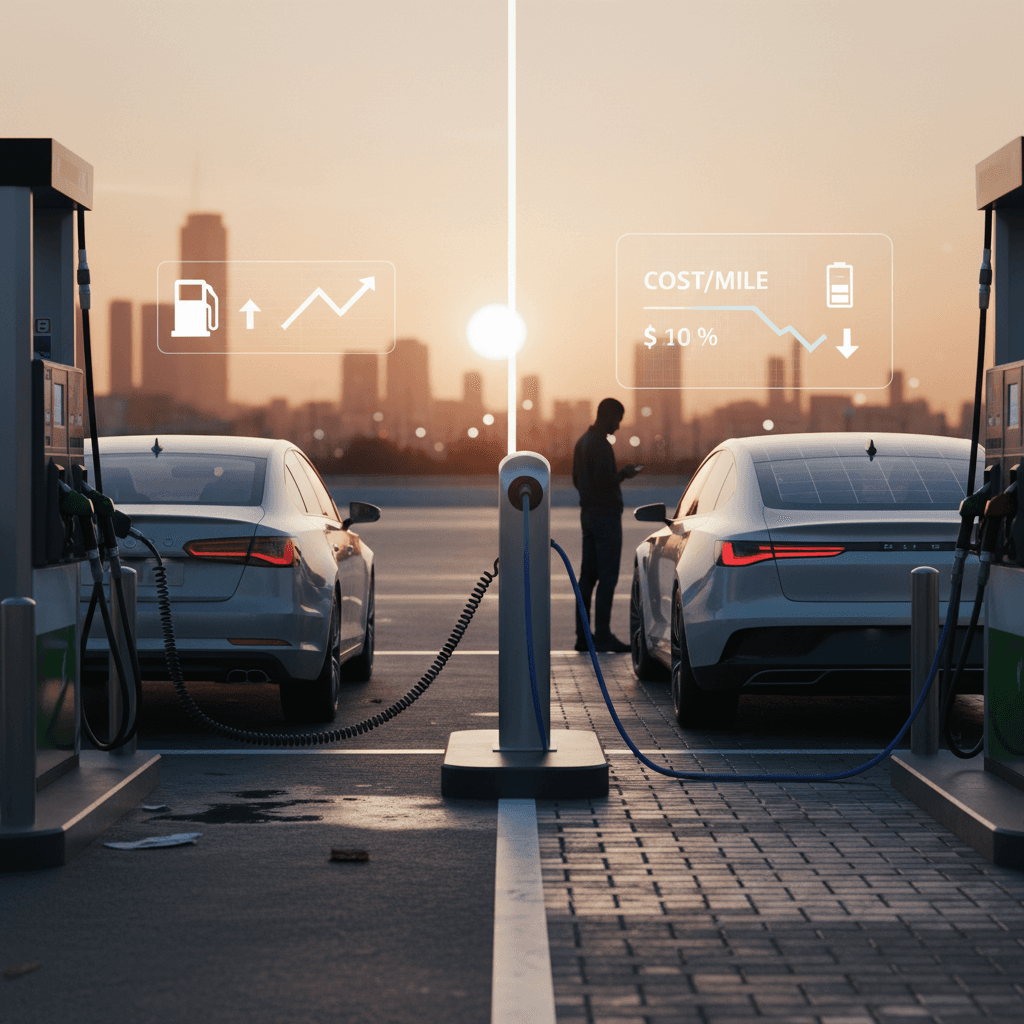
Gas is flirting with $4–$5 a gallon again in parts of the U.S., and every commute feels like a cover charge for existing. No surprise the search term “gas prices making electric cars worth it” is spiking. You don’t need a pep talk; you need math. In this guide, we’ll put hard numbers on gas vs electric costs in 2026, show where EVs really save you money, and where they don’t, especially if you’re considering a used electric car.
The 30‑second snapshot
Why gas prices have everyone rethinking EVs
Gas prices move like a cat on a hot stove. In 2022 we saw national averages near $5/gallon; in mid‑2025 they dipped close to $3. Then geopolitical shocks in 2026 shoved the U.S. average back above $4 per gallon. Meanwhile, electricity prices climbed more slowly, from around 15–16¢/kWh a few years ago to the mid‑teens or high‑teens cents per kWh today for U.S. households.
What matters to you isn’t who’s to blame; it’s predictability. Gas is tied to global oil markets and can jump 30–50% in months. Electricity is mostly regulated at the state and utility level. Rates rise, but in steps, not spasms. That relative stability is why EV owners talk about "locking in" their fuel costs, especially if they mostly charge at home.
How current prices translate on the road
Those numbers are directional, not destiny. Your exact costs depend on your car, how you drive, and where you live. But they’re enough to start answering the big question: are high gas prices finally making electric cars worth it for you?
How to compare gas vs electric car cost per mile
To keep this honest, we’ll use a simple cost per mile framework. There are four main ingredients:
- Your fuel or electricity price (gas: $/gal, electric: ¢/kWh)
- Your car’s efficiency (mpg for gas, kWh/100 miles for electric)
- Annual miles you actually drive
- How long you keep the car (years or total miles)
Here’s the basic math you can adapt to your own situation:
Gas car: cost per mile
Fuel cost per mile = Gas price per gallon ÷ Miles per gallon
Example: $4.00 ÷ 30 mpg = 13.3¢/mile
You can plug in your own mpg and local gas price to see where you land.
Electric car: cost per mile
Electricity cost per mile = (kWh per 100 miles × Electricity price per kWh) ÷ 100
Example EV: 28 kWh/100 mi at 17¢/kWh
28 × $0.17 = $4.76 per 100 miles → 4.8¢/mile
Most modern EVs fall between 25–32 kWh/100 miles in mixed driving.
Quick hack with your current car
Real math example: average driver at $4/gallon gas
Let’s pick a fairly typical scenario so you can sanity‑check your own numbers.
Baseline assumptions: 2026 U.S. commuter
You can adjust these for your own commute, fuel prices, or driving style.
| Factor | Gas sedan | Electric vehicle | |
|---|---|---|---|
| Efficiency | 30 mpg | 28 kWh/100 mi | |
| Fuel/energy price | $4.00/gal | $0.17/kWh at home | |
| Annual miles | 12,000 miles | 12,000 miles | |
| Ownership period | 5 years | 5 years |
Typical annual costs for a mainstream gas sedan vs a mainstream EV at current U.S. prices.
Now let’s run the math.
- Gas sedan fuel cost: 12,000 miles ÷ 30 mpg = 400 gallons/year. 400 × $4 = $1,600 per year. Over 5 years: $8,000.
- Electric car electricity cost: 12,000 miles ÷ 100 = 120 intervals of 100 miles. 120 × 28 kWh = 3,360 kWh/year. 3,360 × $0.17 = $571 per year. Over 5 years: ≈$2,855.
Five‑year fuel cost comparison at $4 gas
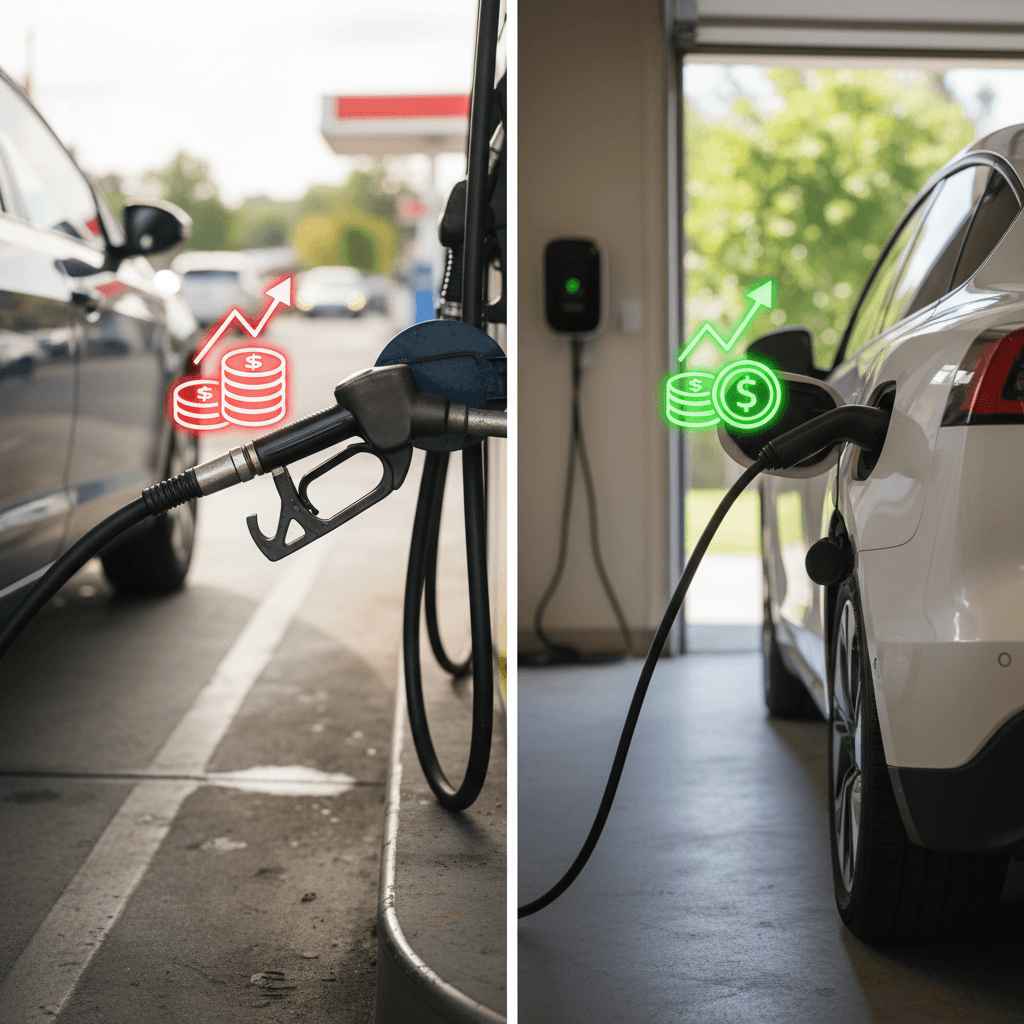
At these prices, the EV is saving you roughly $1,000 to $1,100 per year on energy alone. Over five years, that’s a bit more than $5,000, enough to offset a higher purchase price, especially if you’re looking at a used EV where the sticker shock has already been beaten out of it.
But electricity is expensive too, do EVs still win?
You may live in a high‑rate state where residential electricity is 20–30¢/kWh, or pay steep demand charges in a big metro. On top of that, not everyone can charge at home; some drivers rely on public fast charging, which is closer to gasoline on a dollars‑per‑mile basis.
Home charging, expensive electricity
Say your rate is 25¢/kWh and your EV uses 30 kWh/100 miles:
- 30 × $0.25 = $7.50 per 100 miles
- Cost per mile = 7.5¢
Compared to our 30‑mpg gas sedan at $4/gallon (13.3¢/mile), the EV still wins, just by a smaller margin.
Mostly public DC fast charging
Fast‑charging networks often price around 30–45¢/kWh:
- At 40¢/kWh and 30 kWh/100 mi → $12 per 100 miles
- Cost per mile = 12¢
Now your EV is roughly even with a 30‑mpg gas car at $4/gal. If gas drops to $3, the gas car can actually be cheaper per mile than a fast‑charged EV.
The EV savings assumption that breaks
Where EVs save you money beyond fuel
Fuel is only one of the levers. Modern EVs cheat the ownership game in a few other important ways that matter even more as gas prices climb.
Hidden places EVs can be cheaper to own
These don’t make headlines, but they move the spreadsheet.
Less routine maintenance
No oil changes, spark plugs, timing belts, or exhaust systems. You’ll still need tires and brake fluid, but many EVs stretch service visits to long intervals.
Over 5–8 years, that can add thousands to your gas vs EV gap.
Fewer wear items
Regenerative braking lets the motor slow the car, so brake pads often last much longer. There’s also no transmission with dozens of failure points.
Less mechanical complexity generally means fewer big repair surprises.
Tax credits & incentives
Depending on the model and your income, you may qualify for federal or state EV incentives, or utility rebates for installing home charging.
These can effectively shave thousands off your real purchase cost, accelerating your break‑even point.
Used EV owners often stack the deck
Ready to find your next EV?
Browse VehiclesWhen a used EV makes the most sense
The rap on electric cars used to be simple: great to drive, brutal to buy. Early EVs carried big‑battery sticker prices that took ages to earn back, even with pricey gas. The story in 2026 is different, especially in the used market.
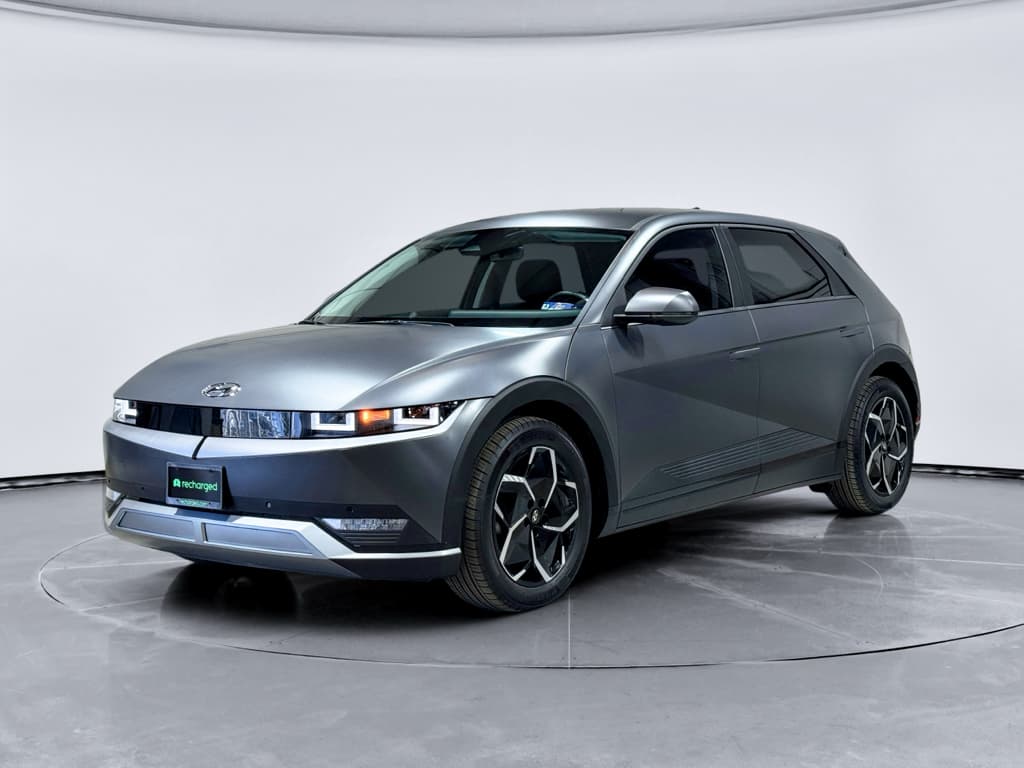
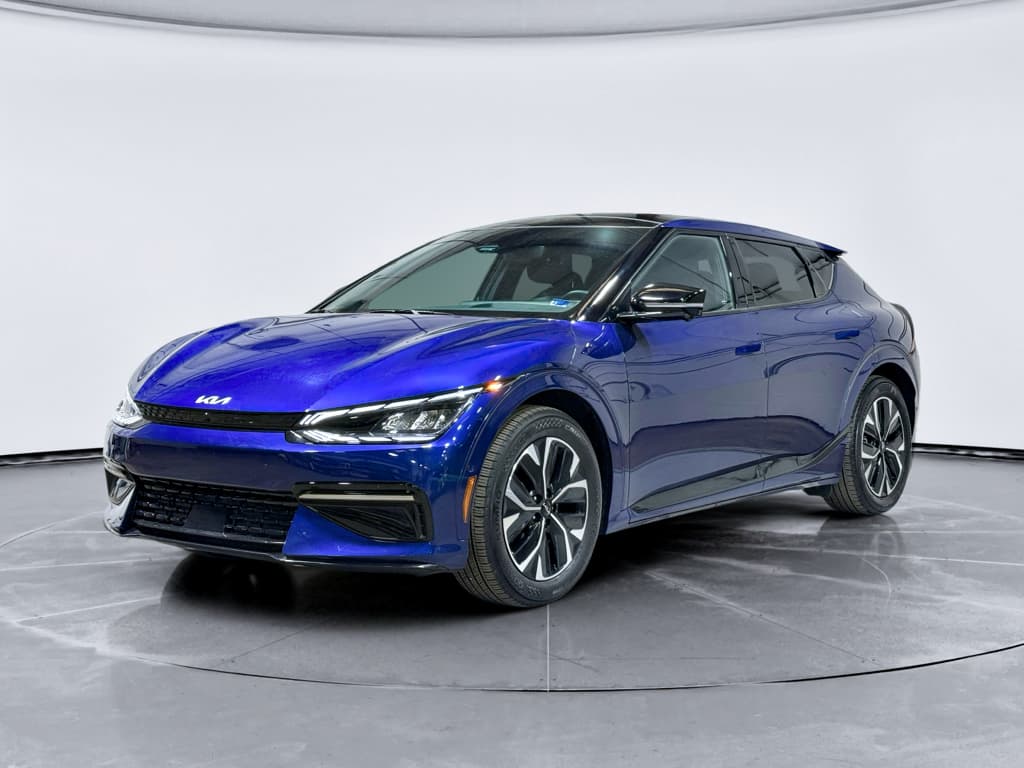
Off‑lease Teslas, Chevy Bolts, Nissan Leafs, Hyundai Ioniqs, and Kia EVs have taken their big depreciation hits. Meanwhile, their batteries have often held up better than the doomsayers predicted. That combination, lower upfront price plus lower operating cost, is what finally makes the math click for a lot of households.
Signs a used EV is a smart move for you
You drive at least 10,000 miles per year
The more you drive, the faster cheap EV “fuel” pays you back. If you’re under 7,500 miles a year, fuel savings alone may take longer to offset any higher purchase price.
You can charge at home most nights
A driveway or garage with access to at least a standard outlet is a huge advantage. Level 2 home charging (240V) is even better and can be financed or rebated in many areas.
You’re considering a 3–6‑year‑old EV
These cars have already eaten most of their depreciation. At Recharged, every used EV gets a <strong>Recharged Score battery health report</strong>, so you can see real pack condition instead of guessing.
You’re cross‑shopping similar gas cars
Compare a used EV to a similar‑size, similar‑age gas car. If they’re within a few thousand dollars of each other, today’s gas prices usually make the EV cheaper to own over 4–6 years.
You can qualify for good financing
If financing stretches your purchase over 5–6 years, that monthly EV fuel savings (often $60–$120) can help offset a slightly higher payment. Recharged can help you <strong>pre‑qualify with no credit impact</strong> and see your real numbers.
How Recharged derisks the used EV bet
When a gas car still might be cheaper
Despite expensive gas, an EV is not an automatic slam‑dunk. There are real edge cases where a conventional gasoline car, or even a hybrid, can still be the rational choice for your wallet.
Scenarios where gas (or hybrid) may win on cost
Gas prices are only half the equation.
Very low annual mileage
If you only drive 5,000–6,000 miles a year, your fuel spend is relatively small. Saving 6–8¢ per mile with an EV might only be $300–$400 per year, which can take a long time to offset a higher purchase price.
No reliable home or work charging
Apartment dwellers without assigned parking or charging often pay premium public charging rates, or have to move their car constantly. That frustration, plus higher energy rates, can erase a lot of EV savings.
Extreme road‑trip usage
If you constantly drive long highway distances through regions with sparse fast charging, you’ll spend more time (and sometimes more money) on public chargers. A very efficient hybrid might be cheaper and less stressful.
Deep discounts on gas cars
Automakers still use aggressive rebates and low‑APR financing to move gas inventory. A heavily discounted efficient gas sedan or hybrid can undercut an EV, especially if you don’t drive much.
Don’t buy any EV assuming gas will stay sky‑high
Simple checklist: Is gas high enough for an EV to be worth it?
Think of this as a pre‑flight checklist for your own “gas prices making electric cars worth it” math. Grab a scrap of paper, or the notes app on your phone, and walk through these steps.
5‑step personal EV vs gas cost check
1. Write down your true gas cost per mile
Take your current gas price and divide by your real‑world mpg. If you don’t know mpg, use the EPA combined figure as a starting point, then adjust if you’re a heavy‑footed driver.
2. Estimate EV electricity cost per mile
Pick an EV you’re considering and look up its kWh/100‑mile rating. Multiply by your home electricity rate (in $/kWh), then divide by 100. That’s your EV’s energy cost per mile, assuming mostly home charging.
3. Multiply each by your annual miles
Take both per‑mile numbers and multiply by how many miles you drive in a typical year. Subtract the EV number from the gas number. That’s your <strong>annual savings</strong> window if you go electric.
4. Compare to the purchase price gap
If the EV costs, say, $4,000 more than a similar gas car and you’d save $1,000 per year on energy and maintenance, your payback is roughly 4 years. Shorter than you’ll own it? That’s a good sign.
5. Add in the intangibles
Cheaper HOV access? Quieter commute? Less oil consumption? For many people, these perks matter as much as the math. Just don’t let them distract from the numbers if your situation doesn’t support an EV yet.
Common myths about gas prices and EV savings
Myth vs. reality: gas prices and EV economics
A few persistent ideas that deserve retirement.
“EVs only make sense when gas is $5+”
Reality: At $4/gallon and typical U.S. electricity rates, EVs already undercut many gas cars on per‑mile energy cost. The threshold where EVs start to make sense is often closer to the mid‑$3s, depending on your local power rate.
“Electricity is just as volatile as gas”
Reality: Electricity rates generally move in regulated steps, not overnight spikes. Your bill may creep up over years, but you won’t wake up to a 40% jump at the whim of global crude prices.
“Batteries always fail before you break even”
Reality: Real‑world data shows many EV batteries retaining most of their range well past 100,000 miles. Platforms like Recharged back this up with battery health diagnostics so you can see degradation before you buy.
“You’re not trying to win a spreadsheet contest; you’re trying to avoid getting mugged at the pump for the next decade.”
Frequently asked questions: gas prices and EV value
Your top questions, answered
Bottom line: are gas prices making electric cars worth it?
With U.S. gas prices back over $4 a gallon and electricity in the mid‑teens cents per kWh for many households, yes, electric cars are financially “worth it” for a growing share of drivers. If you drive a normal American mileage, can plug in at home most nights, and shop smart, especially in the used market, the combination of cheaper energy and lower maintenance is hard for a comparable gas car to match.
Where things get murkier is at the edges: very low‑mileage drivers, people stuck with expensive public fast charging, or buyers staring at massive discounts on conventional cars. In those cases, the economic win for an EV shrinks, and the decision tilts back toward lifestyle, values, and how much you value being insulated from the next oil shock.
If you’re EV‑curious but nervous about the math, focus your search on late‑model used EVs with verified battery health and reasonable pricing. That’s exactly the niche Recharged was built for: expert‑inspected used electric vehicles, clear Recharged Score battery reports, financing and trade‑in options, and EV specialists who will walk you through your personal numbers, not just a sales script. High gas prices may be the thing that drove you to ask the question. The right used EV might be what finally makes the answer easy.