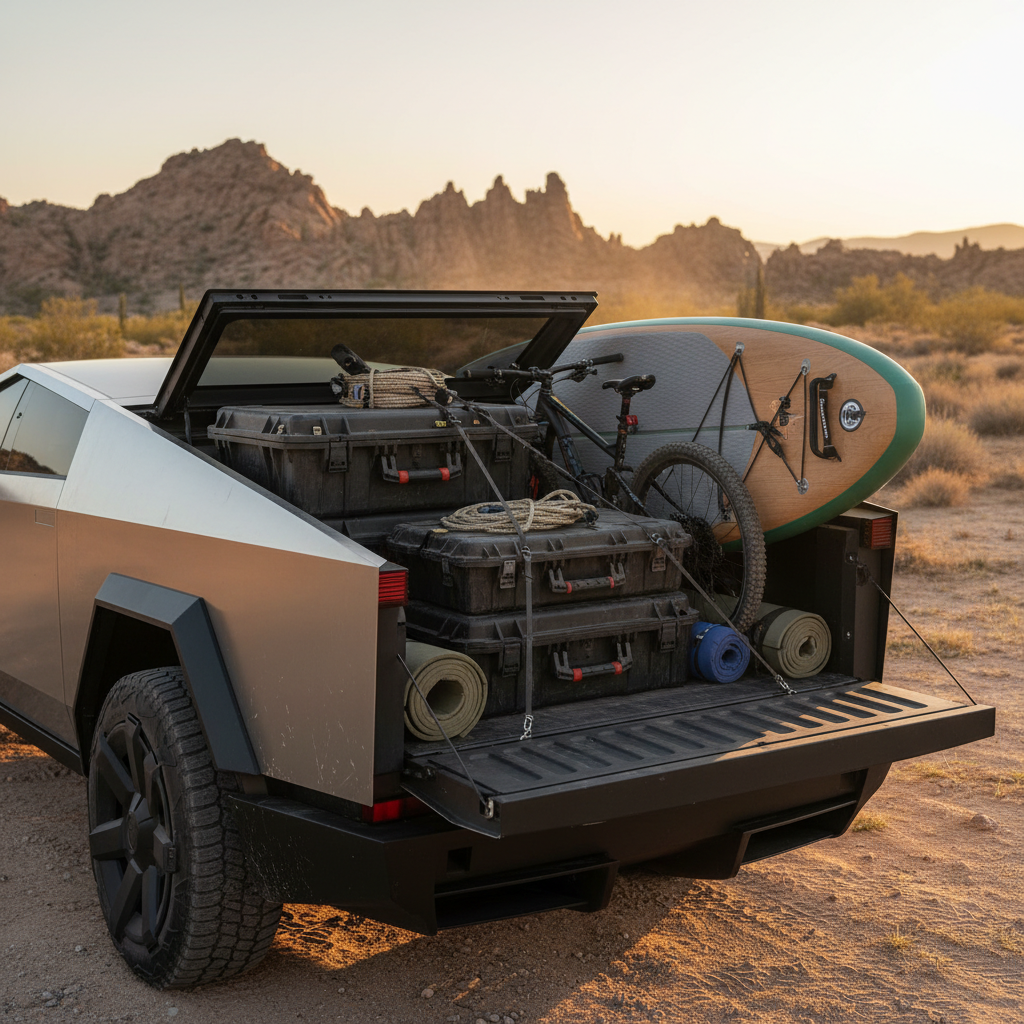
If you’re eyeing a stainless-steel wedge in your driveway, you’re probably asking a practical question beneath all the memes: **what is the 2026 Tesla Cybertruck reliability rating actually going to look like**, and should you trust it as a daily driver or work truck?
Important context
2026 Cybertruck reliability at a glance
Cybertruck reliability snapshot (2024–2026)
For 2026 specifically, you won’t see a finalized **reliability rating** from places like Consumer Reports or J.D. Power until enough trucks have been built, sold, and surveyed. But given the pattern so far, it’s reasonable to treat the 2026 Cybertruck as a **high‑risk, high‑novelty first‑generation vehicle** rather than a proven workhorse like a Tacoma or F‑150.
Early read on 2026
How reliability ratings for the Cybertruck are calculated
When you see phrases like **“much less reliable than average”** or a **45–65 out of 100** score attached to the Cybertruck, they’re not coming out of thin air. Here’s what goes into those numbers:
What goes into a Cybertruck reliability rating
Behind the scores you see in 2026 buying guides
Owner‑reported problems
Recalls & defects
Severity & repairability
Because the Cybertruck is still relatively low‑volume compared with mainstream pickups, each serious defect or safety recall carries more weight in these early reliability snapshots than it would for a truck that’s been iterated on for a decade.
How to use ratings, not worship them
What we know from 2024–2025 Cybertruck reliability data
By April 2026, the cleanest signal we have for **2026 Tesla Cybertruck reliability** is still what’s already happened with the 2024 and 2025 model years.
- Independent reliability trackers peg the Cybertruck around the **mid‑50s to mid‑60s out of 100**, labeled “mixed” or “fair.”
- Consumer Reports calls the 2024 Cybertruck **“much less reliable than other 2024 vehicles”**, driven by trouble spots in electronics and body hardware.
- The truck has already logged **double‑digit NHTSA recalls** in its first two model years, an unusually high count for such a new vehicle.
- Owner reviews on mainstream sites skew emotionally positive, many still “love” the truck, but complaints frequently mention build quality, software bugs, trim and panel issues, and service frustration.
The first‑year effect is real
Is 2025 better than 2024?
Some early data suggests 2025 Cybertrucks are slightly more reliable than the launch 2024 units, with fewer complaints per vehicle and better panel fit as production matures. That’s what you’d hope to see.
But those improvements happen against a backdrop of continued recalls and fresh software issues, so the truck is still not in “buy with full confidence” territory.
What that implies for 2026
If Tesla keeps iterating, 2026 models should be the best‑built Cybertrucks so far. The question isn’t whether they’re improving, it’s whether they can catch up to more conventional trucks that started from a far more sorted baseline.
For shoppers, that means 2026 is more defensible than 2024, but it’s still a bet on rapid learning rather than a long track record.
2026 Tesla Cybertruck recalls and safety concerns
Reliability and safety aren’t the same thing, but they’re tightly linked when failures involve steering, acceleration, or lighting. By 2026 the Cybertruck has already seen recalls that affect **2024–2026 VIN ranges**, including:
Major Cybertruck recalls affecting 2026 model year
Not exhaustive, but representative of the kinds of issues owners are facing.
| Recall type | Model years impacted | Issue summary | Fix type |
|---|---|---|---|
| Headlight brightness | 2024–2026 | Headlights too bright, risk of glare to oncoming drivers. | Over‑the‑air software update to adjust output. |
| Accelerator pedal | 2024 | Pedal pad could slip and trap pedal, increasing risk of unintended acceleration. | Physical repair in service center. |
| Windshield wiper motor | 2024 | Single giant wiper motor prone to failure, leading to visibility loss in rain. | Part replacement and software update. |
| Exterior trim & molding | 2024–2025 | Loose exterior trim/moldings that can detach while driving. | Inspection and reattachment/replacement. |
Always check your VIN on NHTSA.gov or the Tesla app for the latest recall status.
Why recalls matter for reliability
On top of official recalls, criticism has focused on the Cybertruck’s sharp edges, crash behavior, and real‑world fire incidents. Tesla maintains that the truck meets federal safety standards, but as of early 2026, **independent crash‑test data from NHTSA and IIHS is still limited** compared with mainstream pickups.
Common Cybertruck problem areas to watch
Looking across owner reports, forum posts, and service bulletins, several **problem patterns** show up again and again. If you’re considering a 2026 Cybertruck, or a used 2024–2025, these are the systems you want to scrutinize.
Top Cybertruck trouble spots so far
Based on early owner feedback and defect data
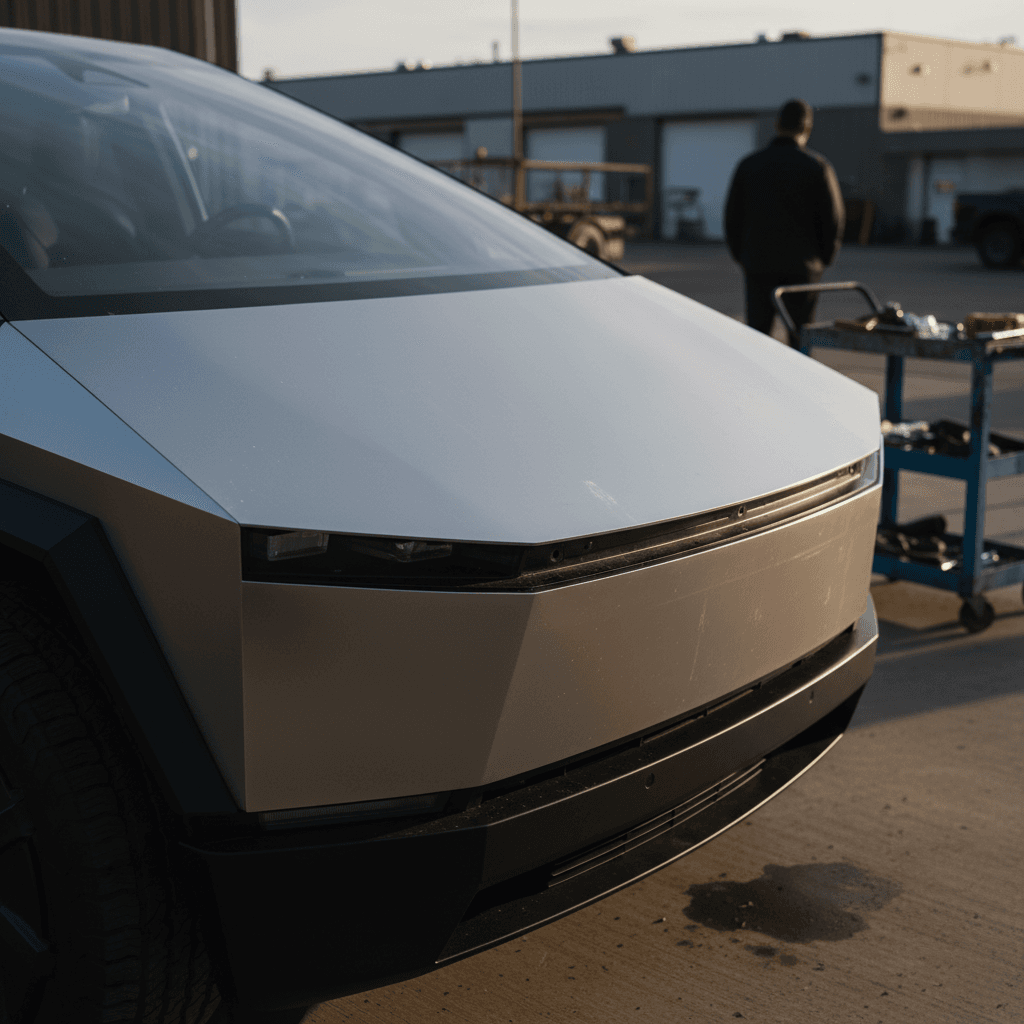
Body & build quality
Electronics & software
Wipers & visibility
Charging & 12V system
Steering & ride quality
Fit, seals & corrosion
Why used buyers have an edge
Warranty coverage on the 2026 Cybertruck
One bright spot in the **2026 Tesla Cybertruck reliability story** is the underlying coverage. Tesla’s warranties don’t magically prevent problems, but they do shift much of the financial risk away from you during the early years.
2026 Cybertruck key warranty terms (U.S.)
Approximate coverage for 2026 model year; always confirm final terms in your contract and local market.
| Coverage type | Typical term | What it covers | Notes |
|---|---|---|---|
| New Vehicle Limited Warranty | 4 years / 50,000 miles | Most non‑wear components: electronics, HVAC, interior, many body components. | Standard Tesla bumper‑to‑bumper coverage. |
| Battery & Drive Unit Warranty | 8 years / 150,000 miles | High‑voltage battery pack and drive units, with ~70% minimum capacity retention guarantee. | Key protection for degradation or HV component failure. |
| High‑Priced Propulsion‑Related Parts | 7 years / 70,000 miles (select states) | Additional coverage on major propulsion components, required by some state laws. | Cybertruck‑specific documents list items like HV battery assembly. |
| Corrosion / Body | Limited, varies by panel type | Corrosion‑through on body panels, not cosmetic staining. | Stainless construction is unusual, document any surface issues early. |
Warranty protects your wallet, not your time, repairs can still mean days or weeks without the truck.
What warranty doesn’t cover
For used buyers, warranty status is a big swing factor. A 2024 Cybertruck with 15,000 miles will usually have years of battery and drive‑unit coverage left. A high‑mileage work truck that’s burned through its 4‑year/50,000‑mile basic warranty is a very different risk profile.
Should you buy a 2026 Cybertruck new or used?
Once you strip away the hype, buying a 2026 Cybertruck is a bet on two things: **Tesla’s ability to keep improving build quality**, and your appetite for risk compared with more conservative pickups and EV trucks.
Who a new 2026 Cybertruck fits
- You value design and novelty more than rock‑solid uptime.
- You’re comfortable being part of Tesla’s real‑world beta cycle, including recalls and over‑the‑air fixes.
- You can afford backup transportation if the truck spends time in service.
- You plan to keep it long enough that you’re not counting on top‑tier resale.
Who should be cautious, or look used
- You need predictable uptime for work and can’t afford downtime.
- You live far from a Tesla Service Center, making fixes slow and inconvenient.
- You care more about total cost of ownership than being first with new tech.
- You’d rather let someone else eat the first‑year bugs, then buy a carefully vetted used example after issues are sorted.
Where a sorted used Cybertruck shines
At Recharged, every used EV, including Cybertrucks, comes with a Recharged Score report that verifies **battery health, high‑voltage system performance, and fair‑market pricing**. That doesn’t erase Tesla’s early‑build issues, but it gives you a far clearer, data‑driven view of one specific truck’s risk than you’ll get from a generic model‑year reliability score.
How Recharged evaluates used Cybertruck reliability
Because the Cybertruck is such a polarizing, complex vehicle, a simple “good” or “bad” reliability label doesn’t help much. When Recharged inspects a used Cybertruck, our EV‑specialist process focuses on **failure patterns that actually show up in the real world**.
Inside a Cybertruck’s Recharged Score report
How we turn a meme truck into a measurable risk profile
Battery & high‑voltage health
Structural & build quality
Software & safety systems
Cost‑of‑ownership modeling
Financing & trade‑in support
Test drive & real‑world feel
Ready to find your next EV?
Browse VehiclesChecklist if you’re considering a 2026 Cybertruck
Practical steps before you commit
1. Decide if you can tolerate downtime
Be blunt with yourself: if the truck spends a week in service for a recall or glitch, do you have backup transportation? If the answer is no, a first‑generation EV truck may not be the right fit.
2. Compare to alternative EV trucks
Cross‑shop the Cybertruck against options like Rivian R1T and Ford F‑150 Lightning. Look at their reliability records, dealer/service coverage, and how each fits your actual use case.
3. Read owner complaints, not just fan posts
Spend time on owner forums, NHTSA complaints, and balanced reviews. You’ll quickly see which issues are isolated and which are common patterns for Cybertruck owners.
4. Understand warranty and recall status
If you’re shopping used, verify basic, battery, and high‑priced‑parts warranty terms, plus recall completion, before you negotiate price. A truck that’s out of basic warranty should be discounted accordingly.
5. Get independent or Recharged inspection
Don’t buy blind. Use a specialist who understands EVs, or a platform like Recharged, to inspect battery health, software behavior, and build quality with Cybertruck‑specific checklists.
6. Model your total cost of ownership
Factor in charging costs, insurance, possible repairs, and depreciation. A flashy launch‑year truck that lives in the shop can cost more, all‑in, than a less exciting but more reliable EV.
2026 Tesla Cybertruck reliability FAQ
Frequently asked questions about 2026 Cybertruck reliability
Bottom line on 2026 Cybertruck reliability
If you’re wondering about the **2026 Tesla Cybertruck reliability rating**, the honest answer is that it’s still forming, and the early signs from 2024–2025 aren’t rosy. High recall counts, build‑quality complaints, and mixed owner experiences make this a truck you buy with your eyes wide open, not because a scorecard says it’s bulletproof.
For some drivers, the design, performance, and cultural cachet are worth living with recalls and service visits. For others, a more conventional EV truck, or a carefully vetted used Cybertruck with a strong inspection and a clean Recharged Score, will be the smarter long‑term play. Either way, treat the Cybertruck like what it is: a rolling science experiment with improving, but still uncertain, reliability, not a set‑and‑forget appliance.