

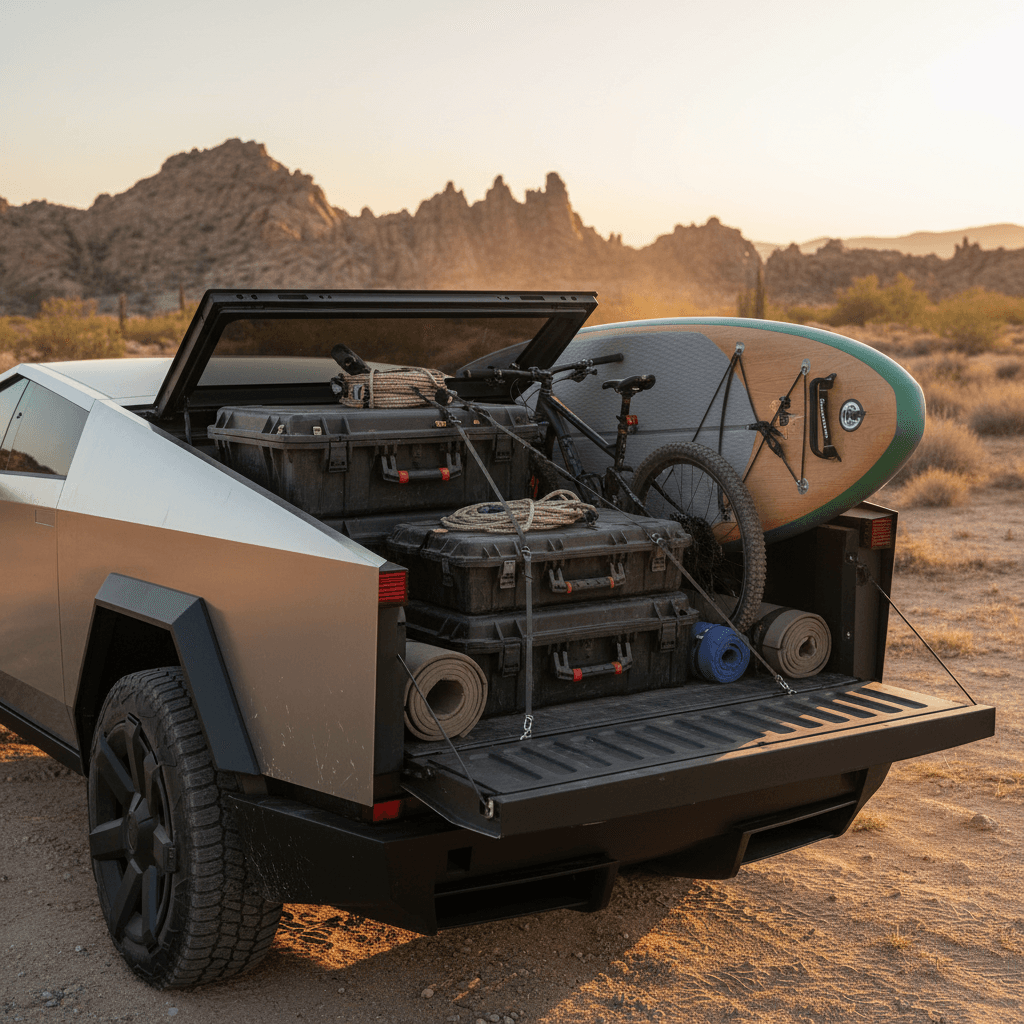
If you’re looking at a Tesla Cybertruck, you’re probably wondering less about 0–60 times and more about **what you can actually haul**. The good news: Tesla Cybertruck cargo space dimensions are competitive with other full‑size trucks and beat many big SUVs for enclosed storage. The catch is that the space is laid out very differently, so it pays to understand the numbers before you buy, especially if you’re shopping the used market.
Key Cargo Highlights
Overview: How Much Cargo Space Does the Cybertruck Have?
Tesla Cybertruck Cargo At a Glance
Tesla classifies the Cybertruck as a **full‑size electric pickup** with a 6.5‑foot composite bed, a power tonneau cover, under‑floor storage in the bed, and a front trunk. Official specs put the bed volume at roughly 121 cubic feet, with additional volume in the frunk and interior when you flip or fold the rear seats. In practice, that means you can carry sheet goods and job‑site gear like a truck, and still lock it up like an SUV.
Think “enclosed pickup”
Bed & Vault Dimensions: Length, Width & Height
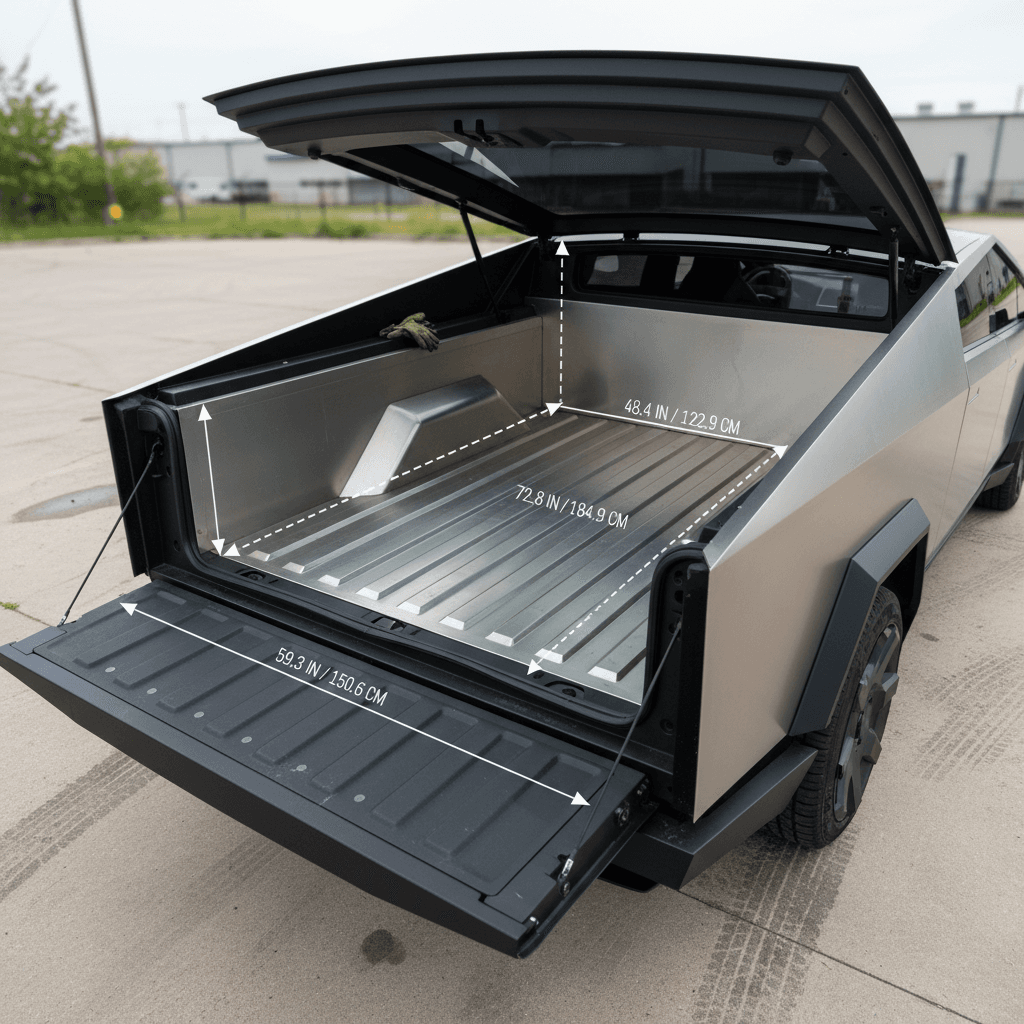
Tesla calls the Cybertruck’s bed the **“vault”** because it’s fully enclosed by a lockable roll‑top tonneau cover that integrates with the central locking system. For hauling, though, what matters are the hard numbers.
Tesla Cybertruck Bed (Vault) Dimensions
Key physical dimensions of the Cybertruck cargo bed for AWD and Cyberbeast trims.
| Measurement | Value (inches) | Value (feet) | Notes |
|---|---|---|---|
| Bed length at floor | ~77 in | ~6.4 ft | Tesla lists 71.8 in usable within the tailgate, ~77 in to the closed tailgate edge |
| Bed width at floor | 51.0 in | 4.25 ft | Between bed walls at the floor |
| Maximum bed height – front | 28.7 in | 2.4 ft | Forward part of the bed, near the cab |
| Maximum bed height – rear | 19.8 in | 1.7 ft | Near the tailgate opening |
| Tailgate opening width | ~50 in | ~4.2 ft | Usable width between rear bed walls |
| Tailgate height (drop) | ~20 in | ~1.7 ft | Approximate height from bed floor to top of gate when closed |
Measurements are approximate and can vary slightly by trim and liner/accessories.
The Cybertruck bed floor is slightly higher than many traditional full‑size pickups because the battery pack sits under the cabin and bed. That means **you get good depth in the front of the bed**, but the rear bed wall and tailgate are lower to make loading easier. The 51‑inch floor width is enough to lay standard **4×8 sheets flat on top of the wheel wells** with support, but they’ll rest above the lowest point of the bed unless you add a bed rack or use the tailgate as a support.
No pass‑through from cab to bed
Cargo Volume Numbers: Vault, Frunk & Interior
Where the Cybertruck gets interesting is total **enclosed** cargo volume. Traditional pickups leave most of their capacity open to the elements. The Cybertruck instead treats much of its space like a giant lockable trunk.
Cybertruck Cargo Volume Breakdown
Approximate volumes from independent testing and Tesla‑adjacent sources.
Bed (vault) volume
~121 cu ft of volume in the covered bed, according to testing. That’s with the tonneau closed and includes the space above the bed rails.
Under‑bed storage
Hidden compartment beneath the bed floor, roughly large enough for a carry‑on suitcase or a couple of toolboxes. Think of it like a truck‑sized spare‑tire well.
Frunk volume
Front trunk is modest but useful, about the size of a small hatchback trunk. In testing it fits one airline carry‑on suitcase plus a few soft bags.
One well‑documented test fit a **single carry‑on suitcase in the frunk**, an additional carry‑on in the under‑bed compartment, and still had the entire main bed free. With the rear seats folded or flipped up, reviewers have reported **22 carry‑on suitcases inside the cabin** alone, more than many three‑row SUVs can swallow.
SUV‑beating enclosed space
Real‑World Use: What Actually Fits in the Cybertruck
Specs are useful, but what most owners really ask is, “Will it fit?” Here’s how the Cybertruck’s cargo space translates into everyday jobs, moves, and adventures.
Common Hauling Scenarios in a Cybertruck
1. Home‑improvement runs
The 6.5‑foot bed will carry 8‑foot lumber and trim with the tailgate down. Plywood and drywall can ride flat on the wheel wells or on a simple rack. For longer 10‑ or 12‑foot boards, plan on bed extenders or flagging the load, there’s no cab pass‑through.
2. Family road trips
Suitcases, strollers, and coolers disappear into the covered vault, leaving the cabin clutter‑free. With the tonneau closed, everything is protected like it would be in an SUV, and the under‑bed tub is ideal for dirty items you don’t want inside.
3. Camping and overlanding
A row of storage bins, a cooler, and backpacks easily fit under the tonneau with room to spare for soft gear on top. The frunk can carry recovery gear or cooking kits, and onboard power outlets in the bed turn the Cybertruck into a rolling campsite.
4. Bikes, boards, and kayaks
Mountain bikes fit diagonally in the bed with the front wheels removed, or upright with fork mounts. Surfboards and kayaks typically ride on a rack system over the vault, keeping the bed free for other gear.
5. Worksite tools and materials
Tool chests, compressors, and job‑site bins can live in the vault full‑time. Because it’s lockable and weather‑sealed, you’re not constantly moving gear in and out like you might with an open‑bed truck.
Watch the tailgate and overhang
Interior Storage & Seats‑Up Cargo Options
Inside, the Cybertruck cabin is minimalist, big glass, big screen, not a lot of visual clutter. But look closer and you’ll find useful storage solutions that matter when you’re living with the truck every day.
Small‑item storage
- Large center console with configurable dividers for bags, tablets, or tools.
- Deep door pockets that can hold large water bottles and maps or job folders.
- Under‑seat bins when the rear cushions are flipped up, good for boots, recovery straps, or charging cables.
Rear seat flexibility
- Rear seatbacks fold and/or cushions flip up (depending on configuration), opening a long, flat(ish) space for gear you’d rather keep inside.
- Reviewers have fit 20+ carry‑on bags with the rear seats folded, turning the cabin into a secure cargo hold.
- Because the roofline slopes, very tall or bulky items still do better in the bed.
Use the cabin for valuables, vault for volume
Cargo vs. Towing & Payload: How It All Works Together
Like any pickup, the Cybertruck has limits on how much weight you can carry or tow. Depending on trim, payload falls in line with other electric trucks, and towing can reach into traditional half‑ton territory. But the battery pack and stainless body make the truck heavy, so it’s easy to hit payload limits before you run out of physical space.
- Check the door‑jamb or owner’s manual for your specific truck’s GVWR and payload rating.
- Remember that payload includes people, cargo in the bed, cargo in the cabin, and tongue weight from a trailer.
- If you’re loading the bed close to its volume capacity with dense materials (landscape blocks, gravel, bagged concrete), you’ll max weight long before you fill the vault.
Heavy loads change range and braking
Cybertruck Cargo Space vs Traditional Trucks & SUVs
If you’re cross‑shopping the Cybertruck with a conventional pickup or a three‑row SUV, it helps to think less in terms of raw numbers and more in terms of **how the space is shaped and protected**.
How the Cybertruck Stacks Up
Cargo space comparison with common alternatives.
Vs. full‑size pickups
Lengthwise, the Cybertruck’s 6.5‑foot bed is competitive with other crew‑cab trucks. Where it differs is height and enclosure: the powered tonneau and under‑bed tub make it far more secure and weather‑proof than an open‑bed truck without a cap, but the fixed sloping roof means you can’t just toss in a tall fridge and tie it down as easily.
Vs. large SUVs
Many full‑size SUVs offer 90–105 cu ft of maximum cargo space with all rear seats folded. The Cybertruck can match or beat that in total when you combine the vault, frunk, and interior. The trade‑off is that most of that volume is behind the cab, not directly behind a hatch, so loading is a bit more deliberate.
Great for:
- Tradespeople who want lockable bed storage without adding a cap.
- Families who road‑trip and want gear out of the cabin.
- Outdoor enthusiasts hauling bikes, boards, and camping gear.
Less ideal for:
- Folks regularly moving tall appliances or furniture.
- Owners who rely on a flat, boxy 8‑foot bed.
- Anyone needing a simple, low‑tech work truck with minimal body overhang.
Work Truck or Adventure Rig? Choosing Based on Cargo Needs
Because the Cybertruck blends traits of a pickup and an SUV, the right choice really comes down to how you’ll use that cargo space week in and week out. A contractor’s needs look different from a weekend mountain biker’s, and both are different from a family that wants a do‑it‑all vehicle.
Match Your Cargo Pattern to the Right Setup
Daily work & job‑site use
Plan for a bed organization system: drawers, bins, and racks turn the vault into a rolling tool room.
Verify that the under‑bed storage lid still opens and seals properly on any used truck you’re considering.
Consider whether stainless‑steel bodywork and high sides make loading heavier items harder than with your current truck.
Family hauler & commuter
Focus on how easy it is to load kids, strollers, and groceries with the high bed floor and sloped tail.
Test‑fit child seats and check how much space is left behind the front seats for bags and backpacks.
Decide whether you want a bed rack for bikes or a roof system to keep the vault free for luggage.
Adventures, towing & toys
Think through where kayaks, bikes, or overlanding gear will go, rack and accessory support is key.
Balance tongue weight from trailers against people and cargo in the bed so you don’t exceed payload.
If you camp often, the lockable vault makes a great place for kitchen kits and recovery gear that would normally live in totes.
Cargo planning tip
Buying a Used Cybertruck: Cargo Checks to Make
In the real world, Cybertrucks have already seen **hard work and hard miles**, and some early owners discovered depreciation the painful way. That’s an opportunity if you’re shopping used, but only if the cargo areas are still in good shape and the truck’s core systems check out.
Cargo‑Focused Inspection Tips for a Used Cybertruck
1. Inspect the vault interior closely
Look for gouges in the composite bed liner, cracks in tie‑down points, and any signs the under‑bed storage lid has been overloaded or jumped on. Excessive wear can hint at a life of constant heavy hauling.
2. Test the powered tonneau cover
Open and close it several times. It should move smoothly, seal evenly at the sides, and show no signs of binding. Repairs aren’t cheap, and a damaged cover compromises both weather protection and security.
3. Check under‑bed storage and drains
Lift the under‑bed panel and look for standing water, rust on hardware, or damaged seals. This compartment is invaluable for dirty gear, but only if it stays dry when closed.
4. Evaluate the frunk
Make sure the frunk opens, closes, and latches without force. Check for damage to the plastic tub and confirm that the trim around the hood still seals properly.
5. Look for suspension and tire clues
A truck that’s been run near max payload a lot can show sagging air suspension, worn bushings, or uneven tire wear. Those are red flags that the cargo capacity has been abused, not just used.
6. Review range and battery health
Heavy hauling and frequent towing can accelerate perceived range loss. When you shop with Recharged, every EV, including any Cybertruck we list, comes with a <strong>Recharged Score</strong> and independent battery‑health report so you know how the pack is holding up.
How Recharged can help
Ready to find your next EV?
Browse VehiclesFAQ: Tesla Cybertruck Cargo Space & Dimensions
Frequently Asked Questions
Bottom Line: Is the Cybertruck’s Cargo Space Enough for You?
If you think of the Tesla Cybertruck as a stainless‑steel conversation piece, you’ll miss the point. From a purely practical standpoint, its **6.5‑foot covered bed, under‑floor storage, and useful frunk** add up to serious capability. It can’t match a long‑bed work truck for open, boxy space, and it demands more planning when you’re hauling tall furniture or very long lumber. But for owners who value secure, weather‑proof cargo space as much as raw volume, it’s one of the more versatile electric trucks on the road.
If you’re eyeing a used Cybertruck, or any electric pickup, take the time to map your real‑world cargo needs against the numbers. Then, when you’re ready, explore Cybertruck and other used EV listings on Recharged. Every vehicle comes with verified battery health, transparent pricing, and expert EV support so you’re not just buying a striking shape, you’re getting a truck that genuinely works for the way you haul, tow, and live.
Tesla on Recharged
See all →


Related Articles

EV Service Centers: How to Choose, What to Expect, and When to Go
Learn how EV service centers work, what maintenance your electric car really needs, and how to choose the right shop, plus how Recharged supports used EV owners.
Used Nissan Leaf for Sale: Smart Buyer’s Guide for 2025
Shopping for a used Nissan Leaf for sale? Learn prices, range, battery health, tax credits, and how Recharged makes buying a used EV simple and transparent.

Porsche Taycan Cross Turismo: Range, Specs, and Used-Buyer Guide
Thinking about a Porsche Taycan Cross Turismo? Explore range, performance, practicality, charging, and what to know before buying one used in 2025.