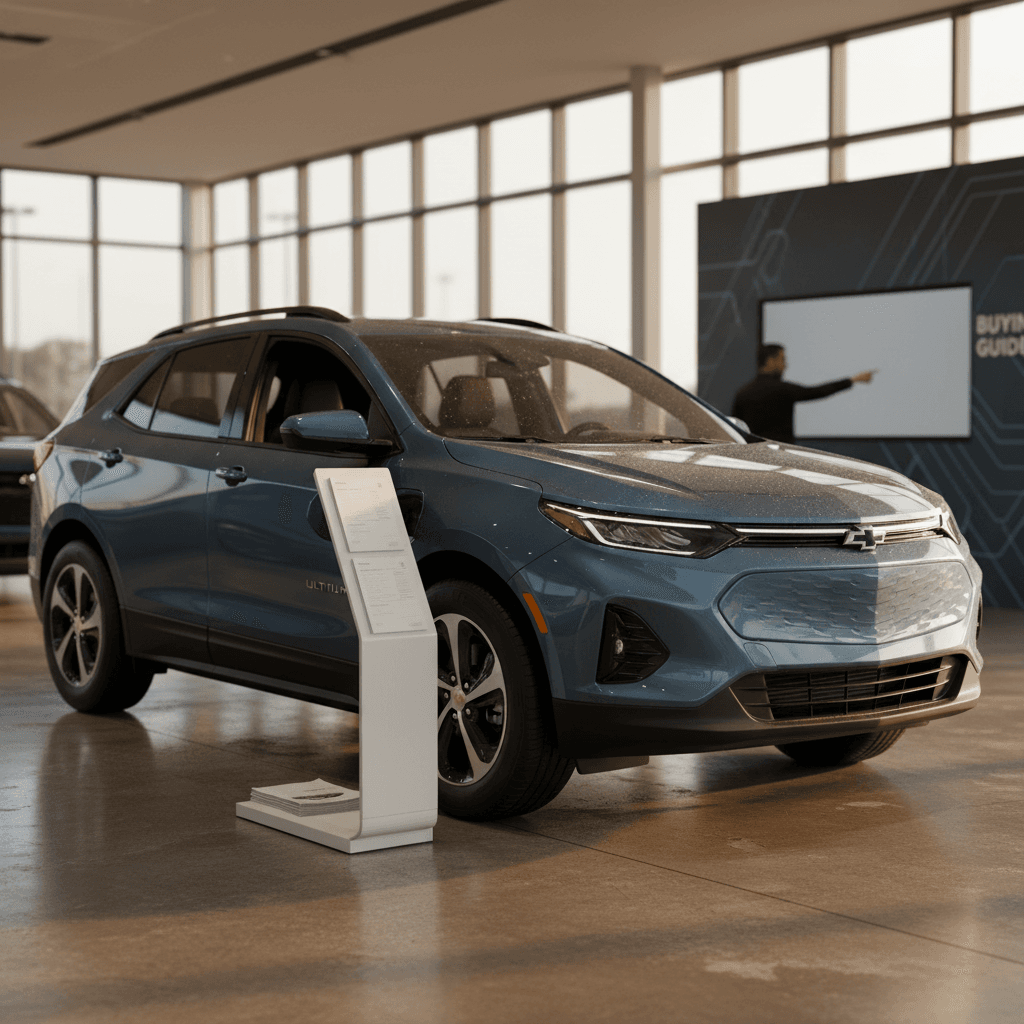
The 2026 Chevrolet Equinox EV is aimed squarely at shoppers who want a practical, reasonably priced electric SUV rather than a rolling science experiment. It rides on GM’s Ultium platform, promises up to roughly 320 miles of EPA‑rated range in front‑wheel‑drive form, and undercuts many rival EV SUVs on price. This buying guide walks you through trims, real‑world range, charging behavior, incentives, and whether a new or used Equinox EV makes sense for you.
A quick note on 2026 info
2026 Chevrolet Equinox EV overview
Positioning and platform
The Equinox EV is a compact, two‑row electric crossover on GM’s Ultium platform. It’s sized similarly to the gas Equinox but with a sleeker roofline, no frunk, and about 57 cubic feet of max cargo space with the rear seats folded.
- FWD single‑motor and optional AWD dual‑motor configurations
- Targeted 0–60 mph performance in the mid‑7‑second range for most trims
- Ultium battery pack around the high‑80s to low‑90s kWh usable capacity
Who it’s for
If you’re cross‑shopping a RAV4 Hybrid, Hyundai Ioniq 5, Kia EV6, or Tesla Model Y, the Equinox EV is meant to sit right in your consideration set.
- Daily commuters who want 250–320 miles of range without paying luxury‑EV prices
- Families that need real back‑seat space but not a third row
- First‑time EV buyers who prefer a mainstream brand and dealer/service footprint
Key 2026 Equinox EV numbers at a glance*
Specs can vary by trim
What’s new for the 2026 Equinox EV
For 2026, Chevy leans into simplification more than reinvention. The Equinox EV’s basic battery, charging hardware, and Ultium platform carry over from 2025, but trim structure and pricing are tweaked. The line now centers on LT 1, LT 2, and RS, replacing the earlier 1LT/2LT/3LT/2RS/3RS spread. Equipment groupings and option packages shuffle a bit, and paint choices update, but driving experience and range remain broadly familiar.
2026 changes that matter to buyers
Less about hardware, more about packaging and price
Simplified trims
Instead of a dizzying list of LT and RS combinations, the 2026 lineup focuses on LT 1, LT 2, and RS. That makes it easier to pick based on equipment level and budget.
Small price bump
Base LT 1 pricing nudges up versus 2025, but you’re still well below many rival EV SUVs. Keep an eye on dealer markups and discounting in your region.
V2H & NACS roadmap
GM continues rolling out bidirectional vehicle‑to‑home (V2H) capability and approved NACS adapters across its Ultium lineup. If those features matter to you, verify build dates and hardware support before you buy.
Why 2025 info still matters
Trims, range and pricing breakdown
Chevy’s official 2026 Equinox EV page and recent pricing guides show three core trims: LT 1, LT 2, and RS. AWD typically adds a few thousand dollars and cuts range slightly versus FWD. Exact numbers can move with options and destination charges, but the table below gives you a realistic shopping baseline in the U.S.
2026 Chevrolet Equinox EV trims overview
Approximate pricing and capability snapshot. Always verify the specific vehicle’s window sticker.
| Trim | Drivetrain | Est. Range (mi) | Key Highlights | Approx. MSRP* |
|---|---|---|---|---|
| LT 1 | FWD | ≈300–320 | Entry Ultium pack, cloth seats, basic driver‑assist, 11.5 kW AC charging | ≈$36,800 |
| LT 2 | FWD or AWD | ≈300 FWD / ≈280 AWD | More comfort & tech, larger wheels, often popular value pick | ≈$43,500 |
| RS | FWD or AWD | ≈300 FWD / ≈280 AWD | Sportier styling, larger wheels/tires, more tech and appearance upgrades | ≈$45,900 |
FWD range figures reflect GM’s published estimates and 2025 EPA ratings where 2026 data isn’t finalized yet.
Equinox EV vs gas Equinox pricing
- Best value for most buyers: LT 2 FWD – balances range, price, and features.
- Best for snowbelt drivers: LT 2 or RS with AWD – worth it if you regularly see snow/ice.
- Budget‑conscious new‑EV shopper: LT 1 FWD – simplest and usually easiest to find near MSRP.
- Style‑driven buyer: RS – expect slightly less efficiency from larger wheels and tires.
Charging performance & real‑world range
On paper, the Equinox EV looks strong: a roughly 85–90 kWh usable battery, advertised peak DC fast‑charge rates around 150 kW, and EPA estimates near 320 miles for FWD trims. In practice, owner reports from 2024–2025 Equinox EVs suggest a more nuanced story, especially on public fast charging.
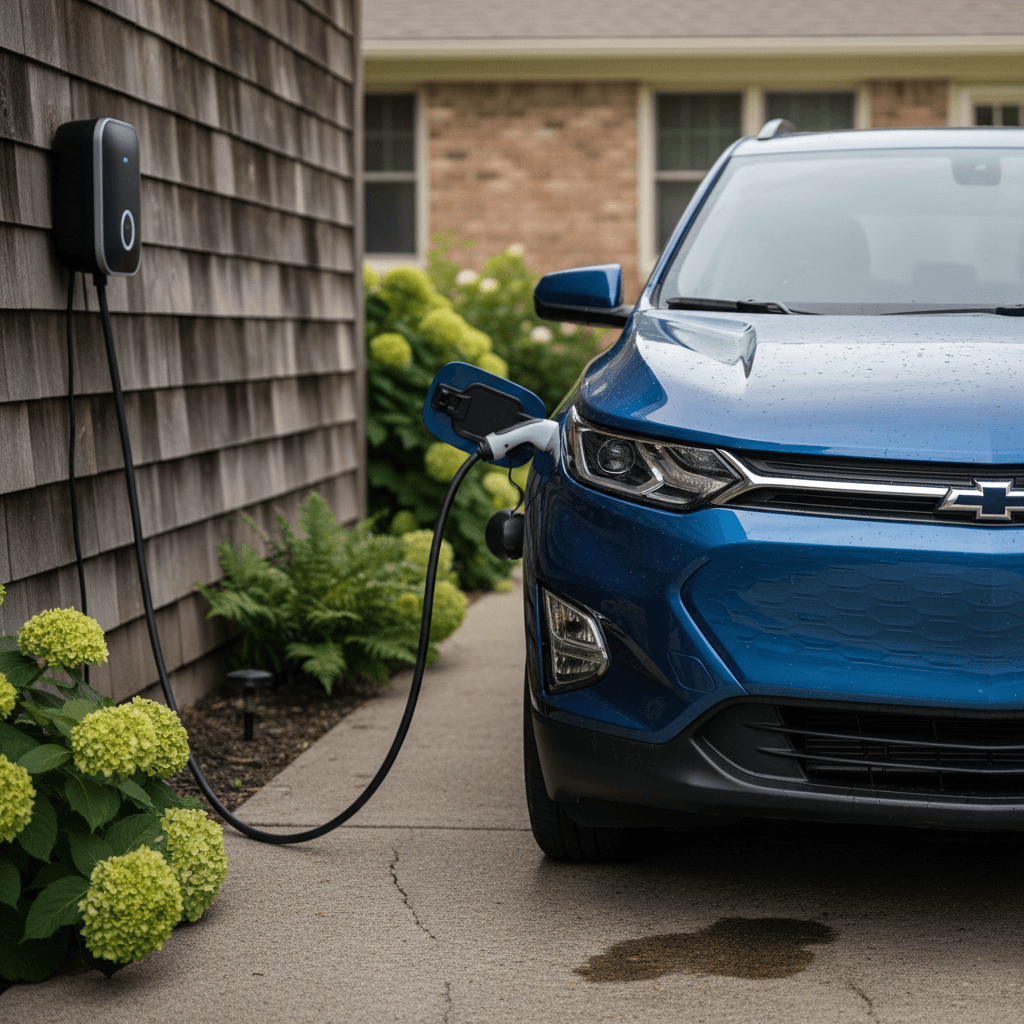
How the Equinox EV charges in the real world
What you can expect at home and on the road
Level 1 (120V)
Good for emergencies or very low daily mileage. Expect roughly 3–4 miles of range per charging hour. Not ideal as your primary setup.
Level 2 (240V)
With the onboard 11.5 kW charger and a 40–60 amp circuit, you can add 25–35 miles of range per hour. For most owners, this fully replenishes the battery overnight.
DC fast charging
GM targets up to ~150 kW peak on compatible stations, but owner tests often see lower sustained power, especially on crowded or aging public hardware. Plan around 25–45 minutes to go from about 10% to 80% in good conditions.
Fast charging frustration is real
Real‑world range expectations
- City/suburban mix (efficient driver): Many owners report 3.0–3.5 mi/kWh in mild weather, translating to 260–320 real‑world miles.
- Highway at 70–75 mph: Expect more like 2.4–2.8 mi/kWh, so a realistic 220–260 miles between charging stops.
- Winter driving: Cabin heat, cold batteries, and snow can easily cut range by 20–35%, like most EVs.
Tips to protect range and battery health
- Use departure pre‑conditioning when plugged in so the pack and cabin warm on grid power, not battery.
- Aim to live between about 20% and 80% state of charge for daily use.
- On road trips, start charging around 10–20% and stop around 60–70% if stations are frequent, that’s where charge rates are fastest.
NACS adapter & Tesla Superchargers
Ownership costs, incentives & tax credits
Sticker price is just the start. What really matters is what the 2026 Equinox EV costs you to own over time. Between federal incentives, state/local rebates, utility programs, and lower fueling and maintenance costs, an Equinox EV can pencil out better than a similarly equipped gas compact SUV, especially if you buy smart.
Why the Equinox EV’s total cost can be compelling
Tax credit fine print
- Check whether your utility offers off‑peak EV rates or home‑charger rebates.
- Price out your commute in electricity vs. gasoline using your local kWh rate.
- Ask insurers how an Equinox EV compares to your current vehicle on premiums.
- If you can, stack incentives: federal credit, state rebate, utility programs, and dealer or manufacturer cash.
Should you buy new or used Equinox EV?
With 2024 and 2025 Equinox EVs already in owners’ hands, the used market is beginning to form just as the 2026 model year arrives. That gives you a choice: pay up for a new build with the latest software and hardware, or hunt for a well‑priced used example with known history and a verified battery.
When a new 2026 Equinox EV makes sense
- You want full factory warranty coverage and the latest software and hardware revisions.
- You’re counting on the new‑EV federal tax credit or lease incentives to make the numbers work.
- You plan to keep the vehicle 7–10+ years and care about long‑term support and resale value.
When a used Equinox EV is smarter
- You want to avoid the steepest first‑year depreciation and let someone else eat early kinks.
- You’re open to 2024–2025 builds that are mechanically similar and may be thousands less than new.
- You value verified battery health data over “brand‑new” status.
How Recharged can help on the used side
Ready to find your next EV?
Browse VehiclesHow the Equinox EV compares to other EV SUVs
The 2026 Equinox EV sits in a crowded, fast‑moving segment that includes the Hyundai Ioniq 5, Kia EV6, Tesla Model Y, Ford Mustang Mach‑E, and its bigger sibling, the Chevy Blazer EV. Where it stands out is price‑to‑range value and mainstream friendliness rather than outright performance or brand cachet.
Equinox EV vs key EV‑SUV rivals (high‑level view)
Approximate U.S. market positioning as of early 2026.
| Model | Size class | Max range (approx.) | Base MSRP (approx.) | Notable strengths |
|---|---|---|---|---|
| Chevy Equinox EV | Compact | ≈320 mi | ≈$36,800 | Strong range for price, mainstream brand, Ultium platform |
| Chevy Blazer EV | Midsize | ≈320+ mi | Higher than Equinox | More space, performance‑oriented trims, higher price |
| Hyundai Ioniq 5 | Compact | ≈303 mi | Mid‑$40Ks | Ultra‑fast charging, design, warranty |
| Tesla Model Y | Compact/midsize | ≈330 mi | Low‑$40Ks | Supercharger network, software, efficiency |
| Ford Mustang Mach‑E | Compact | ≈320 mi | Low‑$40Ks | Driving feel, styling, BlueCruise on some trims |
Always check current specs and pricing; EVs evolve quickly.
Equinox EV’s main value pitch
Equinox EV inspection checklist (especially for used)
If you’re looking at a used 2024–2026 Equinox EV, whether through a private seller, franchise dealer, or marketplace like Recharged, you’ll want to look past the paint and wheels. Here’s a focused checklist tailored to this model and its Ultium underpinnings.
Chevy Equinox EV buyer’s checklist
1. Verify battery health and DC fast‑charge history
Ask for an independent battery‑health report if possible. Heavy DC fast‑charging, especially at high states of charge, can stress packs over time. With Recharged, the Recharged Score includes a detailed battery‑health snapshot so you’re not guessing.
2. Check software level and recall status
GM has been iterating software for Ultium vehicles, including charging behavior and driver‑assist systems. Confirm that all recalls and service bulletins are completed and the car is on the latest recommended software.
3. Inspect charging hardware
Test both AC and DC charging before you buy. Plug into a Level 2 station to confirm it pulls normal power, and if possible do a brief DC fast‑charge session to make sure rates look healthy and there are no error messages.
4. Look for uneven tire wear and wheel damage
Heavier EVs like the Equinox EV can be hard on tires. Check for inside‑edge wear, cupping, or sidewall damage, especially on RS trims with larger wheels. Budget for a fresh set if you see anything concerning.
5. Confirm driver‑assist feature set
Verify that systems like adaptive cruise, lane‑keeping assist, and parking cameras work as advertised. Some features may be optional or subscription‑tied; read the build sheet carefully so you know what you’re paying for.
6. Ask about home‑charging setup
If the previous owner installed a home charger, clarify whether it’s included, who owns it (vs. utility), and whether it’s appropriately sized for the Equinox EV. A 40–60 amp Level 2 unit is ideal for most owners.
Don’t skip a pre‑purchase EV inspection
Financing, trade‑ins & smart shopping tips
Because the Equinox EV is a relatively affordable Ultium SUV, your biggest levers are incentives, financing terms, and how you handle your current vehicle. Tight inventory can still make EV pricing choppy, but patient shoppers with their numbers dialed in usually come out ahead.
Dial in your payment and incentives
- Get pre‑qualified for financing before you step into a showroom so you know your budget ceiling and rate.
- Compare dealer‑arranged financing to third‑party options; sometimes manufacturer‑subvented rates win, sometimes not.
- If you lease, ask explicitly how any federal incentive is being applied to your capitalized cost.
Make your current car work for you
- Collect instant offers or trade‑in quotes from multiple sources; spreads of $1,000–3,000 aren’t uncommon.
- Consider consignment or marketplace‑style selling if you have time and want to maximize proceeds.
- With Recharged, you can trade in or get an instant offer as part of a fully digital purchase, then arrange nationwide delivery of your next EV.
Use total cost of ownership to stay grounded
2026 Equinox EV buying FAQ
Common questions about buying a 2026 Chevrolet Equinox EV
Bottom line: Who the 2026 Equinox EV is for
The 2026 Chevrolet Equinox EV is not the flashiest EV SUV, and it won’t win every spec‑sheet battle. What it offers is a familiar compact‑SUV footprint, respectable range, and a price that undercuts many rivals, wrapped in a package backed by Chevy’s dealer and service footprint. If you mostly charge at home, drive under 250 miles a day, and want a pragmatic EV rather than a conversation piece, it belongs on your short list.
Your decision ultimately comes down to how you drive and how you value time, money, and convenience. If you prioritize blazing‑fast DC charging and cutting‑edge software, keep cross‑shopping. If you want accessible, predictable EV ownership from a mainstream brand, and especially if you’re open to a lightly used 2024–2025 example with a Recharged Score Report backing its battery health, the Equinox EV can be a quietly excellent choice.