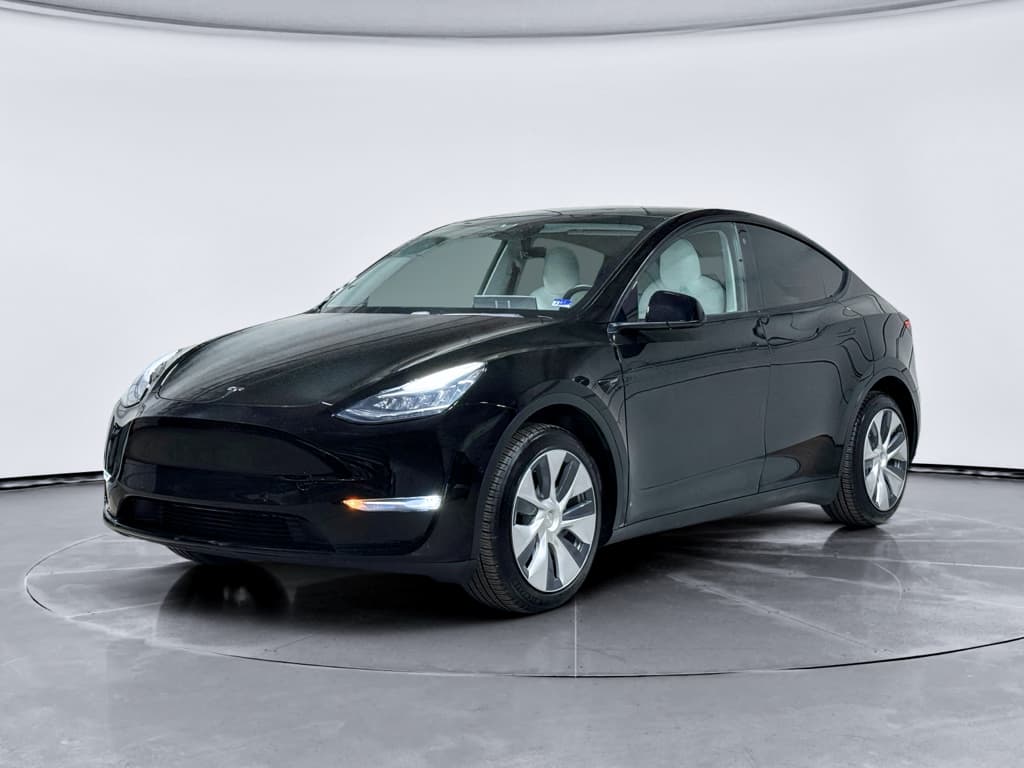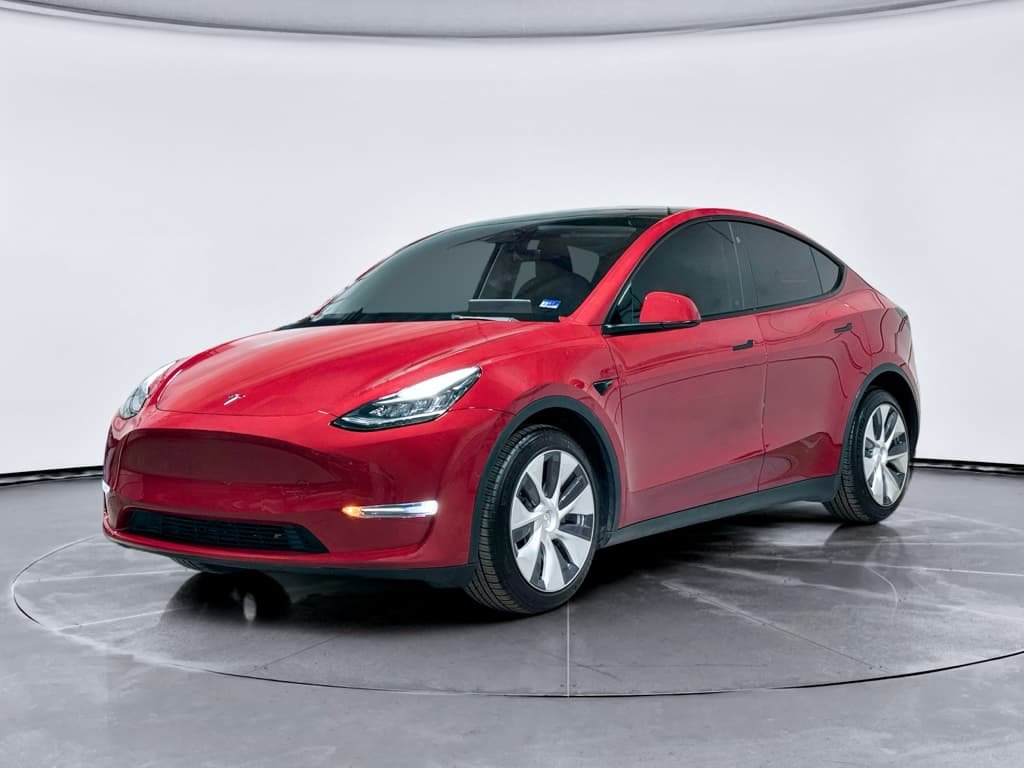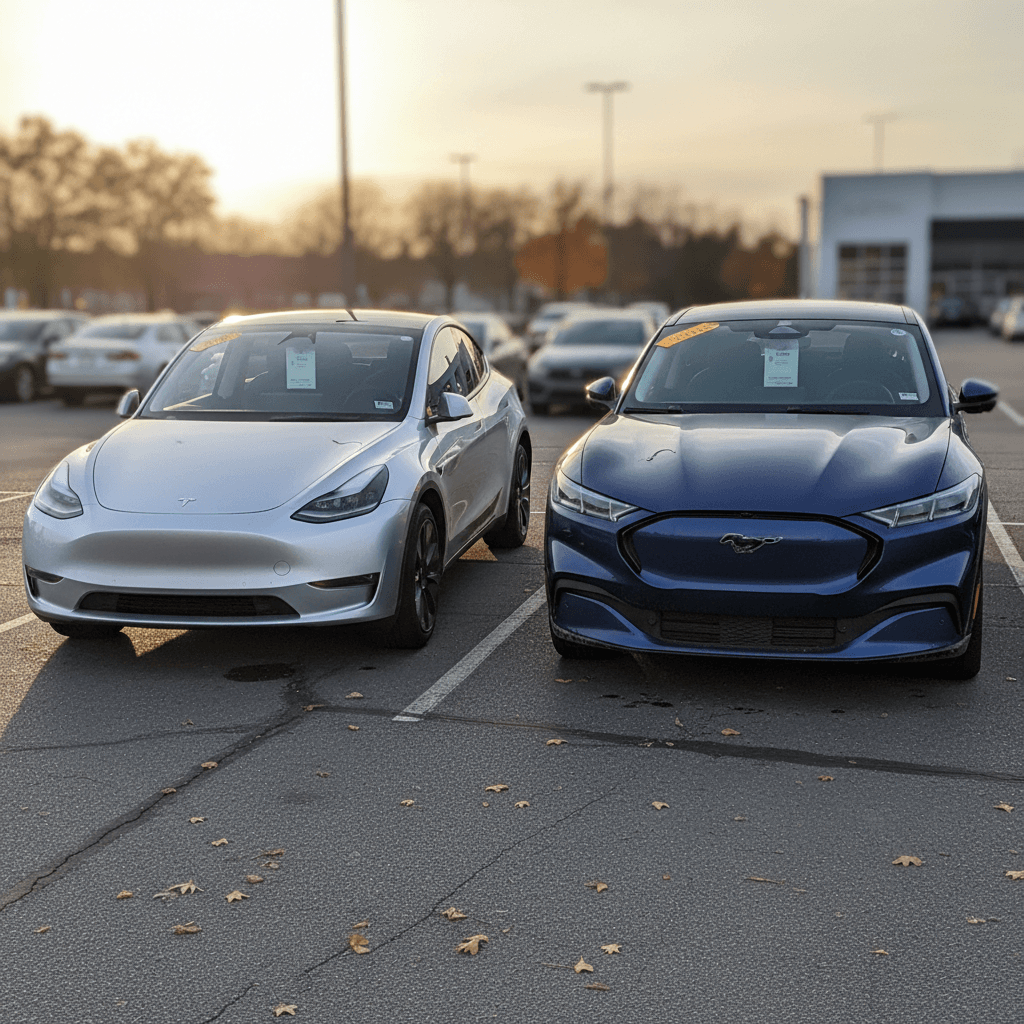
You’re shopping for a compact electric SUV, you’ve drawn a hard line at $30,000, and the two heavyweights on your shortlist are the used Tesla Model Y and the used Ford Mustang Mach‑E. Same basic idea (family EV crossover), very different personalities. One is Silicon Valley minimalism with a messianic charging network; the other is Detroit’s electric reinvention of an American icon. Under $30k, though, the romance dies quickly if you buy the wrong one.
The short version
Why this comparison matters under $30,000
Both the Model Y and Mustang Mach‑E were pricey status objects when they launched; now they’re filtering into the used market in volume, often dipping under $30k as depreciation and rapid EV price cuts do their work. That $30,000 cap is where they collide head‑on with each other, and with a lot of very good used gas crossovers. Get this decision right and you’ve basically hacked the family‑car game for the next decade; get it wrong and you’ve bought an expensive science project.
Used Model Y & Mach‑E market snapshot (U.S. late 2025–early 2026)
Can you actually find a used Model Y or Mach‑E under $30,000?
Let’s start with the practical question: are you chasing unicorns? Thankfully, no. By late 2025, multiple pricing studies and real‑world listings showed used Model Y prices frequently dipping under $30,000, especially for 2020–2021 all‑wheel‑drive cars with higher mileage. That trend has continued, even with a modest rebound in used Tesla pricing in early 2026.
Used Tesla Model Y under $30k
- Commonly 2020–2021 Long Range AWD or 2021 Standard Range/Long Range RWD with higher mileage (70,000+ miles).
- Occasional aggressive deals on 2022s from fleets or prior price‑cut cycles.
- Tesla’s frequent new‑car price cuts and demo discounts have accelerated depreciation, pulling older trims below $30k.
- Inventory is thick: the Model Y has outsold every other EV by a wide margin, so there’s a lot of used metal sloshing around auctions and trade‑ins.
Used Ford Mustang Mach‑E under $30k
- Plenty of 2021–2022 Mach‑E Select and Premium Standard Range cars now sit comfortably under $30,000.
- More than a few 2021–2022 Premium Extended Range examples flirt with $30k, especially with higher miles.
- Ford’s heavier discounts on new EVs and lukewarm early demand mean steeper used‑market drops than Tesla in many regions.
- Because Mach‑E volume is lower overall, you may need to search a wider radius than for a Model Y.
Factor in the used EV tax credit
Which years and trims show up under $30k?
Under $30,000, you’re not shopping the full catalog; you’re fishing in a specific part of each model’s family tree. Think earlier model years, sensible trims, and some compromises on mileage or options.
Typical Model Y & Mach‑E configurations you’ll see under $30,000
These are the configurations most commonly found with asking prices at or just under $30,000 in the U.S. as of late 2025–early 2026. Exact availability and pricing vary by region and mileage.
| Model | Likely Years Under $30k | Common Trims | Typical Mileage Range | What You Sacrifice |
|---|---|---|---|---|
| Tesla Model Y | 2020–2021 (occasional 2022) | Long Range AWD, some early RWD | 60,000–100,000+ miles | Higher miles, more cosmetic wear, fewer years left on basic warranty |
| Ford Mustang Mach‑E | 2021–2023 | Select SR, Premium SR; some ER near $30k | 35,000–80,000 miles | Shorter range on SR, slower DC fast charge vs Tesla, some early‑build quirks |
| Stretch candidates | 2022+ Y, 2022–2023 Mach‑E ER | Well‑equipped trims with nicer wheels/audio | Varies widely | You may need to stretch slightly over $30k or accept very high mileage |
Focus your search on these trims first if you’re capped at $30k.
Range and performance: Model Y vs Mach‑E
Under $30,000, you’re choosing between slightly different philosophies of electric motion. The Tesla is the ascetic marathon runner, light on its feet, obsessed with efficiency. The Mach‑E is the gym‑rat Mustang that discovered therapy; beefier, warmer, a little less ruthlessly efficient.
How they drive and how far they go
Think in terms of real‑world range and daily feel, not brochure numbers.
Tesla Model Y (typical sub‑$30k examples)
- Common battery sizes in this price band are mid‑70 kWh usable, with EPA ranges around 300 miles when new.
- In practice, a high‑mileage 2020–2021 Long Range Y still often delivers 230–260 miles of comfortable highway range when charged to 90%.
- 0–60 mph in the mid‑4 to mid‑5‑second range for AWD trims, quicker than most family SUVs and many sports sedans.
- Ride quality is firm; on rough pavement the Y can feel nervy and busy, especially on 19–20" wheels.
Ford Mustang Mach‑E (typical sub‑$30k examples)
- Standard Range packs are smaller and heavier than the Tesla’s, so you’re usually in the 210–240‑mile real‑world zone when new.
- Extended Range packs narrow the gap but often sit closer to $30k, especially on Premium trims.
- Most sub‑$30k Mach‑Es are brisk rather than brutal: 0–60 mph in the mid‑5s to mid‑6s, perfectly adequate for daily use.
- Ride is generally quieter and more compliant than the Model Y, with better isolation from bumps and road noise.
Don’t shop on EPA range alone
Charging access: Superchargers vs BlueOval and others
Here’s where Tesla has been playing on home field for a decade. The Supercharger network is still, in most of North America, the EV equivalent of Starbucks: omnipresent, predictable, and rarely out of order. But the gap is closing, and under $30,000 you can’t assume every Model Y has the same privileges.
Model Y: the Supercharger advantage (with caveats)
- Most used Model Ys in this price band can access Tesla’s Supercharger network, often with faster charge curves than the Mach‑E on comparable DC fast chargers.
- Newer Ys and many regions now rely on the NACS standard, which third‑party automakers are adopting; that’s good news for long‑term plug compatibility.
- On road trips, the Tesla’s navigation tightly integrates charger availability, pre‑conditioning the battery to hit the charger warm and ready.
- Reality check: some earlier Ys had free unlimited Supercharging that may not transfer to you; assume you’ll pay per kWh or minute.
Mach‑E: more options, more variability
- Ford’s BlueOval Charge Network ties together third‑party stations like Electrify America, ChargePoint, EVgo and others under one billing umbrella.
- DC fast‑charging peaks are typically 110–150 kW, and sessions can be slower or more inconsistent than a good Supercharger stop.
- Public CCS networks have improved but still show more site‑to‑site variability in uptime and charger quality.
- As NACS rolls out across brands, newer Mach‑E models and adapter strategies will ease access to Superchargers, but check what your specific car supports.
Think about your real life, not your dream road trip
Reliability, recalls, and battery health
Tesla’s never been shy about shipping the future before it’s fully debugged; Ford, for its part, used early Mach‑E buyers as beta testers more than it would like to admit. Under $30,000, you’re living with the consequences of those first‑generation growing pains, and they’re not identical.
Which one ages more gracefully?
What owners and studies suggest about long‑term dependability.
Tesla Model Y reliability patterns
- High‑volume production and rapid iteration mean some early build‑quality gripes: paint, trim, squeaks, rattles.
- Electrically, the powertrain and battery have generally aged well; major pack failures are rare but expensive when they occur.
- Tesla’s software‑heavy design means many annoyances are fixable with over‑the‑air updates, but also that you’re at the mercy of those updates.
- Independent reliability scores often rate the Model Y below average for minor issues, above average for drivetrain durability.
Ford Mustang Mach‑E reliability patterns
- Early Mach‑E builds saw a cluster of recalls (HV battery contactors, software issues, charging faults). Most have factory fixes on record; verify they’ve been done.
- Recent reliability data often places the Mach‑E ahead of the Model Y on overall dependability, thanks largely to fewer infotainment and trim complaints.
- Battery and drivetrain have held up well; extended‑range packs are robust but expensive out of warranty like any modern EV battery.
- Traditional dealer network can be a blessing (nearby service) or a curse (inconsistent EV expertise) depending on where you live.
Battery replacement is a four‑figure mistake
Comfort, space, and tech experience
Under $30k, you’re unlikely to get every bell and whistle, so you need to decide which sins you can live with: a firmer ride and austere cabin, or slower software and a chunkier, more traditional cockpit.
Model Y: Scandinavian spaceship with a firm handshake
- Spacious cabin with an airy glass roof and excellent rear legroom; cargo space is among the best in class.
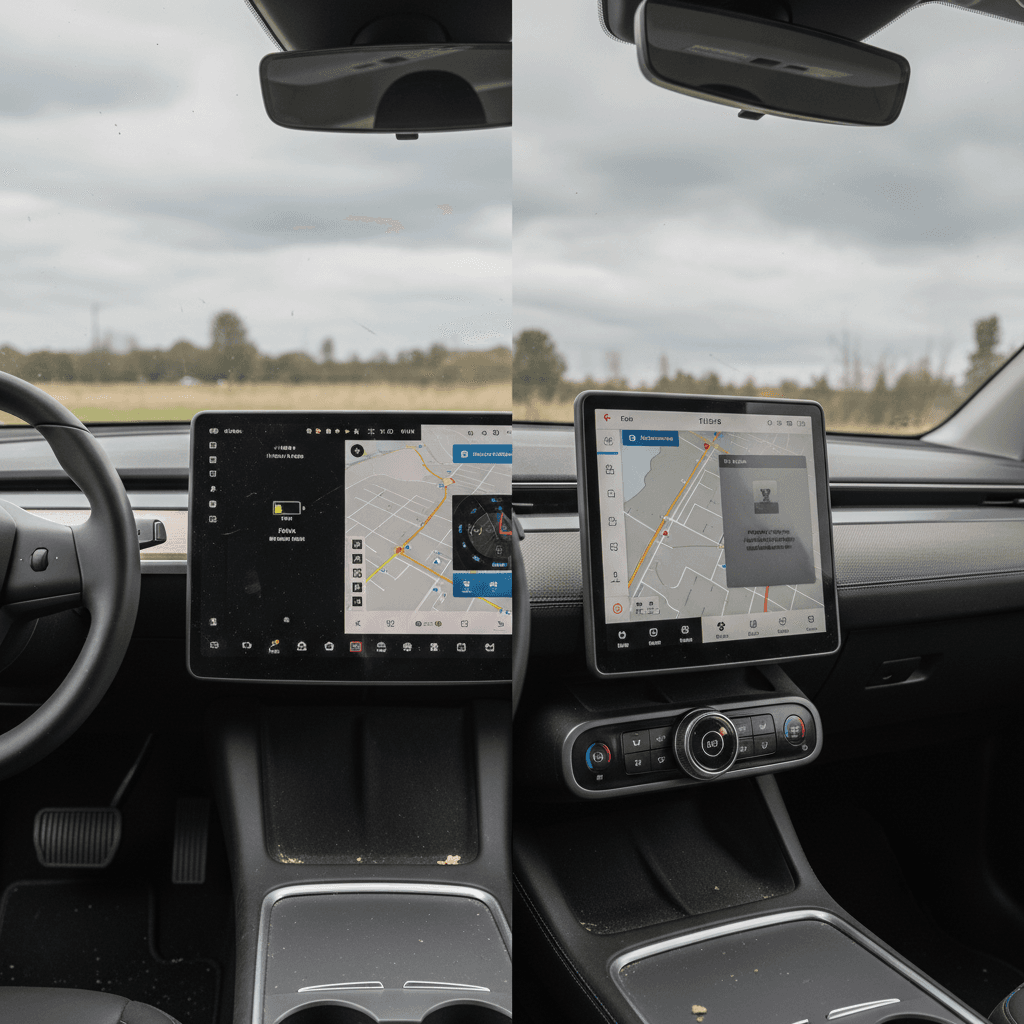
- Ultra‑minimalist interior: nearly everything lives on the central touchscreen. If you like physical buttons, this may feel like punishment.
- Seats are supportive but the ride can be stiff and slightly busy, especially on rough urban pavement.
- Software and UI are segment‑leading: navigation, trip planning, and energy prediction are deeply integrated and frequently updated.
Mach‑E: modern Mustang family car
- More conventional crossover cockpit with a vertical center screen and a small digital cluster behind the wheel.
- Ride is generally quieter and softer than the Model Y, making it the better highway companion for many families.
- Rear seat and cargo space are good but not quite as cavernous as the Y; tall rear passengers may notice the difference.
- Ford’s software has matured but still lags Tesla for polish; over‑the‑air updates exist but feel less seamless.
Family‑use verdict
Ownership costs: insurance, maintenance, depreciation
This is where the monthly reality check arrives. Under $30,000, the sticker price is only part of the story; insurance, tires, and how fast the thing continues depreciating all matter.
What it costs to live with them
Not just fuel savings, think insurance, service, and resale.
Insurance
- Across many quotes, the Model Y often carries higher premiums than the Mach‑E, sometimes dramatically so.
- Reasons: pricier glass, Tesla‑specific repair procedures, and strong performance.
- The Mach‑E, despite the Mustang badge, can be notably cheaper to insure thanks to lower parts pricing and Ford’s repair network.
Maintenance & repairs
- Both vehicles avoid oil changes and most traditional ICE maintenance; think tires, brakes, cabin filters.
- Tesla’s mobile service is a genuine advantage if you live far from a service center.
- Ford dealers are everywhere, but EV literacy varies widely; vet your local store’s EV reputation.
Depreciation & resale
- Recent years saw sharp drops in used EV prices overall, with the Model Y leading in pure depreciation off a high original price.
- That works in your favor now: under $30k, a Y can feel like a lot of car for the money.
- Mach‑E values have also softened; the flipside is that both will likely keep sliding, so buy for the long term, not a one‑year flip.
Use total monthly cost, not just the price
Key specs side‑by‑side (typical sub‑$30k examples)
Specs vary by year and trim, but if you imagine the kind of Model Y and Mach‑E you’ll actually see under $30,000, the comparison looks something like this:
Used Tesla Model Y vs Ford Mustang Mach‑E under $30k: typical spec comparison
These are representative specs for common sub‑$30k configurations, not exact for every car. Always confirm the specific trim and battery on any listing.
| Used Tesla Model Y (Long Range AWD, 2020–2021) | Used Ford Mustang Mach‑E (Select / Premium SR, 2021–2022) | |
|---|---|---|
| Approx. price (U.S.) | $26,000–$30,000 | $24,000–$30,000 |
| Typical mileage | 60,000–100,000+ mi | 35,000–80,000 mi |
| Original EPA range | ≈ 316–330 mi | ≈ 230–247 mi (SR), ≈ 270+ mi (ER) |
| Real‑world range today* | ≈ 230–260 mi | ≈ 200–230 mi (SR), more for ER |
| DC fast‑charge peak | Up to ~250 kW (V3 Supercharger) | ~110–150 kW depending on pack |
| 0–60 mph | Mid‑4s to mid‑5s (AWD) | Mid‑5s to mid‑6s (non‑GT) |
| Cabin character | Minimalist, tech‑heavy, firmer ride | More traditional crossover, quieter, softer ride |
| Charging ecosystem | Tesla Supercharger + growing NACS support | CCS networks via BlueOval; NACS access evolving |
| Insurance tendency | Often higher | Often lower |
Think of this as the rough shape of what you’ll find at or under $30,000.
About that real‑world range
How to choose: Model Y vs Mach‑E under $30k
In this price band, you’re not choosing an abstract brand; you’re choosing how you want to live with an EV every day. Here’s the honest, no‑spin breakdown.
Choose a used Tesla Model Y under $30k if…
- You road‑trip a lot and want effortless charging and route planning on the Supercharger network.
- You value efficiency and performance over creamy ride quality.
- You’re comfortable with a software‑defined car: constant updates, new UI layouts, and the occasional quirk.
- You need maximum space for kids, strollers, dogs, and gear.
- You’re okay with higher mileage in exchange for the Tesla ecosystem and stronger resale.
Choose a used Ford Mustang Mach‑E under $30k if…
- You mostly drive locally with home charging, and a bit less range is fine.
- You prefer a quieter, more compliant ride and a cabin that still has some physical controls.
- You’d rather have a newer, lower‑mileage vehicle than a faster badge or extra range you rarely use.
- Your local Ford dealer has strong EV reviews and convenient service hours.
- Insurance costs are a major part of your decision and quotes favor the Mach‑E.
Shopping checklist for used EVs under $30k
Regardless of which badge ends up in your driveway, the way you shop matters as much as the name on the grille. Use this checklist as a guardrail against expensive regrets.
Essential checklist for a used Model Y or Mach‑E under $30,000
1. Get objective battery health data
Ask for a <strong>formal battery health report</strong>, not just a photo of the charge screen. At Recharged, every car comes with a Recharged Score that includes pack diagnostics so you know how much usable capacity is left.
2. Decode the exact trim and pack
For both models, range and charging speed change dramatically by trim and battery. Confirm whether you’re looking at Standard Range or Extended/Long Range, and whether options like AWD or performance packages are present.
3. Check recall and service history
Both vehicles had meaningful software and hardware recalls. Make sure <strong>all recall campaigns have been completed</strong> and ask for service records that show charger, contactor, and software issues addressed.
4. Inspect tires, brakes, and suspension
Heavy EVs eat tires and can stress suspension components. On a high‑mileage Model Y or Mach‑E, budget for a fresh set of quality tires and an alignment if they haven’t been done recently.
5. Compare insurance quotes first
Before you fall in love, run VIN‑specific insurance quotes for both a candidate Model Y and Mach‑E. The difference can be $50+ a month for similar purchase prices.
6. Test the charging experience
If possible, do a supervised DC fast‑charge test. Watch how quickly the car ramps and whether the station/network plays nicely with your vehicle. This is especially useful with third‑party CCS networks for the Mach‑E.
7. Consider financing and trade‑in together
Sometimes the "cheaper" car costs more once you add real‑world interest rates and trade‑in value. Recharged can streamline this by <strong>valuing your trade‑in, pre‑qualifying you for financing, and matching you to inventory</strong> in one digital flow.
FAQ: Used Tesla Model Y vs Ford Mustang Mach‑E under $30k
Frequently asked questions
Bottom line: which is the better buy?
If you look at the used EV market under $30,000 with cold eyes, the Tesla Model Y is still the rationalist’s pick: more range for the kilowatt‑hour, better charging integration, stronger software, and cavernous space. The Mustang Mach‑E, though, has matured into something quietly compelling in this price band: a calmer, more comfortable daily driver that often gives you fewer miles on the odometer for the same money and a friendlier insurance bill.
So the question isn’t "Which one is best?" It’s "Which one is best for the way you actually live?" If your life is long‑distance road trips and you love tech, lean Model Y. If your life is school runs, commutes, and the occasional weekend blast, a well‑sorted Mach‑E might be the more adult choice. Either way, don’t buy blind. Use battery‑health data, recall history, and real monthly costs, not just the sticker, to make the call.
If you want a shortcut through that homework, Recharged exists precisely for this crossroads. Our EV‑specialist team can help you compare specific used Tesla Model Y and Ford Mustang Mach‑E listings under $30,000, interpret battery reports, line up financing, and even deliver the car to your driveway. The future of driving is already cheap enough; your job now is simply to pick the one that fits your life.