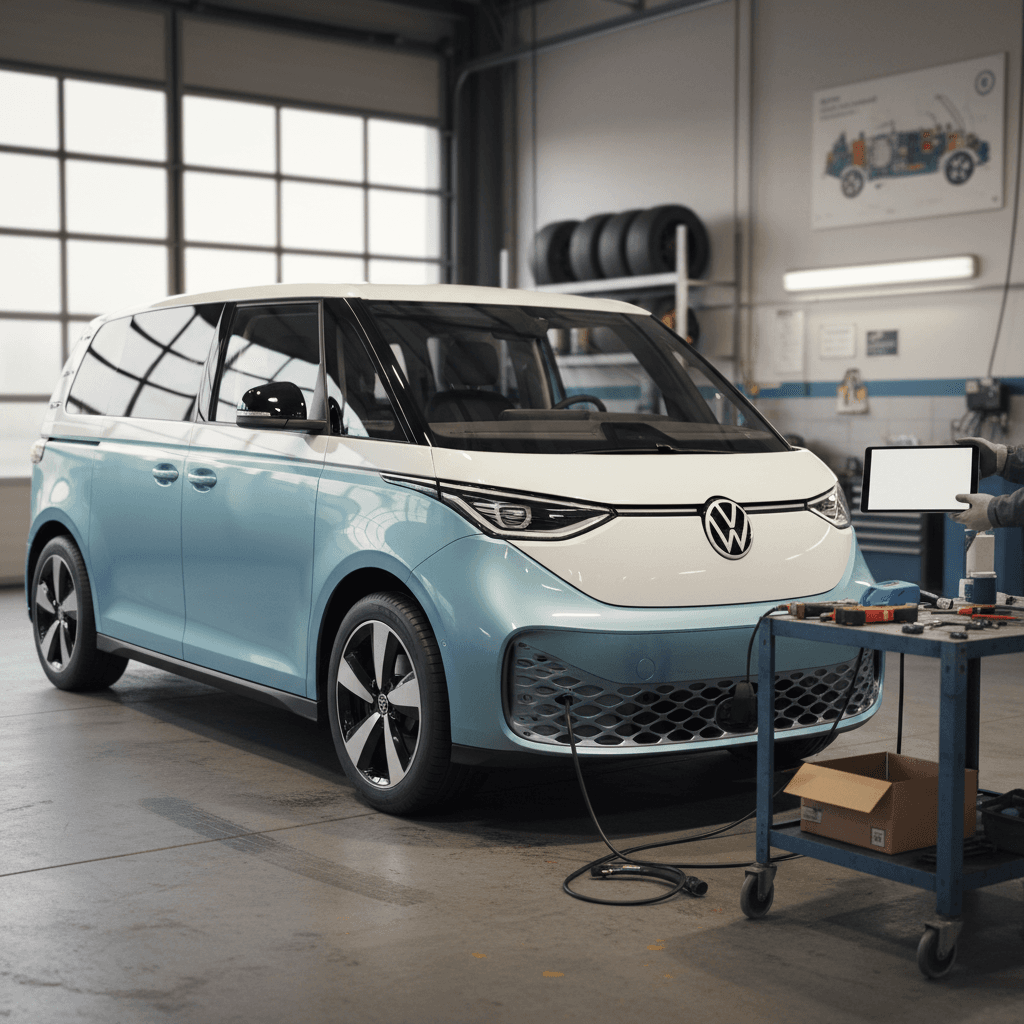
If you’re considering a 2025 Volkswagen ID. Buzz, or you already have one in the driveway, you’ve likely heard about some early recalls. This 2025 Volkswagen ID. Buzz recalls list walks through every major U.S. campaign, what problems they address, how fixes work, and what it all means for safety, resale value, and buying a used electric van with confidence.
Quick context
Overview: 2025 ID. Buzz recalls at a glance
Key 2025 ID. Buzz recall facts (U.S.)
Volkswagen’s early recall activity on the 2025 ID. Buzz falls into two buckets: 1. Third-row seating compliance – the rear bench is physically wide enough for three occupants but has only two belts and head restraints. 2. Brake warning display compliance – instrument cluster software and ABS indicator labeling that need to meet U.S. regulations. Below, we’ll break down each campaign in plain English and flag what matters if you already own the van or are shopping for a used one.
Recall 1: Third-row bench too wide (25V-233 / 90A2)
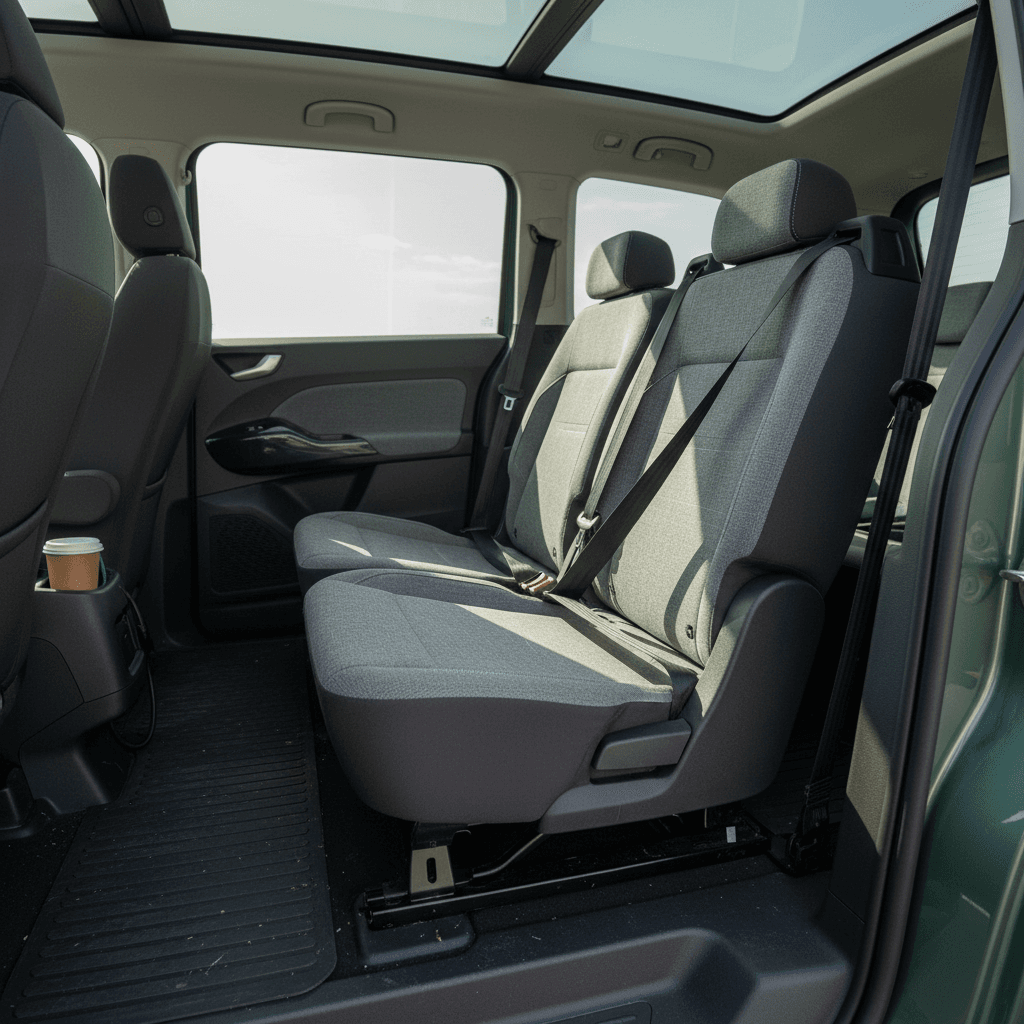
The most publicized 2025 ID. Buzz recall involves the third-row bench seat in U.S.-spec vans. Regulators flagged that the bench is wide enough to suggest three passengers, but Volkswagen only equips it with **two seat belts and two head restraints**. That mismatch can encourage someone to sit in the middle without proper restraint, increasing injury risk in a crash.
- NHTSA campaign number: often referenced in coverage of 25V-233 (rear seat compliance)
- Volkswagen internal campaign code: typically listed as 90A2 in dealer systems
- Issue: third-row bench width suggests three seating positions, but only two are protected
- Risk: an unbelted or improperly restrained third occupant could be injured in a collision
- Scope: thousands of 2025 ID. Buzz vans built for and shipped to the U.S. market
Why this matters
Volkswagen’s remedy is to modify the third row so it clearly supports **two passengers only**. That means adding a fixed center trim or spacer section to remove any suggestion of a middle seating position and, in some configurations, updating labels or owner documentation so there’s no ambiguity.
Owner takeaway on the rear-seat recall
Recall 2: Brake warning light software issue
Separate from the seat issue, Volkswagen also initiated a brake warning display campaign on the 2025 ID. Buzz. Here, the concern isn’t that the brakes themselves fail, but that the **warning indicators and labeling** in the instrument cluster don’t fully meet federal standards.
- Issue type: instrument-cluster software and ABS indicator compliance
- Typical concern: the brake warning icon or ABS lettering may not illuminate or size correctly in certain fault conditions
- Regulatory angle: U.S. rules specify not just that a warning must appear, but also how it’s displayed, including minimum letter heights and symbol behavior
- Risk: in a worst case, a driver might miss or misinterpret a brake-related warning, delaying service or repair
What the dealer actually does
For owners, the big question is whether this recall hints at broader brake-system defects. Based on what’s publicly available so far, this is a **display-and-labeling compliance problem**, not a pattern of physical brake failures. You still want it fixed promptly, but it’s more about meeting the letter of the law than reengineering the braking hardware.
How to check if your 2025 ID. Buzz has open recalls
Three easy ways to check for open 2025 ID. Buzz recalls
Confirm status before your next long trip, or before you buy used.
1. Use NHTSA’s VIN lookup
Go to the official NHTSA recall lookup site and enter your full 17-character VIN.
- Shows all open U.S. safety recalls.
- Updates as campaigns are added or closed.
- Works for current and used owners.
2. Ask a Volkswagen dealer
Call your preferred VW store’s service department and provide your VIN.
- They can see open recalls and service campaigns.
- They’ll confirm if parts and software are available.
- You can book the fix in the same call.
3. Check your owner account
If you’ve registered your ID. Buzz with Volkswagen online or via the app, watch for:
- Recall notices in your account.
- Digital copies of mailed recall letters.
- Recommended service timing.
Pro tip for used shoppers
Do these recalls hurt the 2025 ID. Buzz’s safety record?
On paper, the 2025 Volkswagen ID. Buzz is one of the brand’s safest vehicles, with a 5‑Star overall rating from NHTSA. That’s the top score under the federal New Car Assessment Program and puts the electric van in good company with Volkswagen’s best-rated SUVs.
What the recalls say
- They highlight teething issues on a new model, mostly around regulations and interior design.
- Neither campaign points to high-voltage battery failures or structural crash problems.
- Regulators frequently push automakers on details like icons, labels, and seat spacing when new vehicles launch.
What the crash tests say
- NHTSA’s 5‑Star rating reflects strong crash performance once occupants are correctly restrained.
- The rear-seat fix is meant to ensure everyone in back is using belts and head restraints properly.
- With recalls performed, the ID. Buzz’s safety story is more reassuring than alarming.
Reframing the early recalls
Impact on resale value and used-buying decisions
From a used-market standpoint, recalls can cut both ways. Yes, they add headlines, but they also create a bright line between vans that have been cared for and vans that have been ignored. For a 2025 ID. Buzz, your goal is simple: find one with a clean recall history and documented fixes.
How 2025 ID. Buzz recalls affect used value
Use this as a quick lens when evaluating used vans in listings or on dealer lots.
| Recall status | What it usually means | Impact on value | What you should do |
|---|---|---|---|
| All recalls completed | Owner stayed on top of safety notices and maintenance. | Neutral to slightly positive. | Ask for service records; this is the baseline you want. |
| Open rear-seat recall | Dealer or owner never scheduled the fix; van may still be safe but noncompliant. | Negative until fixed; may narrow your lender or insurer options. | Make completion a condition of sale or negotiate a discount and book the repair immediately. |
| Open brake-warning recall | Cluster software hasn’t been updated, even though remedy is available. | Slight negative; more about diligence than mechanical risk. | Have the selling dealer perform the update before delivery. |
| Mixed or unclear history | Paperwork is missing, or the seller can’t explain which campaigns are done. | Potential red flag depending on price. | Walk away or demand a full dealer printout and inspection before deciding. |
Condition refers specifically to whether mandated recall work has been done, not normal wear and tear.
At Recharged, every used EV, including an ID. Buzz when they start showing up in volume, comes with a Recharged Score Report that verifies open recalls, battery health, and fair pricing. That kind of documentation is your friend when you’re comparing one van against another online.
Owner checklist before and after recall repairs
Step-by-step checklist for 2025 ID. Buzz recall work
1. Confirm your VIN is covered
Run your VIN through NHTSA’s lookup or call a Volkswagen dealer. Note which specific campaigns apply (rear seat, brake display, or both).
2. Ask about parts and timing
When you book the appointment, ask the service advisor how long the fix will take and whether any interior parts need to be ordered ahead of time.
3. Photograph the third-row area
Before the rear-seat recall, take a few photos of the third row from different angles. It’s helpful if you want to compare the pre- and post-fix layout or document any trim scuffs.
4. Verify software versions
After a brake-warning or cluster update, ask the advisor to print or show the <strong>software release version</strong> for your instrument panel so you know the patch actually loaded.
5. Inspect the third-row work
Once the seat-width remedy is done, sit in the third row and look for solid center trim and clear visual cues that only two positions are usable. Make sure belts retract and latch smoothly.
6. Get documentation for your records
Leave the dealer with an itemized repair order showing the campaign codes and completion dates. Keep digital copies; they’re useful when selling or trading the van.
Avoid this common mistake
How recalls are handled on a used ID. Buzz
If you’re shopping the used market, the rules are straightforward: safety recalls follow the vehicle, not the owner. Any open campaign on a 2025 ID. Buzz remains the responsibility of Volkswagen to fix at no cost, whether you’re the first owner or the third.
What good dealers should do
- Run every trade-in through their system for open recalls.
- Complete recall work before listing the van for sale.
- Provide printed proof of completed campaigns in the sales file.
What actually happens in the real world
- Some dealers do this religiously; others let vehicles sit with open recalls.
- Smaller independents may rely only on auction condition reports.
- That’s why you should always verify status directly with NHTSA or a VW store.
One advantage of buying through a specialist used-EV retailer like Recharged is that recall status, battery diagnostics, and pricing are all surfaced in a single, transparent report. If you’re comparing an ID. Buzz on a generalist lot to one with a Recharged Score, prioritize the one where you can clearly see the recall history and health data up front.
FAQ: 2025 Volkswagen ID. Buzz recalls
Frequently asked questions about 2025 ID. Buzz recalls
Bottom line for current and future owners
The 2025 Volkswagen ID. Buzz is a distinctive, high-profile electric van that’s gone through the same early growing pains we see with many new EVs. Its recalls to date center on **rear-seat design and warning-light compliance**, not fundamental battery or crash-structure flaws. If you ensure those campaigns are completed and keep good documentation, the ID. Buzz can still be a compelling family hauler or lifestyle van.
If you’re shopping used, treat recall status as one more data point alongside battery health, charging behavior, and pricing. A transparent inspection report, like the Recharged Score every vehicle gets at Recharged, makes it far easier to see whether a 2025 ID. Buzz has had its early issues cleaned up. Do that homework now, and you’ll be better positioned to enjoy the retro styling, spacious interior, and all-electric drive without second‑guessing what’s lurking in the fine print.