If you’re shopping for a 2025 Tesla Model Y, or you already have one in your driveway, you’ve probably heard two conflicting stories. On one hand, the Model Y is the best‑selling EV in the U.S. and one of the more reliable electric vehicles on the market. On the other, it’s constantly in the news for recalls, build‑quality complaints, and software drama. This guide breaks down the most common 2025 Tesla Model Y problems and fixes, what’s actually serious, and how to get issues resolved quickly.
Quick context
2025 Tesla Model Y reliability in context
Reliability data for any brand‑new model year always lags a bit, but we can triangulate the 2025 Model Y’s outlook from three places: independent testing, owner‑reported reliability on earlier years, and early service‑center patterns.
How the Model Y is doing by 2025
That mix is the story of the 2025 Model Y: drivetrain and battery are generally solid, but Tesla continues to struggle with cosmetic quality, human‑machine interface quirks, and a high tempo of software‑driven recalls. The good news is that many issues are annoying rather than catastrophic, and most serious defects show up early in ownership, while you’re still comfortably under warranty.
A word on early‑build 2025 cars
Most common 2025 Tesla Model Y problems
Drawing on owner reports, service bulletins, and patterns from 2020–2024 model years that carry into 2025, the most common 2025 Model Y problems fall into a handful of buckets:
- Build quality and trim: panel gaps, paint imperfections, squeaks and rattles, misaligned doors or liftgates
- Software glitches: infotainment freezes, phantom alerts, Bluetooth/key‑phone bugs, Autopilot or cruise‑control weirdness
- Hardware and computers: occasional camera failures, rear‑view camera feed loss, early‑life computer (ECU) failures on some vehicles
- Safety‑related recalls: mainly software, but occasionally hardware, often addressed via over‑the‑air updates
- Battery, range, and charging quirks: range estimates, DC fast‑charging speed variability, charging‑port or charge‑door issues
The upside
Build quality and trim issues
If you hang out in any Tesla forum long enough, you’ll see a familiar pattern: photos of misaligned hatchbacks, inconsistent panel gaps, paint nibs, or interior rattles. Tesla has improved from the roughest 2020–2021 Model Y builds, but 2025 cars still show more cosmetic defects than legacy brands like Toyota or Honda, especially on high‑volume plants and early‑run refreshed builds.
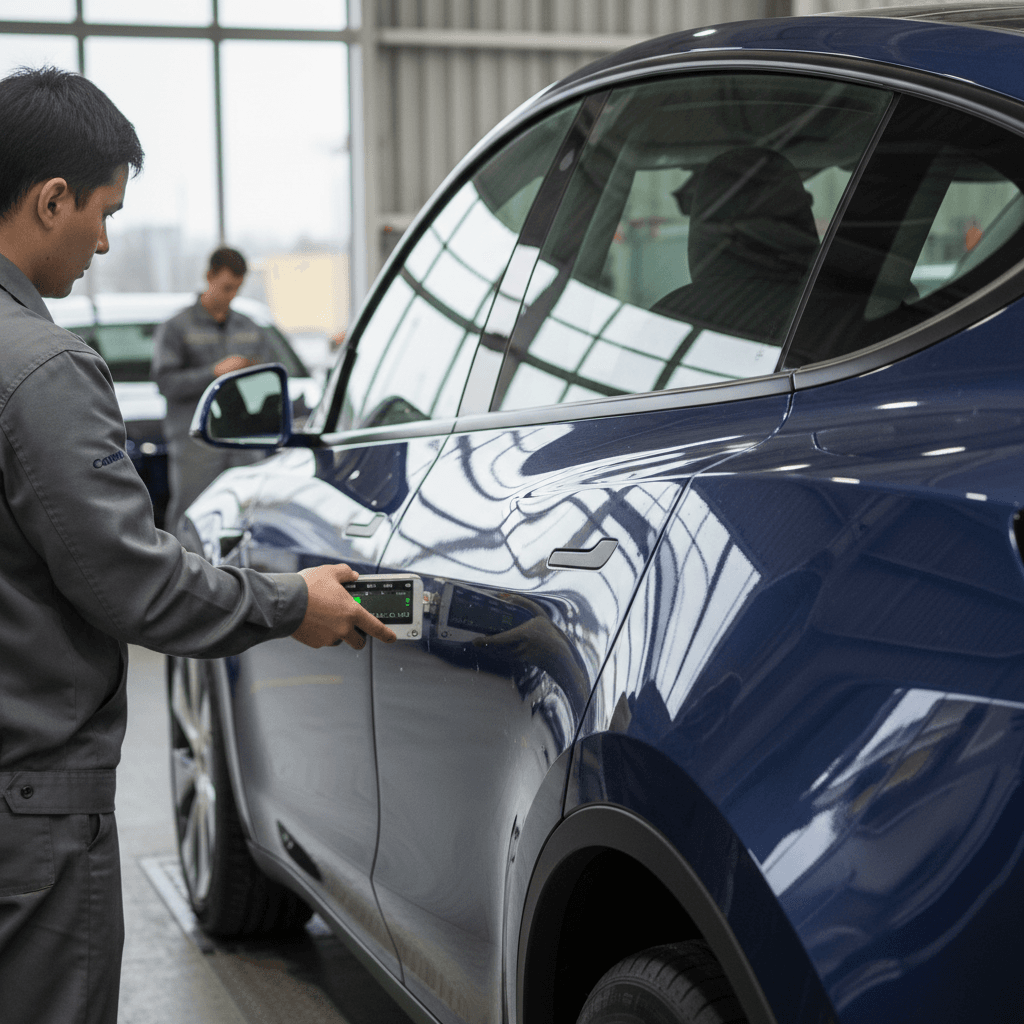
Typical 2025 Model Y build‑quality complaints
Most are fixable under warranty if you catch them early
Panel gaps & alignment
Paint imperfections
Squeaks & rattles
Delivery‑day and early‑ownership checklist
The key with build issues is timing. Cosmetic flaws are easiest to fix in the first weeks or months, when there’s no question the problem existed at delivery. Once you’re a year or two in, Tesla is more likely to call the same issues “normal wear and tear.”
Software glitches, infotainment, and driver‑assist
Tesla leans harder on software than almost any automaker. The upside is constant feature updates. The downside is that the 2025 Model Y’s most visible problems often look like software regressions: screens freezing, navigation bugs, Autopilot quirks, and alerts that randomly appear and clear.
Common software symptoms on 2025 Model Y
- Center screen briefly goes black or reboots while driving.
- Bluetooth or phone‑as‑key becomes unreliable after an update.
- Autopilot or cruise control suddenly becomes unavailable with a sensor or camera error.
- Random warnings about driver‑assist features that clear after a restart.
- Streaming audio apps crashing or lagging.
Typical fixes (before a service visit)
- Perform a soft reboot: hold both steering‑wheel scroll wheels until the screen goes black and reboots.
- Check for and install the latest software update when on Wi‑Fi.
- Power cycle the car from the Service menu and let it sit for a few minutes.
- Remove and re‑add your phone key; re‑pair Bluetooth devices.
- If driver‑assist errors persist, document them with photos and schedule service.
Avoid repeatedly trying to install a failing update, if it won’t take after a couple of attempts, that’s a data point for service.
Safety first with Autopilot and FSD
Many software problems are fixed with over‑the‑air updates, but they’re still problems while you’re living with them. The pattern to watch for is persistence: if a bug survives more than one or two updates or materially affects safety, it’s worth a service visit rather than endless reboot rituals.
Hardware, cameras, and computer failures
Late‑2024 and 2025 Model Y builds use newer computer and camera hardware packages. That modernization brings capability, but it has also produced a cluster of early‑life failures on some vehicles, things like rear‑view camera feed loss, repeated camera calibration failures, or entire computers that need replacement within months of delivery.
Hardware problems 2025 Model Y owners are seeing
These issues aren’t universal, but they’re common enough in service channels and owner reports to warrant attention.
| Issue | Typical symptoms | Likely fix | Owner action |
|---|---|---|---|
| Rear‑view camera feed loss | Blank or frozen backup camera image, intermittent or permanent | Software update or, in some cases, camera/computer replacement | Document with photos/video; schedule mobile or service‑center visit. |
| Camera calibration never completes | Driver‑assist stays limited; car repeatedly asks for calibration | Camera or computer replacement plus software re‑provisioning | Avoid relying on Autopilot; push for hardware diagnosis, not just resets. |
| Computer/ECU failure | Car won’t boot properly, multiple systems offline, stuck in software update | Tow to service center, computer replacement under warranty | Don’t try DIY software re‑installs that can brick the car further. |
| Door handle or latch quirks | Handle doesn’t present smoothly, occasional failure to open on first try | Adjustment or replacement of handle/latch components | Log frequency; get it addressed before warranty expires. |
Most of these failures appear early, which is good news for warranty coverage but a reason to test systems thoroughly when the car is new.
Don’t be shy about warranty hardware
Recalls and safety concerns for 2025 Model Y
By 2025, the Model Y has accumulated a long list of NHTSA recalls, ranging from minor label fixes to more serious safety‑system behavior. Many 2023–2025 recalls are software‑only and resolved via over‑the‑air updates, but a few require physical inspection or parts replacement.
Typical recall themes affecting 2025‑era Model Y builds
Most are low‑friction to fix, but they still matter
Software behavior
Instrument & alerts
Hardware & retention
How to stay on top of recalls
Because Tesla leans so heavily on software, it’s easy to get numb to update prompts. Don’t. Some 2023–2025 Model Y safety recalls simply will not be closed on your VIN until you’re on the specified software version. That can affect resale, particularly if you later try to sell or trade the car and a buyer or dealer runs a recall check.
Battery, range, and charging quirks
The core battery packs in the Model Y have generally held up well across early model years, and there’s no evidence that 2025 packs are dramatically different in durability. Most owner complaints here are about expectations and software behavior rather than cells falling over.
- Range estimates that swing noticeably with temperature, speed, or elevation, especially in cold weather.
- DC fast‑charging speeds that taper earlier than expected when the pack is cold or at higher state of charge.
- Occasional charge‑port door misbehavior (not closing flush or sticking).
- Wall‑connector or third‑party Level 2 chargers occasionally failing to initiate a session until unplugged and re‑plugged.
Battery health vs. energy management
For long‑term peace of mind, watch for two things: rapid, unexplained loss of indicated range in the first few years, and repeated DC fast‑charging failures or extreme slow‑downs compared with other Teslas on the same charger. Both are reasons to get Tesla service involved and, if needed, to request a formal battery health report.
Preventive checklist: Catch problems early
Preventive checklist for 2025 Model Y owners
1. Do a deep delivery inspection
On day one, inspect paint, panel gaps, glass, wheels, and interior trim in good light. Note anything you see in the Tesla app with photos. Small cosmetic fixes are much easier to get approved right after delivery.
2. Road‑test everything in the first 1,000 miles
Use Autopilot on a known route, test all cameras and parking sensors, open and close every door, window, seat, hatch and the frunk. The goal is to surface hardware or calibration issues while the car is brand new.
3. Keep software reasonably up to date
Don’t sprint to every bleeding‑edge update the second it appears, but don’t ignore them either. Install updates within a week or two, especially if they mention safety or driver‑assist systems.
4. Log recurring issues in the app
If a problem pops up more than once, grab screenshots or photos and file a service request through the app instead of only mentioning it verbally. A paper trail is your friend if the issue escalates.
5. Monitor tires and suspension noises
The Model Y is heavy and quick; it eats cheap tires. Rotate on schedule, keep pressures dialed in, and investigate new clunks or rattles promptly to avoid more expensive suspension repairs later.
6. Protect the paint early
If you care about cosmetics, consider ceramic coating, partial paint‑protection film, or at least regular washes and sealant. Tesla’s paint isn’t notoriously delicate anymore, but it’s not overbuilt either.
Buying a used 2025 Model Y: what to look for
Because the Model Y is so popular, you’ll see 2025 cars hitting the used market quickly, off lease, from early adopters chasing the next refresh, or from households that simply overshot their budget. The upside: selection. The risk: inheriting someone else’s unsolved problems.
High‑value checks on a used 2025 Model Y
- Panel, paint, and glass: Look for mismatched paint, overspray, or non‑OEM glass that can signal accident repairs.
- Warning lights: The dash should be clean on startup, no persistent alerts for ABS, airbags, or driver‑assist.
- Driver‑assist test: Make sure Autopilot engages smoothly and that the car holds lane without erratic weaving or phantom braking.
- Charging test: Plug into both a Level 2 and a DC fast charger if possible to confirm normal charging behavior.
- Service history: Ask for invoices or app screenshots showing how prior issues were resolved.
Where Recharged fits in
At Recharged, every used Model Y we sell comes with a Recharged Score that covers verified battery health, charging behavior, and a visual inspection for common Tesla build‑quality issues.
You can also:
- Get EV‑specialist guidance on which Model Y years and builds fit your risk tolerance.
- Trade in your current vehicle or get an instant offer if you’re upgrading into a Model Y.
- Have the car delivered nationwide after a fully digital buying process, no haggling required.
That’s especially helpful if you’re wary of hidden issues on private‑party sales or generic dealer lots with little EV expertise.
Tip for used shoppers
FAQ: 2025 Tesla Model Y problems and fixes
Frequently asked questions about 2025 Model Y problems
Bottom line: should you worry about 2025 Model Y problems?
If you strip away the social‑media drama, the picture is fairly clear: the 2025 Tesla Model Y is a high‑volume EV with average reliability overall, strong fundamentals in its battery and drivetrain, and an above‑average appetite for software updates and cosmetic nitpicks. Most problems owners face are fixable under warranty if they’re caught early and documented well.
The smart move is not to avoid the Model Y altogether, but to go in with open eyes: do a thorough inspection, test all the tech in your first weeks of ownership, keep an eye on recall status, and push Tesla service when something isn’t right. If you’d rather have a professional do that legwork, consider shopping used through a specialist like Recharged, where every Model Y includes a Recharged Score battery‑health report, fair‑market pricing, and EV‑savvy guidance from first click to delivery.
Handle it that way, and the 2025 Model Y’s problems become manageable trade‑offs for one of the most capable, practical, and efficient EVs on the road, rather than surprises you discover the hard way three years down the line.