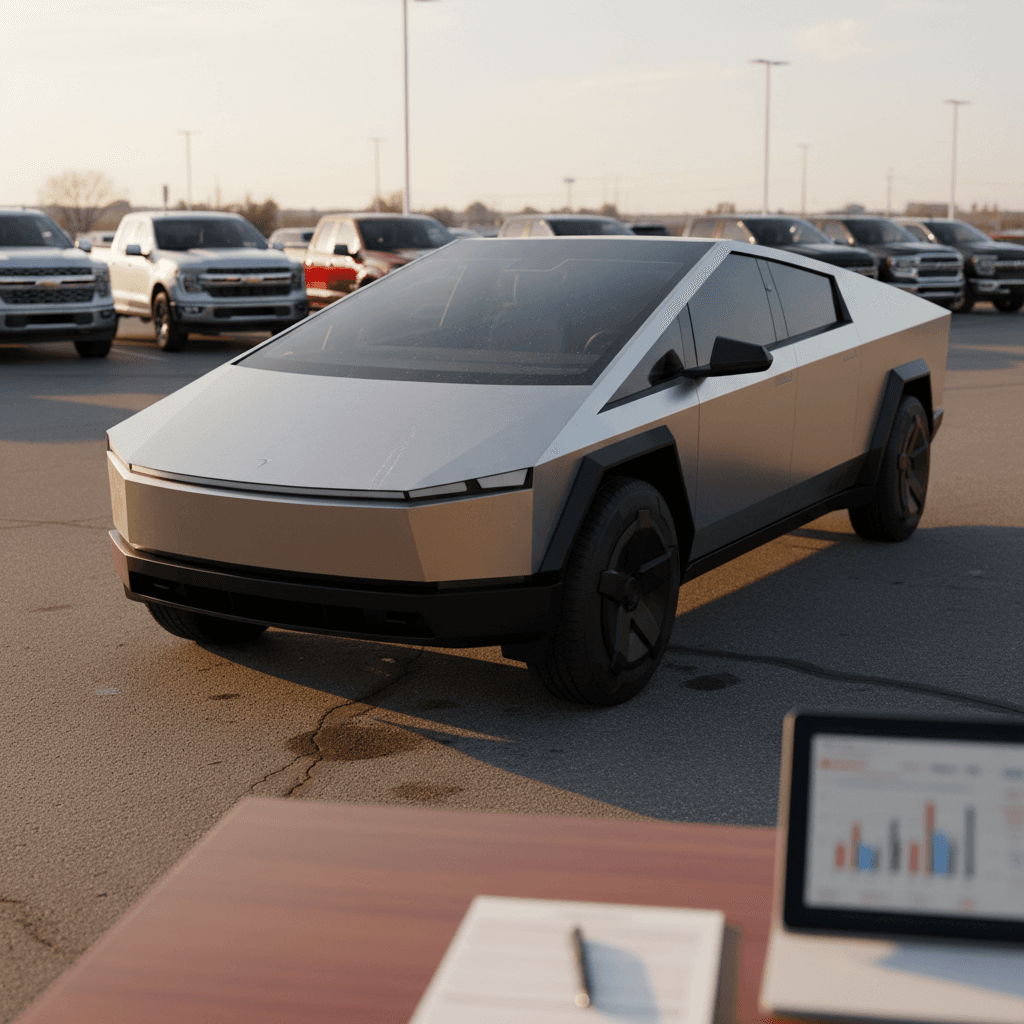
If you bought into the hype and now you’re staring at a trade-in quote for your Tesla Cybertruck, you’re not alone. By 2025, Tesla Cybertruck trade-in values have become a case study in how fast an overhyped vehicle can fall back to earth, especially once production catches up and new prices move around.
Snapshot: Cybertruck trade-in reality in 2025–2026
Why Cybertruck trade-in values are so volatile
Cybertruck trade-in values in 2025 don’t behave like a normal full-size pickup. Instead of a slow, predictable glide down from MSRP, values have lurched from insane markups in the first months of deliveries to steep discounts once supply caught up and the novelty factor faded.
- Unstable pricing from Tesla: Early Foundation Series trucks transacted near $100,000, while later 2024–2025 AWD builds have been listed tens of thousands lower as Tesla tried to stoke demand.
- Fast shift from scarcity to oversupply: By mid‑2025, reports of thousands of unsold Cybertrucks sitting on lots meant used buyers suddenly had leverage, pushing trade values down hard.
- Polarizing design and use case: Cybertruck doesn’t slot neatly into the traditional truck market, which makes it harder for dealers and pricing guides to peg what a “normal” buyer will actually pay.
- Broader EV headwinds: Rising interest rates, generous new-EV incentives, and rapidly improving alternatives all drag on used EV values, and Cybertruck isn’t immune.
Why your friend’s quote may not match yours
What 2025 Tesla Cybertruck trade-in values look like today
Because Cybertruck is still new and the market is thin, any numbers are snapshots, not guarantees. But by late 2025 and into early 2026, a few patterns have emerged that can help you sanity‑check your 2025 Tesla Cybertruck trade-in value:
Big-picture Cybertruck value ranges in late 2025–early 2026
Approximate retail and trade-in ranges for common Cybertruck scenarios, assuming average mileage and condition in the U.S. These are directional, not offers.
| Configuration & age | Original price context | Typical retail asking range | Typical dealer/Tesla trade-in range |
|---|---|---|---|
| 2024 AWD Foundation Series, ~1 year old, low miles | Often sold near $95k–$100k in 2024 | Low–mid $70,000s | Mid–high $60,000s |
| 2024–2025 Cyberbeast, ~1 year old | Transaction prices often well into six figures | High $80,000s–low $90,000s | Mid–high $70,000s |
| 2025 AWD non‑Foundation, 6–18 months old | MSRP and transactions pulled down vs early builds | Mid–high $60,000s | Low–mid $50,000s |
| Higher‑mile work use trucks (any trim) | Heavy use, cosmetic wear, bed rash | Often discounted another 5–15% | Can fall into high‑$40,000s depending on miles/condition |
Use this table to understand order-of-magnitude Cybertruck value patterns before you start shopping trade-in offers.
Don’t anchor on early flipper prices
Cybertruck depreciation versus the broader EV market
How Tesla calculates your Cybertruck trade-in
Tesla’s own trade-in program has had an on‑again, off‑again relationship with the Cybertruck. After reportedly refusing to accept Cybertruck trade-ins for a period, likely to avoid crystallizing those ugly early depreciation numbers, Tesla began taking them again in 2025 with offers that shocked some owners.
- Online appraisal form: You enter your VIN, mileage, basic condition, and upload photos in your Tesla account when speccing a new vehicle.
- Automated base value: Tesla benchmarks against its own internal data, auction results, and third‑party pricing feeds to generate a starting value for your Cybertruck.
- Adjustments for options: Hardware options (tow package, wheels) and obvious damage move that number up or down. Tesla typically assumes you’ll transfer Full Self Driving (FSD), so it often doesn’t pay full freight for that software on a trade‑in.
- Final inspection: When you drop the truck off, Tesla does a quick physical check. If they find undisclosed damage or modifications, your number can change on the spot.
- No-haggle quote: Tesla’s trade offer is presented as take‑it‑or‑leave‑it and is usually lower than what a motivated third‑party buyer will pay. The appeal is convenience and tax savings, not maximum price.
Leverage tax savings, especially on pricey trucks
Dealer vs. private sale vs. online offer
When you talk about 2025 Tesla Cybertruck trade-in value, you’re really talking about three different markets: what Tesla will pay, what a traditional dealer or used‑EV specialist will pay, and what an individual buyer is willing to spend.
1. Tesla trade-in
- Pros: Seamless when buying a new Tesla, potential tax savings, no hassle.
- Cons: Historically conservative offers, limited flexibility, and FSD value often treated as portable rather than paid out.
- Best for: Owners prioritizing simplicity over squeezing every last dollar out of the truck.
2. Franchised or independent dealer
- Pros: Some dealers will pay more than Tesla if they have a buyer waiting or want a stainless halo vehicle on the lot.
- Cons: Many aren’t comfortable pricing Cybertruck, which can mean lowball safety margins.
- Best for: Markets where local demand is strong and you can shop multiple offers.
3. Private sale or marketplace
- Pros: Typically the highest gross price if you’re willing to wait and filter buyers.
- Cons: Time, tire‑kickers, and the usual headaches of selling a six‑figure vehicle privately.
- Best for: Unique builds or low‑mile trucks where you want top dollar and aren’t in a rush.
Where Recharged fits
Ready to find your next EV?
Browse VehiclesKey factors that move Cybertruck trade-in values
On paper, pricing a Cybertruck is simple: trim, mileage, options. In the real world, a handful of details can swing your 2025 Tesla Cybertruck trade-in value by five figures.
The biggest drivers of Cybertruck trade-in value
If you only focus on a few levers, make it these.
Mileage & use pattern
Cybertruck buyers skew toward enthusiasts and tech‑curious early adopters. That crowd still pays a visible premium for low‑mile, garage‑kept trucks versus workhorses that have lived with trailers and job sites.
Condition & repairs
Stainless hides small dings better than paint, but obvious panel damage, bed gouges, and interior wear still crush value. Evidence of structural repairs or air‑suspension work is an immediate red flag for many buyers.
Software & options
Big ticket items like FSD, premium interior, and wheel packages matter, but not always dollar‑for‑dollar. Many buyers are wary of paying full MSRP again for software, especially with Tesla’s shifting policies around FSD transfers and pricing.
Build date & batch
Early builds carry "Founders" bragging rights but also more reported quality quirks. Later 2025 trucks may benefit from incremental fixes, which can narrow the gap between old and new in a buyer’s mind.
Regional demand
In parts of California or Texas, you’ll still find more people willing to take a chance on a Cybertruck. In Midwest or rural truck country, buyers may default to more conventional pickups, dragging offers down.
Macro EV market
Rising rates, shifting incentives, and new competitors like refreshed F‑150 Lightning and Ram 1500 REV can move Cybertruck values even if nothing changes about your individual truck.
How to avoid leaving money on the table
You may not love the number the market is putting on your stainless statement piece, but you can absolutely control whether you’re getting the bottom or the top of today’s range. Treat your Cybertruck like the six‑figure asset it is, not a gadget you toss on Craigslist.
Checklist: Maximize your Cybertruck trade-in value
1. Get a real battery health read
Range anxiety isn’t the issue here, <strong>range confidence</strong> is. A clean, third‑party battery health report (like the Recharged Score) reassures buyers and appraisers that they’re not inheriting a problem pack and helps justify the top of the value range.
2. Fix obvious, inexpensive cosmetic issues
Detail the interior, touch up curb‑rashed wheels where possible, and clean the stainless properly. You don’t need perfection, but you do want to remove distractions that a buyer or appraiser can mentally turn into a $5,000 discount.
3. Document software and service history
Print or screenshot your service history, recall work, and software status. If you’ve already had key Cybertruck recalls or campaigns done, that’s one less uncertainty for the next owner.
4. Shop at least three offers
Get a quote from Tesla, from at least one EV‑savvy dealer or marketplace, and from a service like Recharged. The spread between low and high offers on a Cybertruck can easily hit five figures.
5. Time your move around incentives & pricing shifts
Watch for Tesla list‑price cuts or new‑EV incentive changes. When new Cybertruck prices fall overnight, used and trade-in values can lag for a few weeks, if you’re paying attention, you can thread the needle.
6. Consider consignment if you’re not in a rush
If you have time, consigning your Cybertruck with an EV specialist lets you tap retail pricing without having to manage the sale yourself. That can be a good middle ground between Tesla’s low‑effort trade and the chaos of private sale.
Be skeptical of “instant cash” sites with no EV expertise

Cybertruck and EV depreciation: how bad is it really?
The Cybertruck isn’t tanking in a vacuum. It’s surfing on a broader wave of aggressive EV repricing that started when new‑EV discounts, soft demand, and rapidly improving tech met rising interest rates.
Where Cybertruck sits among EVs
- Above-average early pain: Going from $100k hype pricing to mid‑$60k trade-ins in about a year is worse than what most mainstream EVs have seen.
- But not uniquely doomed: Plenty of luxury EVs have seen 50%+ drops over 3–4 years when new prices were cut or demand cooled.
- Truck premium still matters: Full‑size pickups, gas or electric, tend to hold value better than sedans and small crossovers in the long run, even when they stumble out of the gate.
The bigger EV picture
- Price cuts ripple backwards: When OEMs slash new‑EV prices, every existing owner eats that discount in their equity line.
- Tech moves fast: Battery, charging, and driver‑assist upgrades arrive quickly, making early EVs feel older than their age suggests, which compresses used prices.
- Policy whiplash: Shifts in tax credits and state incentives can instantly make certain model years more or less attractive than others.
Why projections can still look rosy
When it makes sense to trade in your Cybertruck
There’s no single "right" time to get out of a Cybertruck, but there are some patterns that can help you decide whether to keep riding the stainless roller coaster or bail out.
Scenarios where trading in a Cybertruck is rational
Think beyond emotion and sunk cost.
You’re deeply underwater and Tesla just cut prices again
If Tesla slashes new‑Cybertruck prices or piles on discounts, your used value may be about to take another leg down. Trading quickly, especially if you’re also benefiting from tax credits or favorable financing on the replacement, can cap the damage.
Your use case quietly changed
If you bought Cybertruck as a toy and now you mostly need a family EV or a long‑range commuter, continuing to carry a truck‑sized payment for a misfit vehicle rarely pencils out. Trading into a better‑fit used EV can actually lower your total cost of ownership.
Quality or recall fatigue
If repeated service visits or unresolved quality issues are eroding your confidence, buyers will eventually notice the same thing. In those cases, trading while the truck is still within warranty can de‑risk your ownership story.
You want out of the brand, not EVs
Some owners are fine with EVs but done with Tesla specifically. In that case it can make sense to take your lumps on the Cybertruck and move into a used F‑150 Lightning, Rivian R1T, or even a non‑truck EV that better matches your values and needs.
Run the math, not just the emotion
How Recharged values a used Cybertruck
At Recharged, our job is to strip the drama and memes away from Cybertruck pricing and treat it like what it fundamentally is: a depreciating electric asset whose value lives at the intersection of battery health, build quality, and real buyer demand.
- Battery-first valuation: Every Cybertruck we consider gets a Recharged Score, our standardized battery‑health and high‑voltage system report. That becomes the backbone of our offer, because it’s what will matter most to the next owner.
- Transparent market comps: Instead of hiding behind black‑box algorithms, we look at live transaction data for similar Cybertrucks, trim, mileage, build window, region, and show you how your truck slots into that range.
- Condition adjusted, not punished: Work‑use wear is expected on a truck. We document it, photograph it, and price it rationally, rather than treating every scuff like a catastrophe.
- Flexible selling paths: Depending on your goals, we can buy the truck outright, take it on consignment, or help you trade into a different used EV on our marketplace, all within a fully digital process and with nationwide logistics support.
Why Cybertruck sellers like the Recharged Score
2025 Tesla Cybertruck trade-in FAQ
Frequently asked questions about Cybertruck trade-in value
Bottom line on 2025 Cybertruck trade-ins
The 2025 Tesla Cybertruck trade-in story is messy: a truck that launched as a meme stock on wheels is now settling into the unglamorous reality of depreciation, oversupply, and a rapidly maturing EV truck market. If you bought early at sky‑high prices, the numbers may sting. But if you focus on battery health, clean documentation, and smart channel selection, you can still land at the top of today’s value range instead of the bottom.
Before you make a move, line up multiple offers, factor in tax impacts, and run the math on your next vehicle, not just the one you’re leaving. And if you want a grounded, EV‑centric view of what your Cybertruck is worth, Recharged can help you get a transparent value, a Recharged Score battery report, and a clear path into your next electric vehicle, without the drama.