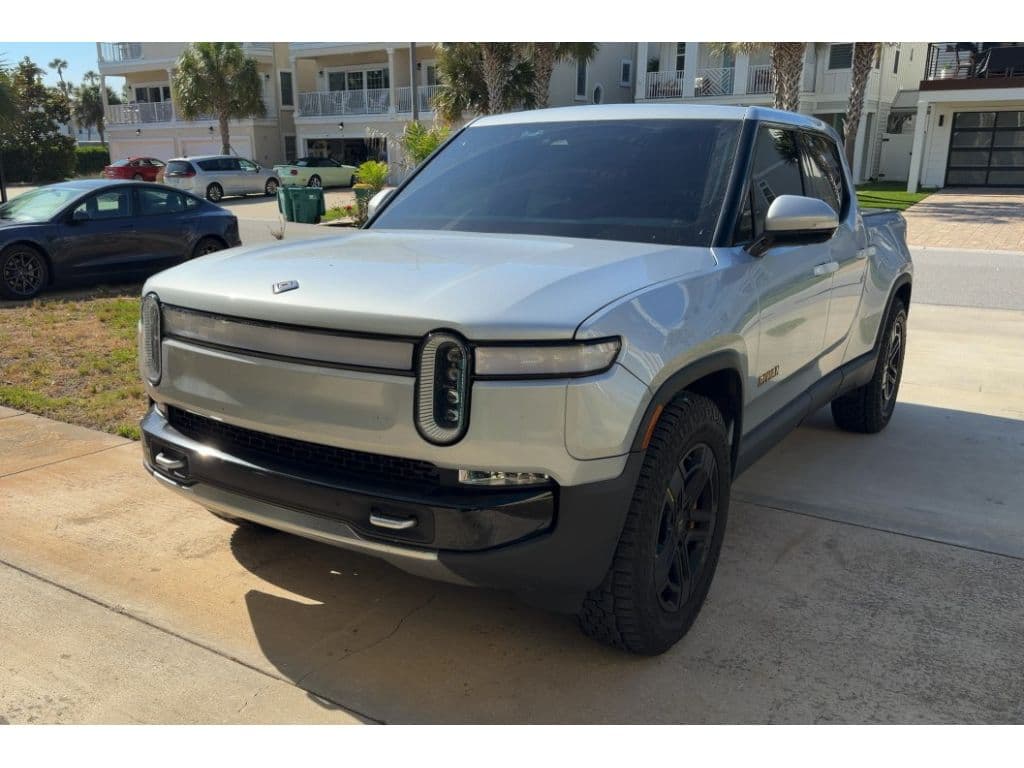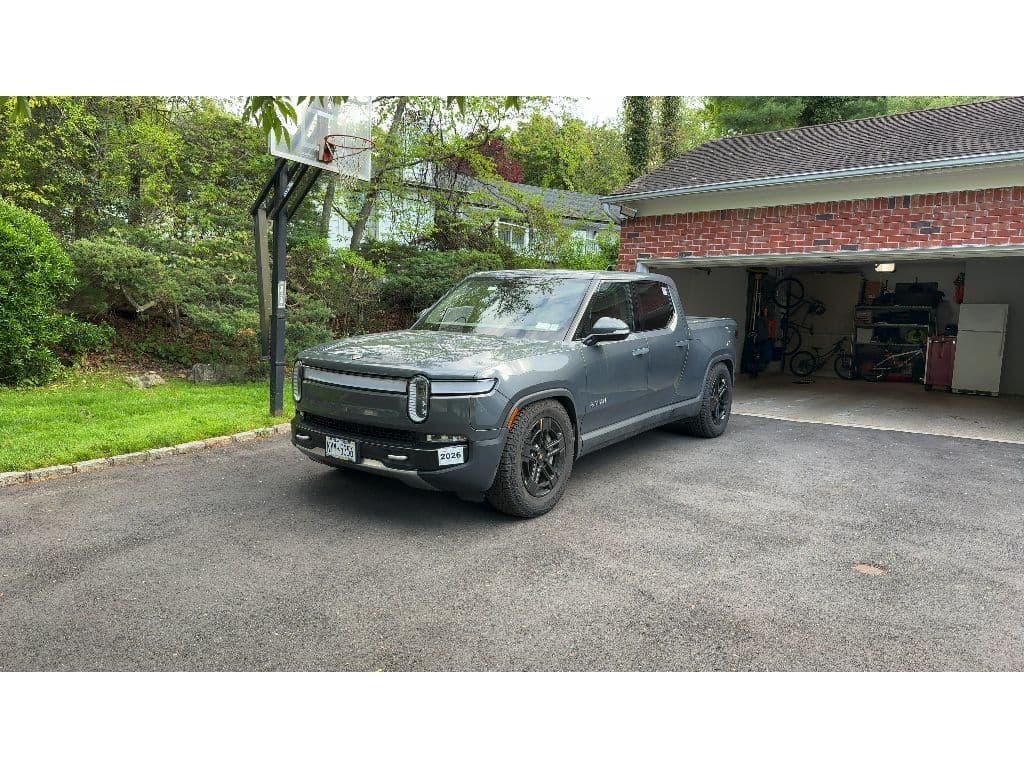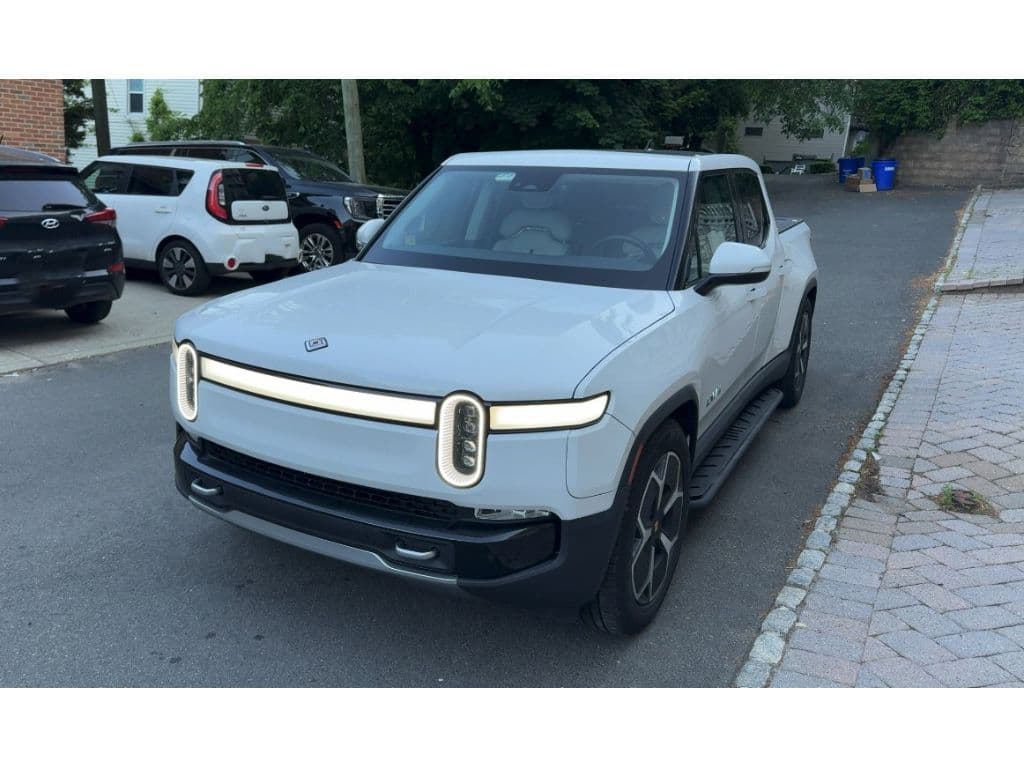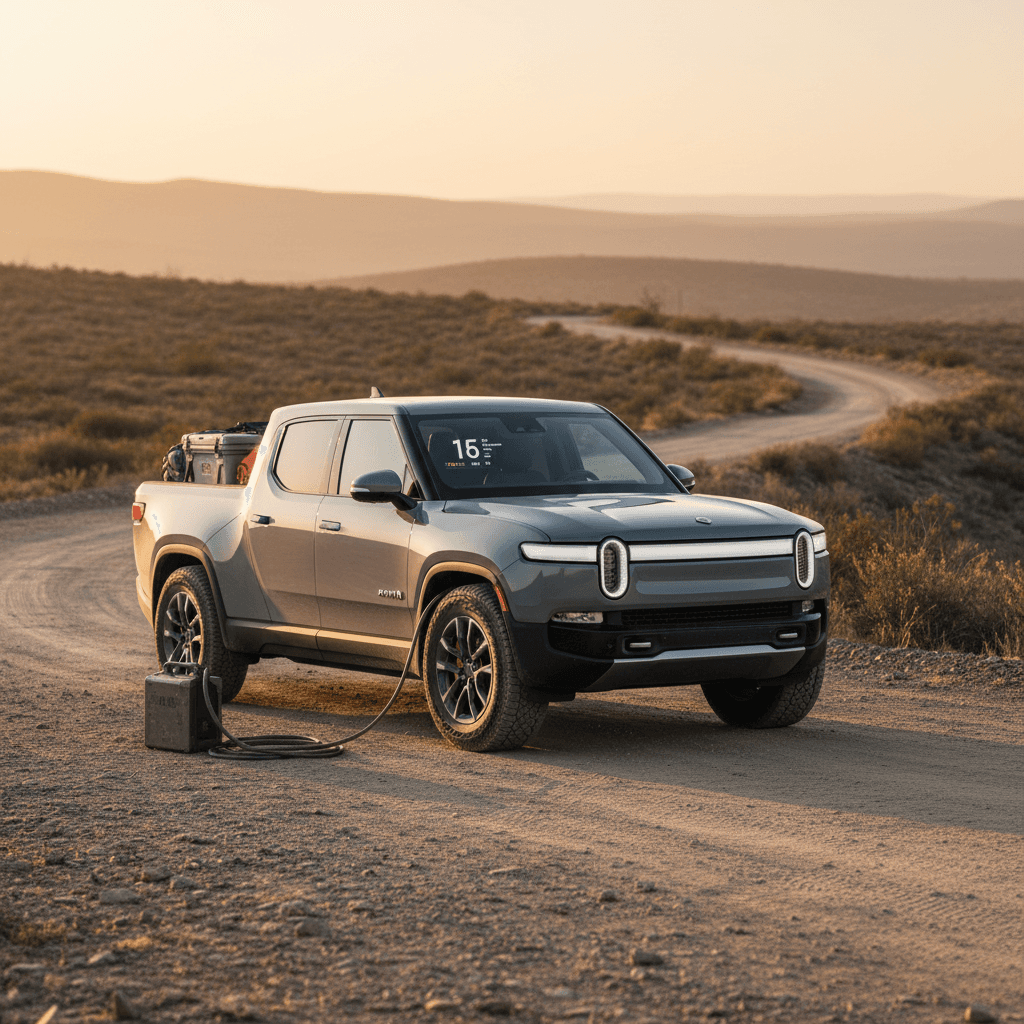
EPA says the **2025 Rivian R1T** can go up to **420 miles** on a charge. On YouTube and owner forums, you see people sweating at a Supercharger after barely clearing 200 miles on the interstate. This guide pulls together the best 2025 Rivian R1T range tests, EPA data and real‑world owner reports so you know what to actually expect before you daily‑drive, road‑trip or buy one used.
Quick take
Why 2025 Rivian R1T range tests matter
If you’re coming from a gas half‑ton, the 2025 R1T is a revelation: quiet, violently quick, and as comfortable as a German luxury sedan. But the **range math is different**. Detours, headwinds, ski racks, 22‑inch wheels, cold snaps, these can erase 25–40% of the rating. When you’re spending luxury‑truck money, you deserve to know the *real* number, not just what’s printed on the window sticker.
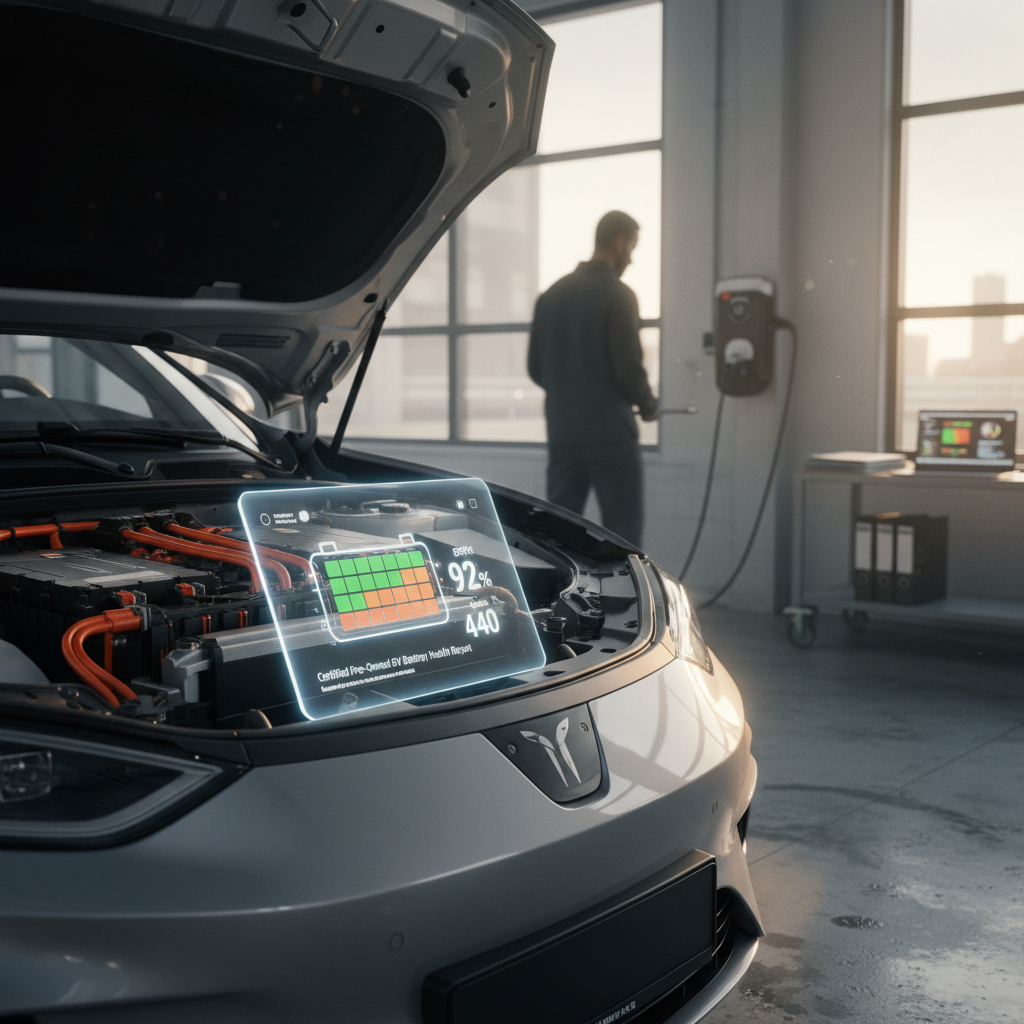
For shoppers looking at a **used R1T** through a marketplace like Recharged, range testing also doubles as a **battery‑health check**. The truck can feel brand new and still hide a pack that’s been fast‑charged hard and to 100% day after day. That’s exactly why tools like the Recharged Score battery health report exist, to turn range and degradation from guesswork into data.
2025 Rivian R1T range at a glance*
About the numbers
2025 R1T batteries, motors and EPA range ratings
The second‑generation 2025 R1T keeps the same basic battery lineup, **Standard, Large and Max**, but Rivian re‑engineered the packs for efficiency and cost. The Standard pack even switches to an LFP chemistry that’s more durable but slightly less energy‑dense.
2025 Rivian R1T battery and range estimates
Approximate EPA or Rivian‑estimated ranges for key 2025 R1T configurations, on efficient wheels and tires.
| Configuration | Pack (usable kWh) | Estimated Range | What it’s best for |
|---|---|---|---|
| Dual Motor Standard | ≈92.5 kWh (LFP) | 258–270 miles | Daily driving, light road trips |
| Dual Motor Large | ≈109 kWh | ~330 miles | Frequent highway miles, mountain driving |
| Dual Motor Max | ≈141–149 kWh | ~420 miles | Maximum range, long‑distance road trips |
| Tri‑Motor Max | ≈140 kWh | ~371 miles | Performance with still‑strong range |
Think of these as best‑case numbers in mild weather on stock, road‑focused tires.
Gen 1 vs Gen 2 R1T
Real‑world range testing: what we actually see
Take a **2025 R1T Dual Motor with Max Pack**. On paper, that’s a 420‑mile truck, one of the longest‑range EVs sold in America. In independent testing, a similar Dual‑Motor Max R1T has managed roughly **390 miles on a single charge** in mixed driving, strong, but still shy of the sticker. And that was with a diligent driver on a curated loop, not a family at 80 mph with a boxy roof box.
Meanwhile, some owners of the **Dual Motor Large pack (≈330‑mile EPA)** report seeing **about 60–65% of that rating at 75–83 mph** in flat summer conditions, roughly a 185‑mile useful leg from 100% down to 10% state of charge. That’s not Rivian‑specific; it’s what happens when any blunt‑nosed truck fights aerodynamic drag at interstate speeds. The difference is that you *feel* it more in an EV because you watch every mile counted out on the dash.
- City and suburban driving at 25–50 mph can get **close to EPA** or even beat it.
- Steady highway cruising at 70–80 mph tends to land at **60–75% of EPA** for most R1T configurations.
- Mix in hills, winter temps, oversized wheels or off‑road tires and it can drop into the **50–60% of EPA** range.
How to run your own range test
Highway vs city: how driving style reshapes range
Urban & suburban driving
In stop‑and‑go traffic the R1T is in its element. Regen braking harvests energy, speeds are low, and aero drag is minimal. Drivers who mostly see 25–45 mph arterials report using **much less energy per mile** than on the interstate.
- Short trips, lots of stops
- Regen braking set to "High"
- Suspension in "Low" or "Auto"
For many owners, this is where the truck feels like the EPA label was written for *them*.
Highway & road‑trip driving
At 70–80 mph, the R1T’s bluff front, high ride height and open bed (or tonneau) pile on drag. Every extra 5 mph is costly. This is where that 330‑mile rating behaves like **200–230 usable miles** between fast‑charge stops.
- Try to cap cruising at **70 mph** when you can
- Use "Conserve" or an efficient drive mode on long hauls
- Plan on 10–80% charge windows when DC fast charging
Speed is the silent killer
Weather, wheels and ride height: silent range killers
If you’ve ever watched your projected range nosedive on the first cold morning of the year, you already know: **EPA tests are done in mild conditions on efficient tires. Your life is not.** The 2025 R1T mitigates some of this with a new heat‑pump thermal system, but physics is still in charge.
Four big factors that move real‑world R1T range
None of these live on the window sticker, but they all live in your daily commute.
Cold weather
Batteries hate cold. Below freezing, expect your range to drop **15–35%**, especially for short trips where the truck never fully warms the pack.
Pre‑conditioning while plugged in and using seat/steering‑wheel heaters instead of blasting cabin heat help a lot.
Heat & HVAC use
Very hot weather is less dramatic than deep cold, but constant A/C on highway trips still eats energy. Think in the **5–10% hit** range on its own, more if you’re also driving fast and climbing.
Wheels & tires
Rivian’s 20‑inch all‑terrain setup looks fantastic and works off‑road, but the **extra rolling resistance** can knock **20–40 miles** off a Max‑pack truck compared with 21‑inch or 22‑inch road tires.
Likewise, aggressive winter tires will cost you efficiency in warm months.
Ride height & aero add‑ons
Leaving the air suspension jacked to its highest off‑road setting on the highway is throwing away range. A taller truck punches a bigger hole through the air.
Roof racks, light bars and boxes also add drag, figure another **5–10% loss** on the interstate.
Set up an "efficient" profile
Towing and hauling: how ugly does R1T range get?
If you’re looking at a Rivian R1T as a **work or tow rig**, you already know there’s no free lunch. The truck can tow up to 11,000 pounds, but at that point it’s a **rolling wind tunnel experiment**. Gas trucks see this too; with EVs, the telemetry just makes the pain public.
What to expect when towing with a 2025 R1T
1. Assume 40–60% of rated range
With a medium‑size camper or enclosed trailer, most owners report landing around **40–60% of the EPA rating** at 60–70 mph. Your 420‑mile Max‑pack truck may behave like a **170–250‑mile truck** when towing.
2. Drop your speed
Every 5 mph helps. Towing at **60–65 mph** rather than 75 can be the difference between one extra charging stop or two on a day’s drive.
3. Aim for conservative charge windows
On long tow days, think in **10–70% or 10–80%** state‑of‑charge windows. Above 80%, DC fast‑charge speeds slow down sharply, so topping to 100% usually isn’t worth the time unless you really need the cushion.
4. Use built‑in trip planning
Rivian’s navigation will route you through DC fast chargers and adjust its estimates as it learns your weight and speed. Treat its projection as a guide, not gospel, and keep a margin of **30–40 miles** when possible.
5. Pack charging flexibility
Carry adapters and know your options, Rivian Adventure Network, CCS public chargers, and now **Tesla Superchargers via NACS/adapter**. More options mean fewer "truck + trailer gymnastics" in weird parking lots.
Don’t learn tow range the hard way
How to plan a road trip in a 2025 R1T
A 2025 Rivian R1T on the right wheels, with the right pack, is **absolutely a road‑trip truck**. The key is planning around **realistic legs**, not idealized ones. Think in time blocks, how long you want to drive between bathroom/coffee stops, rather than fixating on raw miles.
Sample real‑world road‑trip legs by configuration
Assumes mild weather, moderate elevation changes and 70 mph cruise.
Dual Motor Standard (≈270 mi EPA)
- Plan for **120–160‑mile** highway legs
- Charge from ~10% to 70–80% each stop
- Best for regions with **dense fast‑charging**
Dual Motor Large (≈330 mi EPA)
- Plan for **160–210‑mile** highway legs
- Comfortable spacing in most of the U.S.
- Sweet spot for mixed daily and trip use
Dual Motor Max (≈420 mi EPA)
- Plan for **200–260‑mile** highway legs
- Can skip chargers others must use
- Ideal if you road‑trip multiple times a year
Five steps to a low‑stress R1T road trip
1. Map the route in multiple apps
Use Rivian’s built‑in planner, then sanity‑check with third‑party tools. Look for **charger clusters** rather than single‑point failures and have a Plan B in each region.
2. Start with a warm, full battery
Pre‑condition while plugged in at home so you roll out with a **warm pack and 90–100% charge**. That alone can save 10–20 minutes at your first fast‑charge stop.
3. Drive the first leg gently
Let the truck learn you. On leg one, stick to the limit, avoid hero launches, and watch how the projected arrival state of charge settles. Then decide how aggressive to be later.
4. Charge for time, not percentage
DC fast chargers are most efficient early. Often it’s faster to **stop twice for 20 minutes** each than once for 55 minutes to get from 10% all the way to 95%.
5. Watch wind and weather
A solid headwind or unexpected cold front can wreck your plan. If forecasted, trim leg lengths by 20–30 miles in advance rather than watching your buffer vanish in real time.
Used 2025 Rivian R1T: range checklist before you buy
Shopping for a **used 2025 R1T** is the smartest way to get Rivian’s best hardware without absorbing all the early‑adopter depreciation. But range, and what it says about battery health, should sit right up there with paint and panel gaps in your inspection.
Range and battery checks for a used R1T
Confirm pack and motor configuration
Verify whether it’s **Standard, Large or Max** and whether you’re looking at a Dual Motor or Tri‑Motor truck. This sets your baseline EPA expectation and resale value.
Check tires, wheels and software
Note wheel size and tire type, then confirm the truck is on current software, Rivian regularly tweaks efficiency and range estimation via OTA updates.
Review lifetime efficiency
In the trip/energy menus, look at **overall kWh/100 miles** or similar lifetime stats. An unusually high figure might indicate tons of high‑speed or heavy towing use.
Ask for a battery health report
If you’re buying through <strong>Recharged</strong>, you’ll get a <strong>Recharged Score battery health report</strong> that quantifies capacity and prior fast‑charging behavior instead of leaving you to guess from the gauge.
Do a short real‑world run
If possible, take the truck on a **30–50 mile highway loop**, start around 70–80% charge and watch how much the state of charge drops. Compare that to what a new truck of the same spec should do.
How Recharged can help
Ready to find your next EV?
Browse VehiclesFAQ: 2025 Rivian R1T range questions, answered
2025 Rivian R1T range: common questions
Bottom line: should range stop you from buying an R1T?
The **2025 Rivian R1T** is an honest truck in a dishonest world of marketing numbers. No, you won’t see 420 miles at 80 mph with a ski rack and 20‑inch all‑terrains. But with eyes‑open expectations, a Large or Max pack, thoughtful trip planning and a sane cruising speed, you get a genuinely usable **200–260‑mile highway truck** and a city rig that often matches its rating.
If you’re buying new, spec the **battery for your worst‑case day**, not your average one. If you’re buying used, insist on **real data about range and battery health** instead of feel‑good assurances. That’s precisely what you get with a **Recharged Score Report** and expert EV‑specialist support baked into every purchase through Recharged, so your 2025 R1T range test doesn’t start only after you’ve signed the paperwork.