If you’re looking at a 2025 Polestar 3, you’ve probably seen numbers all over the map: 350 miles EPA, 438 miles WLTP, and even a Guinness World Record run of more than 580 miles on a single charge. That makes any shopper ask the same question: in a real 2025 Polestar 3 range test, what will you actually get on the road?
Why this range test matters
Overview: 2025 Polestar 3 range at a glance
2025 Polestar 3 headline range numbers
On paper, the 2025 Polestar 3 has some of the strongest range numbers among luxury electric SUVs, especially in single‑motor form. But like every EV, your actual result in a 2025 Polestar 3 range test depends heavily on **speed, temperature, elevation, and how you drive**. Let’s decode the specs before we talk about real‑world results.
Battery, EPA range, and WLTP ratings
Polestar keeps the 2025 Polestar 3 lineup simple: three powertrains, one big battery. Every version uses a **400‑volt lithium‑ion pack with 111 kWh gross capacity** and roughly 107 kWh usable energy. That’s a lot of storage, more than many midsize EVs, and it’s how this big SUV posts such confident range figures.
2025 Polestar 3 official range ratings
How the main Polestar 3 variants compare on paper.
| Trim | Drivetrain | Battery (gross) | EPA range (approx.) | WLTP range (approx.) | EPA efficiency |
|---|---|---|---|---|---|
| Long Range Single Motor | RWD | 111 kWh | up to 350 mi | up to ~438 mi | ~35 kWh/100 mi |
| Long Range Dual Motor | AWD | 111 kWh | up to 315 mi | around 392–403 mi | ~38 kWh/100 mi |
| Long Range Dual Motor Performance | AWD | 111 kWh | around 279 mi | around 347–352 mi | ~44 kWh/100 mi |
EPA numbers are US‑focused; WLTP ratings are generally higher and apply to European test cycles.
EPA vs WLTP vs your driveway
The **single‑motor Long Range** is tuned for efficiency, not outright acceleration, and that shows in its standout range. The dual‑motor and Performance versions trade some of that range for all‑wheel drive traction and stronger acceleration. If you care most about range, you’ll want the single‑motor or standard dual‑motor on smaller wheels.
Real‑world 2025 Polestar 3 range test results
Real‑world range testing for the Polestar 3 is still ramping up as deliveries expand, but we already have three useful pillars to work from: **Polestar’s own consumption data, independent range estimates, and that headline‑grabbing Guinness record run** in a Long Range Single Motor.
Three ways to think about Polestar 3 range tests
From lab numbers to world records to everyday commuting
1. EPA & WLTP baselines
Start with EPA and WLTP as your **best‑case scenario** on mixed driving, mild weather, and moderate speeds. For the single‑motor, that’s roughly 350 miles EPA and up to 438 miles WLTP.
2. Independent mixed‑driving estimates
Early independent testing of the Long Range Dual Motor points to **around 280–300 miles** in mixed driving, roughly 10% below its 315‑mile EPA rating.
3. Guinness World Record run
A carefully planned UK drive saw a Long Range Single Motor Polestar 3 cover **581.3 miles on one charge**, beating its WLTP rating by a huge margin with ultra‑efficient driving and patient speeds.
Don’t chase the record
If you’re trying to ballpark a **real‑world 2025 Polestar 3 range test** on a typical US road trip, 70–75 mph highway, some traffic, some hills, reasonable weather, a good planning number looks like this:
- Long Range Single Motor: **280–320 miles** on a full charge in real mixed use
- Long Range Dual Motor: **260–290 miles** in mixed use, closer to **230–260 miles** on long highway stints
- Dual Motor Performance: **220–250 miles** in mixed use if you resist the fun pedal; less if you don’t
Those numbers assume temperatures near room temperature, no trailer, and 20–21‑inch wheels. Add extreme cold, a roof box, or 22‑inch performance tires and you’ll shave meaningful miles off those estimates.
Highway vs city: how the Polestar 3 really behaves
At steady highway speeds
The Polestar 3 is shaped for aero efficiency, but it’s still a tall, heavy SUV. At 70–80 mph, aerodynamic drag is your main enemy. Independent energy‑use figures for the dual‑motor show **around 38 kWh/100 miles** in EPA testing. Push faster or drive into a headwind and that climbs quickly.
On a 75‑mph interstate cruise, expect the **single‑motor** to land closer to the low end of its real‑world range band (around 280–300 miles) and the AWD models to run closer to 230–260 miles per charge.
In city and suburban driving
Stop‑and‑go is where the Polestar 3 claws back range. Strong regenerative braking, a big battery, and smart thermal management help in lower‑speed driving. If most of your miles are under 50 mph with lots of coasting and regen, you can get **closer to EPA or even slightly beat it** in mild weather, especially in the single‑motor version.
Think of the Polestar 3 as a champ at suburban errands and commuting, and merely very good at high‑speed road trips.
Weather, wheels, and driving style: range wildcards
Think in percentages, not panic
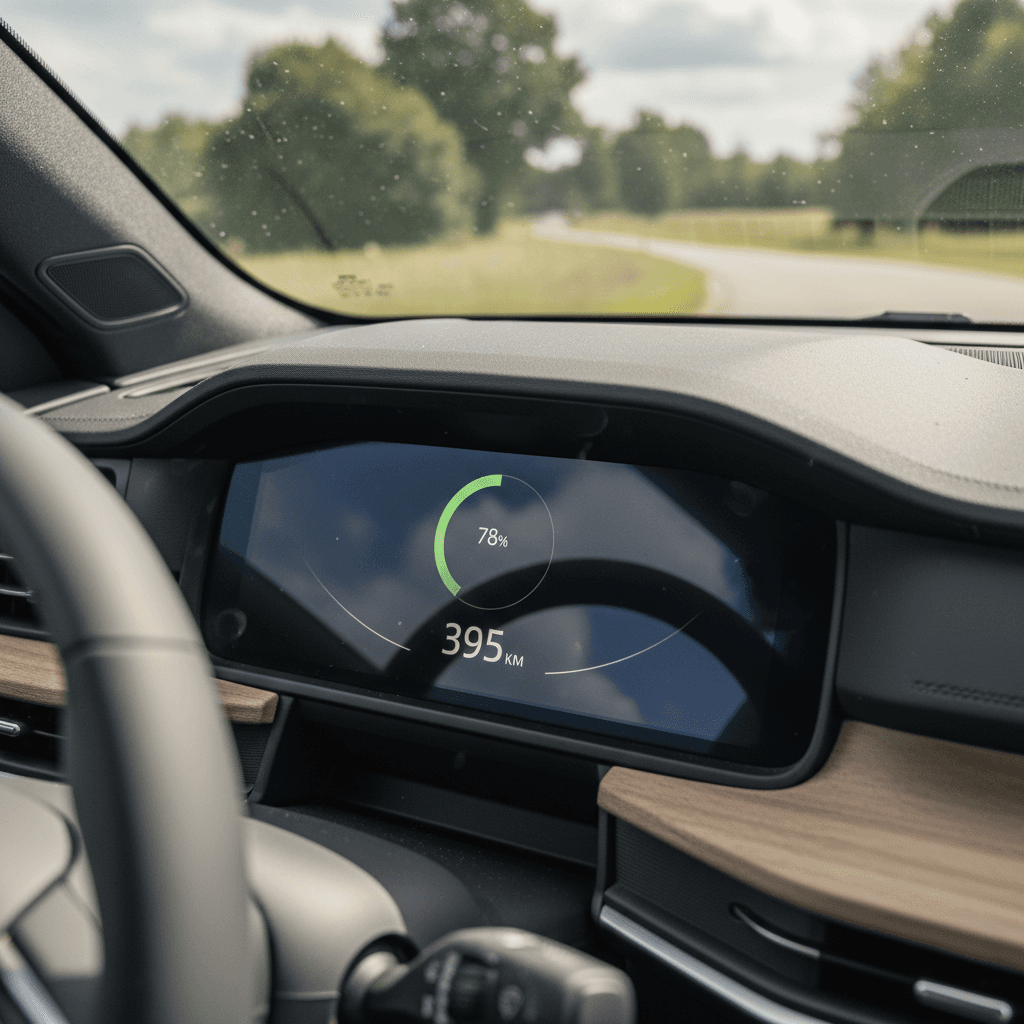
Four big factors that change your Polestar 3 range
Same battery, very different results
Temperature
Cold weather (below freezing) can cost you 15–30% of your range thanks to cabin heating and a cold battery. The Polestar 3’s heat pump helps, but physics still wins.
Speed
Jumping from 65 to 80 mph can be the difference between arriving with 20% charge or pulling in on fumes. Above 70 mph, **every 5 mph really matters**.
Wheels & tires
Big 22‑inch performance wheels look fantastic but add rolling resistance and weight. Stick with the smaller aero‑optimized wheels if maximum range is your priority.
Driving style
Hard launches and late braking hurt range. Smooth throttle, early regen, and using Eco/Range modes can easily add **20–40 miles** of usable range to a charge.
Polestar publishes EPA consumption figures from roughly **35 to 44 kWh/100 miles** depending on trim, which translates to about 2.3–2.9 miles per kWh. Your own number will slide up or down that scale based on the variables above. The larger and heavier the SUV, the more you feel those swings, and the Polestar 3 is no lightweight.
Range drops to watch for
Charging speed and road‑trip time planning
Range is only half the story. The other half is how quickly you can put miles back in. With its 400‑volt architecture and big 111 kWh battery, the 2025 Polestar 3 is set up for **up to 250 kW DC fast charging** and an 11 kW onboard AC charger for home or Level 2 public stations.
Charging times for the 2025 Polestar 3
Approximate times from low state of charge under good conditions.
| Charger type | Power | 10–80% time | Miles added (single‑motor) | Best use case |
|---|---|---|---|---|
| DC fast (ultra‑fast) | Up to 250 kW | ~30 minutes | ~230–260 miles | Highway road trips |
| DC fast (standard) | 100–150 kW | ~35–45 minutes | ~180–230 miles | Smaller highway sites, mixed routes |
| Level 2 home/work | 11 kW | ~11 hours (0–100%) | Full overnight charge | Daily commuting |
| Level 1 (standard outlet) | 1–1.5 kW | Not recommended for full charges | A few dozen miles overnight | Emergency top‑ups only |
Real charging speeds depend on the station, battery temperature, and how busy the site is.
Simple road‑trip math
Compared with rivals like the BMW iX, Mercedes EQE SUV, and Audi Q8 e‑tron, the Polestar 3’s **combination of big battery and solid fast‑charging speed** makes it a confident long‑distance machine, as long as you use honest range numbers in your planning.
Practical range tips for Polestar 3 owners
Seven ways to stretch your Polestar 3 range
1. Start with a warm battery
Precondition the cabin while plugged in, especially in winter. Warming the pack and cabin from grid power means more of that 111 kWh is left for actual driving.
2. Use built‑in route planning
The Polestar 3’s Google‑based navigation understands your consumption, elevation, and weather. Let it suggest charging stops instead of guessing from the dash range estimate alone.
3. Watch your cruising speed
If your schedule allows, cruising at 68–72 mph instead of 78–80 mph can add **20–40 miles** of range on a full charge, with almost no change in arrival time over a typical day.
4. Mind wheel and tire choices
If you’re ordering new or shopping used, note the wheel size. The smaller, more aero‑friendly wheels are the quiet hero of any 2025 Polestar 3 range test.
5. Pack smarter, not higher
Roof racks and cargo boxes punch a hole in your aero profile. When possible, load heavy items in the rear cargo area and avoid permanent roof accessories for long trips.
6. Learn your personal mi/kWh
Reset a trip computer and drive your normal week. Note your miles/kWh. That number, multiplied by ~107 usable kWh, is the **most honest range estimate you’ll ever get.**
7. Keep tires properly inflated
Low tire pressures quietly eat range and can cause uneven wear. Check pressures monthly, and especially before a road trip with a fully loaded SUV.
Thinking used? Range, battery health, and resale
The Polestar 3 is just reaching driveways, which means **used examples are next up**, and battery health will be front‑and‑center for savvy buyers. Polestar backs the pack with an **8‑year/100,000‑mile battery warranty**, including a minimum 70% state‑of‑health guarantee, which is a strong safety net for early used‑market shoppers.
What range looks like after a few years
Modern EV packs, especially large ones like the Polestar 3’s 111 kWh unit, tend to degrade slowly when treated well. After 5–7 years, it’s reasonable to expect a healthy pack to retain **75–90% of original usable capacity**, depending on climate and charging habits.
On the road, that might mean a former 280‑mile real‑world highway SUV now comfortably delivers 230–250 miles, still very practical for most owners.
How Recharged helps you shop smarter
If you’re considering a used Polestar 3 down the line, a traditional test drive and a seller’s “it seems fine” just aren’t enough. Every vehicle on Recharged comes with a **Recharged Score Report** that includes verified battery health, usage history insights, and fair‑market pricing.
That means you’re not guessing how much real‑world range is left, you’re seeing it in black and white, with EV‑specialist support if you have questions.
Ask for data, not vibes
FAQ: 2025 Polestar 3 range & testing
Frequently asked questions about 2025 Polestar 3 range tests
Bottom line: What to expect from a 2025 Polestar 3 range test
The 2025 Polestar 3 doesn’t just look like a serious long‑distance EV on paper, it backs it up in the real world. With a 111 kWh battery, EPA ratings up to about 350 miles, and independent tests pointing to **high‑200s real‑world range** for the dual‑motor models, it belongs in the top tier of electric SUVs for road‑trip confidence.
If you treat the EPA numbers as an optimistic ceiling, keep an eye on weather and speed, and learn your personal miles‑per‑kWh, you’ll find that a well‑driven 2025 Polestar 3 can comfortably handle daily commuting and family road trips alike. And when these start appearing on the used market, tools like the **Recharged Score Report** and EV‑specialist support from Recharged will make it much easier to separate the battery‑healthy heroes from the merely shiny SUVs on a lot.