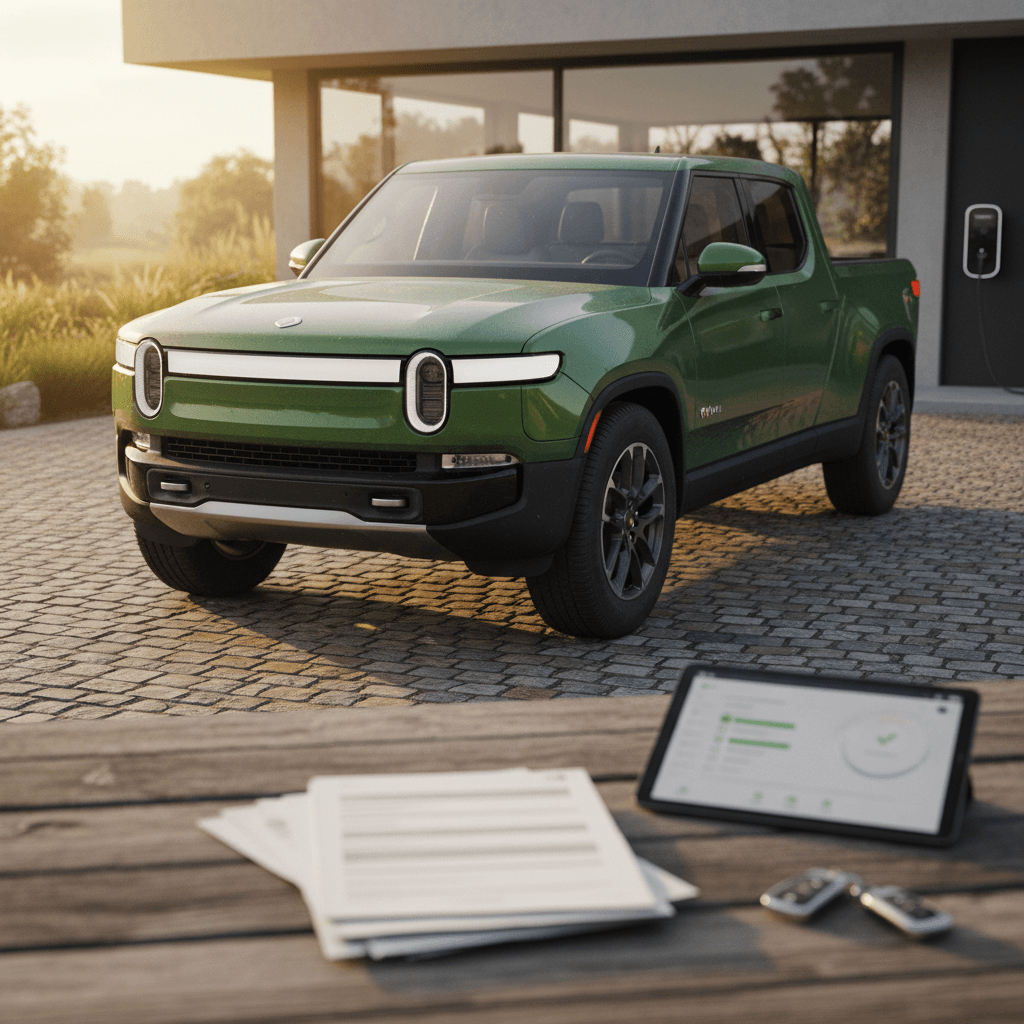
If you’re ready to move on from your Rivian R1T, you’re not just selling any pickup, you’re selling a high‑tech, high‑value EV that smart shoppers will scrutinize. A generic used‑truck guide won’t cut it. This Rivian R1T selling checklist walks you through every step, from prep and pricing to test drives and payment, so you can capture top dollar and hand off the truck with confidence.
Rivian R1T resale is different
Why a Rivian R1T–Specific Selling Checklist Matters
Selling a Rivian R1T isn’t quite like selling a gas F‑150. You’re dealing with over‑the‑air software updates, multiple drive configurations, fast‑changing warranty terms, and buyers who care deeply about battery health. On top of that, the used EV market is evolving quickly, which means the difference between a “clean” sale and a messy one is usually preparation.
Three Ways Selling an R1T Is Unique
Understand what EV‑savvy buyers are actually evaluating
Battery & range anxiety
Buyers want proof your pack is healthy and that real‑world range matches expectations, not just EPA numbers.
Software & hardware changes
Rivian updates hardware and software frequently. Shoppers will ask about drive unit type, driver‑assist hardware, and recent OTA updates.
Complex warranties
The R1T’s 8‑year high‑voltage coverage is a selling point, but only if you can explain what’s still in effect for your specific truck.
Where Recharged fits in
Step 1: Decide How and When to Sell Your R1T
Before you touch a sponge or open your camera app, decide whether a private sale, trade‑in, or consignment fits you best, and whether this is the right time to exit. Rivian pricing has been more volatile than established truck brands, so a bit of planning pays off.
Choose your selling path
- Private sale: Usually nets the highest price, but you’ll handle listing, showings, and paperwork yourself.
- Trade‑in: Fast and low‑stress. You’ll likely get less than private‑party value but save time, sales tax in some states, and hassle.
- Consignment: A middle ground, another party markets and sells the truck for a fee or commission.
Check timing and depreciation
- Look up current private‑party and trade‑in values for your year, mileage, and options.
- Note where you are in the 4–5 year basic warranty and 8‑year battery/drive unit warranty; many buyers prefer trucks still under basic coverage.
- If you’re close to a major mileage milestone (like 50,000 or 60,000 miles), consider selling just before you cross it.
Watch the warranty calendar
Step 2: Get Your R1T Ready to Show
Presentation still sells, even in the EV world. The best Rivian R1T listings look like they came from a careful owner, not a worksite. A few hours of prep can literally add thousands to the offers you see.
Rivian R1T Prep Checklist
1. Deep clean inside and out
Wash and clay the paint, clean the underbody where you can, and pay special attention to the frunk, gear tunnel, and bed. Clean out personal items, dog hair, and camping gear, buyers want to imagine their life in the truck, not yours.
2. Refresh the cabin
Vacuum thoroughly, wipe all touchpoints, clean the glass, and condition vegan leather or cloth. Clean the center screen and instrument display with a proper screen cloth, fingerprints look terrible in listing photos.
3. Fix small, obvious items
Replace wiper blades, burnt bulbs, and cracked license‑plate frames. Top off washer fluid, address any dashboard warnings, and consider repairing curb‑rashed wheels if cost‑effective.
4. Check tires and brakes
Measure tire tread depth on all four corners and photograph it. If tires or pads are nearly worn out, either replace them or price the truck accordingly and disclose honestly.
5. Update software
Make sure your R1T is on current stable software before listing. Buyers will notice if it’s behind on updates and may worry about how the truck has been maintained digitally.
6. Remove personal data
Delete saved home/work addresses, unpair your phone, log out of streaming apps, and clear garage‑door codes. You’ll repeat this before delivery, but it’s good practice now too.
Step 3: Document Battery Health and Warranty
On a used Rivian R1T, battery health and remaining warranty are as important to many buyers as paint color or wheels. If you can show that the high‑voltage pack is performing well and still covered for years, your truck moves to the top of the shortlist.
Battery & Warranty Documentation Checklist
Turn unknowns into selling points
Battery health snapshot
Get a third‑party or Recharged‑style battery report that shows estimated state of health and recent charging patterns. This reassures buyers you’re not off‑loading a weak pack.
Warranty status summary
Note in your listing how many years and miles remain on the high‑voltage battery, drive units, and basic warranty based on in‑service date and odometer.
Service and recall history
Gather invoices and screenshots of completed services, TSBs, and recalls. If Rivian has already addressed known issues, that’s a major plus for shoppers.
How Recharged helps here
Ready to find your next EV?
Browse VehiclesStep 4: Set a Smart Asking Price
Rivian R1T pricing can swing thousands of dollars based on battery pack, drive configuration, wheels, and software options. Your goal is to land where informed buyers feel the number is fair, but still leave room for a modest negotiation.
Key Rivian R1T Pricing Factors
Weigh these elements before you pick an asking price
| Factor | What Helps Value | What Hurts Value |
|---|---|---|
| Battery & drive unit | Large or Max pack, dual/quad motors with plenty of warranty left | Standard pack, less warranty remaining, unclear battery health |
| Mileage | Well‑documented highway miles under ~50,000 | High miles with gaps in service history |
| Condition | Clean paint, wheels, interior, no accidents, fresh tires | Visible wear, body damage, worn tires, unresolved issues |
| Options | Adventure or similar trims, desirable wheels, premium audio, popular colors | Odd color combos, heavy off‑road mods that narrow the buyer pool |
| Market context | Few similar R1Ts for sale locally, strong demand | Many similar trucks listed, recent price cuts from Rivian or rivals |
Two trucks that look similar online can differ by $15,000 or more once you factor in options, battery, and history.
Use a three‑number strategy
Step 5: Create a Listing That Rivian Buyers Trust
Rivian shoppers tend to be detail‑oriented. They read spec sheets, know about Large vs. Max packs, and talk in forums. A thin, generic listing suggests you’re hiding something. A detailed, transparent listing signals a careful owner and makes serious buyers lean in.
- Lead with the year, trim, drive configuration, battery pack, and color (for example: “2023 R1T Adventure, Dual‑Motor, Large Pack, Midnight”).
- Highlight remaining high‑voltage and basic warranty, plus any transferable service plans.
- List meaningful options: off‑road package, premium audio, gear guard, camp kitchen (if included), wheel size, and any Rivian‑approved accessories.
- Disclose accidents and repairs honestly, with notes on quality of repair and any OEM parts used.
- Explain how the truck has been used, daily commuting, road‑trip touring, towing, or frequent off‑roading.
Must‑Have Photos for Your R1T Listing
Front and rear three‑quarter views
Shoot the truck in landscape during the golden hour if possible, with wheels straight and full body in frame.
Interior overview and screens
Photograph the front seats, rear seats, center screen (with software version), and driver display with the truck in Park.
Bed, gear tunnel, and frunk
Open and photograph these signature storage areas, they’re a big part of why people want an R1T.
Close‑ups of wheels and tires
Show each wheel, any curb rash, and a clear shot of tire brand and tread depth.
Odometer and VIN plate
Include a clear odometer shot and a photo of the VIN label on the door jamb or windshield.
Skip the heavy filters
Step 6: Handle Inquiries and Test Drives Safely
Your R1T is a high‑value, connected vehicle. Treat every inquiry like a business appointment, not a casual meet‑up. The right process keeps you safe, protects your data, and helps legit buyers feel comfortable sending a large wire or cashier’s check.
Safe Test‑Drive Protocol for a Rivian R1T
1. Pre‑screen by message or phone
Ask how they plan to pay, whether they’ve driven an EV before, and when they’re hoping to buy. Evasive answers, unrealistic offers, or pressure to skip steps are red flags.
2. Meet in a public, well‑lit place
Choose a busy parking lot, bank, or police‑station safe‑exchange zone. Avoid having first‑time strangers visit your home.
3. Verify identity and insurance
Before they drive, photograph a valid driver’s license and confirm active insurance. For a truck in this price bracket, you should usually ride along.
4. Control the test‑drive route
Plan a 15–20 minute loop that shows off one‑pedal driving, highway merging, and ride quality without putting the truck at unnecessary risk.
5. Protect your data
Log out of apps, remove saved addresses, unpair your phone, and temporarily disable garage‑door openers or access codes before they arrive.
6. Never let the truck leave without you
Don’t hand over the key and let a stranger disappear for an “inspection” or “bank run.” If a mechanic needs to see it, meet them together.
Beware of payment scams
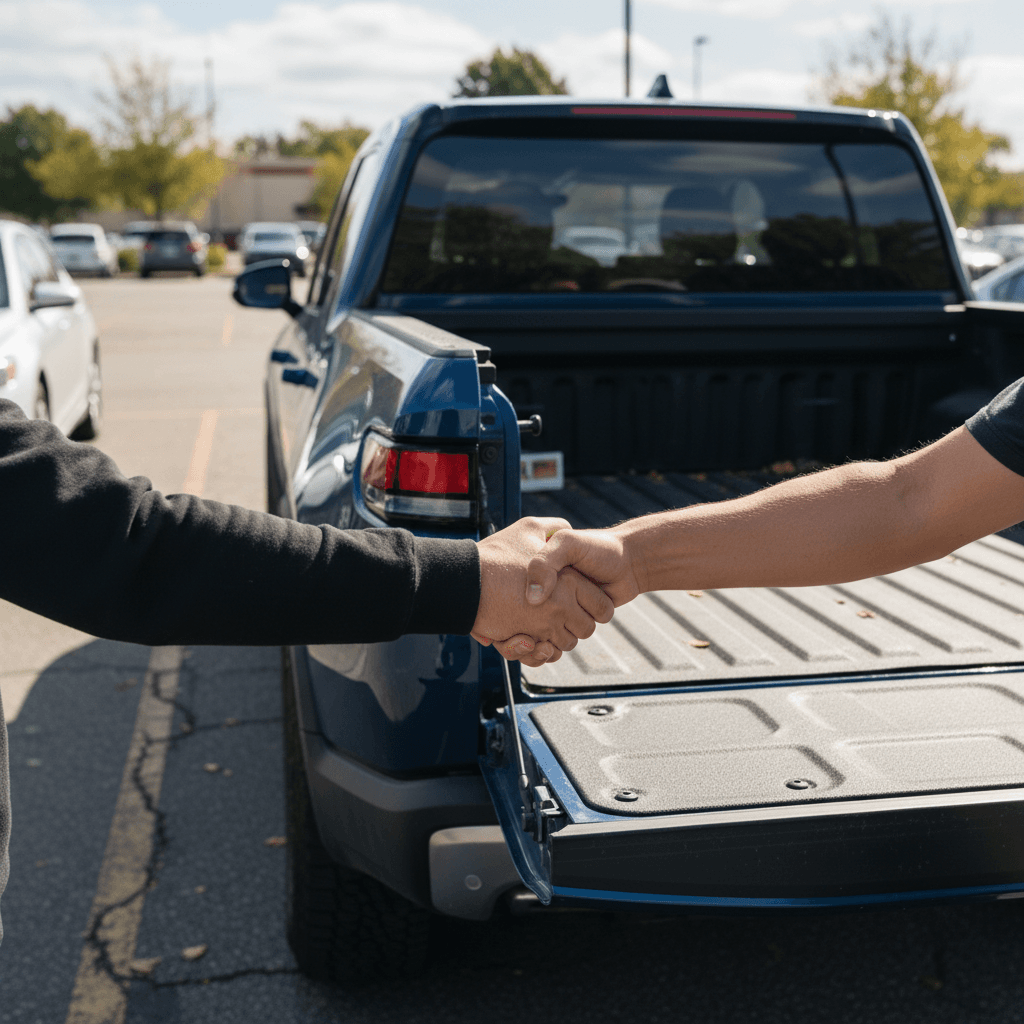
Step 7: Close the Deal, Payment, Title, and Accounts
Once you’ve agreed on a price, slow down and work through closing carefully. The last thing you want is a missing lien release, a mistaken payoff, or the truck still showing in your app a week later.
1. Handle the money correctly
- With a loan payoff: Contact your lender for a 10‑day payoff, then arrange for the buyer’s funds to go directly to the bank. Only sign the title once the payoff is confirmed.
- Paid‑off truck: Meet at the buyer’s bank to verify a cashier’s check, or use a wire transfer. Don’t release keys or title until funds are confirmed.
- Through a marketplace: If you sell via Recharged or a similar platform, they’ll typically collect funds, pay off any lien, and disburse your proceeds.
2. Transfer ownership cleanly
- Complete the title exactly as your state requires, including odometer disclosure.
- Draft a simple bill of sale with VIN, price, date, and as‑is language.
- Submit any required notice of sale to your DMV so you’re not liable for future tickets or tolls.
- Remove the R1T from your Rivian account and app once the buyer has linked it to theirs.
Recharged can handle the details
Quick Rivian R1T Selling Checklist Summary
If you just want the essentials in one place, here’s a condensed Rivian R1T selling checklist you can screenshot or print before you list your truck.
One‑Page Rivian R1T Selling Checklist
1. Decide where and when to sell
Choose between private sale, trade‑in, or consignment and check how much basic and battery warranty you have left.
2. Prep and detail the truck
Deep clean inside and out, address minor fixes, ensure software is updated, and remove most personal items.
3. Gather documents
Title or payoff info, service records, recall/TSB documentation, battery‑health report if available, and a simple bill‑of‑sale template.
4. Set a data‑backed price
Use multiple pricing guides and real listings, then define your dream, target, and walk‑away numbers.
5. Build a transparent listing
Include configuration, options, warranty status, usage history, and 20–30 clear photos that show the truck honestly.
6. Screen buyers and run safe test drives
Pre‑qualify by message or phone, meet in public, verify ID and insurance, control the route, and protect your data.
7. Close with clean payment and paperwork
Favor wire or verified cashier’s check, follow your state’s title rules, notify the DMV, and remove the truck from your Rivian account.
Rivian R1T Selling FAQ
Frequently Asked Questions About Selling a Rivian R1T
Selling a Rivian R1T is part art, part process. If you prepare the truck, document its story, and follow a clear checklist from pricing to payoff, you’ll stand out from the flood of rushed, vague listings. Whether you ultimately sell privately or decide a Recharged instant offer or trade‑in fits you better, taking these steps will help you protect your time, your safety, and your truck’s hard‑earned value.